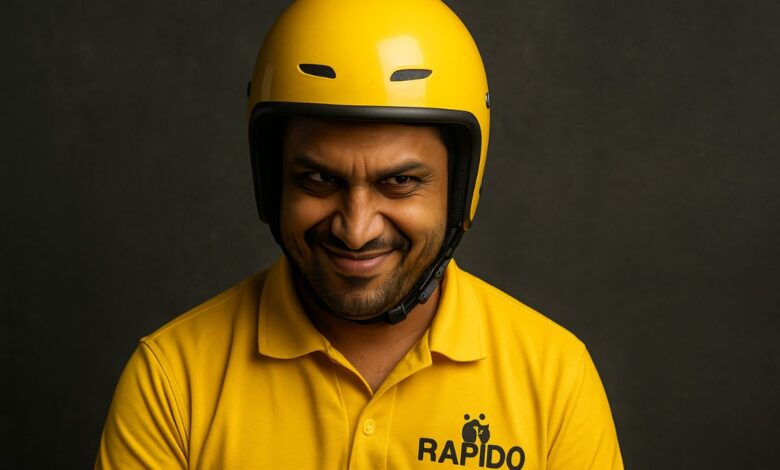
The marketing for ride‑sharing services is all about ease: “Book within seconds”, “Your own bike at your doorstep” and “Make every ride hassle free.” Scroll through the sleek adverts of Rapido, India’s largest bike‑taxi aggregator, and you’ll see smiling captains in yellow helmets whizzing happily through city traffic. Behind the glossy veneer, however, lurks a darker reality where customers find themselves trapped with strangers who have no respect for boundaries, laws or even basic decency. The name Rapido, which evokes speed, often becomes synonymous with how quickly an ordinary ride can descend into an ordeal.
Here, we began with a simple question posted on Reddit: “I booked a Rapido to DLF Mall; how did the driver get my number and start texting me?”. As we dug deeper, we found case after case of harassment, molestation, extortion and violent threats. Far from isolated incidents, these complaints reveal systemic flaws in Rapido’s design, from exposing riders’ phone numbers to failing to vet captains properly. In a twist befitting the absurdity of the situation, one might ask-
When your gig‑economy ride starts to feel like a true‑crime podcast, who exactly is “rapid” – the service, the escalation of harassment or your heartbeat?
We collected accounts from public Reddit posts describing encounters with Rapido drivers, focusing on incidents involving harassment, intimidation or privacy invasion. To corroborate these accounts, we cross‑checked them with news reports from mainstream Indian outlets like Livemint, NDTV, Indian Express, Times of India, Asianet Newsable, The Logical Indian and India Today. The result is a comprehensive, narrative‑driven piece anchored in verified facts.

Case studies: When rapido rides turn disturbing
The Noida rider who received unwanted messages
In April 2024 a Reddit user from Noida recounted an unnerving experience after booking a Rapido bike. According to her post, she reached her destination without trouble, yet soon after the ride the captain began sending her WhatsApp messages. She had never shared her number with the driver, raising immediate questions about Rapido’s privacy safeguards. The conversation quickly turned uncomfortable; the driver asked personal questions and insisted on continuing to message, leaving the rider feeling “creepy as f***”. In the comments, other users expressed similar fears, one noted that Rapido does not mask phone numbers the way Uber and Ola do.
What went wrong? Ride‑hailing companies typically mask both riders’ and drivers’ numbers via an anonymised call system. However, Rapido often routes calls directly, leaving phone numbers exposed. The company states in its terms of service that numbers are masked, yet multiple riders report receiving unsolicited calls and messages from captains. The Noida case is an early example that foreshadowed many subsequent complaints.
Hyderabad’s threatening auto driver
Another Redditor from Hyderabad described a terrifying encounter when she booked a Rapido auto. She said the driver suddenly ended the ride partway, shouting at her and demanding she step out. Frightened and alone at night, she sought help from other commuters and wanted to ensure the driver was held accountable. She later reported the incident to Rapido but, like many complainants, did not receive a satisfactory response. This case highlighted how quickly an everyday ride can become a situation of coercion and intimidation, and how helpless passengers feel when there is no immediate recourse.
The Delhi woman who was verbally harassed and stalked
A widely shared post in 2025 detailed the experience of a Delhi woman who booked a Rapido in Bawana. She described how the driver, apparently intoxicated, took her phone when she attempted to use the SOS feature, and later chased her when she sought help at a police station. The driver insisted she pay for the ride even though he had forcibly taken her phone; he pursued her on foot as she ran toward safety.
When she finally reached the police station, officers allegedly advised her not to lodge a complaint. Rapido’s customer support called her an hour later to express regret, but by then the rider had already been traumatized. She posted her ordeal online as a cautionary tale, warning others that the platform’s SOS feature could be rendered useless if a driver physically intervenes.
Encountering a creep on an offline ride in Delhi
Not all disturbing experiences occur during official app‑based rides. One Delhi user recounted that she initially booked a Rapido through the app, but the driver asked her to cancel and pay him cash. As soon as she agreed, he started asking intrusive questions and demanding that she sit closer to him. He repeatedly touched her legs and insisted on getting her phone number. When she refused to comply, he followed her after she alighted, only stopping when she pretended to call the police. This case underscores two major issues, the presence of unregistered “offline” rides circumventing any digital trail and the vulnerability of passengers when the transaction happens outside the app’s safety net.
A Bengaluru passenger threatened with a knife
Perhaps the most shocking incident documented online came from Bengaluru in February 2024. A passenger alleged that their Rapido driver refused to turn on the AC despite the city’s heat and insisted they cancel the ride. When the passenger declined to cancel, the driver became aggressive, pulled out a sharp key‑chain and attempted to stab them. The commuter managed to escape only thanks to a nearby auto driver who came to their aid.
Even after the traumatic escape, the customer reported receiving threatening calls from the driver. According to Asianet Newsable, a former Rapido employee commenting on the viral Reddit post disclosed that “Rapido can see all customers’ numbers. There is no safety or protection,” raising serious concerns about the platform’s privacy practices. Other Reddit users suggested recording all calls and urged the passenger to file a lawsuit for emotional distress.
The molested passenger in Bengaluru
In September 2025, multiple news outlets reported that a Rapido auto driver in Bengaluru had been booked for molesting a woman passenger. During a ride from Kumaraswamy Layout to JP Nagar, the driver allegedly commented that the passenger “looked like a film actress” and offered to help with her bags. Under the guise of checking her forehead for fever, he touched her chest and attempted to confine her inside the auto. The terrified woman jumped out and rushed home, later filing a complaint with police.
Rapido responded by permanently suspending and blacklisting the driver, while promising refresher training and reinforcing its safety protocols. The company emphasized that it offers post‑10 pm safety calls to women riders, 24×7 in‑app SOS support and continuous reminders urging passengers to verify vehicle and driver details. Despite these assurances, the case revealed how easily a predator can exploit a short ride to assault a customer, and how limited the immediate protections are when such assaults happen inside a moving vehicle.
A Gurgaon HR executive jumps for her life
On 12 September 2025, a 42‑year‑old HR executive in Gurugram booked a Rapido autorickshaw from Basai Chowk. According to her husband, she felt the driver was under the influence of some substance; near Feroz Gandhi Colony he suddenly held her hand and tried to snatch her laptop. When she confronted him, he restarted the auto and accelerated. Terrified, she jumped from the moving vehicle, injuring her legs.
After the ordeal, the driver began calling her and sending abusive messages. Police registered an FIR under provisions dealing with sexual harassment, and Rapido suspended and blacklisted the driver. In a statement, Rapido expressed that they were “deeply shaken” by the incident and emphasised their zero‑tolerance policy for harassment, again highlighting their safety measures like post‑10 pm calls to women, in‑app SOS support and reminders to verify vehicle details.
Gurugram man confronts a driver using someone else’s ID
In May 2025, The Logical Indian reported a disturbing case in Gurugram where a Rapido driver, operating under another person’s account, harassed a female passenger by sending inappropriate messages. The driver asked for her flat number, implying he would visit her home, causing her to alert her husband. The husband confronted the driver and recorded the encounter, which went viral on social media.
Investigations revealed that the driver, Manjar Alam, was using a colleague’s Rapido account even though the vehicle was registered in his name. This exposed major flaws in Rapido’s driver verification process. Following public outrage, Rapido permanently banned the driver and vowed to strengthen safety protocols, including stricter ID checks, enhanced captain training and tighter background verification. The Logical Indian emphasised that ride‑sharing platforms bear a crucial responsibility to protect passengers and called on companies and regulators to collaborate on systemic reforms.
The creep who kept calling after a Delhi ride
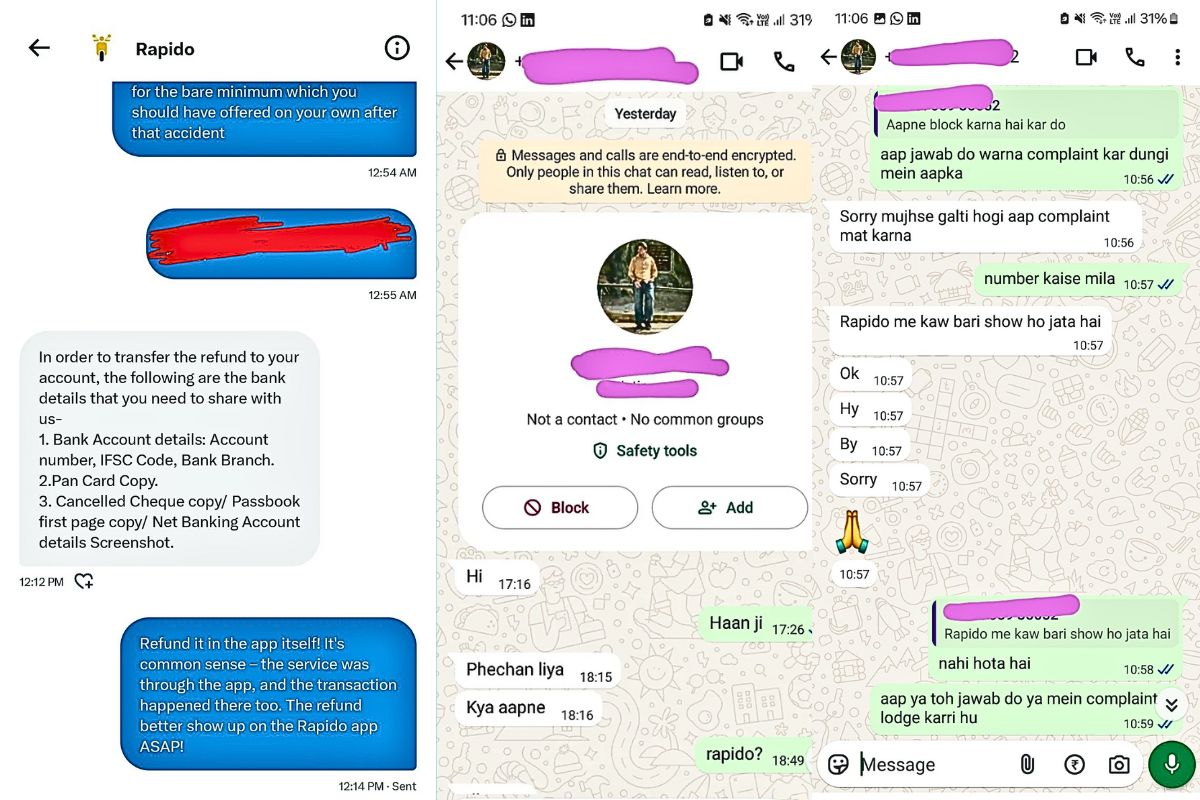
Another widely shared article recounted a young woman’s ride in Delhi where a Rapido driver repeatedly called her after dropping her off. NDTV reported that the driver asked her not to refer to him as “bhaiya”, commented on her youth and beauty, and inquired about her fiancé. He asked for her social‑media handles and insisted on staying in touch.
After she left, he called and texted her dozens of times. When she complained to Rapido, the company responded with the generic statement, “We will see what we can do”. This dismissive response led many netizens to advise women to avoid the service altogether. Comments from other users noted that Rapido does not mask numbers and that company staff might sell data for a small bribe. In this case, Rapido eventually banned the captain, but only after the story went viral and attracted media scrutiny.
Extortion and customer service woes
Harassment isn’t limited to physical or verbal abuse; sometimes it involves financial extortion. Several Reddit threads describe drivers demanding extra cash beyond the fare shown in the app. In one post, a user said a Rapido driver demanded an extra ₹30 from an elderly passenger; after she paid, the user filed a complaint and Rapido refunded the money within an hour. Another Bangalore rider asked whether Rapido takes most of the fare and if drivers know who complained because he feared retaliation. These cases show a pattern of drivers exerting pressure for additional payments and passengers worrying about reprisals after complaining.
The threat of knives and continued harassment
Returning to the Bengaluru knife incident, the Redditor later reported that the driver and his associates kept calling, abusing and OTP‑bombing them even after Rapido suspended the captain. Without effective number masking, the driver was able to continue harassment long after the ride ended. The user expressed concern that Rapido’s suspension of the driver meant little when the platform still allowed him to contact them. This raises another question: what does “suspension” mean when the driver already has your personal number and can harass you outside the app?
A Rapido captain scammed by a passenger
While this report focuses on passenger experiences, it is important to note that the gig‑economy dynamic also exposes drivers to fraud. A Reddit post from Chandigarh described how a Rapido captain was scammed by a passenger who tricked him into scanning a QR code and paying money. Although not a case of harassment, this incident shows that both riders and captains can suffer when the platform lacks robust safeguards and trust mechanisms.
Rapido parcel also in danger!
Not only is Rapido plagued with safety concerns when it comes to human passengers, but now even its parcel delivery service is proving to be a nightmare. One customer recounted how a prepaid parcel meant for Defence Colony mysteriously ended up in Delhi Cantonment; a blunder that would be laughable if it weren’t so serious. Worse, despite repeated attempts to contact Rapido’s customer care, there was no satisfactory response. The parcel was never returned, and instead of real help, the customer was handed the driver’s number and told the query was “resolved.”
Adding to the frustration, Rapido’s support staff insisted the driver had delivered the parcel after receiving the drop OTP. But here’s the disturbing twist. Neither the sender nor the receiver shared any OTP at all. This loophole doesn’t just expose negligence; it raises serious doubts about how Rapido handles both verification and accountability in its parcel operations. If OTPs can be faked, bypassed, or mishandled so easily, then what’s the guarantee that parcels, be they gifts, valuables, or sensitive documents, are safe in Rapido’s hands?
What should have been a simple delivery turned into a disturbing reminder of Rapido’s irresponsibility, where customers are left not only parcel-less but also powerless, with no closure and no accountability. This isn’t just irritating; it’s dangerous for trust, safety, and consumer rights.
Reflections: speed, trust and gaslighting
It is difficult not to inject satire into this narrative, if only to cope with the surreal nature of the stories. Consider the advertising tagline “India’s largest bike‑taxi platform” next to the reality that a driver used a colleague’s ID to harass a woman and then claimed he thought her message was a flirtation.
Or the claim that Rapido makes “safety calls after 10 p.m.” juxtaposed with a 42‑year‑old HR executive who was forced to jump from a moving vehicle at 6 p.m. because the captain tried to snatch her laptop. Another favourite: Rapido emphasises its “masked numbers” while a former employee cheerily explains on Reddit that they can view every customer’s number. The gulf between corporate messaging and on‑ground experience is so vast that one wonders if Rapido should pivot to fiction writing.
Even the “captain” moniker used for drivers becomes ironic when those captains treat passengers as hostages rather than guests. It’s as if Rapido’s brand designers borrowed from the airline industry’s language without considering that captains require rigorous training, licensing and adherence to safety protocols. On Rapido, an individual can sign up with questionable or even fake documents, as seen in the Gurugram case, and start ferrying passengers within days. When something goes wrong, the company’s script offers generic apologies, promises of action, and a hidden assumption that the problem lies with a “few bad apples.” But as the number of incidents grows, the orchard begins to look rotten.
The wider context: gig‑economy pressures and regulatory gaps
Rapido is not alone in facing safety issues; many ride‑sharing platforms worldwide have struggled to control misconduct. The underlying business model prioritizes rapid scaling and market share over thorough vetting or adequate pay. Drivers, or “captains,” are not employees but independent contractors with minimal oversight. Low fares mean that a driver must complete many rides per day to earn a living, increasing stress and reducing the time for proper customer service. Platforms like Rapido thus attract a broad array of individuals – some diligent, some desperate and others unscrupulous. Without strong accountability mechanisms, these pressures create fertile ground for abuse.
In India, regulatory oversight of app‑based transport services remains fragmented. Central government guidelines for taxi aggregators (2020) require background checks and driver training, but enforcement rests with state authorities who often lack resources. Rapido’s operations sometimes fall into a grey area: bikes and autos are regulated differently from cars, leading to inconsistent requirements across states. These loopholes make it difficult to implement uniform safety standards or to penalise companies for recurring failures. Each high‑profile incident sparks demands for stricter laws, but sustained regulatory interventions remain rare.
Company responses: promises and reforms on paper
In response to the mounting scandals, Rapido has rolled out a series of policy updates. After the Bengaluru molestation case, the company announced refresher training for drivers, emphasised that they were cooperating with police and reiterated a “zero‑tolerance” stance on harassment. Following the Gurgaon HR executive’s leap, the platform again promised to suspend and blacklist the captain, emphasising that safety is their top priority. After the Gurugram driver‑ID scandal, Rapido said it would strengthen verification checks and provide legal support to victims. These statements show a pattern of reactive rather than proactive measures – each new tragedy prompts an apology and a pledge, but the underlying vulnerabilities persist.
Some of the promised features include:
- 24×7 in‑app SOS: Riders can tap an SOS button that connects them to a helpline or local authorities. However, as the Bawana case shows, this system fails if the driver snatches the passenger’s phone.
- Post‑10 p.m. safety calls: Women riders are supposed to receive calls after 10 p.m. to verify they have reached safely. Yet many incidents occurred well before 10 p.m., and there is no evidence that such calls were made in cases where they might have helped.
- Continuous reminders to verify vehicle and driver details: The app encourages passengers to check the vehicle number and driver ID before starting the ride. But when drivers operate under other IDs or ask riders to cancel and go offline, this verification is moot.
- Strict KYC verification: Rapido claims all captains undergo “Know Your Customer” checks. Yet cases like the Gurugram driver using a colleague’s account highlight gaps in this process.
These measures, while useful in theory, often amount to window dressing in the absence of robust implementation. Without technical solutions to truly mask numbers, strict enforcement of identity verification and effective cooperation with law enforcement, the platform’s pledges remain aspirational.

From speed to safety – time for transformation
At its core, Rapido offers a valuable service of inexpensive, convenient rides that fill gaps in public transport. Many captains are hardworking individuals trying to earn an honest living. There are even stories of drivers who go above and beyond to help passengers; such anecdotes occasionally go viral, reminding us that gig workers are not inherently bad actors. However, the cases compiled here reveal systemic flaws that must be addressed if the platform is to maintain public trust.
It is easy for Rapido to say that these are isolated incidents. Yet the patterns of harassment, extortion, privacy breaches and violent threats indicate deeper problems: weak number masking, lax identity verification, insufficient driver vetting and poor customer support. Each time a scandal emerges, Rapido issues a new statement promising reforms; each time, another rider goes online to share a horrifying experience. The cycle will continue until the company invests in robust technical safeguards and accountability mechanisms.
Regulators, too, cannot remain passive. When a woman has to jump from a moving vehicle to save herself or a driver tries to stab a passenger with a key‑chain, the stakes go far beyond corporate reputation. These are public‑safety issues demanding legal and policy interventions. As ride‑sharing services expand across India, they must evolve beyond the “move fast and break things” ethos that has defined the tech industry. Safety should not be an optional feature, nor should it be relegated to PR statements after each incident.
In the end, the satirical title of this report, Rapido: When Your Ride‑Share Becomes a Nightmare, reflects a serious problem. For too many riders, the joy of weaving through traffic on the back of a bike has turned into a journey of fear and humiliation. Until Rapido and its regulators confront the uncomfortable truth of these stories, the promise of affordable, safe mobility will remain an empty slogan, and passengers will continue to wonder: who is really in control when they hail a ride?