Justice Denied Is Life Died: How The Third Pillar Of Democracy Is Shaking?
Bail, Jail, and Epic Fail: The Chronicles of Indian Judiciary!


When Justice Becomes Injustice…
In a democracy, courts exist to protect citizens against oppression, arbitrate disputes, and uphold the rule of law. Yet in India, the world’s largest democracy, the very system meant to guarantee justice often becomes an instrument of suffering. Across the country, people have been languishing in prisons for years, sometimes decades, without a conviction.
They lose their youth, health, families and livelihoods while their cases crawl through an overloaded judiciary. When verdicts finally arrive long after the damage is done, the courts simply declare these individuals innocent and move on. For the wrongfully imprisoned, however, the trauma remains. This piece writes a string of cases where citizens were held in custody for astonishing lengths of time despite a lack of evidence, and shows how India’s judicial machinery is failing to uphold its constitutional promise of timely, fair justice.
Systemic Rot, A Normal Event In Broken Indian Judicial System
India’s courts are overwhelmed. Official data show that more than 50 million cases were pending across courts as of April 2025. The Supreme Court alone had over 88,000 pending matters in August 2025, the highest backlog since 2019. Lower courts are clogged with cases that drag on for years due to frequent adjournments, procedural delays, and an acute shortage of judges.
The India Justice Report 2025 found that 61% of high court cases and 46 % of district court cases were pending for over three years, while vacancies were 33 % in high courts and 21 % in subordinate courts. With only 21,285 judges against a sanctioned strength of 26,927, India has about 15 judges per million people, far below the recommended 50 judges per million. Undertrial prisoners, or the people accused but not yet tried, now constitute 76 % of the prison population; some 11,448 undertrials have spent more than five years in detention. These numbers paint a grim portrait of a system on the verge of collapse.
The consequences are not abstract. They translate into shattered lives, broken families and destroyed futures. The following sections examine individual stories that reveal the human cost behind these statistics.

Vishnu Tiwari: Twenty Years Behind Bars for a Crime He Never Committed
In 2000, Vishnu Tiwari, a poor labourer from Lalitpur in Uttar Pradesh, was arrested on charges of rape and atrocities under the Scheduled Castes and Scheduled Tribes (Prevention of Atrocities) Act. He was sentenced to life imprisonment and spent two decades in prison. In 2021, the Allahabad High Court acquitted him, finding no medical evidence of rape and noting contradictions in witness statements.
After 20 years, the court declared that the case was false, yet the damage was already irreversible. Tiwari’s parents died while he was behind bars; his siblings’ lives moved on without him. Emerging from prison as a middle‑aged man with a broken body and no family left, Tiwari asked, “Who will give me back my 20 years?” His story illustrates how a wrongful conviction, compounded by the system’s reluctance to revisit evidence, can rob a man of his life.
Samleti Blast Case: Twenty‑Three Years of Innocent Men Wasting in Prison
On 22 May 1996, a bomb exploded on a bus in Samleti village, Rajasthan, killing 14 people. Police arrested several men, most of them Kashmiri, accusing them of involvement in a series of blasts. They were convicted and sentenced to life imprisonment. For 23 years these men languished in jail without parole or bail. In July 2019, the Rajasthan High Court overturned their convictions and acquitted them, noting there was no credible evidence linking them to the Samleti blast.
When Ali Muhammad Bhat and his co‑accused returned home, they found parents and relatives dead; marriages had collapsed; they struggled to adjust to a world that had moved on. The acquittal came too late to undo the decades spent in prison. The case exposes how torture, coerced confessions and a rush to find culprits can lead to wrongful convictions and shows how appeals take decades to be heard.
Lakhan: A Century‑Old Man Freed After Forty‑Three Years
Lakhan, often referred to in court records simply by his first name, was arrested in connection with a 1977 murder case. For 43 years he remained in jail, aged and frail, awaiting justice. By the time his appeal reached the Allahabad High Court in May 2025, Lakhan was 104 years old. The court acquitted him, noting that the evidence against him was insufficient.
3 of his co‑accused had already died during the pendency of the case. Lakhan’s release meant little to him beyond the symbolic; he was physically weak and had spent nearly half his life behind bars. What does acquittal mean to a centenarian who has known nothing but prison for decades? His case epitomises the extreme delays plaguing India’s judicial system and the cruelty of a process that allows people to rot in jail until long after any possible punishment could serve a purpose.
Jageshwar Prasad Awadhiya: Three Decades for a ₹100 Bribe Allegation
Jageshwar Prasad Awadhiya, a bill assistant in Raipur’s Public Works Department, was accused in 1986 of demanding a ₹100 bribe. He was convicted in 2004 and sentenced to prison. After nearly four decades of litigation, the Chhattisgarh High Court acquitted him on 19 September 2025, ruling that there was insufficient evidence: no bribe money was recovered and there were no corroborating witnesses.
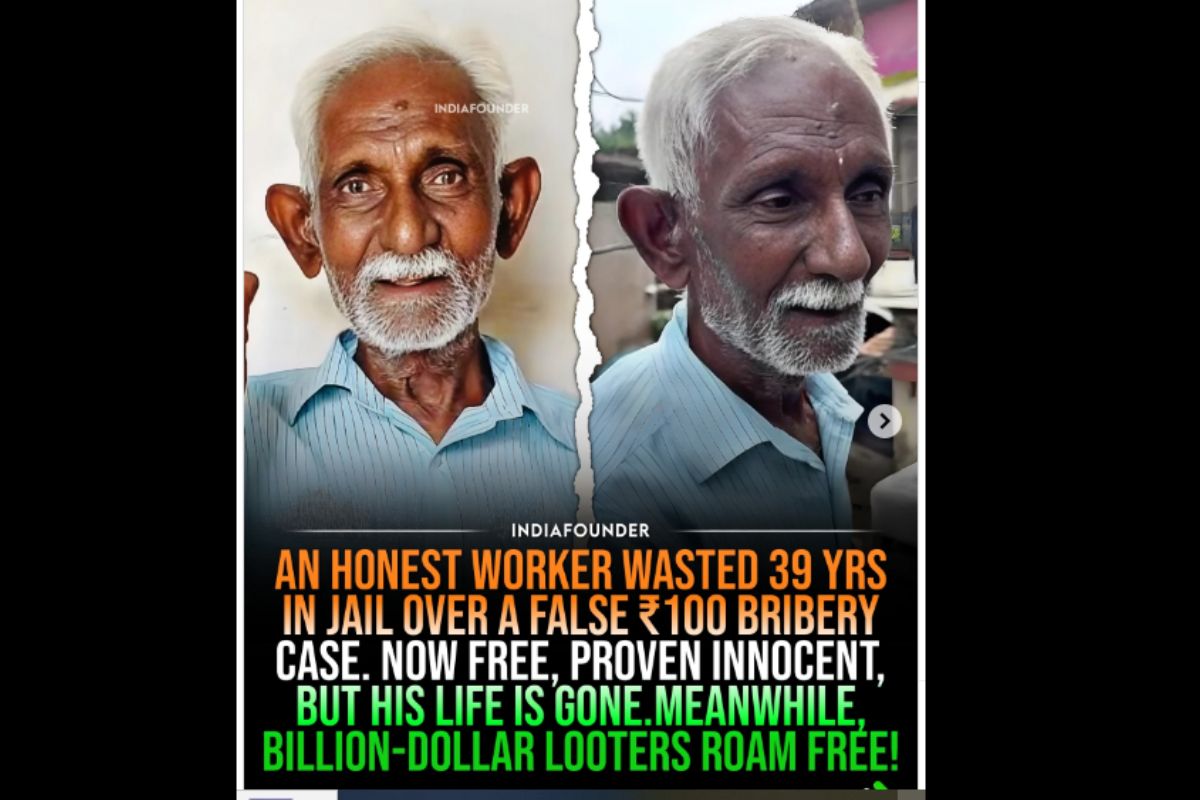
The court’s decision came after more than a hundred hearings over 39 years. In the intervening decades, Awadhiya lost his job, depleted his savings, saw his wife die from stress, and struggled to educate his sons. His family was ostracised as ‘bribe‑takers’. When the verdict finally came, he was 83 years old and had already served out the alleged punishment. The case raises glaring questions about accountability: why does it take nearly four decades to decide whether a ₹100 bribe was taken, and who compensates for the destruction of a man’s life when the accusation turns out to be false?
Mohammad Aamir Khan: Fourteen Years of Youth Lost to False Terror Charges
In 1998, 18‑year‑old Mohammad Aamir Khan was picked up by Delhi police on suspicion of involvement in a series of bombings. Over the next 14 years, he was tried in 18 different cases. He endured beatings and solitary confinement in Tihar Jail. In 2012, courts acquitted him in all but one case, and he was finally freed. By then he was 32, having spent his entire youth in prison. Khan emerged from jail with deep psychological scars, branded as a terrorist even after being acquitted. He struggled to reintegrate into society, his education disrupted and employment prospects bleak. His case highlights not only the miscarriage of justice but the stigma that stays with those once accused.
P. Satyam Babu: Eight Years Wrongly Accused of Ayesha Meera’s Murder
In December 2007, 19‑year‑old pharmacy student Ayesha Meera was raped and murdered in a hostel in Vijayawada, Andhra Pradesh. Police arrested P. Satyam Babu, a young man with a neurological disorder that left him partially paralysed, and charged him with the crime. Despite his physical limitations, investigators insisted that he had scaled a wall and escaped after committing the murder. He was convicted and spent eight years in jail.
In 2017, the Hyderabad High Court acquitted him, finding no evidence that he was involved and noting that the investigation was shoddy. The court ordered compensation and disciplinary action against the officials responsible. During Babu’s incarceration, his mother sold her house and worked as a farm labourer to fight for his release. After his acquittal, Babu said he had no idea how to rebuild his life; the stigma of being called a murderer lingers. His case reveals how law enforcement can fixate on a convenient suspect despite contradictory facts, while courts take years to correct the error.
Niranaram Chetanram Chaudhary: A Child Sentenced to Death
In 1994, 12‑year‑old Niranaram Chetanram Chaudhary was arrested in Rajasthan for the rape and murder of a four‑year‑old girl. Despite being a juvenile, he was tried as an adult and sentenced to death. He spent 28 years in prison, much of it on death row. In August 2023, the Supreme Court recognised that he was a minor at the time of the crime and set aside his conviction. Chaudhary’s decades on death row were marked by trauma and isolation. He missed out on education and family life and aged in prison. His case underscores systemic failures in applying juvenile justice protections and the irreversible harm caused when courts ignore them.
The Human Cost: Lives and Families Torn Apart
What binds these stories is the human devastation wrought by judicial delays and wrongful convictions. In each case, the accused lost years, or even decades of freedom. Their families lived with social stigma, financial ruin and emotional anguish.
Vishnu Tiwari emerged from prison to find his parents dead. Ali Muhammad Bhat and his co‑accused returned from the Samleti case to homes where their parents had died and siblings had married off. Lakhan spent 43 years behind bars only to be freed at age 104. Jageshwar Prasad Awadhiya’s wife died from stress while he fought his case. Satyam Babu’s mother sold their house to pay legal bills. These tragedies extend beyond individuals: children grow up without fathers, spouses become single parents, and families are pushed into poverty.
Wrongful imprisonment also leaves psychological scars. Survivors of prolonged incarceration often suffer from depression, anxiety and post‑traumatic stress. Released prisoners struggle to reintegrate into society after years of isolation. Employers are reluctant to hire them; neighbours whisper; marriages break down. The stigma of criminal accusation lingers long after acquittal. For those acquitted of terrorism charges, such as Mohammad Aamir Khan, the suspicion of being a ‘terrorist’ follows them everywhere. When the state takes away someone’s freedom for decades and later admits its mistake, it cannot return lost years or heal fractured families.
Underlying Causes: Pendency, Vacancies and an Undertrial Crisis
The root causes of these injustices lie in structural flaws. India’s courts are overwhelmed with cases because of several interrelated problems:
- Massive Backlog: With over 50 million cases pending, the system simply cannot dispose of matters quickly. Delays in scheduling hearings and delivering judgments allow cases to drag on for decades.
- Judge Vacancies: There are not enough judges to handle the caseload. High courts had a vacancy rate of 33 % and subordinate courts 21 %. This shortage means each judge must handle thousands of cases, reducing the time available per case.
- Inadequate Infrastructure: Courts lack basic infrastructure and technology. Many proceedings still rely on manual record‑keeping. Video conferencing is not universally available, causing delays in taking evidence from distant witnesses.
- Undertrial Crisis: Undertrials comprise 76 % of India’s prison population. Many remain in jail because they cannot afford bail or surety bonds. Bureaucratic inefficiency delays bail hearings. Some have been detained longer than the maximum sentence they would receive if convicted.
- Police and Investigative Failures: In several cases examined, police extracted confessions under duress or relied on weak evidence. Courts, in turn, failed to scrutinise these cases promptly. For instance, the Samleti blast acquittals reveal that police coerced confessions that judges later found unreliable.
- Socio‑Economic Disparities: The majority of those wrongfully imprisoned are poor. They cannot afford competent legal representation. They lack the social capital to draw attention to their cases. The system is skewed against the marginalised.
These systemic issues make it almost inevitable that innocent people will be trapped in legal limbo. Each adjournment adds months or years; each vacancy ensures slower case disposal; each undertrial waiting for bail occupies a jail cell that should have been reserved for convicts.
Justice Delayed Is Justice Denied
The Indian judiciary is meant to be the guardian of citizens’ rights. Yet, as this article shows, it has often become a source of torment. Vishnu Tiwari, Lakhan, Jageshwar Prasad Awadhiya, Mohammad Aamir Khan, Satyam Babu, Niranaram Chaudhary and others lost years or decades of their lives because courts failed to deliver timely justice. Their cases are not anomalies; they are symptomatic of a system plagued by backlogs, vacancies, investigative failures and socio‑economic biases. When courts acquit the innocent after decades, they offer legal absolution but not real justice; the lost time cannot be returned.
As India aspires to be a global leader and emphasises the rule of law, it must confront the rot in its judiciary. A justice system that imprisons innocents for decades is neither just nor humane. It is time to fix the foundations: hire more judges, modernise courts, reform bail, hold police accountable and compensate victims. Until then, prisons will continue to house the innocent, and “justice” will remain a cruel irony for those who need it the most. The Indian judiciary, as these cases show, is leaving citizens with little hope for timely justice and accountability.
Beyond These Cases: A Wider Pattern of Neglect
The tragedy is not confined to the names highlighted above. Court records and news reports reveal countless other individuals, often from marginalised communities, who languish in jails for years without a verdict. Their stories rarely make headlines. Statistics from the India Justice Report and the National Judicial Data Grid show that 11,448 undertrials have been imprisoned for more than five years. Some prisons house only undertrials.
In certain facilities, the undertrial population exceeds capacity by more than 200 %. Overcrowding breeds violence, disease and psychological trauma. Women prisoners, particularly those with young children, suffer additional indignities: they are often detained far from their families, hindering visitation. The families of undertrials, most of whom survive on daily wages, must decide whether to pay for lawyers and travel to court hearings or spend on food and schooling. Meanwhile, witnesses’ memories fade, evidence degrades and the chance of a fair trial diminishes with every passing year.
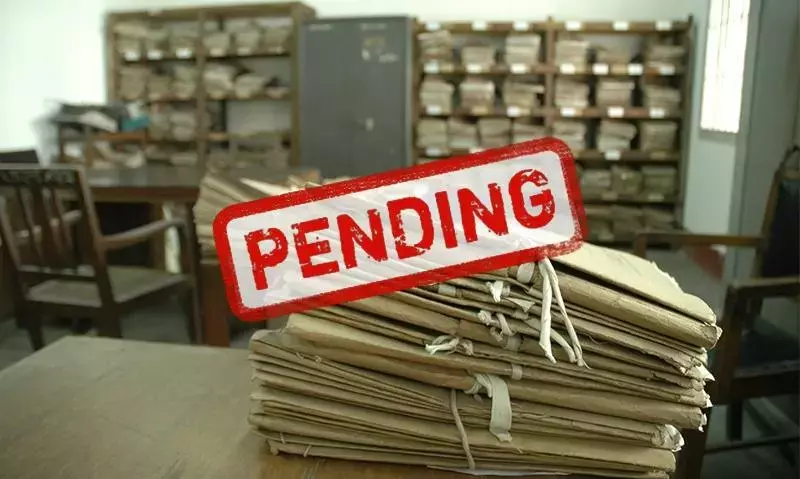
The Supreme Court has repeatedly decried these delays, calling them a form of “slow poisoning” of justice. Yet progress has been glacial. For decades, commissions and law reform committees have recommended solutions: increasing judge strength, simplifying procedures, decriminalising petty offences, expanding alternative dispute resolution, and introducing plea bargaining. Successive governments have promised reforms, but little has changed on the ground. Political interference in judicial appointments, lack of coordination between state and central authorities, and bureaucratic inertia have stymied progress.
The pattern of neglect extends beyond delays to the very design of legal processes. FIRs are often registered without preliminary inquiry, leading to arrests based on false or exaggerated allegations. right now.