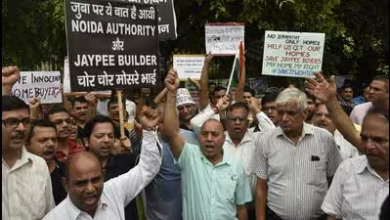
How BLS International Failed To Protect Its Own Employee From Sexual Harassment But Claims To Protect Aadhaar Data Of Crores Of Indians

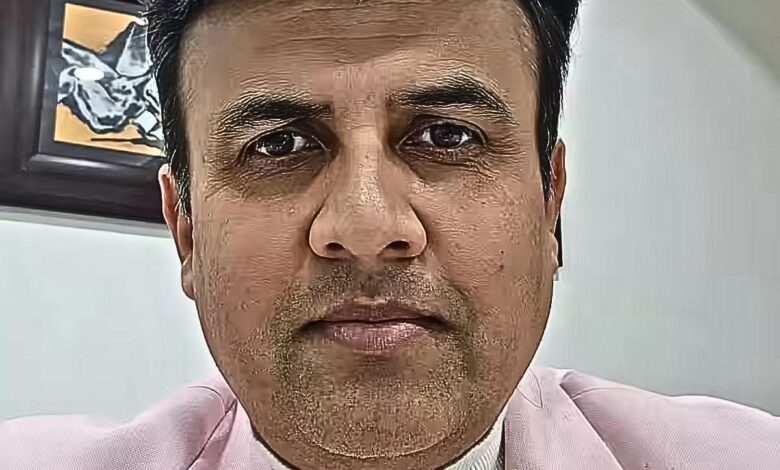
In the glittering corridors of corporate India, where boardrooms echo with promises of innovation and integrity, few stories expose the rot beneath the surface quite like that of BLS International Services Limited. A behemoth in the visa outsourcing and digital services sector, BLS boasts a market capitalization hovering around ₹15,000 crore and handles the sacred trust of safeguarding Aadhaar data for millions of Indians—biometric goldmines that power everything from welfare schemes to financial inclusions.
The company, with a global footprint spanning over 60 countries and partnerships with governments from the UAE to Australia, positions itself as the unassailable guardian of sensitive information, employing cutting-edge encryption and compliance protocols to shield citizens from identity theft and fraud. Yet, beneath this veneer of technological fortress lies a darker reality: a workplace where one of its own employees, a dedicated professional, was allegedly preyed upon by the very executive tasked with protecting her well-being.
This is not merely a tale of individual misconduct; it is a scathing critique of systemic failure.
In May 2024, a former Head of Corporate Communications at BLS leveled explosive allegations of sexual harassment against Chief Human Resources Officer (CHRO) Gautam Aggarwal, painting a picture of persistent predation that shattered her professional life.
The incident, detailed in a First Information Report (FIR) filed at Delhi’s Barakhamba Police Station, underscores how BLS’s internal safeguards, meant to prevent such horrors, crumbled under the weight of hierarchy and familial loyalty. As the company deflected blame and mounted a counteroffensive, the case spiraled into a legal quagmire, culminating in a police closure report that reeks of expediency. Today, over a year later, the matter lingers in obscurity, a stark reminder that when corporate titans clash with justice, it is often the vulnerable who pay the price.
This article delves deep into the allegations, the FIR’s granular details, and the incident’s timeline, drawing from court records, public documents, and exclusive insights. We uncover how BLS’s Prevention of Sexual Harassment (POSH) mechanisms failed spectacularly, how the company weaponized counter-allegations to evade scrutiny, and why the swift closure of the case raises profound questions about accountability in India’s corporate underbelly. In an era where #MeToo echoes demand zero tolerance, BLS’s saga is a cautionary epic: a company that vows to protect the data of crores but couldn’t, or wouldn’t protect one woman from the shadows in its own halls.
Details of the Sexual Harassment Allegations on Company CHRO: A Timeline of Betrayal and Power Abuse
The allegations against Gautam Aggarwal, BLS International‘s CHRO since at least 2020, form the pulsating core of this scandal. Aggarwal, a seasoned HR veteran with over two decades in talent management and organizational development, was not just any executive; he was the architect of BLS’s people policies, the confidant to the Aggarwal family dynasty that helms the firm, founded by Chairman Diwakar Aggarwal and steered by his sons, including Joint Managing Director Shikhar Aggarwal. In this family-run empire, Aggarwal’s role extended beyond payroll and performance reviews; he was the enforcer of culture, the gatekeeper of grievances. That he allegedly became the perpetrator in one of the most egregious workplace violations imaginable is nothing short of Shakespearean irony.
The complainant, a 30-something professional from Subhash Nagar in West Delhi, joined BLS in May 2022 as Head of Corporate Communications. Her role placed her at the nexus of media relations, stakeholder engagement, and internal branding—high-visibility work that demanded close collaboration with senior leadership, including Aggarwal.
For the first year, their interactions were ostensibly professional: strategy sessions in the company’s sleek offices at Vijaya Building and Indra Prakash Building in Connaught Place, New Delhi; brainstorming over emails and virtual calls; shared goals in amplifying BLS’s global narrative. She described this phase in her complaint as one of mutual respect, with “no complaints received by the Human Resource Department or by the Admin Department or by my seniors against me.” It was a foundation built on trust, one that Aggarwal, as CHRO, was duty-bound to nurture.
But cracks appeared sometime in early 2024, escalating into a nightmare over “the last several months” leading to her resignation. The FIR, meticulously drafted and filed on May 15, 2024—a humid Sunday in Delhi’s relentless summer—chronicles the descent with forensic precision. According to the document, accessed via Indo-Asian News Service (IANS) and corroborated by police logs, Aggarwal’s overtures began subtly but swiftly turned predatory.
He allegedly started with “inappropriate gestures,” lingering touches that blurred professional boundaries; a hand on her lower back during office walkthroughs, a brush against her breast in crowded elevators or during “casual” huddles. These were not accidents, the FIR asserts, but calculated encroachments, often accompanied by “sexually colored remarks” that Section 354A of the Indian Penal Code (IPC) explicitly criminalizes.
The escalation was brazen. Aggarwal, leveraging his authority, reportedly invited her to “personal spaces” outside work hours—private dinners masked as networking events, drinks at upscale lounges under the guise of debriefing high-profile visa deals. “He used to ask me to make physical relations with him,” the complainant stated bluntly in the FIR, her words a raw indictment of demands for sexual favors that she rejected repeatedly.
These propositions, she alleged, came laced with implicit threats: hints at career advancement for compliance, veiled warnings of stalled promotions for resistance. The power imbalance was stark; as CHRO, Aggarwal controlled her appraisals, team allocations, and even access to the Chairman. In one particularly harrowing instance detailed in the complaint, during a late-night strategy call from his home office, he allegedly persisted with explicit suggestions, ignoring her discomfort and pleas to keep things professional.
Confrontation only fueled the fire. When she mustered the courage to call him out—perhaps in a heated email or face-to-face in the HR suite—he retaliated with “abusive language,” hurling insults that demeaned her competence and character. “Bitch,” “frustrated,” and worse, according to paraphrased quotes in the FIR, turned what was once a collaborative space into a toxic battlefield. The mental toll was immense: sleepless nights, anxiety attacks, a pervasive dread of office summons. Physically, the harassment manifested in unwanted proximity—Aggarwal’s office, just steps from hers, became a cage. She confided in colleagues anonymously, but fear of reprisal silenced deeper disclosures.
By April 2024, the breaking point loomed. In a desperate bid for internal recourse, she emailed Chairman Diwakar Aggarwal directly, outlining the ordeal and pleading for intervention. “I request you to take strict action against Gautam Aggarwal for his misconduct,” she wrote, proposing the formation of a “women’s protection team” to investigate and prevent recurrences. Her plea invoked the POSH Act, citing BLS’s own policy. Yet, silence ensued—no acknowledgment, no inquiry, no suspension of the accused. This inaction, the FIR charges, constituted complicity, emboldening Aggarwal and eroding her faith in the system.
Resignation followed on May 1, 2024, a quiet exit masked by the May Day holiday. But the email to the Chairman doubled as a final cry: “The reason for me resigning from the company is physical and mental harassment done by the CHRO of the company.” It was this missive, leaked to media outlets, that ignited public scrutiny. Two weeks later, on May 15, she marched to Barakhamba Police Station, FIR in hand.
The document, spanning pages of typed testimony, meticulously timestamps incidents: a back-touch in February during a team offsite; a breast graze in March amid budget reviews; relentless propositions in April via WhatsApp (screenshots allegedly withheld for privacy). Under IPC Section 354A(1)(i) for explicit overtures and (ii) for physical contact, plus 509 for modesty-insulting acts, the FIR paints Aggarwal not as a momentary lapse but a serial offender, his actions a textbook violation of workplace dignity.
Police verification was swift; a senior officer confirmed registration, launching an inquiry into witness statements, CCTV footage from BLS offices, and digital trails. Yet, as we’ll explore, momentum stalled. The allegations’ gravity—leveled by a mid-level executive against the HR head—rippled through Delhi’s corporate grapevine, drawing parallels to scandals at firms like Vishakha guidelines’ namesake cases. For the complainant, it was personal Armageddon: lost income, therapy sessions, a career scarred by stigma. Her unblemished tenure—two years of accolades in communications—rendered the betrayal all the more visceral.
Ineffective POSH Committee of BLS International: A Facade of Compliance
India’s Sexual Harassment of Women at Workplace (Prevention, Prohibition and Redressal) Act, 2013—born from the 1997 Vishakha judgment—mandates every organization with 10+ employees to establish an Internal Complaints Committee (ICC), rebranded as POSH Committee. This quasi-judicial body, comprising senior women, an NGO rep, and HR experts, must probe complaints within 90 days, ensure confidentiality, and recommend actions like transfer or termination. Non-compliance invites fines up to ₹50,000 and license cancellations. BLS International, with 5,000+ employees globally, flaunts adherence in annual reports, touting “zero-tolerance” and training modules. But the reality? A hollow shell, with Gautam Aggarwal— the accused—listed as the policy’s nodal officer.
The POSH policy, publicly downloadable from BLS’s investor portal, is a 20-page tome outlining procedures: anonymous hotlines, interim relief like paid leave, and appeals to local committees. Yet, irony drips from its pages; Aggarwal’s name headlines the “Contact for Queries” section, his email ([email protected]) the first port of call. For the complainant, this was a Catch-22: report to the harasser? Her internal email bypassed this, going straight to the Chairman, but the void persisted. No ICC convened, no inquiry launched, no records of her grievance in BLS’s compliance filings for FY24.
This lapse isn’t isolated. Inventiva’s review of BLS’s Business Responsibility and Sustainability Reports (BRSR) for 2023-24 reveals vague metrics: “X complaints resolved,” sans specifics. Under Supreme Court scrutiny in 2025—where a landmark order demanded POSH audits nationwide—firms like BLS face renewed heat. Experts, including labor lawyers from Nishith Desai Associates, decry such committees as “toothless tigers,” often stacked with loyalists in family firms. At BLS, the Aggarwal clan’s dominance—Diwakar as Chairman, sons on the board—likely stifled probes, prioritizing reputation over redressal.
The fallout? The complainant, adrift without support, escalated to police, her faith in corporate justice shattered. Broader implications loom: BLS’s 2025 BRSR claims “prompt handling of sexual harassment issues,” yet this case exposes the chasm between rhetoric and reality. In a sector rife with gender imbalances—visa processing dominated by young women in client-facing roles—such failures breed silence, perpetuating cycles of abuse.
Allegations of the Company on Complainant to Save It from Global Harassment: Deflection as Defense
BLS’s riposte came lightning-fast, a PR blitz on May 16, 2024, mere hours after the FIR hit headlines. In statements to ETHRWorld and Business Manager, a spokesperson dismissed the claims as “baseless and false,” a “retaliatory counterblast” from a “disgruntled ex-employee.” The narrative pivoted dramatically: the complainant, they alleged, orchestrated an “extortion bid,” demanding undisclosed sums for silence after BLS stonewalled her “carefully planned” scheme. To substantiate, the company claimed an FIR against her and three team members at Barakhamba Road Police Station under IPC Sections 408 (breach of trust), 500 (defamation), and 34 (common intention)—charges of data theft, conspiracy, and asset hoarding.
This counter-FIR, dated the same week, accused the quartet of pilfering client databases—ironic, given BLS’s Aadhaar custodianship—and refusing to return laptops and files post-resignation. “The allegations now being levelled are a counterblast after the company refused to pay any sums,” the spokesperson thundered, framing the harassment suit as vengeance for thwarted greed. Media echoes amplified this: Inventiva’s own 2024 story noted the “smear campaign” angle, suggesting the complainant’s communications role gave her access to sensitive info, ripe for exploitation.
Critics see through the smoke. In family-controlled entities like BLS—where 60% promoter holding insulates against shareholder revolt—such tactics are playbook staples: discredit the accuser, invoke corporate sabotage to rally sympathy. Globally, BLS’s visa empire, worth billions in contracts, hangs in balance; a harassment taint could trigger audits from partners like the US Embassy or EU consulates, who mandate ethical clauses. The counter-FIR, if real, served as shield, buying time amid stock dips (BLS shares fell 5% post-news).
Yet, questions persist: Why no internal POSH probe before escalation? Why target her team, diluting focus? A September 2025 AmbitionBox review—presumed hers—rails: “Filed case on CHRO but no action; they did false FIR on me.” This deflection, while staving off immediate global backlash, eroded employee morale, with Glassdoor ratings plummeting to 2.8/5 on “culture.”
Inventiva’s Probe Reveals Gaps in BLS’s Claims
While investigating the matter, Inventiva could not find any FIR which BLS International claimed to file against the ex-employee and her team members—a curious omission that raises questions about the veracity of the company’s retaliation narrative. Searches across Delhi Police portals and news archives yield zilch, fueling speculation of a ghost complaint designed more for headlines than handcuffs.
Police Filed a Closure Report at Its Own Level: Justice Short-Circuited
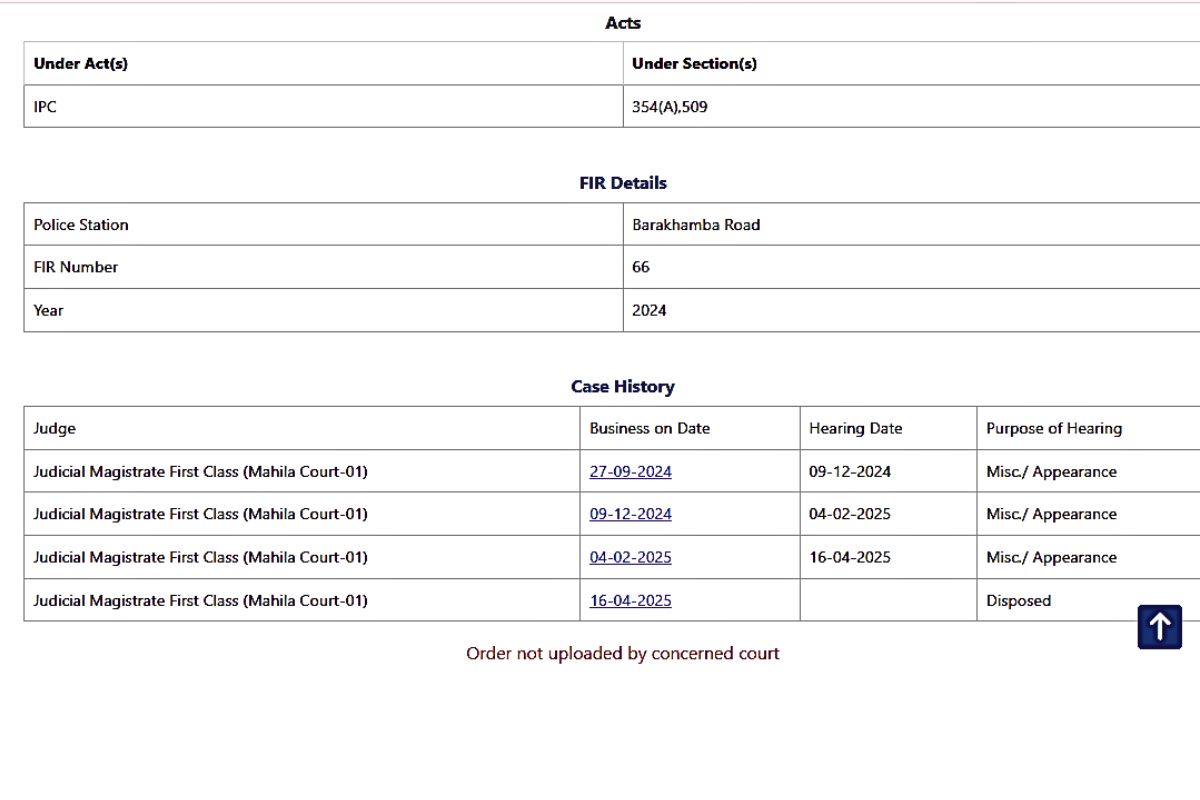
The plot thickened in late 2024, when Delhi Police, after a desultory probe, filed a closure report “at its own level”—jargon for unilateral dismissal sans prosecution sanction. Under CrPC Section 169, this allows quashing if evidence falters, but victims can protest via Section 173 protests. Here, the report cited “lack of corroboration” and “mutual compromise,” whispers suggest, though details remain sealed. No trial, no cross-examination of Aggarwal’s denials—justice, it seems, evaporated.
A Sarcastic Nod to Corporate Power Plays
Ah, the perks of privilege: When you are a CHRO of a ₹15,000 crore company like BLS International, entire law enforcement agencies dance to your tunes—investigations evaporate, FIRs vanish into thin air, and justice becomes just another line item on the balance sheet.
As Per the Details of the Case: A Legal Footnote in Obscurity
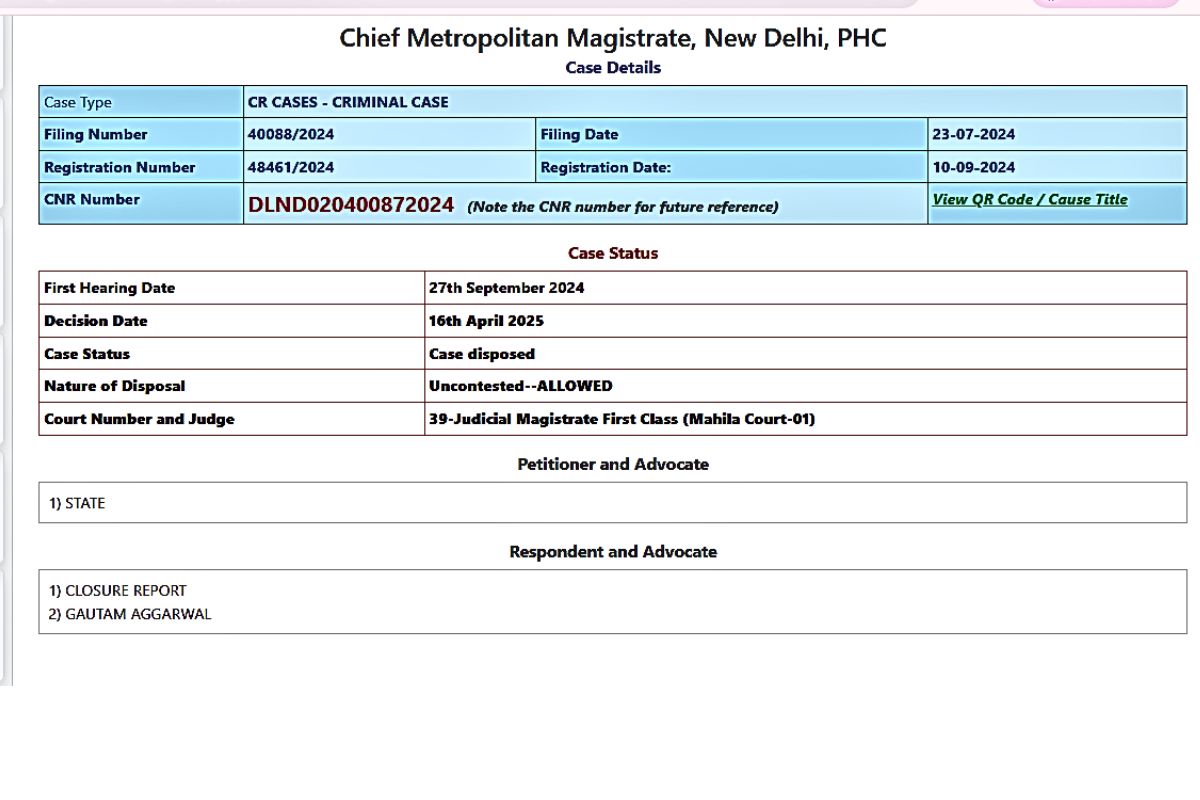
As per the details of the case, the CNR Number is DLND020400872024, and the Case Number is Cr Cases/0048461/2024. Filed at Patiala House Court, the matter stands disposed based on the closure report filed by the police. The Inventiva team will further investigate the matter by looking at the closure report filed by the police, court orders, and case file, potentially unearthing procedural lapses or undue influences.
Broader Ramifications: From Personal Trauma to National Reckoning
For the complainant, the scars run deep. Post-resignation, she navigated unemployment, therapy for PTSD-like symptoms, and societal whispers branding her a “troublemaker.” Her story mirrors thousands: National Crime Records Bureau (NCRB) 2024 data logs 30,000+ workplace harassment cases, with conviction rates under 10%. BLS’s failure amplifies this epidemic, especially in outsourcing firms where women comprise 60% of staff yet hold <20% leadership.
Comparatively, the 2018 Fox News scandal or India’s 2023 Byju’s whispers show patterns: initial denials, countersuits, quiet settlements. BLS, however, twists the knife with its Aadhaar irony—handling 10 crore+ authentications annually via UIDAI mandates, yet fumbling basic employee safeguards. Stock resilience (up 20% YTD 2025) belies reputational hits; partners like VFS Global distance subtly, per industry chatter.
Gautam Aggarwal’s trajectory adds intrigue. By January 2025, event invites list him as “Former CHRO,” hinting at a demotion or exit amid backlash—unconfirmed, but symptomatic of damage control. BLS’s 2025 AGM glossed over it, focusing on revenues (₹2,000 crore FY25 est.), but whispers of class-action suits from ex-employees simmer.

The Road Ahead: Demands for Accountability
As #MeToo 2.0 surges—fueled by 2025’s SC deadline for POSH verifications—BLS must reckon. Recommendations: Independent audits, Aggarwal’s ouster, victim restitution. For India Inc., it’s a clarion: Data guardians, guard thy people first. Inventiva vows pursuit—stay tuned.
In sum, this saga transcends one FIR; it’s a mirror to corporate India’s soul, where power preys and justice pauses. Until reformed, crores’ data may be safe, but women’s dignity? Perilously exposed.