From Spices That May Cause Cancer To Syrups That Kill, The Quiet Decay Of Standards In India!
From cough syrups to spices, why does India never obey the permissible limits?

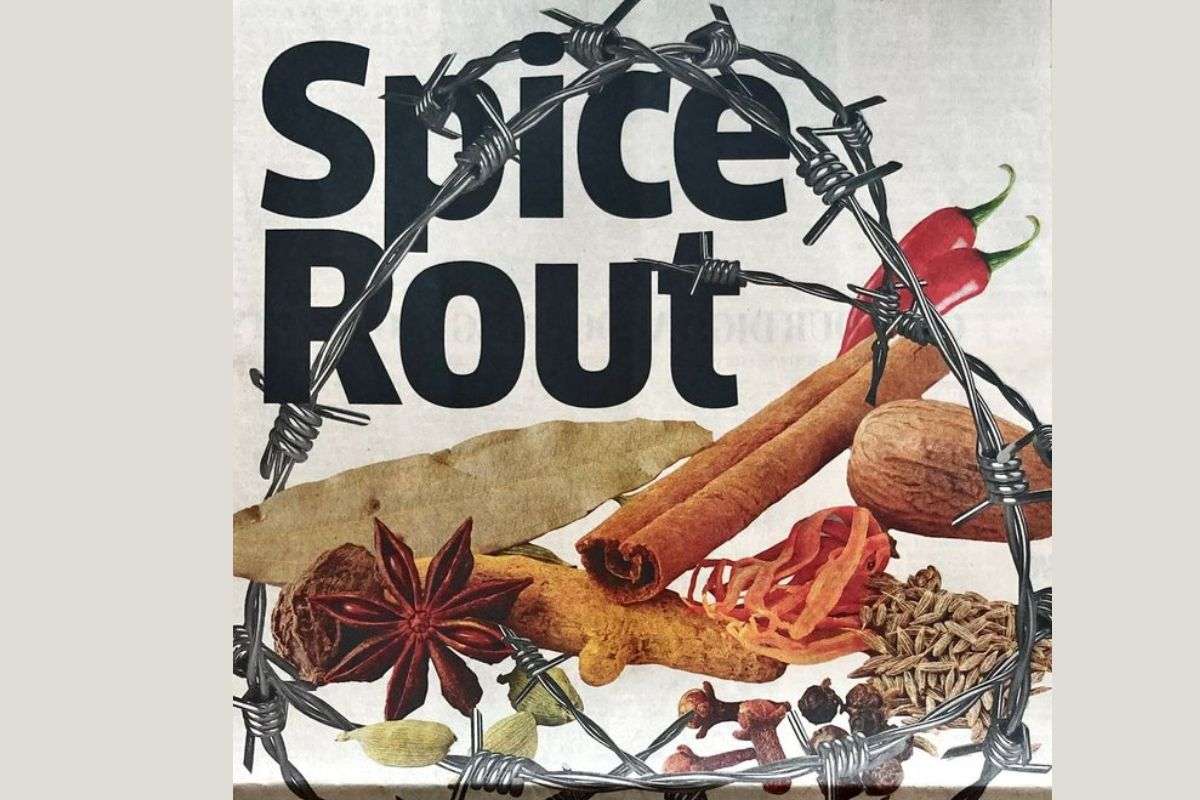
Recent years have seen a shocking list of Indian products flagrantly breaching safety norms, with lethal consequences. For example, recently, WHO raised the alarm after India’s own drug regulator found three popular cough syrups tainted with industrial antifreeze (diethylene glycol). These drugs named as Coldrif, Respifresh TR and ReLife far exceeded the 0.1% DEG limit allowed by Indian law, and reportedly caused multiple child deaths in Madhya Pradesh. This was not an isolated glitch. Investigations revealed Coldrif had ~50% DEG by volume, which is an outrage when even trace amounts are toxic. The tragedy mirrored past incidents where 12 Indian children died from contaminated syrups in 2019, and WHO counted 300+ deaths worldwide (2022–24) linked to Indian-made tainted medicines.
In other domains, equally alarming stories abound, where mainstream spice brands (MDH, Everest, etc.) triggered recalls in 2024 after high levels of ethylene oxide, which is a banned carcinogen, were detected. Air pollution remains off the charts too. Delhi’s annual fine-particle levels run ~20× above WHO guidelines, with local monitors often exceeding even India’s own (looser) standards. And consider food; supposedly “healthy” drinks have ridiculously high sugar, so much that regulators quietly forced brands like Horlicks and Boost to drop the label “health”, warning their sugar was “much above acceptable limits”.
Even beloved spices are adulterated as studies found Indian turmeric with lead up to hundreds of times the legal limit. These recent scandals, from tainted medicine to toxic spice and sugar-loaded drinks paint a grim picture in which Indian consumers are habitually exposed to products that flout “permissible” standards, often to deadly effect.
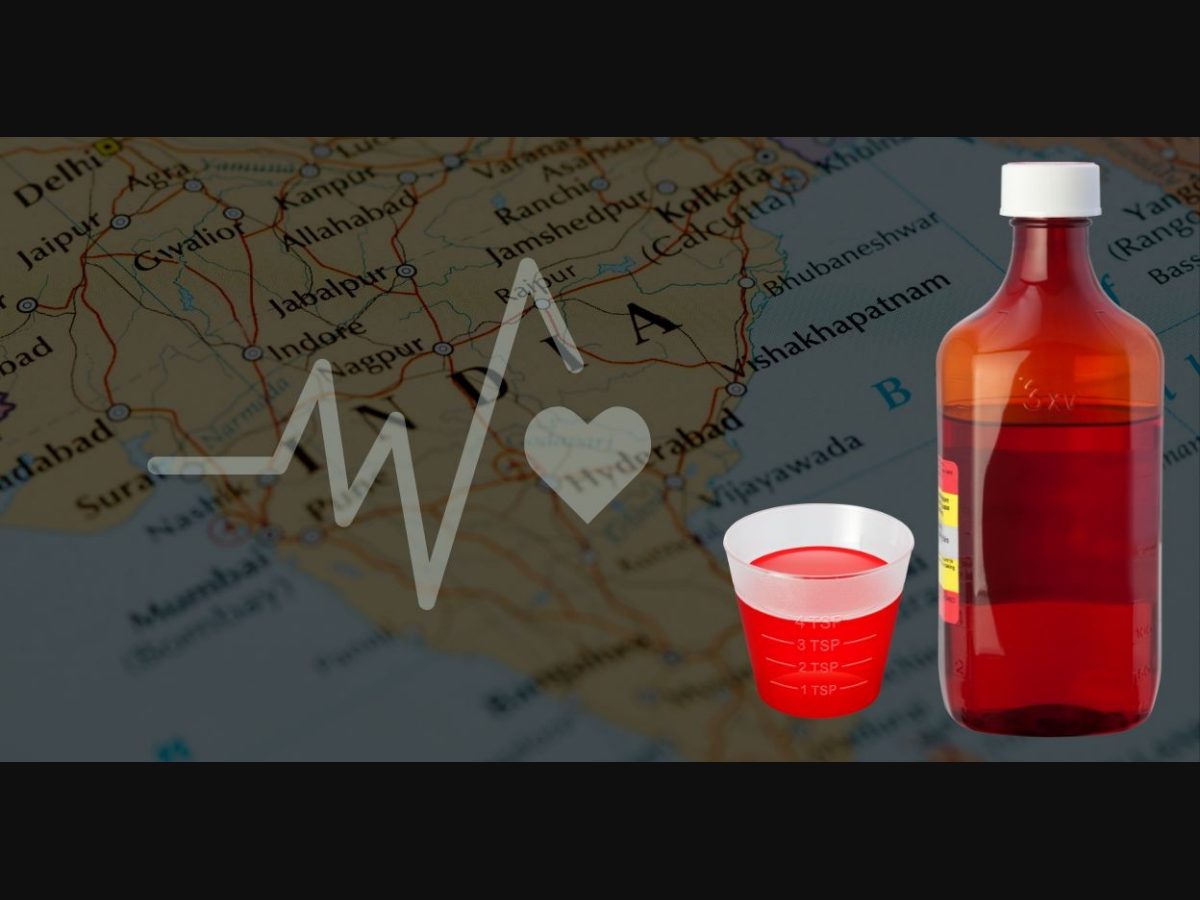
Medicines and Poisons: When Syrups Kill the Cure
The most harrowing recent example is the October 2025 cough-syrup crisis. The WHO issued a Medical Product Alert after India’s regulator (CDSCO) reported finding diethylene glycol (DEG) in three cough medicines. DEG is a toxic industrial solvent, sometimes sold fraudulently as pharmaceutical-grade glycerin. It should never be in drugs, yet CDSCO confirmed it was present “in at least three oral liquid medicines”. These syrups, designed to combat common colds became poison, causing acute kidney failure and multiple pediatric deaths. The alert noted the contaminated products were used in “localized clusters of acute illness and child fatalities” in India. The affected batches (from small firms Sresan, Rednex, Shape Pharma) were immediately halted and recalled; yet only after lives were lost.
How did this happen? Investigations found one product (Coldrif) was ~50% DEG by volume. Indian law technically limits DEG in medicines to 0.1%, but that rule was utterly ignored. After the scandal, regulators admitted companies had not even tested their raw materials properly. CDSCO bluntly warned that manufacturers “are not carrying out testing of each batch”. In short, firms shipped syrups without verifying a single ingredient and regulators failed to catch this until children died. This tragedy repeated a terrible pattern. In 2019, 12 Indian kids similarly died from tainted cough syrup.
Globally, WHO has tracked dozens of such poisoning events. 66 Gambian children died in 2022 after taking syrup tied to an Indian company, 68 died in Uzbekistan (also Indian-made), 150 in Indonesia, all from syrups with industrial glycols. By 2025 a WHO report tallied over 300 child deaths (2022–24) linked to substandard medicines, five cases involving Indian manufacturers. It seems that “strong enforcement is the exception rather than the rule” in India’s drug oversight. Over a hundred more children died from Indian syrups in 2022–23, yet Indian authorities have only piecemeal responded. Amidst these crimes, accountability remains elusive.
The steroidal-syrup debacle is sadly not unique. Even ordinary antibiotics and vitamins frequently fail quality checks. In mid-2025, CDSCO reported 185 separate drug samples as “Not of Standard Quality”, meaning they failed basic potency or purity tests. Four more were outright spurious (fake) drug samples. These weren’t obscure herbs but common medicines like painkillers, antacids, vitamins, pediatric syrups, even veterinary drugs repackaged as human meds. Yet the government shrugged, saying one bad batch “does not warrant concerns about other products”. Consumers might wonder why there are any controversies at all if only “one bad lot” is an outlier.
Regulators have tried half-measures. After repeated syrup poisonings, CDSCO in 2025 issued ad-hoc bans on certain children’s cough formulations and ordered firms to improve testing. But sadly these steps came only after disaster struck. The WHO noted a “regulatory gap in DEG/EG screening for domestically marketed medicines”. It advised India to rigorously test every batch and audit supply chains; an advice that echoes after decades of warnings. Until systemic inspection and enforcement improve, every cough syrup carries a grim uncertainty.

Tainted Foods and Flavors: Spice and Sugar Crimes
Medicine isn’t the only domain of violations. Food, too, is riddled with excesses. Take spices; India’s pride and livelihood. In early 2024 it emerged that major Indian spice brands were shipping toxic residue overseas. The Hong Kong Food Safety Centre found high ethylene oxide (EtO) in curry masala from MDH and Everest, leading to a ban of those blends. EtO is a disinfection gas banned for foods in many countries because it breaks down into carcinogens. Singapore likewise recalled a batch of Everest spices for EtO, and by mid-2024 regulators in New Zealand, Australia, UK and EU were all scrutinizing Indian spice imports.
The UK Food Standards Agency went as far as imposing extra inspection on all spice imports from India. In its statement, the FSA bluntly noted that “the use of ethylene oxide is not allowed” in Britain and that EU maximum residue levels (MRLs) apply. (India, by contrast, has no codex MRL for EtO in spices, a loophole FSSAI exploited to upgrade domestic MRLs from 0.01 to 0.1 mg/kg, which is a tenfold relaxation.)
Thus, while European markets cry foul, Indian officials have mostly downplayed the problem. In Parliament, the Health Minister reassured that only some batches of spices tested above limits, not entire product lines. But consumers know that tenfold raising of pesticide limits invites more contamination, not less. Citing industry pressure, FSSAI quietly permitted far more pesticide residue in herbs and spices – a regulatory decision that directly undermines exports and health. Environmentalists warned that higher limits “will increase consumption of pesticides” and lead to more food containing combinations of unsafe chemicals. In effect, FSSAI told the world it would allow what used to be banned.
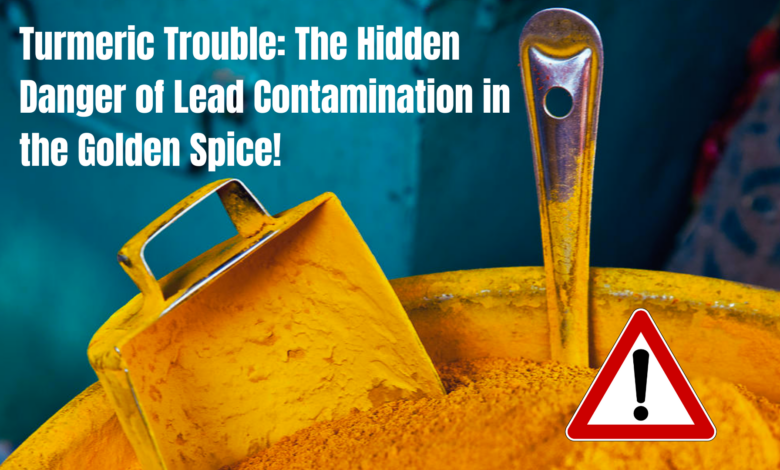
Spice misery goes deeper in adulteration. Independent studies have repeatedly found Indian turmeric adulterated with yellow lead chromate pigment to boost color. A 2024 analysis reported lead content up to 1,000 μg/g, a 100 times the FSSAI limit of 10 μg/g in some samples from Bihar and Chennai. Lead chromate gives turmeric its “extra yellow” hue, but at a horrific cost where lead poisoning causes brain damage, kidney failure and cancer risk.
One field investigation in Bihar (turmeric hub) found lead levels 50–500× above permissible. (For perspective: 2 μg/g lead is a typical international safe standard, India’s FSSAI allows 10 μg/g, and tests found up to 4,000 μg/g.) These revelations often spur media outrage, but enforcement is meager. Occasional recalls (e.g. some mislabeled chili powder) happen, but the core problem – weak checks at origin – persists.
Sugars in diets are another example. India is experiencing a diabetes epidemic, yet many products marketed as “health” are packed with sugar. In 2024 the government prodded Hindustan Unilever to drop the “health drink” label from Horlicks and Boost, not because these drinks became healthy, but because a child rights body exposed their sugar content.
Regulatory filings admitted “the sugar content in these drinks is much above the acceptable limits”. Those “limits” aren’t clearly defined by law, but public health guidelines by ICMR/NIN advise Indians to cap added sugar at ~20–25 g per day. A typical 30g scoop of Horlicks can contain 12–15 g of sugar by itself, which is easily half the daily max in a single serving. Yet these products are still widely sold as “healthy” by brand marketing (until regulators step in). This double standard of labeling indulgent products as wellness aids often misleads parents and feeds obesity.
It’s not just sugar: a host of staple foods routinely carry additives above safe thresholds. Tainted honey, adulterated paneer, carcinogenic dye in chilli powder, etc., all surface now and then. A 2025 CSE report found 68% of Indian honey brands contaminated with sugar syrup. News investigations cite up to 80% of paneer (cheese) samples faked with cheap chemicals. These may not make headlines like child deaths, but they steadily undermine trust. The pattern is clear where standards exist on paper (FSSAI regulations, BIS codes), but in practice “permissible limits” become suggestions. The public pays with chronic illnesses and sometimes early death.
Choking on Our Own Air: A Silent Compliance Failure
Food and medicine aren’t the only domains of runaway limits. The environment is a notorious casualty of neglect. India’s air quality routinely violates both WHO and its own CPCB standards. According to a Lancet study, air pollution caused 1.6 million Indian deaths in 2019, the leading environmental killer by far. This seasonally turned dire: as of Diwali 2025, Delhi’s PM2.5 was ~250–300 µg/m³, about 20 times the WHO annual guideline.
Neighbours often accuse Indian factories of fouling cross-border air. Domestically, the government’s nominal standards (NAAQS) are already much weaker (40 µg/m³ annual) than WHO’s 5 µg/m³. Even against those laxer norms, many hotspots exceed limits. For instance, in mid-2024 CPCB found PM2.5 and PM10 at a Gurgaon landfill “surpassed the permissible limits”, yet daily dumping continued.
Why do these flags keep getting raised? Enforcement fatigue and bureaucratic inertia are key. CPCB routinely publishes pollution data, but state agencies often delay action. During Diwali 2025, even the Supreme Court’s own pollution watchdog (EPCA) imposed odd-even car bans; smog barely budged. Regulators concede – CPCB’s own surveys note that “PM2.5 and PM10 levels for [Nov] and [Dec] surpassed NAAQS” at waste sites, but fall cleanup plans are still sketchy.
Water is similarly run-down: many rivers fall short of bathing standards, yet sewage treatment is chronically underfunded (CPCB reports dozens of towns with failing plants). In effect, every river, road and kitchen chimney becomes a testing ground for how high you can push a pollutant before it “technically” breaks the law.
The consequences are horrific where lungs are full of soot, kids are playing with asthma (pun intended), cardiovascular crises rises; these are now normalized as seasonal “news”. While half the world installs air purifiers, in India one breathes poison on most days. And again, failure is systemic. Studies like IQAir rank Delhi among the world’s worst cities for air quality. Yet curiously, the phrase “permissible limits” rarely appears in public debate. Instead we hear blame games (“stubble burning”, “firecrackers”). Meanwhile, the pollution problem is quietly written off as inevitable, prompting few convictions or firm regulations. This chronic overshoot – on air, water or noise – is a regulatory failure writ large, indirectly “killing citizens” every day via disease.
The Broken Watchdogs: Regulatory Apathy and Capture
Why do these violations keep happening? A big part of the answer is that India’s regulators often lack teeth (or will) to enforce the rules they create. The Food Safety and Standards Authority of India (FSSAI), CDSCO (drug controller), CPCB (pollution board), BIS (standards bureau), all have mandates to protect public health. On paper their norms match international best practice. In reality, enforcement is patchy and reactive.
Consider FSSAI. It sets maximum residue limits (MRLs) for contaminants, sugar limits for products, etc. Yet when products fail, often nothing happens. A CAG audit (2023) found one-third of tested foods failed safety norms, but only ~15% of violators were punished. FSSAI freely issues millions of licenses but barely revokes any (CBI even caught an official taking bribes). More recently, FSSAI made headlines not by cracking down but by rolling back standards: after international bans on their spices, it quietly relaxed pesticide MRLs by 10× and allowed trace EtO on imported herbs because “no standard existed” – an ingenious loophole. This invites companies to keep pushing pollutants.
CDSCO’s track record is similar. It approved thousands of drug licenses and vaccines, but inspections are infrequent. Even after repeated syrup poisonings, national recalls came only after WHO issued alerts. In October 2025, WHO noted that CDSCO only told it contaminated syrups weren’t exported after a week-long delay, and that it still didn’t know how the contamination happened. CDSCO’s own statements have blamed manufacturers’ “failure to test each batch” – a ground-shifting revelation for regulation that supposedly required such testing all along. And the response?
Ban a few formulations and issue memorandums. Yet when ET Pharma reported 185 substandard drugs in mid-2025, the Health Ministry brushed it off, downplaying concerns. The CDCSO does list NSQ (Not of Standard Quality) batches every month, but it rarely prosecutes or widely publicizes results.
CPCB too often plays wet noodle to state inaction. It can fine polluters, but its biggest annual fine kitty (Rs45 crore) is used for sprinkling water on dumpsites, a Band-Aid on a broken system. Car owners and brick kilns occasionally get slapped with tickets (a few lakh fines by EPCA even drew news), but the overarching culture is one of tolerance. Even BIS (which certifies everything from steel to lighters) sees standards undermined: there are occasional recalls of unsafe toys or pressure cookers, but no unified crackdown on shoddy goods.
In short, regulators show curious complacency. They issue advisories after children die or landslides happen; they enact new rules only when shamefully forced (e.g. banning trans fats after global pressure). Activists note that accountability is almost non-existent: an RTI revealed FSSAI cancelled only 1,225 of 3.5 million food licenses (0.035%) during 2018-22, meaning almost no violator ever lost authorization. When U.S. or EU regulators raise an issue (spice bans, syrup alerts), Indian officials often respond with gentle “market surveillance” rather than ground-level raids. It’s telling that the UK’s FSA now tells citizens to beware of all Indian spices– a global loss of faith driven by domestic regulatory lapses.
This perfunctory attitude is not limited to food and drugs. It echoes in workplace safety (routine building collapses), consumer goods (fairly ordinary items cause accidents), even seatbelts and helmets compliance is spotty. Each failure to enforce a limit – be it a safety standard or a pollution norm – essentially signals: “don’t worry, a little (or a lot) over the limit is fine.” No wonder companies test how much they can get away with. And no wonder citizens pay with illness, injury and death.
From Lax Rules to Human Cost
Above all, we must connect these dots to the human toll. The examples above aren’t just “inventory of regulatory lapses” – they represent people’s lives. When syrups kill infants, it’s the sharpest evidence that ignoring “permissible limits” is murderous. When adulterated milk or paneer sicken consumers, it’s the slow drip of toxicity. When the air is foul, it gives our children asthma and hearts a burden. Even “allowed” sugar overloads fuel India’s spiraling diabetes and heart attacks.
Despite this, the public conversation often sidesteps blame. We hear debates about farm fires and vehicular quotas, but less about the 50-year-old chemical auntie who secretly added formalin to milk to “keep it fresh” – even though formalin is outlawed as an adulterant. Or the small pharma boss who repeatedly uses industrial solvent because it’s cheap, knowing enforcement is lax. The tragedies of the last 5–10 years are the tip of an iceberg of low-level cheating and corner-cutting that has been going on for decades.
Indeed, historical pattern shows little learning. The deadly DEG syrup scandals echo past poisonings (e.g. 1930s US elixir deaths or 2008 Haitian glycerin tragedy) but India’s regulators should have learned from them. Instead, new loopholes appear (like allowing DEG at 0.1% while failing screening). Spice exports have long had pesticide issues (EU member states have banned many Indian food imports for pesticide residues) – yet India still fails to curb farm chemical use. Water and air quality crises have plagued India for at least two decades, but only moderate policy changes (like odd-even traffic schemes) have been attempted.
On paper, laws exist: Air Pollution Rules, Food Safety Acts, Drug & Cosmetic Act, etc. In practice, compliance is spotty. One contributor noted matter-of-factly that India built a big pharma industry on the promise of cheap drugs, and sometimes it delivered “cheaply” in lives lost. Another pointed out that in some sectors, regulators practically rely on digital checklists rather than boots on the ground.
For consumers, this means perpetual vigilance just to stay safe. Many Indians now buy foreign baby formula or imported brands of everything from powdered milk to packaged spices, trusting outside standards more than homegrown “Made in India” labels. Meanwhile, media and NGOs continue to uncover fresh scandals – each one reinforcing public suspicion that inside India, rules apply only to the naïve.
Domestic Focus, Global Repercussions
It’s worth noting the international fallout. Our friends abroad have begun to lose trust in “Made in India” labels. The spice bans in Hong Kong/Singapore and UK’s extra inspections are clear signals: even if Indian regulators shrug, other countries won’t take risks with their citizens’ health. Shipping contaminated goods abroad not only harms buyers overseas but also tarnishes India’s brand as a reliable exporter (spices are a major foreign exchange earner).
Airlines have had to reroute if cargo planes from India loaded with spices are deemed biohazards. The cold-chain vaccine export industry likewise came under scrutiny after reports of substandard manufacturing practices. In some cases, the Centre had to personally intervene to assure trading partners that bad batches won’t be re-exported.
Yet ironically, these global alarms haven’t led to a “me too” outcry at home. Many Indians still assume the government will fix things – after the crises. There is outrage when infants die (and rightly so), but it quickly subsides into slogans (“corruption must go”) without sustained demand for better regulation. Some voices in the media even suggest India is singled out by foreign regulators, diverting blame back to exporters. Meanwhile, the everyday scourge remains largely unchecked: road dust, pesticide fields, lax factories.
To truly protect citizens, India needs a culture shift: from permissive to protective. That means not just passing stricter laws but actually applying them – and punishing violators. It means funding regulators (FSSAI, CPCB, etc.) adequately, prosecuting corrupt officials and companies, and educating the public about their rights. And yes, it means industries rethinking short-term profit chasing. After all, what’s the point of exploding pharma exports if domestic hospitals are stocked with mock pills? What pride is there in owning the world’s largest industry if our own people are its victims?
At the end…
India’s chronic breaches of “permissible limits” in food, drugs, air and water are not accidents – they are failures of the system that allow cutting corners. From the cough syrups tainted with antifreeze to spice mixes laced with carcinogens, from sugar-soaked powders to lead-painted curry, the stories all end the same way: citizens end up paying with poor health or worse. While we may joke in passing about lenient standards (“limits are for the unambitious”), the reality is grim. Every overdose of chemical, every microbe in our bread, every puff of smog is a silent killer.
It is a tragedy that India, a nation of scientists and doctors and farmers, has tolerated this for so long. The loopholes haven’t closed by themselves – instead, they have widened under bureaucratic inaction. If we allow this to continue, we willingly sign up for a future where “India-made” is synonymous not with quality, but with scandal. One hopes that drawing such parallels will jolt authorities and citizens alike to demand — and enforce — the real, permissible adherence to safety, before more lives are needlessly lost.