Election Commission Of India Pvt. Ltd.: ‘Is It’ Open For Business, Closed For Democracy?

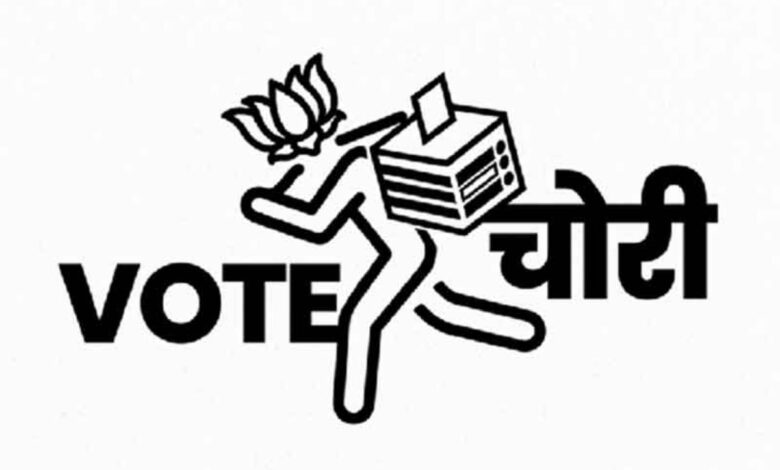
When Democracy Was Stolen: The Chilling Truth Behind the “Vote Chori” Allegations
There is a moment in every democracy when the dream of one-person-one-vote feels less like a promise and more like an illusion. In India, that moment is here. What you’re witnessing is not merely a political spat; it is the unraveling of faith in the institutions that are supposed to protect our republic. At the centre of this unravelling stands Rahul Gandhi, wielding explosive allegations under the banner of “vote chori” – “vote theft” – and pointing a finger directly at Election Commission of India (ECI) and the ruling Bharatiya Janata Party (BJP). What he claims is breath taking in scale, terrifying in implication, and utterly corrosive to the very foundation of Indian democracy.
The Grave Allegations: Democracy Subverted
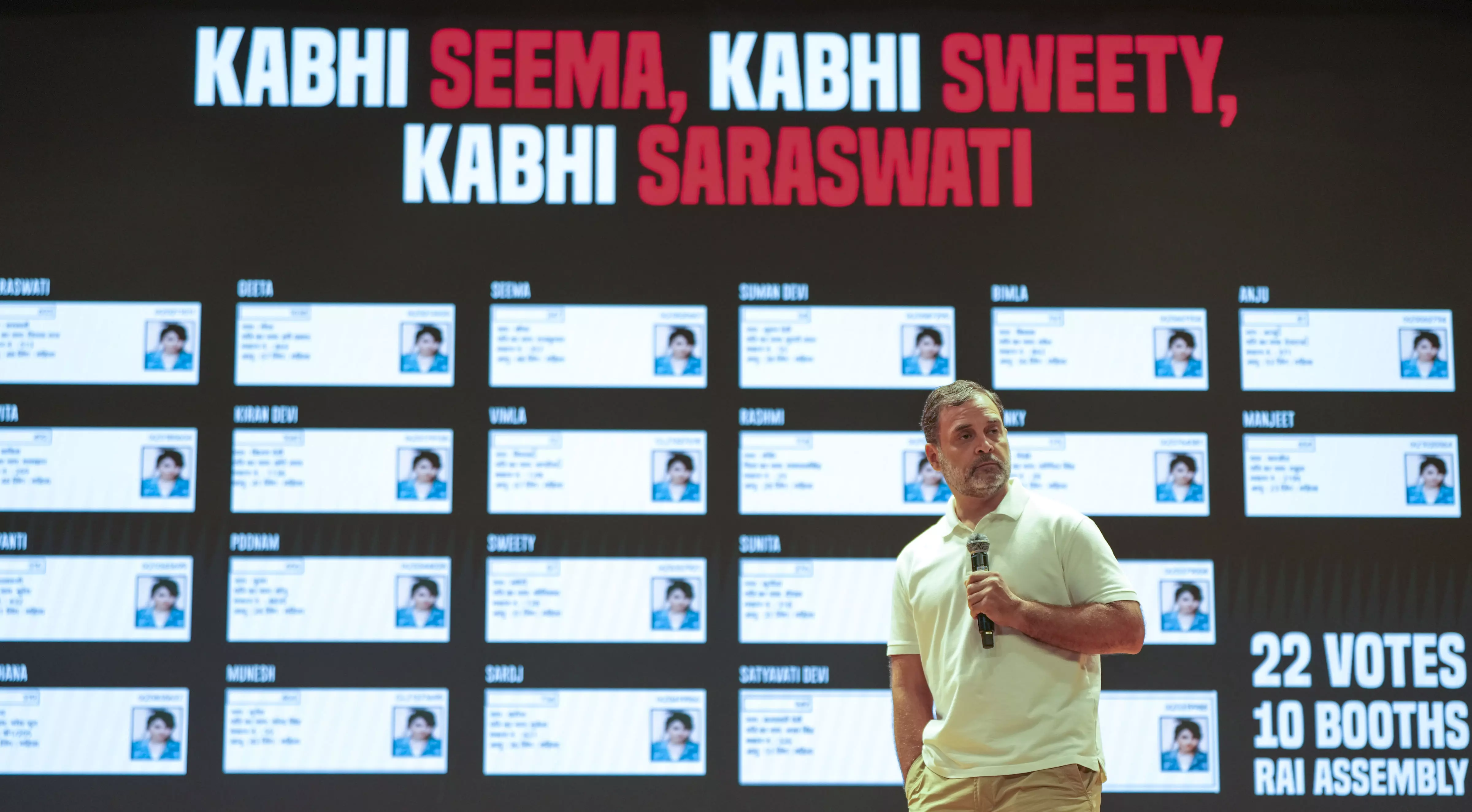
In November 2025, Rahul Gandhi stood before the press with what he described as 100 per cent proof that the electoral process in states such as Haryana, Karnataka and Maharashtra had been manipulated – not a glitch, not isolated error, but deliberate, systemic subversion. In Haryana alone, he claimed, around 25 lakh votes were “stolen”, including 5.21 lakh duplicate voters, 93,174 invalid voters, and 19.26 lakh “bulk voters” added en masse. He pointed to one mind-numbing example: the photograph of a Brazilian model allegedly used 22 times across different voter identity cards in Haryana.
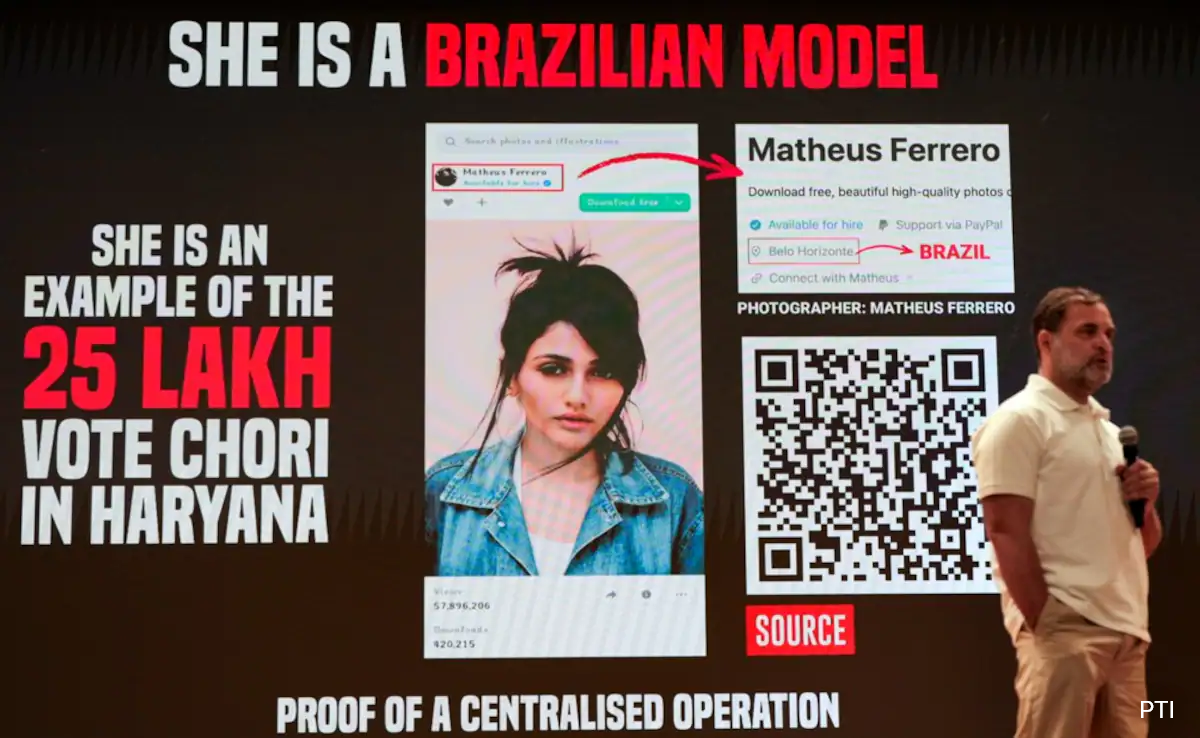
He claimed the methods were chillingly simple: fake photographs, the same person registered in multiple booths, house number “0” or blank address entries, bulk enrolments at single addresses, cross-state duplicates – all of this orchestrated under the nose of the ECI. In this narrative, the ECI is not a neutral umpire; it is complicit or at least negligent. Said Gandhi: “An entire state has been stolen.”
In Karnataka’s Mahadevapura constituency, he flagged over one lakh voter-list anomalies (bulky registrations, invalid addresses, duplicate entries) and warned that if this was happening in one assembly segment, imagine what might be happening in dozens of seats across the country. The story then spread: the ECI had a deduplication software tool – developed by the Centre for Development and Advanced Computing (CDAC) – to detect “photo-similar entries” and duplicates, but it has not been used for years. The implication is stark: the gate-keeper tools exist, but the gate remains open.
Institutional Rot: ECI’s Failure in Plain Sight
Let us dwell on the dose of irony: the Election Commission of India, which sits atop the edifice of our poll machinery, now finds itself accused of being part of the problem. It is the referee that allegedly missed the foul, or worse, turned a blind eye to it. The ECI’s reactions have not soothed the alarm; they have deepened it.
When challenged, the ECI demanded that Gandhi submit his allegations under oath, citing Rule 20(3)(b) of the Registration of Electors Rules, 1960, and warned that unfounded claims would have to be withdrawn. But the public cannot be expected to wait while the very mechanics of democracy are eroded. Meanwhile, the ECI revealed that it has not deployed its duplicate-detection software since 2022; ergo, the cleaning of rolls has stagnated even as allegations mount.
And then comes the worst part: if the ECI does not enforce the rules around voter-roll integrity, and if the rolling-out of revisions is opaque or unmonitored, then how can any citizen trust that their vote counted? How can they believe their ballot box matters when votes are allegedly being manufactured?
In Maharashtra’s Rajura constituency, Gandhi flagged the deletion of 6,861 supposed “fake” voters after a complaint, in a contest lost by just 3,050 votes. The electoral agency claims the deletions were pre-emptive; opposition says the process and data trails are missing. The tipping point is not a single bad booth—it is the possibility that a large number of booths, taken together, can be manipulated to flip outcomes.
The Broader Collapse: When the System Loses Its Bearings
This is not just a Congress vs BJP fight. This is a confrontation with the idea of India’s democratic promise. We are talking about a moment when the institutions which underpin fair elections begin to lose legitimacy. And when legitimacy vanishes, democracy doesn’t quietly wither—it collapses.
We live in a country where the ruling party is alleged to have collaborated with the electoral body to manufacture votes, rig contests, and short-circuit the one-person-one-vote principle. Gandhi specifically accused Prime Minister Narendra Modi of becoming PM through “chunav chori”, claiming the vote-theft was not just local but national.
In this view, the ECI is no longer the honest broker, but the facilitator (or at least the unchallenged bystander) of electoral theft. The same body that sanctions polling schedules, publishes rolls, oversees recounts—now finds its very credibility under attack.
And what happens when the stewards of elections are alleged to be rigging them? What happens when citizens learn that their names may be missing, their vote replaced, or duplicated dozens of times elsewhere? What happens when the system that promises fairness goes dark behind claims of manipulation? The answer: apathy accelerates, trust evaporates, and democracy sags into deep crisis.
Citizen Apathy: The Silent Threat
Often, the gravity of this moment is missed because we assume elections will simply go on, and voters will continue to believe in the sanctity of the ballot box. But make no mistake: when citizens doubt the system, they disengage. They stop believing their vote matters. And when that faith disappears, you don’t just get lower turnout — you get the quiet acceptance of rigged contests.
In the past, if a candidate asked: “Was my vote counted?” the answer could usually be “yes, at least with high probability.” But with these “vote chori” allegations, the question becomes: “Was any vote counted?” That is a democratically toxic question.
And what is the ECI’s response? The ECI tells us to submit affidavits, file petitions, wait for investigations. Meanwhile, the rolls are quietly bloated, software lies idle, technologies un-used. It is administration by inertia. It is implementation by default. Citizens are meant to trust in the system—while the system appears to trust itself.
Gandhi has appealed to Gen Z, to young Indians, asking them to be vigilant, to protect their vote—because, he says, the machinery is bent on bypassing them. Indeed, when a democracy’s young voters stop believing, the generational renewal of the system is broken.
The Human Cost: One Man, Multiple Votes
The concrete examples are haunting. In Haryana, Gandhi said one person carried 223 votes across two polling booths. At another address, dozens of voters were registered though no one lives there; in yet another, the house number is “0”. Duplicate photographs, multiple registrations, registrations at empty homes.
Imagine the elderly grandmother in that area. She goes to vote, inserts her finger in the machine, cast her ballot. Elsewhere, someone else already voted in her name—perhaps a duplicate entry, perhaps a manufactured one. Her faith in democracy rots. And an entire constituency’s results flicker with doubt.
What does it mean when you tally votes and one-eighth of them might be fake? In Haryana’s estimate, Gandhi said one in eight votes was fake. Allow this to sink in: The margin of victory in many seats is a few thousand votes. If 12.5% of votes were fake, this is no longer distortion; this is dis-empowerment.
Where Does This Leave India’s Democracy?
India has always prided itself on its elections — on crossing a billion-plus people to the polling booth. But the legitimacy of that exercise rests on one core belief: that the machinery is fair. That your vote is yours. That every genuine vote counts. That the institution overseeing it is impartial.
If either the machinery or the institution fails, you have a hollow ritual. The voters show up. The ballots are cast. The lights go off. But the outcome—they lose faith in it.
Look at the ECI’s defensive posture: “Provide proof. File complaints. Use legal remedies.” Fine. But for millions of voters outside these legal corridors, the damage is already done. The suggestion that the ECI’s own deduplication software has remained unused, despite early success, is evidence someone doesn’t want full accountability.
And when an opposition figure says the Election Commission and the ruling party are acting “together” to undermine democracy, this isn’t conspiracy fringe talk—it’s a reflection of the gravity of the crisis. Gandhi said plainly: “This is about how an entire state has been stolen.”
What Must Be Done – Urgent Repairs Before the Crash
The system cannot limp on with this level of damage. To salvage democracy, the following steps must be considered:
- Transparent Roll Audit – All voter-roll data must be made machine-readable, audited, deduplicated. The software supposed to find “photo-similar entries” must be reinstated and its results published.
- Independent Oversight – If Election Commission is to be trusted again, a credible third-party audit of its processes (especially in states with flagged anomalies) must be undertaken.
- Fast-Track Investigations – Where allegations like “Brazilian model votes 22 times” appear, the investigation must be swift, transparent and public. Victims must be identified, names removed, registration corrected.
- Public Trust Campaign – Unless the public begins to believe in the vote again, the turnout, the investment in democracy fades. The Election Commission must lead a credibility-restoration effort.
- Legal Loopholes Closed – The window for challenging elections, for revising rolls, for submitting complaints must be extended and the process simplified. Litigation should not be the only route.
If these steps are not taken, the next election might prove to not just be a contest—but a consolidation of a hollow procedure.
A Dark Warning
This essay is not only a commentary on politics—it is a warning shot. Once the belief in one-man-one-vote dies, democracy doesn’t go gently into the night: it staggers and fades. The institutions meant to guard it turn into actors in its erosion. Citizens become cynics.
In India today, that erosion is not hypothetical. It is happening in states, in constituencies, behind thousands of IDs. The allegation isn’t that a few infiltrators snuck in—it is that an entire structure of power, ostensibly under the watch of a neutral institution, may have been weaponised.
When Rahul Gandhi walks onto the media stage and says the vote was stolen, one must face the possibility: what if he is right?
Final Word
We often say: “It will never happen here.” And yet, democracies don’t fall in one day—they decline. They slip. They rely on complacency. On trust that the next election will fix things. But when trust is broken, it takes more than ballots to fix it—it takes courage from institutions, accountability from leaders, vigilance from citizens.
Right now, India is at that moment of truth. The ECI must stop being the guarded fortress of procedure and become the transparent lighthouse of democracy. The ruling party must let the process transparently decide outcomes not manufacture them. And the citizens—yes, we must not turn away. Because when you stop believing your vote counts, you’ve already given up a piece of your soul.

The “vote chori” allegations mirror a deeper crisis: the collapse of an implicit social contract. If the ballot box is hollow, the republic is hollow. The question isn’t just whether one political party cheated. The question is whether we all still believe in the system.
And if we don’t, then what are we left with?