Bihar Elections 2025: When Caste Drives The State, Democracy And Progress Takes The Rear Seat!

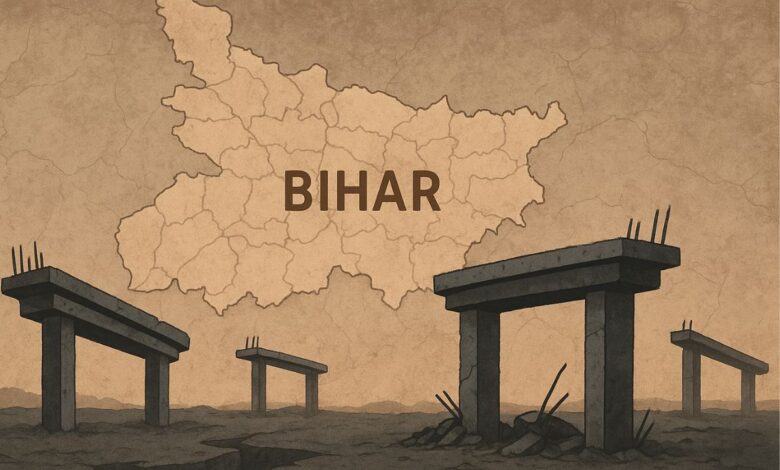
The dust has settled on Bihar’s assembly polls, and the verdict is clear: the ruling NDA romped home in a landslide. Yet beneath this triumph lies a grim paradox. A campaign preaching education, healthcare and vikas (development) was utterly rejected by the voters, while candidates notorious for criminal records and little formal schooling sailed to victory. This outcome leaves a bitter truth: in Bihar’s democracy, ballots carried the weight of caste loyalties over the appeal of reform. The people gave the incumbent regime a thumping victory – but what did this really say about the state of Bihar?
The elephant in the room is caste-based politics. For decades, Bihar’s power corridors have been drawn along caste lines, a dynamic that our fierce desire for change fails to break. Political experts note that since the 1990s, “caste has been the primary axis” of political mobilization in Bihar. Every election is a chessboard of caste coalitions; Yadavs with Muslims in one corner, upper castes with non-Yadav OBCs in another and development promises are an afterthought.
This collision of identity and democracy explains why even with generous Central funding and new welfare schemes, Bihar state lags grimly behind the rest of India. As critics lament, symbolic gestures like breaking caste monopolies in the assembly have outpaced real change. Poverty, migration and educational deficits stubbornly persist in spite of all the annual grants.
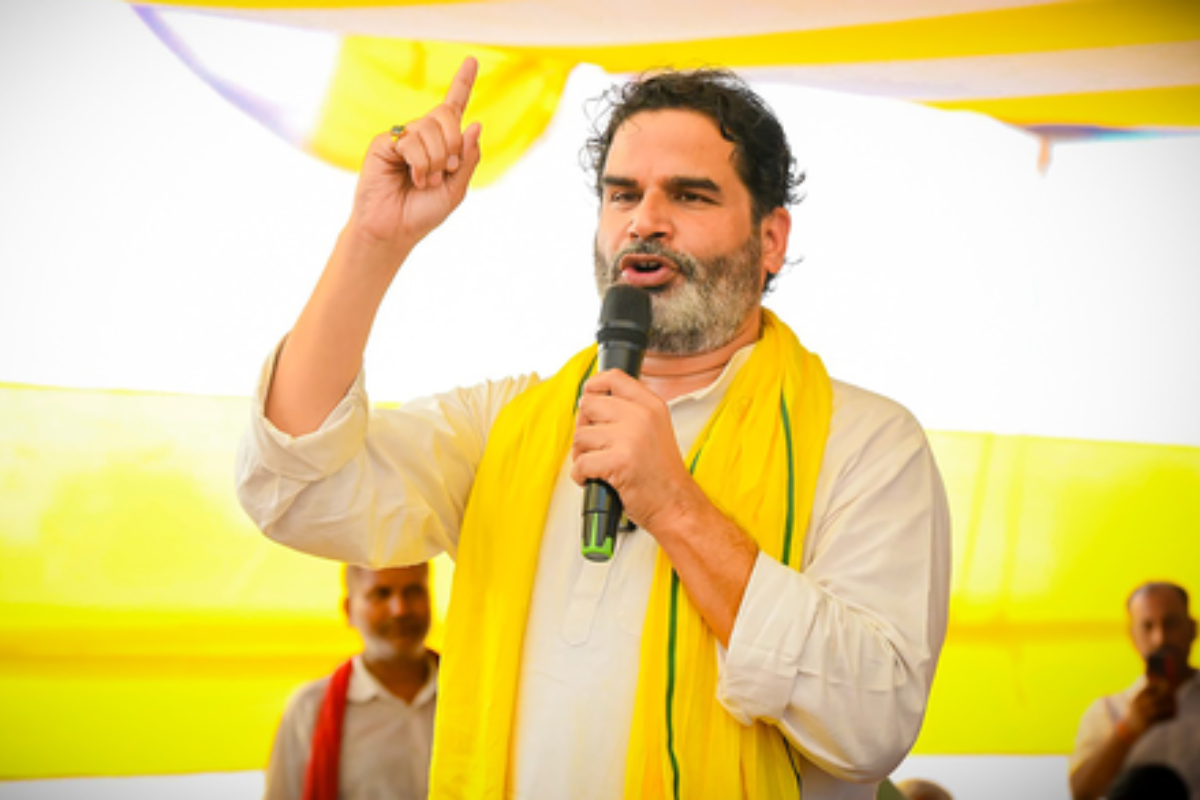
This year’s Bihar verdict was especially puzzling on two fronts. First, a newly formed third front, the Jan Suraaj party led by poll strategist Prashant Kishor ran a campaign built on tangible issues like education and jobs. They even proposed a radical vikas agenda of free uniforms, loans for women, pensions, and even a careful review of the liquor ban to fund schools. Yet the voters gave them zero seats, almost unanimously rejecting the offer of development.
Second, on the other hand, candidates with tarnished reputations and no serious reform plans, some even under criminal indictment not only won, they did so comfortably. How did Bihar’s electorate choose to reward the status quo instead of outsiders promising change? These contradictions underline our uncomfortable conclusion: castes still vote, not causes.
Caste: The Ballot’s Hidden Puppeteer
In Bihar, caste is not just a social identity, but it is political currency. Since Mandal-era mobilizations of the 1990s, electoral coalitions have literally been drawn by caste lines. In Bihar “electoral outcomes have been shaped by caste identities”, arguably more so than anywhere else in India. Parties self-segregate along these identities. Lalu Prasad Yadav’s RJD, for instance, built the “MY” (Muslim–Yadav) alliance that ruled Bihar for fifteen years, pandering to its Yadav core (roughly 14% of the population) and its Muslim allies to an unprecedented degree.
In response, Nitish Kumar’s JD(U) carved out its own coalition by wooing Kurmi and other backward castes, plus women and Dalits with targeted welfare schemes. The BJP traditionally drew support from Brahmins, Rajputs and other upper castes, then expanded into OBCs by allying with Nitish’s party. In every poll, candidates are chosen almost entirely for the caste ballots they command in their home turf, rather than their ideas for statewide progress.
The effect is twofold. On one hand, marginalised groups have gained seats at the table. Bihar has seen backward-caste chiefs and Dalit ministers in roles once dominated by elites. This is often hailed as the “silent revolution” of democracy. But on the other hand, this caste-cleavage approach has consistently relegated infrastructure, schooling and industry to the back burner.
“Caste-based politics has not fully translated into substantive social and economic change”. People have fought for decades for their ‘share of power’, and yes that share grew for many groups, but the state’s overall pie of wealth, jobs and education barely grew. Bihar got new leaders, but often the same old challenges of poverty and illiteracy survived.
This election exposed that gulf. Even as mass transit projects and roads criss-cross the state, most voters clung to the familiar. The youth’s agitation over jobs, or farmers’ distress over irrigation, never broke through. Instead, what resonated was who was promising help, and to whom. The NDA alliance, led by Chief Minister Nitish Kumar and the BJP, courted Bihar’s largest single group, i.e., women (nearly 50% of voters) with cash transfers and freebies.
BJP strategists knew half the electorate was not Yadav, so they focused on new “women-centric” welfare, which is free electricity for up to 125 units, tablets for school helpers, ₹10,000 seed grants to women entrepreneurs. On paper it looked populist, but it proved electorally potent. Critics were quick to notice that this was a direct appeal to broad caste-crossing blocs rather than to raw cash for caste heads alone.

Contrast that with Prashant Kishor’s Jan Suraaj crusade. Kishor, once a darling of the NDA, presented a youthful manifesto of better schools, college seats, turning disdain into the voter’s duty to demand governance. His “encyclopedia of development” was handwritten into his manifesto, and he deployed a coalition of Progressive Janata Dal supporters, leftists, even a new anti-corruption Krantikari Morcha. But in the end, Prashant Kishor drew a blank. His party contested almost everywhere (238 seats), lost its deposits in 236, and not a single candidate made it to the assembly. It was as if no one wanted an education ministry; they just wanted their teacher to remain the same.
Why did such an organized campaign fail to even dent the NDA vote-share? Partly because many of the people it targeted (upper-caste youth) are a tiny fraction in most constituencies. In some seats, Kishor’s votes were more than the winner’s margin, acting as spoilers rather than victors. Pragmatists and caste elders also warned the electorate that Kishor, an upper-caste face, might inadvertently split the NDA vote. But underneath this arithmetic was a deeper truth. Bihar voters haven’t learned to vote their pocketbooks. They still vote their castes and crutches. A fresh vision of schools and sanitation looked abstract compared to the concrete fear of losing clan pride.
When Ballots Overlook the Bazaar: Money and Caste
It might not surprise you that when promises won’t move voters, money just might. In the run-up to the poll, Bihar’s villagers and townsfolk did indeed see one last transfer, though not of power. A day before voting, the NDA government doled out ₹10,000 into the bank accounts of 1.25 crore women, as part of the Mukhyamantri Mahila Rojgar Yojana. It looked like a handout from a messenger of grace. Opposition leaders immediately likened it to outright vote buying.
Sharad Pawar of the NCP bluntly warned that handing out cash on the eve of polling is “a corruption” and “danger to democracy”. In his estimation, the ₹10,000 deposit was “pivotal to the results”, which is a decisive tipping of the scales. Even the Janata Party’s own pollster admitted the timing was eyebrow-raising, where funds to the tune of ₹14,000 crores (allegedly re-routed from a World Bank loan) were “taken out and distributed” just minutes before the code of conduct kicked in.
Whether legal or not, the message was clear that caste loyalties could be bought or at least sweetened. And it likely worked. Many beneficiaries, seeing new money in the palm of their hand, felt an unspoken obligation or gratitude. Voting in democracy often means choosing between abstract parties; this scheme converted it into an instant quid pro quo.
Critically, these doles played on the fault lines of caste. By targeting women across every caste, the ruling coalition tried to dilute Yadav-Muslim hegemony and bind a new cross-caste consensus. And it played on the historical inadequacy of other parties. Nitish Kumar could credibly point out that 50% reservation for women in Panchayati Raj was enacted under his watch, framing other parties as “anti-women”. This identity- and gender-based strategy overpowered demands for better roads or schools.
In effect, money became the new mithai that won hearts. If democracy is meant to be the wisest math of collective will, Bihar’s was instead the math of the caste ledger that deliver C-notes to C-legacy. It gives an unhappy credence to the adage now whispered in op-eds that says “The ballot is powerful, but only when wisdom guides it.” But, wisdom, in the form of development concerns, was in very short supply in this election.
Familiar Faces, Hard Record: The Return of the Untouchables
If money was one shaper of this verdict, so too were the candidates themselves or rather, their records. Bihar’s voters did not shy away from electing men who would have found it difficult to get their names on the ballot in a sane democracy. Deputy CM Samrat Chaudhary (sometimes Chaudhary) and RJD’s Anant Kumar Singh are two telling examples. Both men were plagued with more criminal charges than diplomas. Samrat Chaudhary, once known as Rakesh Chaudhary, was allegedly involved in a gruesome 1995 murder case in Tarapur, filing for a hastily changed birth certificate to claim minority status as a “juvenile” to get lighter treatment.
Prashant Kishor even demanded that he be removed and arrested for it and the BJP’s answer was a shrug. Chaudhary did indeed not pass high school, yet he now holds crucial portfolios like finance. Ironically, after seven months of studying at a California “university,” his honorary degree was deemed worthless because he never even passed 10th grade. That’s right, Bihar’s second-highest official once couldn’t clear basic school, yet he now oversees the state’s budget.
Anant Kumar Singh is no better. A former RJD strongman known as “Chhote Sarkar,” he has alternately been jailed for murder and terror charges while still winning elections on the same JD(U) ticket. In 2022 he was convicted of possessing an AK-47 and sentenced to 10 years, only to have the verdict quashed on appeal; he remains a free man today and was re-elected in 2025. Voters here seem to say: why punish a man who promises to defend our clan interests? Neither Samrat nor Anant bothered the rural masses with development plans; their loyalty cards are filled with muscle power and caste rhetoric. Yet the ballot box embraced them.
Perhaps the vote for these leaders was a sobering sign that caste loyalty trumped all. In Lalu Prasad Yadav’s reign, Bihar was a “jungle”; it was a place where lower castes finally had a stake, and the upper castes were on notice. The insinuation was that critics could call it ‘jungle raj’, but that term really meant “we’re not going back to upper-caste dominance.” That incendiary rhetoric seemed to find new favor with voters as today’s winners hardly blush at its echo. Criminal records hardly matter, it appears, so long as you carry the right caste ticket.
All told, Bihar sent a message that if you run on identity, identity will reward you. Samrat and Anant’s triumph suggests that for many, the magnitude of one’s criminality is outweighed by the strength of their caste and their charisma to champion it.
Nitish Kumar: Bihar’s Evergreen Captain
Through all this tumult, one figure remains unbowed, none other than Chief Minister Nitish Kumar. The architect of the last two decades of JD(U) rule, Kumar is often dubbed ‘Sushasan Babu’, or the man of good governance. Indeed, under Nitish, Bihar did see some gains as literacy inched up, women’s welfare programs became a benchmark, and law and order gradually improved from the chaotic 1990s.
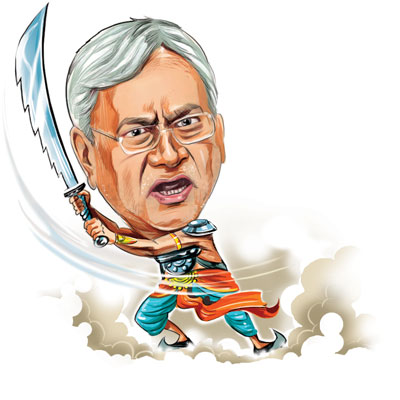)
It’s no wonder even his coalition partner BJP publicly insists “there is no vacancy” for the CM’s chair. Samrat Chaudhary himself told the state, “As long as Nitish Kumar is with us, he remains the Chief Minister, there’s no ambiguity about that”. They point to his record as tenfold rise in high schools, free bicycles for students, and a flood of school uniforms for poor kids, the changes absent in the “long, turbulent chapter” before 2005.
Nitish’s hold on Bihar is near-mythical. Even after years of “playing musical chairs” with alliances, he still carries the voice of development (if not always the deeds). When victory was assured, his first words were testament to his political longevity: he credited this win to the people’s belief in his brand of ‘complete governance’. When the party’s own campaign turned to pre-election freebies (some say it “backfired” on Nitish), he managed the narrative with finesse, proclaiming that giving cash was not “buying” votes but fulfilling promises, and reminding voters that 50% women’s reservation and other reforms were his wins.
For opponents, ousting Nitish seemed like an impossible dream. Polling day passed without even a whiff of a rebellion within his ranks. When Journalists asked if Samrat harbored ambitions, he flatly said, “The BJP has historically been the kingmaker in Bihar, but Bihar’s crown belongs to Nitish.” In fact, he reminded them how the BJP backed Nitish in the past when many doubted him. The underlying message of replacing Nitish would upset decades of caste-coalition chemistry and invite instability. In a state weary of “Chhakka Jam” and flashpoints, Nitish’s steady hand (and his deliberate image as a 75-year-old crusader always on the hustings) reassured many.
So yes, Nitish remains Bihar’s favorite son, much like how an old boat captain is hard to replace in a storm. The NDA’s campaign even leaned on this trust; polls and exit interviews suggest many NDA voters simply cast their ballot because Nitish Kumar’s name was on it. This loyalty is rooted in a paradox as many of those same voters may grumble about caste ties, yet they still cheer the one leader who can navigate those ties to stable governance. Nitish’s mantra now might be, to stick with me, or risk the old forces returning. And apparently, most of Bihar shrugged and said, “We’ll stick.”
The Paradox of Progress: Why Millions in Aid Haven’t Moved the Meter
It bears asking why is Bihar, a state so long neglected by opportunity, stuck in this loop? The answer lies in these caste games. Since independence, Bihar was once prosperous. It produced Bihar School Examination toppers, engineers, books and even an entire philosophy (Buddhism!). But somewhere along the way, caste-based stalls overrode shipbuilding. Instead of planning a robust economy, leaders allocated spoils.
Instead of education and industries, they built patronage networks. When funds arrived from Delhi, they often trickled through schemes targeted by caste. The result was that more than 50% of Bihar’s budget is funded by the Centre, yet incomes remain a meager one-third of the national average. Billions of rupees later, Bihar still wrestles with open defecation, seasonal floods and a textile industry that’s more backward loom than booming mill.
Each election would seem an opportunity to break this cycle. Yet time and again, the same calculus repeats. Upper castes fear losing ground (so they back whoever fights for them), while backward and extremely backward castes fear slipping into old hierarchies (so they cling to their champions). The BJP, for its part, has tried to neutralize this caste lottery by courting non-Yadav OBCs and Dalits – successes in some rural pockets. But even that shift has happened along caste lines, not because voters now care more about roads than rivalries.
Development never stands at the top of anyone’s ballot. It’s more of a whisper than a cry. Even when parties talk up growth or reform, they do it “through caste-specific channels of allocating tickets, designing welfare schemes” by caste groups. So infrastructure projects often end up in constituencies the ruling coalition can’t afford to lose, or they’re advertised along the same lines of which caste will benefit most. Bihar’s “growth paradox” is that despite outsized transfers, it sees less local spending on roads or factories. The money is sometimes squandered on political giveaways rather than capital projects.
Hence, even 75 years after independence, Bihar’s headlines are still about caste census and vote banks, not job creation or literacy leaps. The recent elections have re-proved that the path to Delhi’s purse strings is easiest paved by caste-based alliances, not by charting a new economic course. Every disappointment of the empty school, the flooded field, the broken bridges, becomes accepted as the price of caste clout.

Uncomfortable Reflections: Democracy’s Double-Edged Sword
So where does this leave Bihar’s democracy? We end as we began, with the disquieting truth that the ballot is indeed powerful, but too often it is guided not by wisdom or insight, but by inertia and identity. When voters choose their kin over catalysts, democracy devolves into a self-perpetuating cycle. It’s like giving people a blank check that only the strongest tribal tie can fill. The result is a caste-tainted victory, one that reinforces the very system that may be dragging Bihar backwards.
Imagine a parallel universe where Bihar’s voters had reacted differently; where the votes embraced the call for teachers instead of thieves, for schools instead of sarkars. That would have been a true victory for democracy and development. Instead, our victory is hollow, our future uncertain. And yet perhaps that is exactly the lesson this saga delivers: you can’t force wisdom onto a ballot that chooses comfort over competence.
In the end, we must ask ourselves with concern and a touch of satire- did we just become cheerleaders for caste supremacy? Only time will tell if Bihar’s children will kick these chains, or if they will keep crying for the same rulers who nurtured those chains. For now, the poll results are in, and they raise the uncomfortable question we dared not ask in polite society: when given a choice between change and comfort, Bihar chose comfort, and cast its vote accordingly.