Indigo Or DGCA- Who Is Responsible For Harassment Of ‘We, The People Of India’?

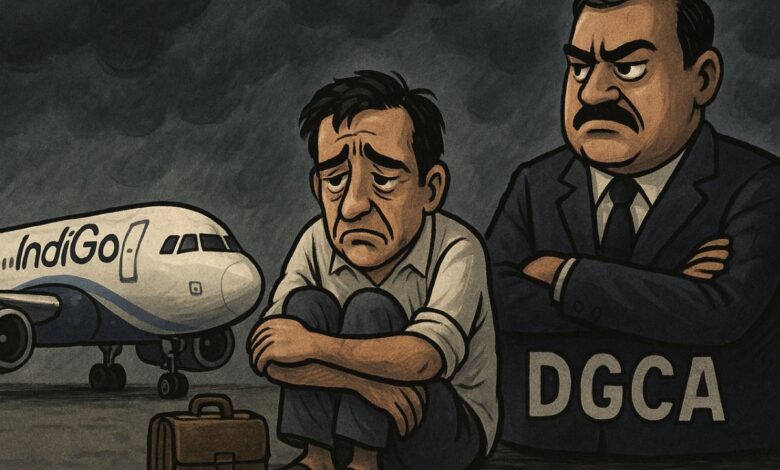
The past week’s air-travel chaos has sparked a blame game in the Delhi skies. Is it India’s largest carrier, IndiGo, or the aviation regulator, DGCA, that is “harassing” travellers with cancelled flights? The answer may lie in the fine print- in pilot rosters, airline expansion plans, and a pile of new safety rules. We start by looking at the raw data of IndiGo’s fleet growth and pilot hiring. We then examine DGCA’s fatigue-time rulings and their implementation timeline, contrasting lofty safety goals with on-the-ground realities. Only with both sides laid bare can we see who really put “we, the people of India” through the wringer.
IndiGo’s Ambitious Growth: Planes on Order and Pilots on Board
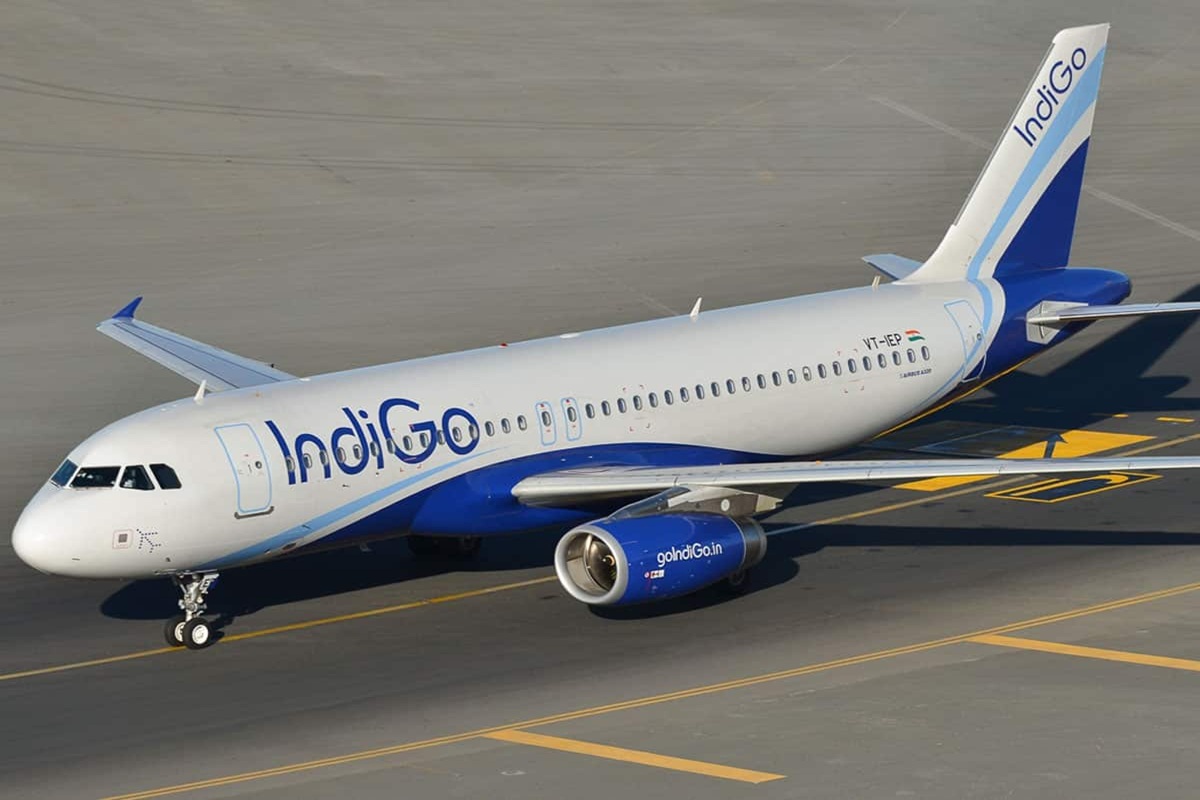
IndiGo has been on an expansion tear. It currently operates over 2,300 flights daily across India and beyond. Its fleet (mostly Airbus A320-family and some ATRs, with recent orders for longer-range planes) now stands at roughly 430–450 aircraft. The order books confirm the ambition. As of late 2025 IndiGo led India’s Airbus order book with 1,370 aircraft ordered, of which 907 were still pending delivery. (This includes dozens of future A321XLR and widebody A350 jets.) In other words, Indigo is poised to nearly double or triple its fleet in coming years as these jets arrive.
That surge in planes demands a surge in crew. Indeed, IndiGo has not stood still on hiring: its pilot force grew by over 1,000 pilots in the last two years, reaching about 5,456 pilots by June 2025. This makes it the largest pilot pool in India, larger even than Air India and Air India Express combined (the two Tata carriers together had 5,449 pilots).
IndiGo also says it has been diversifying, boasting 16% female pilots (far above the global average) and even pledged to have 1,000 women in cockpits soon. In FY2025 it operated 434 airplanes (including turboprops) with 10,212 cabin crew. All this hiring helped IndiGo soak up the generally soaring passenger traffic as domestic flyers surged to 174 million in 2024, but the pilot supply remains tight.
Government data underscores this crunch. Fewer flight licenses were issued in 2024 (1,342 new CPLs, 17% drop from 2023), and even the Ministry admitted India will need roughly 21,500 pilots by 2034. Training a commander (captain) from scratch is not a months-long process but can take years (cadets do thousands of hours of flying and training).
In short, even if IndiGo hired aggressively, the overall pipeline of qualified pilots is limited by physics. And yet, a rough calculation from within IndiGo (shared with DGCA) shows just how razor-thin the margin became. Under the new rules, IndiGo estimated it needed about 2,422 captains and 2,153 first officers to fly its Airbus A320 network stably, but it only had 2,357 captains and 2,194 first officers on staff. In other words, 65 fewer captains than needed, a gap that can turn a small delay into a cancellation chain.
So we have an airline that has tens of thousands of pilots on the roster and orders for nearly a thousand new jets, yet still faces what it calls an “acute crew shortage” under new rules. Are these facts of modern life, or signs of miscalculation? Below, we compare that expansion push against the regulator’s new rest requirements.
DGCA’s Safety Rules: The Fatigue Limits That Bit Back
Pilots haven’t been shy about complaining they were under too much strain. After decades of growth in traffic, airlines and pilots urged more rest and better fatigue management. In January 2024, DGCA released a major rewrite of its Flight Duty Time Limitations (FDTL), a regulator’s official scheme for pilot hours. The government’s press release on Jan 8, 2024 explains the motive plainly: data analysis of rosters and fatigue reports showed pilots deserved more rest. In fact, DGCA claimed the changes were crafted “after extensive data analysis and feedback from various stakeholders, including airline operators, pilot associations and individuals”, aligning Indian rules with best practices (FAA/EASA).
What did these regulations do? The short version is, crew rest increases, flying time decreases. Mandatory weekly rest was raised from 36 hours to 48 hours. The formal “night duty” window was extended; instead of ending at 5 am, it now runs 0000–0600. Perhaps most disruptive to schedules, night operations were curtailed; a pilot may land at night only twice per duty period, instead of up to six times under old rules. (Also, any flight touching night was capped at 8 hours flight-time and 10 hours duty-period.) These sound good for safety as more sleep, less after-midnight heroics. All airlines were theoretically meant to build these limits into rosters by June 2024.
Almost instantly the industry howled. Big carriers said they needed much more lead time to hire and train dozens of new pilots just to operate the same flights. The rules were formally notified in Jan 2024, but by May 2024 the DGCA had already acknowledged that airlines needed more time. A report notes that the DGCA’s final FDTL notice (May 31, 2024) stuck to the deadlines, but quietly deferred actual implementation: the new rules would roll out in phases (first part in July 2025, full enforcement by Nov 1, 2025). (These dates ended up matching a Delhi High Court schedule demand.)
By mid-2025, then, airlines had over a year to adapt. It was recounted that by late 2025, DGCA-ordered FDTL was “phased” – initial stricter rules in Aug 2024, full by Nov 2025. Crucially, everyone knew Phase 2 (the 48-hour rest, night cuts) would hit on November 1, 2025. IndiGo itself (and all carriers) had roughly two years from the first notice to gear up. But, as we’ll see, knowing a rule is coming is not the same as having 100 extra pilots on Day 1. For now, the bottom line is: DGCA’s official safety project did exactly what it said: it sharply reduced pilots’ work hours. The question: was the rest of the system ready?
The Meltdown: FDTL Takes Flight
Come December 2025, that question played out painfully. As soon as Phase 2 hit (Nov 1, 2025, per the schedule), IndiGo’s flight schedule began to unravel. Over a recent two-day span, more than 300 flights were cancelled in 48 hours, stranding thousands.
Airports saw front-page chaos. On Dec 2, IndiGo’s on-time performance (OTP) plunged to about 35% (versus its usual 80%+), meaning over 60% of flights were late or cancelled. By Dec 3-4, individual airports logged dozens of dropouts (73 cancelled at Bengaluru airport Dec 4, 68 at Hyderabad, etc). Delhi, Mumbai and others saw lines of exasperated passengers, sleeping in terminals or flying home by train.
What’s the airline saying? By Dec 4 it publicly apologised and blamed a “multitude of unforeseen operational challenges”, citing tech glitches, weather, congestion and the new crew rostering rules. It warned that disruptions would last a few days while it “stabilises”. Still, the facts on the ground are clear. Crew shortage under FDTL was the dominant theme. The DGCA’s own data shows IndiGo cancelled 1,232 flights in November, and 61% of those were explicitly attributed to FDTL compliance issues.
Industry analysts note the timing was brutal. On Nov 29–30 an Airbus A320 fleet-wide software patch grounded many planes; then Nov 30- Dec 1 brought fog and peak-season crunch. Those hits jumbled already-tight schedules that had no spare crews left. Once a delay cascaded, IndiGo had no backup captain to re-fly a plane, because all pilots were either illegal to duty under FDTL or already tapped out. This was a “domino effect” of delayed flights, which pushed pilots into the forbidden window, and bang, flights had to be abandoned.
So did only IndiGo suffer? Interestingly, it has been far worse for IndiGo than for other carriers. Civil Aviation Minister Ram Mohan Naidu publicly noted that all airlines faced the rule change, yet only IndiGo was imploding. Airlines like Air India, SpiceJet or Akasa Air saw slowdowns but not state-wide blackouts. Why?
IndiGo has the busier network, more night flights, and almost no slack. One DGCA briefing pointed out that after Phase 2, IndiGo’s usual 4% pilot buffer was effectively wiped out by the new rostering demands. By comparison, smaller carriers had more cancellation room or simply fewer flights to crew. In short, the collapse was disproportionately severe for the country’s mega-carrier, and thus for travellers.
What We Can’t Ignore Is DGCA’s Gamble: Safety First — Or Second?
With delays snowballing, the DGCA suddenly shifted gears. On Dec 4 it summoned IndiGo’s bosses to explain. Publicly the DGCA reiterated safety as the guiding light. It noted that IndiGo itself conceded “misjudgement and planning gaps” in the Phase 2 shift. Internal documents cited by Reuters confirm the DGCA’s view: “the disruptions have arisen primarily from misjudgement and planning gaps”. The DGCA said it would monitor operations in real time, demanding that IndiGo submit a detailed recovery plan: hire more pilots, adjust training, fix rosters, and achieve full compliance at once.
If the FDTL rules were truly inviolate “for safety,” why entertain waivers now? By Dec 4 news outlets reported that DGCA was likely to grant IndiGo a temporary waiver on the hardest parts of the rules. NDTV explicitly noted that the midnight‑to‑6 AM night definition would be eased back toward midnight‑5 AM, and the 2-landings cap held off.
Even Times of India reported DGCA was “expected to give a temporary, partial waiver” to IndiGo while it stabilises. The implicit question is: if pilots’ rest rules can be lifted for one busy week, were they so urgent in the first place? Critics howl that safety became negotiable once plenty of Indian families were grounded. One Union minister flatly noted that December’s rules were safely malleable, a far cry from “we can’t ease fatigue norms,” implying the original deadlines might have been arbitrary.
Indeed, DGCA’s own logic seems to have done a 180°. In January the DGCA justified these reforms in terms of data-driven planning and years of effort. Yet in practice it let those very deadlines loom despite the obvious pilot drought, then backtracked. The reactive dance was dizzying: regulators impose rules, promise transition time, observe collapse, then suddenly fix the rules. That “break the system then apply a band‑aid” approach smacks of bureaucratic flip-flopping rather than prudent governance.
Moreover, consultation with industry appears to have been minimal. DGCA claims they factored in pilot associations and airline feedback, but many airline executives say they were never shown the math: “when they set the deadline, did DGCA run a red-team scenario with airlines? The answer is clearly no,” fumes one operations manager.
In fact, union leaders may now wonder if DGCA was too cozy with the airlines it regulates. One counter-narrative suggests the fatigue rules are as much about bureaucracy flexing muscle as about safety, since the DGCA leadership is selected from career civil servants rather than aviation professionals. The timing couldn’t look worse. Rules aimed at safety directly caused tens of thousands of passenger disruptions.
In a twist of irony, DGCA’s harsh autumn enforcement is now blamed on the regulator’s own short-sighted timeline. “Announcing rules, then expecting airlines to somehow find decades of new captains overnight, was not sound planning”. Even the pilot union laments that the DGCA “gave you one year’s time… and you still came up short”. The question must be asked: did DGCA think IndiGo would magically train captains faster than toddlers?
DGCA’s Official Defense
To its credit, DGCA points to credentials. Its touts that after “extensive data analysis” the changes were made to align with global best practices. The regulator insists the intent was noble: reduce cumulative fatigue for safety. These were not pulled out of thin air, the DGCA says, but came after studying pilot rosters and feedback. It even names that the U.S. FAA and EU’s EASA have similar windows. In their view, they gave airlines ample “transition time” and phased the process accordingly.
So DGCA’s own stance: “We did due diligence and kept safety first.” Now airline critics retort: the ultimate safety check is whether schedules could be flown, and for weeks, they often couldn’t. When flights were left unmanned, safety was arguably hurt more than if pilots had just served a couple extra hours. DGCA’s pending waivers, plus its call for IndiGo to replenish pilot ranks, imply admission that the rollout was indeed too aggressive without accounting for India’s chronic captain-shortage.
IndiGo’s Folly: Lean Model vs. Lean Pilots
On the other wing, IndiGo, long considered a poster child of Indian aviation success is far from blameless. The facts are stark. Even with a year’s notice, IndiGo did not ramp up its training nor adjust its scheduling sufficiently. Multiple reports cite airline insiders confessing a planning failure. For one, IndiGo’s own submission to DGCA acknowledges “misjudgement and planning gaps” under the Phase 2 rules. Industry sources report that management assumed regulators would again delay the tough parts, and so IndiGo neither hired enough captains nor trained as aggressively as needed. “Not planning accordingly was a strategic mistake,” bluntly admitted a crew‑planning official, noting their usual 4% pilot buffer vanished under the new laws.
This shortage was hardly news. The pilots’ unions had been sounding alarms for months. The Federation of Indian Pilots (FIP) castigated IndiGo for a “prolonged hiring freeze” and an excessively lean manpower strategy in flight ops. They noted that for two years, IndiGo had all but stopped recruiting to save costs, even as winter schedules expanded. When FIP flew the issue to DGCA, they even suggested redistributing IndiGo’s prime-time slots to other airlines if IndiGo could not crew them – a dramatic statement accusing IndiGo’s senior management of choking its own network.
Aside from hiring, the airline’s operational choices are under scrutiny. Even while crying poor, IndiGo kept adding flights and airports to its network. Last month it launched several new routes, all approved by DGCA, even as its pilot resources remained finite. Data reminds us that over the past year IndiGo’s owned fleet grew by just 24 aircraft, hindered by Airbus delivery delays and 40-plus planes grounded over engine troubles. To fill seats they damp-leased (rented) 20 more planes with outside crews. Yet despite that, insiders say IndiGo still treated its crew pool as a cost to minimize, expecting pilots to work extra or swap flights on call.
When the crunch hit, the results were immediate. Surce after source confirms that IndiGo simply didn’t have enough ready pilots. A DGCA summary found that under the new rules, IndiGo needed 65 more captains than it had for the A320 fleet. Even Finance Minister Jaitley’s ghost might quip: “There’s something off with the ledger.” On top of that, IndiGo habitually ran on just enough staff. A December 2023 report notes IndiGo “maintained around 4% crew buffer for extraordinary situations”; the new norms swallowed that buffer to zero. The Times of India dubbed this a “big strategic mistake”.
The airline’s public statements reflect varying blame. It listed adverse weather, tech glitches, airport congestion and the FDTL rules as causes. However, within hours IndiGo quietly conceded to DGCA that crew shortfall was the “primary cause”. Even the Opposition has pounced: passengers (and government) wonder why IndiGo advertised thousands of new seats even during the crisis, ostensibly soaking up full fares on flights it then cancelled en masse. Social media is rife with outraged posts: why is IndiGo still selling high-priced tickets for flights its own pilots can’t staff? (DGCA will not allow price gouging, one note implied.) Critics call it “hostage-taking”, an unethical airline locking customers out while booking new business.

Still, IndiGo’s defenders say, in a free market, no one can forbid growth aspirations. Slot allocation is not a charity; companies plan for best-case. Indeed, in global aviation Boeing chief reports, carriers often stash crews or rely on backup, but India’s sudden rule shock left none of that safe harbor. In fairness, no single airline controlled the supply of licensed captains – the shortage affects all Indians equally.
Caught in the Crosswind: Passengers Pay the Price
For travellers, the finger-pointing saga is small consolation. Skyrocketing fares on remaining seats, endless queues, unpaid hotel nights – these are real-world consequences of this tiff. Everyone admits: the losers are the flyers. As one frustrated passenger told NDTV: “We have been at Hyderabad airport from yesterday 6 pm until 9 am the next day… this situation has caused significant inconvenience.”.
Even our politicians notice. The Civil Aviation Minister demanded officers ensure no fare spikes during the recovery. Airlines are refunding thousands of customers, yet many argue a voucher or swap should have been offered instead of an all-cash return, since a ticket paid is a seat booked, at a time when seats are scarce.
Some folks ask: were earlier budget carriers better at handling chaos? In past disruptions, Kingfisher or Jet Airways offered alternate flights or full reroutes even on collapse; passengers say this time they got mere apologies and five‑thousand‑rupee credit notes, only to see IndiGo rebook high-fare tickets behind their back. Whether that constitutes an “ethical scam,” as some union members claim, or just bad PR, IndiGo’s net promoter score certainly took a dive.
Who Gets the Final Landing?
So what’s the verdict? It’s tempting to declare winners in this blame game, but the truth is: both sides fumbled. The DGCA, convinced of its safety mission, lost touch with on-the-ground capacity; IndiGo, drunk on growth, failed to maintain the breathing room needed for turbulence. One analyst quipped that “everyone is a thief until they’re caught,” meaning that finger-pointing will continue. But from the vantage of “we, the people” – the strandees, the businessmen late for meetings, the grandparents rerouted by railway – what matters is stability.
The data we have simply do not exonerate either party completely. Airlines were warned of FDTL, yet they took two years to “figure it out,” with IndiGo first among them. Meanwhile, regulators mandated rules developed via studies but apparently never tested their system-wide impact (no “what if Delhi fog?” simulations were publicized). Now, after backpedalling with waivers, DGCA looks uncharacteristically reactive. The bureaucratic game of announce‑crash‑fix does little for passenger trust.
Ultimately, it is the public who foots the bill, not just in refunds, but in hours lost, workdays missed, and political capital. India’s aviation sector was touted as a model of deregulation and capacity growth, yet this episode feels like a reckoning: it underscores that growth must be sustainable. Pilot training takes years, and regulators must time reforms with that reality. A ministry spokesperson now calls for “coordinated, data-driven decision-making” in aviation, rather than knee-jerk mandates.
As one airline veteran put it, if safety truly came first, these fatigue rules would have been phased in more judiciously or tested regionally before nationwide rollout. But by the same token, if IndiGo’s market dominance affords it perks (prime slots, thousands of routes), it also carries greater duty to prepare thoroughly, with buffers and backups – not just ride the upswing and plead pilot shortage at the first sign of trouble.
The last word, therefore, might best be this: preventative planning wins over crisis management, always. And until India’s airports recover their lost calm, every Mumbai-bound grandfather, Ahmedabad-bound college student, and Chennai commuter can only hope that next time, both airline and regulator keep their eyes on the real target: keeping people flying, not grounded.