Why SEBI Must Stop InMobi’s IPO?
It's been one year since the MobiKwik IPO, and we have seen the disaster that the company did. One year later, if SEBI doesn’t stop, we can see the deja vu of a similarly named company!!!

When Debt-Fueled Desperation Masquerades as Founder Conviction!
The champagne bottles remain corked at InMobi’s Bangalore headquarters, but not for lack of trying. India’s first unicorn, that gleaming jewel in the crown of the nation’s startup dreams circa 2011 is preparing for its grand public debut, and the preparations look less like a celebration and more like a fire sale orchestrated by desperate folks drowning in debt.
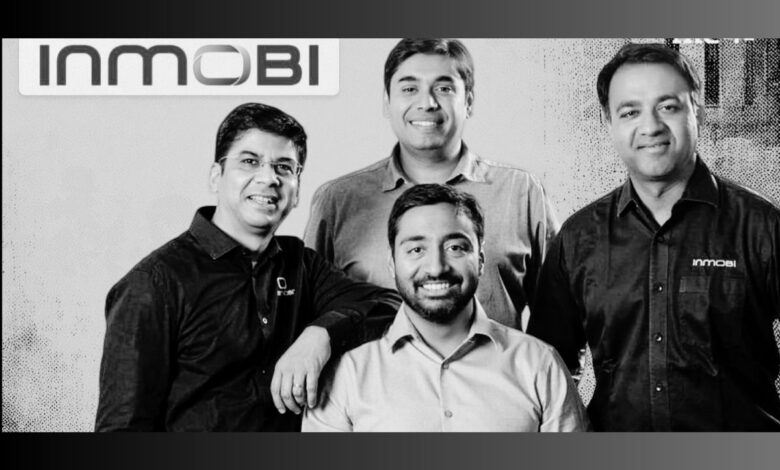
Let me paint you a picture: Four founders, once hailed as visionaries who would take Indian mobile advertising global, have just borrowed $350 million at interest rates between 13-14% from a motley crew of debt funds including Varde Partners, Elham Credit Partners, and SeaTown Holdings. And what did they do with this borrowed mountain of cash? They handed it straight to SoftBank, buying back a stake that the Japanese investment giant had held for 14 long, patience-testing years.
Fourteen years. Let that sink in.
SoftBank, which has weathered everything from the dot-com bubble‘s aftermath to Masayoshi Son’s most spectacular failures (like WeWork), finally threw in the towel on InMobi. Not with a victory lap, but with what amounts to barely breaking even on an investment made when smartphones were still a luxury. The investor had repeatedly written down the value of its InMobi stake as the company went through a turbulent stretch before recently stabilizing. In other words, SoftBank stopped believing years ago; they’re just collecting what they can and running.
And here’s where it gets deliciously ironic; the founders are now pledging their own shares as collateral for this debt. They’re effectively mortgaging the house to buy back the house (pun intended). If that doesn’t scream “financially engineered desperation,” I don’t know what does.
The SoftBank Exit: When Your Biggest Cheerleader Becomes Your Ghost
Let’s dissect this surgical extraction of SoftBank from InMobi’s cap table, because it’s a masterclass in reading between the lines of corporate PR.
SoftBank is selling upwards of 20% stake in InMobi for around $250 million, valuing the company at around a billion dollars. This is for a company that once had aspirations of dethroning Google and Facebook in mobile advertising.
The Japanese conglomerate first invested $100 million in 2011, followed by another $100 million in 2012—a total investment of roughly $200-220 million. Now, after 14 years, they’re walking away with approximately $250 million. That’s roughly a 13% return over 14 years, or less than 1% annually. On a funnier note, my grandmother’s fixed deposits outperformed SoftBank’s bet on India’s first unicorn.
SoftBank had reportedly written off its stake in InMobi in 2016. They gave up on this investment NINE YEARS AGO. They’ve been carrying InMobi as deadweight on their books, a zombie investment that refused to die but also refused to deliver.
Post-transaction, SoftBank’s holding reduces to under 8% from about 35% earlier. From promoter status to barely-there minority shareholder. This isn’t just an exit; it’s a tactical retreat dressed up in the language of “portfolio rebalancing.”
And the founders? They’re touting this as “strengthening founder control” and “aligning with IPO readiness.” What a beautiful euphemism for “our biggest institutional investor lost faith in us years ago, and we had to borrow hundreds of millions to buy them out so we could pretend everything’s fine when we go public.”
The Debt Trap: Mortgaging Tomorrow for Today’s Optics
Here’s where the InMobi story intersects dangerously with India’s broader fintech governance crisis. The founders have raised $350 million in dollar-denominated debt—$200 million for the main operating company and $150 million for the holding entity—all secured against their personal stakes in the company.
Let me try to translate this financial engineering into plain English. These founders have essentially taken out a massive personal loan, using their ownership of InMobi as collateral, to buy out an investor who wanted nothing more to do with their company. And they’ve done this at 13-14% interest rates; rates that would make even credit card companies blush.
This isn’t confidence. This is financial brinkmanship.
Think about the pressure this creates. Every quarter, InMobi must now generate enough cash flow not just to run its business, but to service this enormous debt burden. At 13-14% on $350 million, that’s roughly $45-49 million in annual interest payments alone. For a company valued at just under $1 billion, that’s 4.5-5% of its total valuation going toward interest payments annually. Before they pay a single employee. Before they invest in growth. Before they do anything except keep the debt collectors at bay.
Now, compare this to SEBI’s own guidelines on buybacks. Share buyback is not approved by the SEBI if the ratio of the aggregate of secured and unsecured debts of a company are more than twice the paid-up capital and free reserves. While this is a promoter-led secondary transaction rather than a company buyback, the spirit of the regulation is clear, that the high debt loads are dangerous when you’re about to take public money.
But here’s the kicker as this transaction is happening in a regulatory grey zone. It’s not technically a company buyback, so SEBI’s buyback regulations don’t apply. It’s founders buying shares from an investor using personal debt. Perfectly legal. Perfectly structured. And perfectly terrifying for anyone who understands what it signals about the company’s actual financial health and the founders’ desperation to control the IPO narrative.
The Valuation Mirage: Sub-Billion Dollar Reality vs. IPO Dreams
Let’s talk about the elephant in the prospectus, InMobi’s valuation, or rather, its multiple valuations depending on who’s doing the talking and when.
The SoftBank buyback values InMobi at under $1 billion. But wait! According to sources, InMobi’s valuation could range from $8-10 billion, making it one of India’s biggest IPO from software startups. That’s an expected IPO valuation of 8-10X the price at which founders just bought back shares from SoftBank.
The founders valued their own company at less than $1 billion when negotiating with SoftBank just months ago, but they’re planning to ask public market investors to value it at $8-10 billion. That’s not just aggressive IPO pricing; that’s financial alchemy that would make medieval charlatans blush.
Now, the bulls will argue, “But Glance! What about Glance, their AI-powered lockscreen platform! That’s where the value is!” And they’d be partially right. Glance has indeed shown promise, and the expected IPO size is INR 8,500 crore, with the valuation representing the combined value of InMobi and its roughly 60% stake in Glance.
But here can be the catch—if Glance is so valuable, why isn’t it being included in the IPO? Glance is being treated as a separate entity, and its business will not be part of the company’s planned IPO. Moreover, the lock-screen platform, Glance, posted losses (Rs 929 Cr loss on Rs 600 Cr revenue in FY24), impacting the overall group’s financial health, according to Tech in Asia. So InMobi wants to be valued based on assets it’s not actually selling to public investors. It’s like selling someone a car and insisting they pay Ferrari prices because you also own a Ferrari that you’re keeping in your garage.
The financial performance doesn’t inspire confidence either. InMobi’s revenue is expected to increase from INR 2,330 crore ($281 million) in FY23 to INR 5,810 crore ($700 million) by March 2025, but profits dropped from INR 415 crore ($50 million) in FY22 to INR 340 crore ($41 million) in FY23. Revenue growth is nice, but declining profitability while you’re preparing for an IPO? That’s a red flag big enough to be visible from space.
The MobiKwik Parallel: When “Technical Glitches” Expose Governance Rot
Now, let’s turn our attention to another fintech darling that listed on Indian exchanges just a year ago: MobiKwik. Because if there’s one cautionary tale that should make SEBI pump the brakes on any tech IPO in India right now, it’s the absolute governance catastrophe unfolding at One MobiKwik Systems Ltd.
On September 11-12, 2025, MobiKwik’s systems suffered what the company delicately termed a “limited internal processing error.” The flaw in MobiKwik’s system allowed users to make transactions exceeding their wallet balances, and in some cases, even entering incorrect UPI PINs did not prevent fraudulent transactions. This resulted in over 5 lakh unauthorized transfers, with Rs 40 crore being siphoned off in just 48 hours.

For two days, MobiKwik’s payment system was effectively screaming “YES! TAKE THE MONEY!” at every transaction, regardless of whether users had funds, entered correct PINs, or even existed.
- Zero balance? Success!
- Wrong PIN? Success!
- Authentication failed? Success!
And here’s the truly damning part. The company said the issue was identified and resolved within 45 minutes, but the fraud occurred over two days between September 11-12. So either they’re lying about how quickly they caught it, or they caught it in 45 minutes and still somehow let it continue for another day and a half. Neither explanation is comforting.
MobiKwik’s official narrative blamed a “frustrated junior employee” who deployed untested code. But this excuse insults the intelligence of anyone who’s spent five minutes thinking about software deployment in a financial services company. Where was the QA team? Where was the maker-checker process? Where was the rollback mechanism?
If a single junior developer can burn Rs 40 crore in 48 hours, the architecture itself is fundamentally broken. And blaming the junior employee is cowardice masquerading as leadership, writes Mr Jayant Mundhra, a financial analyst in his linkedin post.
But wait—it gets worse. Much worse. This isn’t MobiKwik’s first rodeo with “technical glitches”:
- 2017: Lost approximately Rs 19 crore in a similar “technical discrepancy”
- 2022-2024: Lost Rs 1.26 crore to internal fraud, with a former employee siphoning funds by altering merchant details in records
- 2025: The big one—Rs 40 crore gone in a weekend
These aren’t isolated incidents. This is a pattern. This is systemic failure dressed up as occasional hiccups.
And here’s what should terrify SEBI. MobiKwik listed on Indian exchanges in December 2024. They took public money. Retail investors, seeing the fintech boom and trusting in regulatory oversight, bought into the IPO. And within months, the company lost Rs 40 crore due to governance failures so fundamental they’d embarrass a college coding bootcamp.
MobiKwik’s revenue fell 20.7% year-on-year to Rs 271.4 crore in Q1 FY26, while its net loss widened sixfold to Rs 41.9 crore. The company is hemorrhaging money operationally, losing money to fraud, and has demonstrated catastrophic gaps in its basic risk management and technical controls.
The Governance Question: Why InMobi’s IPO Timing Reeks of Desperation?
Let’s connect these dots.
InMobi is rushing to IPO after:
- Its biggest investor essentially gave up on it years ago.
- The founders had to take on massive personal debt to buy out that investor.
- The company is being valued at wildly different numbers depending on who’s asking.
- The Indian fintech IPO market just demonstrated, via MobiKwik, that regulatory oversight pre-IPO is clearly insufficient.
SEBI’s IPO regulations are clear that the promoters must contribute at least 20% of the post-issue capital. InMobi will meet these requirement as the founders now hold roughly 60% of the company, and combined with current and former employee holdings, internal ownership accounts for nearly 80%. But meeting the letter of the law isn’t the same as meeting the spirit of the law.
The entire point of promoter requirements is to ensure that founders have skin in the game; that they’re committed to building long-term value rather than dumping shares on retail investors and running. But what kind of “skin in the game” is it when that skin is mortgaged to debt funds at 13-14% interest?
The founders’ shares are pledged as collateral. If InMobi’s business falters post-IPO, if the company can’t service this debt, if cash flows don’t materialize as projected, those debt funds can seize and sell the founders’ shares. The founders could lose control not because they chose to exit, but because their creditors foreclosed on them.
This creates perverse incentives. It means the founders aren’t just accountable to shareholders, but they’re first and foremost accountable to debt funds who hold their shares hostage. It means short-term cash generation becomes paramount, potentially at the expense of long-term strategic investments. It means the founders might be incentivized to take excessive risks or manipulate short-term metrics to keep the debt serviceable.
And here’s the real kicker. Regulation 7(3) of the ICDR Regulations bars issuers from using IPO funds to repay loans to promoters, promoter-group entities, or related parties. But this debt isn’t technically owed by InMobi the company; it’s owed by the founders personally. So while InMobi can’t directly pay off this debt with IPO proceeds, the founders can absolutely use their IPO proceeds (from selling shares in the offering) to service or pay down this personal debt.
In other words, retail investors buying InMobi shares in the IPO aren’t just investing in a mobile advertising company’s growth; they’re indirectly helping founders pay off debt they took on to buy out an investor who’d lost faith in the company. That’s not a growth story. That’s a refinancing scheme with extra steps.
Also, InMobi is currently in the process of redomiciling its headquarters to India from Singapore in the run up to its initial public offering- How much money it will take? While specific costs for the process itself aren’t detailed, comparable flips (like Groww, Meesho) have involved significant tax outlays (hundreds of millions of dollars) and legal/regulatory fees. So, still more money bleeding…
The Regulatory Gap: What SEBI Must Ask Before Approving This IPO
SEBI has specific grounds on which it can reject draft offer documents. SEBI may reject the draft offer document if the business model of the issuer is exaggerated, complex or misleading, and the investors may be unable to assess risks associated with such business models; or if there is a sudden spurt in the company’s financials.
Let’s pose the questions SEBI should be asking, and must answer before allowing InMobi to access public markets:
Question 1: The Valuation Disconnect
How can a company be worth under $1 billion in a transaction between sophisticated parties (founders and SoftBank) in one quarter, and then claim to be worth $8-10 billion to retail investors the next quarter? What changed? Did InMobi suddenly discover a goldmine? Or is this simply aggressive IPO pricing banking on retail investor FOMO?
Question 2: The Debt Disclosure
Will the IPO prospectus clearly and prominently disclose that founders’ shares, including the ones subject to lock-in requirements are pledged to debt funds? Will it explain what happens to these shares if the debt goes into default? Will it quantify the risk that founders could lose control not through choice but through foreclosure?
Question 3: The SoftBank Write-Off
If SoftBank, one of the world’s most sophisticated tech investors, wrote off this investment in 2016 and is now exiting at barely break-even after 14 years, what does that tell us about InMobi’s actual value proposition? Why should retail investors be optimistic when a venture capital giant with inside knowledge spent nearly a decade trying to make this work and still walked away?
Question 4: The Glance Confusion
If InMobi is being valued based significantly on its stake in Glance, but Glance’s business isn’t part of the IPO, isn’t this fundamentally misleading? How can investors properly value what they’re actually buying versus what they’re being asked to pay for?
Question 5: The Governance Framework
Given the catastrophic governance failures at MobiKwik, a company that listed with SEBI’s approval, what additional governance safeguards is SEBI requiring from InMobi? Has SEBI conducted deep technical audits of InMobi’s systems? Has it verified that appropriate maker-checker processes, rollback mechanisms, and security controls are in place?
Question 6: The Use of Proceeds
While technically legal, will SEBI allow an IPO where significant founder proceeds will immediately go toward servicing personal debt taken on to manufacture an improved cap table narrative? Isn’t this exactly the kind of scenario that IPO regulations are meant to prevent—founders using public money as a backdoor way to resolve their personal financial challenges?
The MobiKwik Lesson: When Listing Standards Aren’t Enough
MobiKwik checked all of SEBI’s boxes before its December 2024 listing:
- It had a track record
- It filed all required documents
- It had the requisite corporate governance structures in place
- It passed SEBI’s listing standards
And yet, within just an year, it demonstrated that it had:
- Insufficient technical controls to prevent a junior developer from triggering Rs 40 crore in losses
- A history of similar “glitches” dating back years that went unexamined
- Financial performance showing declining revenue and widening losses
- Fundamental gaps in risk management that no competent financial institution should have
The MobiKwik fiasco proves that SEBI’s current IPO approval framework is insufficient. Companies can technically meet all the regulatory checkboxes while still being fundamentally unprepared for the responsibilities of being a publicly traded entity handling public funds.
InMobi exhibits many of the same red flags:
- A major investor wrote off and then exited the investment after 14 years of underperformance, or let’s say, so-called ‘modest’ performance.
- Declining profitability despite revenue growth.
- A cap table restructuring financed by high-cost debt that creates conflicting incentives.
- A valuation story that shifts dramatically depending on the audience.
- Aggressive IPO timing that suggests urgency rather than readiness.
The Broader Context: India’s IPO Boom and Its Discontents
InMobi’s planned IPO doesn’t exist in a vacuum. It’s part of a broader trend that should concern anyone who cares about market integrity.
Chief Economic Advisor V. Anantha Nageswaran has raised red flags about the changing nature of India’s initial public offerings market, warning that IPOs are increasingly being used as exit routes for early-stage investors rather than for raising long-term productive capital.
Recent data bears this out. Nearly 34.07 per cent of the funds raised via IPOs were raised through offer for sale (OFS), meaning a third of the “funds raised” don’t actually go to the company, but they go to existing shareholders who are exiting.
And here’s the uncomfortable truth: When promoters and early investors sell aggressively at high valuations, it raises the question: if the future is so bright, why are insiders exiting now?
In InMobi’s case, SoftBank has already exited. The founders have already extracted $250 million from the company (via debt that they control). The IPO will likely feature a significant OFS component to help founders partially monetize and service their debt. So the people who know InMobi best, who have the most information about its strengths and weaknesses, are all looking for the exits.
And retail investors are being asked to be the buyers.
This is the definition of information asymmetry. Insiders, with perfect knowledge of the company’s challenges and limitations, are selling. Outsiders, with only the rosy projections in the IPO prospectus, are being asked to buy. It’s a transfer of risk from those who understand it to those who don’t.
The Uncomfortable Truth: Some Companies Aren’t Ready for Public Money
Here’s what nobody wants to say out loud. Not every unicorn deserves to be public. Not every company that was once promising deserves access to retail investor capital. And not every IPO should be approved just because it technically meets regulatory checkboxes.
InMobi had its moment. In 2011, when SoftBank invested, it was genuinely innovative. Mobile advertising was nascent. Indian startups were unproven. InMobi’s founders were pioneers who deserved every accolade they received. But pioneers don’t always build sustainable businesses. First-movers don’t always become market leaders. And companies that were once innovative can become outdated, outmaneuvered, and frankly, not worth the valuations they’re seeking.
14 years is an eternity in technology. Google and Facebook didn’t just compete with InMobi, they obliterated the market InMobi was trying to build. InMobi struggled to scale amid heavier competition from giants like Alphabet Inc. and Meta Platforms Inc. The company has pivoted, diversified, and tried multiple strategies to stay relevant. And to its credit, it’s still here. That’s no small achievement.
But “still being here” and “deserving a multi-billion dollar public valuation” are very different things.
The founders’ debt-financed buyback of SoftBank’s stake isn’t a sign of strength, but it’s a sign of desperation to control the narrative. When you have to borrow hundreds of millions at 13-14% interest to buy out an investor who’s been written off as a loss, you’re not demonstrating confidence. You’re buying time and manufacturing optics.
And when you then turn around and ask retail investors to value your company at 8-10X what you just valued it at in a private transaction, you’re not offering an investment opportunity. You’re offering a game of musical chairs, hoping retail investors don’t notice they’re the ones left standing when the music stops.
The Comparison Nobody’s Making: WeWork India
Let me draw one more uncomfortable parallel: WeWork India.
Remember WeWork? The co-working space company that was going to revolutionize commercial real estate? That was valued at $47 billion before its catastrophic 2019 IPO attempt collapsed under scrutiny? That had to be rescued by SoftBank (seeing a pattern here?) after its business model was exposed as fundamentally flawed?
WeWork’s Indian franchise, WeWork India, was actually majority-owned by local investors including Embassy Group. And here’s the kicker. In 2023, WeWork India was still operating independently even as its global parent imploded. The Indian entity was profitable while the global business was burning cash.
But here’s what matters: WeWork India‘s success was despite WeWork’s brand, not because of it. The India operation succeeded by being fundamentally different from its parent company’s model.
InMobi is facing a similar inflection point. Its brand is “India’s first unicorn,” but that brand is now 14 years old. Its major international backer walked away. Its competitive positioning against Google and Facebook has only deteriorated. Its financial performance shows declining profitability. The question SEBI must answer:
Is InMobi’s planned IPO about raising capital to build a sustainable business, or is it about allowing insiders to exit a deteriorating asset at inflated prices while the brand still carries some nostalgic value?
The honest answers to these questions won’t appear in the glossy IPO prospectus. They’re buried in the footnotes, the risk factors section that nobody reads, and the uncomfortable silences in investor calls.
At the end: The Duty to Think Mindfully?
SEBI has approved thousands of IPOs. Most pass through without incident. The regulatory machinery processes applications, checks boxes, and rubber-stamps offerings. It’s efficient. It’s pro-market. It keeps the wheels of capital formation turning. But efficiency isn’t always wisdom. And sometimes, the most important power a regulator has is the power to say no.
MobiKwik should have been a wake-up call. A company listing with SEBI’s approval and then losing Rs 40 crore in 48 hours to governance failures so basic they beggar belief—that should have triggered deep institutional introspection. It should have led to harder questions about listing standards, about technical competence requirements, about what it really means to be ready for public markets.
Instead, the MobiKwik disaster seems to have passed with barely a ripple. Six arrests were made. Some money was recovered. The company issued a statement. SEBI issued… nothing. No new guidelines. No elevated scrutiny of pending fintech IPOs. No acknowledgment that maybe, just maybe, the regulatory framework needs updating for an era where a “glitch” can evaporate Rs 40 crore in a weekend.
InMobi’s IPO will likely proceed. The founders will get their listing. Retail investors will buy the narrative. Investment bankers will collect their fees. And in a year or two, when the reality of servicing $350 million in high-interest debt collides with the competitive reality of fighting Google and Facebook for advertising dollars, when the promoted valuation crashes back to earth, when retail investors realize they bought into an exit strategy rather than a growth story—well, by then, everyone responsible will have moved on.
Except the investors. They’ll still be holding the bag. SEBI has a chance to learn from MobiKwik. It has a chance to ask harder questions. It has a chance to protect retail investors from an IPO that checks regulatory boxes while missing the point entirely. Will it take that chance? History suggests not. But hope, as they say, springs eternal.
This article is for informational purposes only and does not constitute investment advice. Investors should do their own due diligence.