A Night of Tragedy at Birch by Romeo Lane
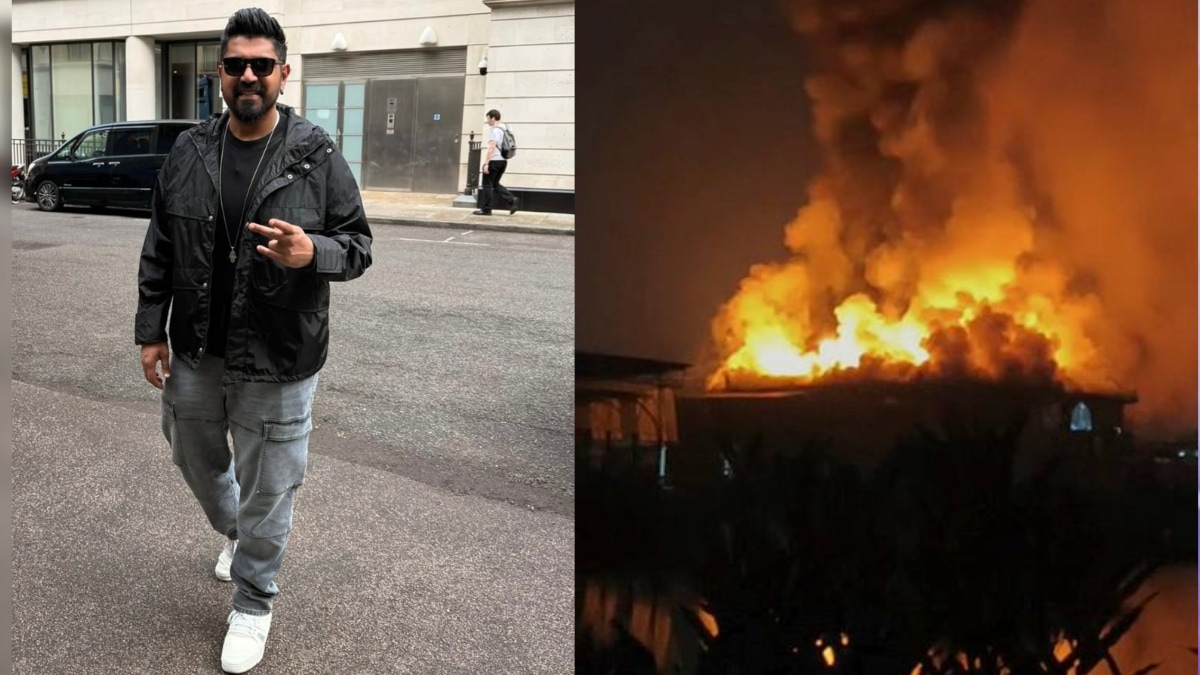
Late on December 6, 2025, a packed crowd at the Birch by Romeo Lane nightclub in Goa’s Arpora village was reveling in a “Bollywood Banger Night” when disaster struck. Around 11:45 pm, flames suddenly erupted near the DJ console, likely ignited by a burst of on-stage pyrotechnics that hit the club’s flammable decor and wooden ceiling. The fire spreaded rapidly through the thatched ceiling and palm-leaf decor, and thick smoke engulfs the club. Musicians drop their instruments and bolt for the exits. The dancer and staff frantically usher people out as alarm finally grips the crowd.
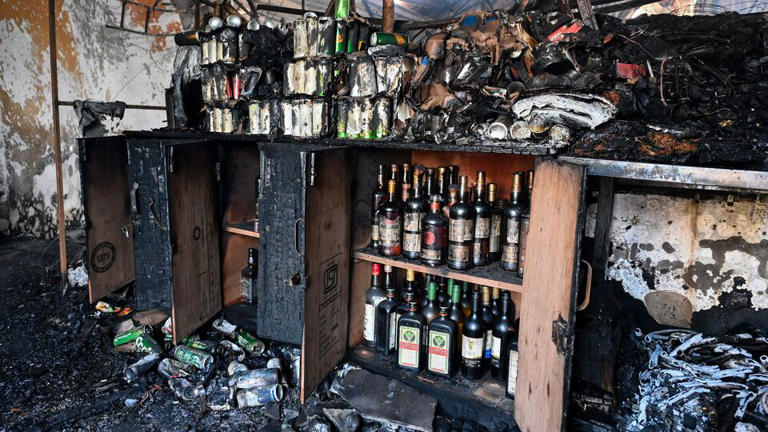
What unfolded in the next few minutes was a scene of horror. The blaze raced through the two-storey venue, feeding on likely illegal additions – a recipe for disaster including a wooden mezzanine, decorative dried leaves, and an overcrowded layout. Over 100 panicked guests stampeded toward a single narrow exit, the only way out of the inferno. Some made it to safety, but many did not. Tragically, 25 people were killed in the fire’s hellish grip, and at least 6 were injured. Most of the dead were not even partygoers but staff members trapped in the basement kitchen, effectively caught in a suffocating death-trap with no escape route.
Of the 25 victims, 20 were employees, waiters, cooks, cleaners, and just 5 were tourists. In the chaos, some fleeing guests had unwittingly rushed downstairs, only to join the staff in the toxic smoke-filled cellar where an exit simply didn’t exist. As firefighters battled the blaze through the night, they found themselves hampered by the club’s awful safety design. The approach roads were so cramped that fire engines couldn’t get within 400 meters of the site, and once on scene, responders discovered Birch had no emergency exits at all on its ground or deck floors.
A preliminary police report later confirmed the obvious, that the hip, happening nightclub had been a tinderbox waiting to explode – operating under valid licenses but lacking mandated emergency exits and basic fire safety measures. By the time dawn broke on December 7, Birch by Romeo Lane stood as a charred tomb – a blackened shell still smoldering, with firefighters and investigators combing through ash and debris for the remains of those who perished.
Goa’s Chief Minister, Pramod Sawant, rushed to the site in the early hours. Visibly shaken, he called it the worst fire in the state’s tourism history and promised “the most stringent action” against those responsible. A magisterial inquiry was ordered to probe whether Birch had flouted construction norms or fire-safety regulations, and an FIR for negligence and culpable homicide was swiftly registered against the club’s management – including its owners. As stunned survivors recounted how a night of dancing turned into a nightmare, one question hung heavy in the smoky Goan air: Where were the owners of Birch, and what would be their hour of reckoning?
Exit Stage Right: Owners Flee the Scene
In the immediate aftermath, while victims’ families were just being notified and firefighters still dousing embers, the two main owners of Birch, Delhi-based brothers Saurabh and Gaurav Luthra were already executing a different kind of exit plan. Unbeknownst to authorities, the Luthras had not been in Goa that fateful night at all.
In fact, it later emerged they were attending a wedding in Delhi as their club burned. Whether by cruel coincidence or convenient alibi, the duo was safely 1,500 kilometers away even as 25 lives were being lost on their premises. But once news of the inferno reached them, the brothers reacted not with an immediate return to face the crisis, but with a panicked flight, literally. Within 40 minutes of the fire breaking out, the Luthras had booked themselves on a plane out of the country.
Records later obtained by investigators show that at 1:17 am on December 7, barely an hour or so after the blaze started, Saurabh and Gaurav purchased tickets on IndiGo flight 6E-1073 from Delhi to Phuket, Thailand. By 5:30 am, while firefighters in Goa were still recovering bodies from the wreckage, the Luthra brothers were comfortably airborne, speeding toward an island holiday destination as if on an impromptu vacation.
They left India just hours after the tragedy, exploiting the slim window before law enforcement could react. Indeed, they managed to slip out moments before a Look-Out Circular (LOC) could be issued to stop them at airports. In effect, the wrong doers of a mass-fatality incident waltzed through Delhi’s international airport while the embers in Goa were still warm.
As dawn broke and the extent of the tragedy became clear, Goa Police scrambled to locate the club’s proprietors, only to find them missing. An FIR had been lodged against both Luthra brothers once they could not be found at any of their known addresses in Goa or Delhi.
Officers dispatched to the Luthras’ upscale Delhi residence on the morning of December 7 found it empty; they pasted notices on the doors, urging the brothers to surrender. By that evening, realizing the fugitives had likely fled abroad, authorities issued an LOC and urged Interpol to intervene with a Blue Corner Notice, an international alert to track and detain suspects. But the horse had bolted from the barn, where the Luthras were already beyond India’s borders, en route to a tropical hideaway.
Perhaps the most galling twist was that even as they were on the run, one of the brothers found time for public relations damage control. On Instagram, Saurabh Luthra “broke his silence” the next day by posting a message of profound grief. The carefully crafted statement from “the management” expressed how deeply shaken they were by the “tragic loss of lives” at Birch and offered heartfelt condolences to the victims’ families. The tone was somber and condolent, as if penned by an innocent bystander rather than by the very proprietors under whose watch safety protocols had apparently gone up in smoke.
This performative grief on social media did not go unnoticed. It rang hollow to many Indians; after all, the Luthra brothers’ actions spoke far louder than their Instagram words. While posting about “solidarity with the families of the deceased,” they were simultaneously making a beeline for Phuket, hardly sticking around to answer questions or assist the investigation. The spectacle of wealthy owners expressing sympathy online from a luxury resort abroad, within a day of a calamity at their establishment, struck a nerve nationwide. It epitomized a pattern citizens have seen too often; powerful businessmen fleeing at the first whiff of legal heat, then offering platitudes from afar.
The International Manhunt and a Hotel Named Indigo
Once it became clear that the Birch owners had absconded overseas, Indian authorities launched an aggressive chase across borders. On December 8, as the tragedy dominated headlines, Goa’s Chief Minister vowed that no matter where the culprits ran, they would be brought to justice. Through the Central Bureau of Investigation (CBI), India approached Interpol, which promptly issued a Blue Corner Notice to member countries, alerting them to the Luthra brothers’ fugitive status. Meanwhile, back in Delhi, a court reacted with urgency: the Luthras’ passports were suspended by the regional passport office, effectively cancelling their travel documents.
This bureaucratic masterstroke, wielding the Indian Passport Act turned the brothers overnight into illegal aliens in foreign lands, with invalid papers. In Thailand, once authorities were notified that the Luthras’ passports had been revoked and they were wanted for manslaughter back home, the duo’s vacation turned into a countdown. They had become, as one official put it, “persona non grata” in the land of beaches.
It didn’t take long for Thai law enforcement to locate the high-profile tourists. On December 11, acting on the Interpol alert, Thai police tracked the brothers down to a boutique hotel ironically (or poetically) named Hotel Indigo in Patong, Phuket. There, the great escape of the Luthras came to an unceremonious end.
Photographs soon emerged of the once-brash club owners standing handcuffed, flanked by Thai officers at the immigration detention center in Phuket. They had been picked up from their hotel room without incident. The name of the hotel, Indigo, did not escape notice in the Indian press, spawning cheeky headlines about “Fled by IndiGo, caught at Indigo”. Indeed, the symmetry was striking: the brothers had fled India on an IndiGo airlines flight, and days later were nabbed at Hotel Indigo.
With the Luthras in custody, albeit on foreign soil, Indian agencies swung into action to bring them back. An extradition treaty exists between India and Thailand since 2015, but formal extradition can be time-consuming. So officials opted for the faster route of deportation. The brothers were now undocumented in Thailand (thanks to their cancelled passports), allowing Thai immigration to deport them as illegal entrants rather than go through lengthy court proceedings.
The Indian Embassy in Bangkok readied emergency travel documents, and a police team from Goa flew to Phuket to coordinate the handover. Goa’s Director General of Police announced that a special escort would be dispatched to physically bring the Luthras back, predicting it was only a matter of a few days. Pramod Sawant, the Goa CM, reassured the public that the fugitives would be on Indian soil “by week’s end” and face arrest the moment they land.
For all the official determination, the episode also highlighted embarrassments. The fact that two prime accused managed to board an international flight after a mass-casualty event raised tough questions. How did they get away so easily? The timeline suggests they capitalized on the chaos. They booked their tickets at 1:17 am (while firefighters were still battling flames) and took off at 5:30 am, literally flying under the radar before alerts could be sounded. It was only later on December 7 evening that the lookout notices were flashed at airports, by which time the brothers were sipping welcome drinks in Phuket.
This gap, potentially just a few hours, proved crucial. A Delhi court, during subsequent hearings, even noted that the Luthras “booked a flight within 40 minutes of the incident,” implying near-real-time awareness and swift decision-making to flee. Whether they received a tip or just knew instinctively that they’d be in legal crosshairs, the speed of their exit hints at a guilty mind.
The prosecution would later emphasize how the brothers’ very first instinct was not to help victims or cooperate with authorities, but to save their own skins. For many Indians, weary of bigshots evading accountability, seeing the Luthras marched in cuffs by foreign police was a moment of grim vindication – a sign that perhaps this time the script might be different, and the absconders wouldn’t get away. But the story was far from over, and back in India another drama was playing out involving a third key player in the Birch saga.
Hiding in Plain Sight: The “Sleeping Partner” and the Hospital Hoax
While the Luthra brothers were busy country-hopping, Indian police turned their attention to a third co-owner of Birch. Enter Ajay Gupta, a 55-year-old Gurgaon-based businessman who had a stake in the nightclub. Initially, Gupta wasn’t in the limelight; the FIR named only the Luthras and the club’s on-site managers. But investigators digging into corporate records soon discovered that Gupta was a financial partner in the venture. In fact, property documents revealed he held a share of the nightclub’s ownership, even if he wasn’t publicly known as an owner. Once this came to light, Goa Police swiftly obtained an arrest warrant for Gupta as well, making him equally culpable in the case.
However, locating Mr. Gupta proved tricky. By the time police knocked on his door, he too had vanished, but unlike the jet-setting Luthras, Gupta didn’t flee the country. Instead, in a crafty attempt to dodge arrest, Ajay Gupta checked himself into a private hospital in Delhi on the pretext of a medical emergency. Claiming to have sudden “spine-related issues,” he admitted himself to the Institute of Brain and Spine in Lajpat Nagar, New Delhi, just as the investigation was heating up.
It appears Gupta was counting on an old trick, where the assumption that police would be hesitant to drag an ostensibly ill patient out of a hospital bed. As one officer later put it, fugitives often believe that “police rarely conduct searches in hospitals” for absconders. Gupta likely hoped to convalesce in plain sight until things cooled down, effectively buying time under the guise of back pain.
For a while, the ruse worked. Gupta successfully flew under the radar for a few days as Goa Police, busy coordinating the international manhunt, didn’t immediately zero in on hospital records. But his cover was blown thanks to persistent sleuthing by Delhi Police’s Crime Branch, who were assisting in the case. Acting on a tip, officers discovered Gupta’s name on an admission list and tracked him down to the Lajpat Nagar hospital on December 9.
When they arrived, they found Gupta ensconced in a ward, reportedly wearing a mask and covering his face, perhaps to avoid being recognized, even by hospital staff. Once doctors gave the green light that he was medically fit (his “slipped disc” drama having miraculously resolved), the Crime Branch wasted no time. Ajay Gupta was detained on the spot, effectively ending his hospital holiday. His arrest was formally recorded on December 10, after a Delhi court granted transit remand to transfer him to Goa for further questioning.
As he was escorted out, Gupta offered a feeble defense to waiting media: “I am only a partner,” he claimed, as if to distance himself from primary responsibility. In police custody, he sang a similar tune. Gupta described himself as a “sleeping partner” in Birch by Romeo Lane, implying he was merely an investor, not involved in day-to-day operations. According to him, all blame lay with the Luthra brothers who ran the show; he just happened to have put some money in.
Whether this claim holds any water is debatable; investigators certainly didn’t release him on the basis of it. Instead, Goa Police prepared to grill Gupta on every aspect of the nightclub’s management and safety practices, from the shoddy construction to the absence of fire equipment. After all, “sleeping partner” or not, Gupta had his skin in the game, and perhaps crucial knowledge of how the club was set up and allowed to operate in blatant violation of codes.
Notably, Gupta’s attempted evasion underscored a mindset often seen among India’s elite: when cornered by law enforcement, feign illness or helplessness to delay the inevitable. In this case, the ploy bought him only a couple of days. A witty observer quipped that Birch’s owners covered all bases in escape tactics; two took an international flight, the third tried a hospital bed. Neither plan succeeded for long.
Gupta’s arrest also exposed another intriguing angle. There were even more individuals with ownership stakes in Birch. In a press briefing, Goa Police mentioned that they had issued LOCs against “two more owners” of the club besides the Luthra brothers. These turned out to be Ajay Gupta (now in custody) and one Surinder Kumar Khosla. Khosla, interestingly, is a British citizen, suggesting foreign investment in the venture. He too had fled India around the time of the fire.
As of the latest reports, Khosla was reportedly in the UK and had not yet been apprehended, though an LOC and likely Interpol notice are in effect. The widening circle of suspects, from the Luthras to Gupta to Khosla, revealed Birch by Romeo Lane as a business with a complex ownership web. This wasn’t a mom-and-pop beach shack; it was part of a larger enterprise, something the investigation would bring into sharper focus.
A Pattern of Violations: Warnings Ignored and Corners Cut
As shock gave way to anger, journalists and whistleblowers began digging into the history of the Birch nightclub and its owners. What they found was a troubling pattern of negligence and rule-breaking even before this tragedy. The Luthra brothers, it turned out, were not novices in the hospitality industry; they were seasoned restaurateurs with a growing empire of chic venues.
But their rapid expansion came with a trail of complaints and regulatory run-ins. According to government records unearthed by the media, the Luthras’ establishments had been cited multiple times for violating laws, from local environmental regulations to building codes. In fact, an NDTV investigation revealed that the Romeo Lane chain (the brand under which Birch operated) faced a string of legal cases and fines in both Goa and Uttarakhand in recent years.
One glaring example was an earlier venture the brothers ran on Goa’s famous Vagator beach. Locals and activists had long alleged that the Luthras’ beach club there was built illegally on government land, with permanent concrete structures erected despite only having permission for temporary shacks and huts. In 2023, a case was filed against that outlet for exactly this reason; it blatantly flouted coastal zone regulations by constructing what was supposed to be a seasonal shack into a year-round fortress.
Repeated complaints were lodged about encroachment and environmental damage (think bulldozed sand dunes, blocked public beach access, loud music past permitted hours). Yet, mysteriously, no substantive action was taken. As one local activist, Ravi Harmalkar, told a national daily, he had alerted the police, the Pollution Control Board, the coastal regulator, and the town planning authority about the Luthras’ illegal constructions – all to no avail.
The complaints would either vanish into bureaucracy or result in minor fines that barely pinched the profitable business. Harmalkar even alleged that when he pressed too hard, he received threats from the Luthra brothers, who flaunted their connections “in the corridors of power” in Goa. It appears the owners of Birch had friends in high places, providing them a long rope to skirt rules. Such political clout might explain how a nightclub with egregious safety lapses was allowed to operate in the first place.
Indeed, Birch by Romeo Lane itself was a disaster waiting to happen. A post-fire safety audit revealed shocking lapses. There was no emergency exit, as noted, and preliminary findings indicate the club’s firefighting equipment was either absent or non-functional. The FIR filed by police highlights multiple violations, from an illegally enclosed basement (which became a death trap) to the use of highly flammable decor like dry palm fronds near heat sources. The night of the tragedy, the club was hosting an over-capacity crowd lured by aggressive social media promotion, including a live band and belly dancers, essentially turning the venue into a packed tinderbox.
It bears noting that under Goa law, performance nights and special events require specific permissions and strict adherence to fire safety norms. Was Birch in compliance? Given the outcome, it’s painfully clear it was not. If a single spark could so quickly engulf the premises, something was very amiss in the layout and materials used. And if 150+ people were crammed in with only one narrow door to escape, it was an accident in waiting.
Locals say the warnings were there. Birch had received noise complaints and safety warnings before, but enforcement was lax. Goa’s own Town and Country Planning department is now under scrutiny for how Birch got its licenses and whether inspections were conducted honestly. The investigation has even roped in two government officers; a panchayat official and the state pollution board’s member-secretary, to probe if there was any negligence or collusion in allowing the club’s unsafe design. In other words, authorities are looking at whether corrupt or careless officials greased the wheels for Birch to operate despite violations.
The broader picture emerging is one of systemic failure. Owners cutting corners to maximize profit, inspectors turning a blind eye (perhaps persuaded by bribes or influence), and a culture of impunity until disaster strikes. The Luthra brothers epitomized this brazenness. Another report uncovered that the brothers are directors or partners in a sprawling network of 42 companies, all registered to one South Delhi address. This web of entities, private companies and LLPs has raised questions about whether the Luthras were using shell companies or creative accounting to juggle funds and liability across their nightlife empire.
For instance, Birch by Romeo Lane might have been under one corporate entity, while the land lease was under another, and the bar license under a third. Such compartmentalization can be a tactic to evade accountability. When something goes wrong, the owners can claim, “Oh, that specific company is responsible, and it has nothing to do with our other ventures.” The Luthras’ business network was vast and complex, which now has forensic auditors busy untangling it.
It also underscores that these were not some naive small-timers; they were savvy businessmen who knew how to work the system. The Goa inferno was not the first hint of trouble in their operations. It was simply the most catastrophic consequence of a long-standing pattern of corner-cutting and arrogance meeting the physics of fire.
Accountability on Trial: Legal Tactics and Blame Games
With the Luthra brothers detained in Thailand and expected to be deported imminently, their first move was unsurprising: send in the lawyers. Even before being physically brought back, the brothers filed an anticipatory bail plea in a Delhi court, hoping to secure protection from arrest upon return. This legal gambit was a long shot given the circumstances, and indeed the Rohini court judge declined to grant any interim relief, scheduling a hearing instead, by which time the brothers would likely be in custody anyway. Nonetheless, the bail hearing on December 11 became a stage for a revealing courtroom drama. The Luthras’ defense counsel, a senior advocate, advanced a line of argument that raised many eyebrows.
First, the lawyer implored the court to see his clients as human beings with reputations. He claimed the Luthras are “also humans” who were deeply pained by the tragedy. He painted them as successful entrepreneurs who “provide employment to thousands” and support over 1,500 families through their restaurants. The subtext was clear: don’t treat these respectable businessmen like common criminals. In perhaps the most tone-deaf comparison, the lawyer argued that the brothers were not like those who commit huge financial scams. “They are businessmen, not someone who fled the country after committing a fraud of ₹5,000 crores,” he said, drawing a stark contrast with India’s infamous fugitive fraudsters.
This was a pointed reference to the likes of Nirav Modi or Vijay Mallya – high-profile tycoons who defrauded banks and indeed fled India. In essence, the defense was pleading: our clients may have run away, but hey, at least they didn’t swindle billions. The argument verged on the absurd, as if fleeing after 25 people die in your nightclub is somehow more acceptable than fleeing after a financial crime.
The lawyer doubled down, emphasizing that the brothers were law-abiding taxpayers who left for Thailand “to work” and were even planning to “employ Indians” there, not to abscond. The subtext: they didn’t run away with stolen money; they simply went on a business trip (albeit at 1 am after a fire) and fully intended to return. In fact, in court the brothers claimed they “want to return” to India voluntarily, a narrative hard to swallow given they were caught and being deported anyway.
The prosecution, for its part, tore into these claims with cold facts. They submitted evidence that the Luthras had booked their escape flight within minutes of the blaze, undercutting any notion of an innocent pre-planned work trip. Prosecutors also reportedly presented photos showing the brothers smiling in Thailand, and suggested that they were scouting to set up a new beach club there, implying the getaway might have been premeditated or at least opportunistic for future business. If true, the brazenness is astonishing: planning a new venture while the ashes of the old one (along with 25 lives) were still smoldering.
The prosecution scoffed at the idea that leaving the country on the night of the incident was no “big crime.” Imagine, they argued, if every time a disaster happened, those responsible could just hop on a plane and later say “Oh, we were far away, so how can you blame us?”. The law doesn’t work that way – physical distance at the time of incident does not absolve owners of liability for negligence. As the government’s lawyer pointed out, this was death by negligence, not an unavoidable accident.
The club owners had a duty of care which they arguably breached by allowing a hazardous setup; that’s a form of criminal negligence. Trying to frame it as if the law was being stretched to wrongfully impute “intention” to them was just a strategy to dodge culpability.
The defense also lamented that the Luthras’ properties in Goa were being bulldozed without notice as a punitive measure. Indeed, in the immediate aftermath, local authorities had demolished some structures of the burnt club and an adjoining property, both to prevent misuse and perhaps as a show of action. The lawyer questioned, how had leaving the country turned into such a vilified act? “They’re being treated as if they themselves went and lit the fire,” he exclaimed.
This argument, however, probably elicited little sympathy from the public. To the layperson, the sequence was straightforward: lives lost due to a probably illegal setup → owners flee → owners get caught → owners now claim they did nothing wrong. The court reserved its judgment on bail, and shortly after, as expected, the anticipatory bail plea was rejected. The Luthras would face arrest and custody like any other accused upon arrival in India.
If the intent of the Luthras’ legal strategy was to rehabilitate their image or mitigate blame, it may have backfired. Arguing that “we’re not as bad as the billionaire fraudsters” is not exactly a winning public relations move, it merely reminded people of India’s other fugitives. And insisting on one’s contributions to employment and tax rolls while 25 funerals were taking place came off as tone-deaf. The irony is, in trying to appear as responsible citizens, the brothers highlighted a telling mindset: a belief that economic clout and distance from the scene should place them above the harshest scrutiny.
It’s a mindset all too common among the elite, and one that Indian courts are increasingly unwilling to indulge. The bail denial suggests that, at least initially, the judiciary isn’t buying the sob story. The real test will come if and when the case goes to trial, where these factual and moral arguments will play out fully. Will the Luthras be held to account, or will they eventually wiggle out through protracted litigation or political influence? That remains to be seen. But for now, the message is clear: they can run, they can hide, they can lawyer up – but they cannot escape responsibility forever.
The Great Indian Escape Act: Fugitives and Failures
The saga of Birch’s fleeing owners has tapped into a deep well of public frustration in India. Time and again, when faced with major wrongdoing, be it financial crimes or deadly accidents, our high and mighty have managed to slip away, literally. It’s a script so common that it hardly surprises anyone, and that is a tragedy in itself. The Luthra brothers instantly drew comparisons to other infamous “flight-risk” fugitives who preceded them.
People recalled how liquor baron Vijay Mallya quietly flew to London in 2016, leaving behind unpaid loans of over ₹9,000 crore, and has since fought extradition tooth and nail. Diamond jeweler Nirav Modi and his uncle Mehul Choksi, key accused in a ₹13,000 crore bank fraud, likewise fled India in 2018 before the scandal broke, and remain abroad years later – Nirav lodged in a UK prison pending a still-contested extradition, Choksi parked in the Caribbean. These men became poster boys of how India’s systems failed to nab culprits in time.
In each case, probe agencies moved too slowly, issuing lookout notices or making arrests only after the suspects had safely left Indian jurisdiction. As a special court bluntly observed in 2024, “all these persons fled because of the failure of the investigating agencies concerned in not arresting them at the proper time.” The horse bolted because we didn’t lock the stable, plain and simple. The Luthra episode followed that pattern initially, where the owners flew out before the LOC could catch them though to its credit, the system did rally to get them detained swiftly abroad.
We’ve also seen countless scamsters and even violent offenders escape overseas. From Lalit Modi (the cricket czar wanted for financial improprieties, living lavishly in London) to Narayan Sai (son of a controversial godman, caught in a rape case, who attempted escape), to Jatin Mehta (another diamond magnate who fled to St. Kitts after massive loan defaults), the list is depressingly long. Even a notorious gangster, Deepak “Boxer”, fled to Mexico after committing murder and had to be extradited back in 2023.
The pattern transcends sectors: corrupt politicians, fraud-accused businessmen, and negligent business owners have all, at some point, tried to become globetrotting fugitives to dodge Indian law. It doesn’t help that extradition to India can be a slow, uphill battle – foreign courts often raise concerns about India’s prison conditions or human rights record, which defense teams exploit to delay or block extradition. For instance, Nirav Modi’s extradition from the UK has dragged on with arguments about his mental health and prison conditions, leaving him in limbo (and India empty-handed) even after multiple court wins.
Similarly, Vijay Mallya, despite an extradition ordered by UK courts in 2019, remains in Britain as of 2025 due to unresolved “secret proceedings” (widely speculated as an asylum request). Indian authorities often appear a step behind, reactive rather than proactive. It’s little wonder that ordinary citizens seethe at this state of affairs. For them, every escape feels like a personal betrayal – a reminder that justice in India often has two tracks: one for the common man, and one for the well-connected.
Even in cases of deadly accidents and negligence, absconding owners are not new. The Bhopal Gas Disaster of 1984 remains the prime example: Union Carbide CEO Warren Anderson flew out of India after being briefly arrested, never to face Indian courts again. He lived out his life in the US with full protection, while tens of thousands of Bhopal victims suffered and over 20,000 eventually died from the disaster’s effects. Despite India’s extradition requests, Anderson evaded trial and died in bed at age 92, a free man – a bitter coda that still haunts survivors who lament that “the worst corporate criminal” got away.
In the Uphaar Cinema fire case (Delhi, 1997), where 59 people perished in a theater owned by the wealthy Ansal brothers, the accused did not flee abroad, but they might as well have in terms of dodging punishment. Through decades of legal manoeuvers, the Ansals managed to reduce their jail time to mere months, and one even attempted to leave the country during trial (stopped at the airport due to an LOC). Victims’ families fought a 24-year battle only to see the perpetrators essentially walk free, highlighting how money and influence can grind justice down to a crawl.
In Kolkata’s AMRI Hospital fire (2011, 89 dead), the hospital’s high-profile directors (some of the city’s richest industrialists) were arrested for culpable homicide, but all got bail within months. Over 10 years later, the criminal case remains unresolved, illustrating the axiom that if you can’t flee in person, you can still make justice itself flee by exploiting legal delays.
The Birch nightclub case slots into this broader narrative of accountability evaded. But perhaps it also signals a turning tide. Public outrage is intense and immediate; the media glare is unblinking. Within days, not only were the Luthras detained, but authorities also started cracking down on similar venues. In New Delhi, for example, the Goa fire prompted a safety audit of 900+ restaurants and clubs to check for fire compliance. It’s a shame that it takes a tragedy to spur action, but at least action there is.
The Delhi Fire Service found dozens of nightspots lacking basic safeguards, a scenario officials termed a “recipe for disaster” that had gone unchecked. One can only hope these findings lead to pre-emptive fixes before another Birch-like incident occurs. Goa too ordered fire audits of all its coastal clubs, and the early reports are unsettling: many have been playing fast and loose with regulations, relying on bribes or political patronage to keep inspectors at bay. This is the rotten ecosystem that allowed Birch to exist as a ticking bomb.
In India, fires and building disasters are distressingly common, and usually preventable. Such fires often stem from “poor building practices, overcrowding and lack of adherence to safety regulations”. Just in 2025, before the Goa tragedy, we saw a string of lethal blazes: 17 die in a Hyderabad commercial building fire in May; 15 killed in a Kolkata hotel fire in April, where desperate guests had to jump from windows; 24 perished in an amusement arcade fire in Gujarat in 2024. Every time, investigations point to illegal alterations, missing permits, or safety equipment that existed only on paper.
And every time, there are owners or managers in the dock who claim ignorance or accident. Seldom do we see truly stringent punishment that could act as a deterrent. If the Birch case manages to break this cycle. If these nightclub owners actually face jail time and hefty penalties, it could send a powerful message across India’s business community that safety negligence will have dire consequences. Conversely, if this case fizzles out in the courts or the accused wriggle free after the spotlight moves on, then it will reaffirm cynicism that rich offenders live by different rules.
Justice for Whom? India’s Long Wait for Closure
At the end of the day, the story circles back to the victims; the 25 souls who died needlessly in Goa, and the dozens more injured or traumatized. For their families, the arrest of the Luthras and Gupta is cold comfort. No press release about manhunts or passport cancellations can fill the void of a lost child, parent or spouse. When a young Goan woman who lost her husband and three sisters in the fire cries on national TV demanding “strict punishment” for the owners, one cannot help but feel the urgency in her voice.
These families are now part of a club nobody wants to join, survivors of tragedy thrust into a prolonged fight for justice. They have seen predecessors in this club, the kin of Bhopal, Uphaar, AMRI, and countless others; many of whom are still fighting decades later. It is the most unforgiving irony that in India, victims must become activists, slogging through a maze of bureaucracy, inquiries, and courtrooms, simply to see accountability upheld.
India’s justice system is notoriously slow, and cases involving powerful defendants even slower. It is not uncommon for such trials to drag beyond a decade, drained by endless adjournments and appeals. Meanwhile, the public memory fades, media attention shifts, and the once-villainous fugitives rebrand themselves as respectable folks who “want to cooperate.” We’ve seen it happen before: outrage dissipates and the narrative is controlled by PR machinery.
We, the people of India, have lived and died waiting for justice in so many cases that it has bred a grim patience. But patience should not be equated with acceptance. The public’s tolerance for impunity is wearing thin. The outrage that erupted over the Birch fire and the owners’ escape is proof that Indians are no longer willing to shrug and say “yeh India hai” (“this is how India is”). There is a mounting demand that our institutions stop failing us at the critical moment, that bureaucrats issue those lookout notices before suspects flee, that police nab the guilty before they escape, and that courts convict the culpable before memories blur.
In the Birch case, one might argue a partial success: yes, the owners fled, but they were caught within days. The system, after stumbling, did scramble to its feet. Perhaps lessons were learned from past embarrassments; perhaps media spotlight accelerated cooperation across borders. However, real success will be measured in the coming months and years. Will the Luthras and their partners be charged, tried, and sentenced in a reasonable timeframe?
Will the case result in meaningful convictions for those whose negligence snuffed out 25 lives, or will it get bogged down in legal technicalities? Equally important, will there be accountability for any officials who enabled this tragedy. The inspectors who signed off on Birch’s licenses, the bosses who ignored complaints about the club? The Goa government’s inquiry must not shy away from identifying any netas or babus (politicians or bureaucrats) who shielded the Luthras’ ventures from scrutiny. Only when all responsible parties face consequences can the victims’ families feel some semblance of justice.
The fire at Birch by Romeo Lane is more than just an isolated incident; it is a mirror held to Indian society. In its flames we see the reflection of our perennial problems. The greed of businessmen who value profit over safety, the complicity or apathy of authorities who don’t enforce rules, and the loopholes in our systems that let the rich escape accountability.
Yet, in the embers of this tragedy, there is also a flicker of hope: the possibility that this time might be different. The sheer brazenness of the escape and the scale of death have created a public mood that demands resolution, not excuses. If enough pressure is maintained, the Birch fire case could set a new precedent that running away only delays the reckoning, but does not deny it. One can envision, some years from now, the Luthra brothers standing in an Indian courtroom, no longer able to hide behind their passports or their Instagram posts, as a judge reads out a verdict that holds them accountable.

Such a day, should it come, would be a small but significant victory for the long-suffering Indian public who have so often been left looking for justice, begging for justice, and too often dying without receiving it. For now, the nightclub is reduced to ashes, the owners have been run to ground, and the wheels of justice are turning. May they turn swiftly and surely, for the sake of the 25 who can no longer speak, and for the faith of a billion who continue to believe that truth, though delayed, will eventually prevail.