Why Countries Like Vanuatu Give Citizenships To Economic Offenders Like Alleged Hawala Operator Hari Shankar Tibrewal?

In the sun-drenched archipelago of Vanuatu, where volcanic peaks pierce turquoise lagoons and the economy hinges on copra and tourism, citizenship is no longer a birthright—it’s a commodity. For a modest donation of $130,000, foreigners can acquire a Vanuatu passport, granting visa-free access to over 90 countries and a veil of anonymity that has proven irresistible to the world’s economic offenders.
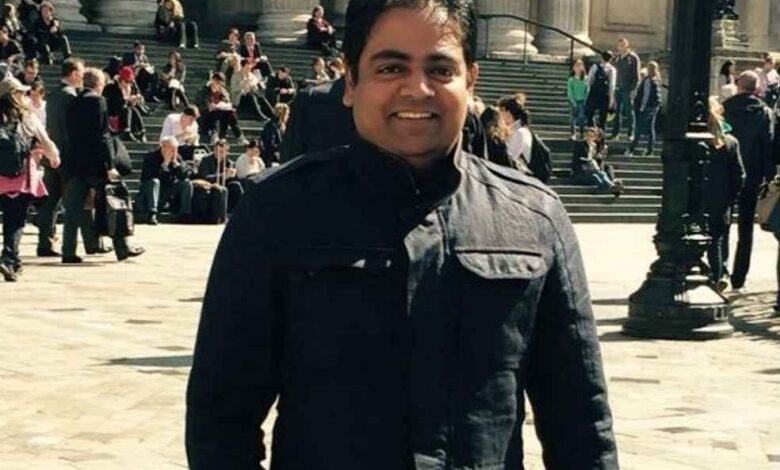
Enter Hari Shankar Tibrewal, the alleged hawala maestro (as mentioned by Enforcement Directorate in their press releases) accused of laundering billions through India’s Mahadev Betting App scandal. In a move that underscores the perilous intersection of global finance and small-state desperation, Tibrewal reportedly renounced his Indian citizenship in late 2025 and obtained Vanuatu’s golden passport, vanishing into a legal limbo far from the reach of New Delhi’s Enforcement Directorate (ED).
Tibrewal’s story is emblematic of a broader, troubling trend. Why would a nation like Vanuatu—home to just 300,000 people and battered by cyclones and rising seas—fling open its doors to figures like him? The answer lies in a toxic brew of economic survival, regulatory laxity, and the insatiable demand from high-net-worth individuals seeking escape from justice.
Citizenship by Investment (CBI) programs, pioneered by Caribbean microstates in the 1980s and emulated across the Pacific, promise quick cash infusions but often deliver a haven for money launderers, tax evaders, and fraudsters. This article dissects the mechanics of Vanuatu’s CBI scheme, Tibrewal’s entanglement within it, the existential drivers compelling small island nations to peddle passports, and the mounting global backlash. At over 2,000 words, it reveals how these programs, intended as lifelines, have become conduits for transnational crime.
Vanuatu’s Golden Gateway: The Mechanics of CBI
Vanuatu’s CBI program, rebranded as the Capital Investment Immigration Plan (CIIP) in 2021 after its origins as the Development Support Program (DSP) in 2015, is a model of expediency. Unlike traditional naturalization paths requiring years of residency, Vanuatu’s scheme processes applications in as little as 30 days, with no physical presence mandated. Applicants—singles, families, or even corporations—must make a non-refundable contribution to the National Development Fund, starting at $130,000 for a sole adult as of November 2025. Families of four can secure citizenship for around $180,000, plus ancillary fees for due diligence and processing that push the total to $150,000–$200,000.
The program’s allure is multifaceted. Vanuatu passports rank 39th on the Henley Passport Index, offering visa-free or visa-on-arrival entry to 130 destinations, including the UK, Singapore, and Hong Kong—though access to Schengen Europe remains suspended since 2022 due to EU concerns over due diligence. Critically, Vanuatu imposes no taxes on foreign income, capital gains, or inheritance, making it a magnet for offshore wealth parking. Dual citizenship is permitted, allowing holders to retain their original passports while adding a “Plan B” for mobility and asset protection.
Post-2025 reforms, announced in April and May amid international pressure, introduced nominal hikes in investment thresholds and enhanced background checks via partnerships with firms like Refinitiv. Yet, the program’s opacity persists: Applications are funneled through a cadre of licensed agents, many operating from Dubai or Hong Kong, who pocket 20–30% commissions. The government’s Citizenship Office, housed in Port Vila, touts the scheme as a “win-win” for development, claiming it generated $100 million annually pre-reforms—equivalent to 10% of Vanuatu’s GDP.
For economic offenders, this setup is paradise. No interviews, minimal documentation beyond proof of funds, and a jurisdictional firewall: Vanuatu lacks extradition treaties with major powers like India or the US, rendering arrest warrants toothless. As one anonymous CBI consultant quipped, “It’s citizenship on demand—cash upfront, questions later.”
The Hawala Kingpin’s Pacific Pivot: Hari Shankar Tibrewal’s Vanuatu Escape
Hari Shankar Tibrewal, a 45-year-old Kolkata native turned Dubai-based financier, embodies the CBI archetype: a shadowy operator whose legitimate facade crumbles under scrutiny. Rising from Marwari trading roots, Tibrewal built a hawala empire in the 2010s, shuttling undeclared remittances between India and the UAE via gems and textiles. His entanglement with the Mahadev Betting App—a ₹6,000 crore illegal gambling syndicate—catapulted him to infamy.
As Accused in the ED’s third chargesheet (March 2024), Tibrewal allegedly laundered ₹1,500 crore of betting proceeds, partnering with promoters Saurabh Chandrakar and Ravi Uppal to pump stocks like Gensol Engineering and Vikas Ecotech. Through his Dubai entity “Green Frontier,” he orchestrated “ramp-and-dump” schemes, inflating shares 300% before cashing out, crashing Gensol by 92% in April 2025.

By mid-2025, with ED raids seizing ₹580 crore in his assets and summoning his brother Nitin, Tibrewal’s options narrowed. Enter Vanuatu. Reports from Inventiva India, published in November 2025, detail how Tibrewal renounced Indian citizenship and acquired a Vanuatu passport via a Phuket-based agent, funneling funds through a Mauritian shell. The timing was impeccable: Just weeks after ED’s July 2025 probe into his Vikas Garg links, Tibrewal vanished from Dubai radars, resurfacing in media leaks as a “Vanuatu citizen” shielded from extradition.
Why Vanuatu for Tibrewal? Proximity to his Dubai base facilitated discreet applications, while the program’s speed outpaced Interpol’s Red Notice issuance. Hawala operators like him thrive on anonymity; Vanuatu’s passport, often called a “ghost visa,” erases digital footprints, allowing seamless integration into global finance. ED sources speculate Tibrewal used it to access Singapore banks for fresh laundering, echoing how Mahadev’s Chandrakar and Uppal—fellow Vanuatu holders—evaded capture post-2023 arrests. For Tibrewal, it’s not flight but fortification: A legal bulwark against India’s Prevention of Money Laundering Act (PMLA), where Vanuatu’s non-cooperation leaves probes in purgatory.
Economic Lifelines in a Sinking World: Small Islands’ Desperate Gamble
Small island developing states (SIDS) like Vanuatu, Nauru, and the Caribbean quintet (Antigua, Dominica, Grenada, St. Kitts-Nevis, St. Lucia) aren’t selling souls lightly—they’re auctioning sovereignty to stave off collapse. These 58 nations, spanning the Pacific and Atlantic, contribute a mere 1% to global GDP but bear 20% of climate vulnerabilities: Rising seas threaten to submerge 80% of Nauru’s land by 2050, displacing 12,500 residents. Tourism, remittances, and aid—once staples—faltered post-COVID, with Vanuatu’s 2023 GDP per capita at $3,500, half its pre-pandemic level.
CBI emerged as a panacea. Pioneered by St. Kitts in 1984 amid a debt crisis, it channels donor funds directly to treasuries, bypassing corrupt bureaucracies. Vanuatu’s DSP, launched during a 2015 Cyclone Pam recovery, has bankrolled infrastructure: Schools, hospitals, and seawalls, per government claims. In 2024 alone, CBI generated $120 million—40% of Vanuatu’s budget—funding everything from airport expansions to disaster reserves. Nauru, facing phosphate depletion, relaunched its program in 2025 to finance a “climate exodus,” pricing citizenship at $105,000.
The rationale is brutally pragmatic. SIDS lack natural resources or scale for FDI; CBI democratizes investment, attracting “friendly” capital from Asia and the Middle East. As LSE economist Kristin Surak notes, these programs “monetize marginal citizenship,” offering premium perks (mobility, tax exile) to the ultra-wealthy while injecting liquidity into fragile economies. For Vanuatu, it’s existential: Without CBI, fiscal deficits balloon, aid dependency deepens, and climate migration looms. Agents in Hong Kong and Dubai market it aggressively, promising “Plan B passports” to 1,500 applicants yearly—many from sanctioned Russia or sanctioned China, per 2025 leaks.
Yet, this “big business” thrives on asymmetry: Buyers gain leverage; sellers risk reputation. Caribbean nations waived investor taxes to lure tycoons, turning islands into de facto tax havens. Billionaires like Mukesh Ambani’s kin or anonymous oligarchs collect passports like trophies, with one UAE royal holding 14 by 2025. For SIDS, it’s a Faustian bargain: Short-term survival versus long-term stigma.
The Shadow Economy: Exploitation by Offenders and High-Profile Cases
CBI’s flaws—rushed vetting, agent incentives, jurisdictional silos—make it catnip for economic offenders. FATF’s 2023 report flags “high ML [money laundering] risks,” citing weak source-of-funds verification and agent collusion. In Vanuatu, four agents faced fraud probes in October 2025 for falsifying docs, per local media. Criminals layer illicit gains through crypto or shells, presenting “clean” donations while evading home-country seizures.

Tibrewal fits this mold: His $150,000 Vanuatu fee, allegedly from Gensol dumps, bought impunity amid ED’s ₹2,295 crore attachments. He’s not alone. Mahadev’s Chandrakar and Uppal, arrested in Dubai but bailed via Vanuatu passports, laundered ₹200 crore weddings while sponsoring Pakistan’s Kheloyar app. Fugitive IPL czar Lalit Modi applied in March 2025, dodging UK extradition over ₹470 crore fraud. Lebanese banker Khalil Fadel, convicted of $20 million embezzlement, secured Vanuatu citizenship in 2023 despite Interpol flags. Russian oligarchs, post-Ukraine sanctions, flooded the program; one, linked to $10 billion laundering, used it for EU backdoors.
Broader patterns emerge: Italy’s ‘Ndrangheta mafia funneled drug profits via Caribbean CBIs; Chinese spies embedded as “investors.” A 2024 LSE study documents 200+ offender cases across programs, with CBI enabling $1 trillion in hidden assets annually. For offenders, it’s not just escape—it’s empowerment: New identities spawn shells for ongoing crime.
Global Reckoning: Scrutiny, Scandals, and the Push for Reform
The CBI boom—$25 billion market by 2025—has invited a storm. EU suspensions crippled Vanuatu’s Schengen access in 2022, slashing applicant volumes 40%. FATF greylisted Vanuatu in 2022 for AML gaps, mandating revocations for 50 criminals by 2024. Scandals abound: A 2025 Phuket office bust exposed agent bribes; Cyprus’s 2020 implosion (revoking 2,000 passports) echoed in Vanuatu probes.
Critics decry “passport laundering”: Funds untraceable, due diligence performative. OECD’s 2023 blueprint urges biometric registries and MLATs; Caribbean states complied, hiking thresholds to $200,000. Vanuatu, defiant, revoked 21 citizenships in 2025 but defends the program: “It funds resilience, not crime,” per PM Ishmael Kalsakau. Yet, as Brussels mulls blacklists, SIDS face a dilemma: Scrap CBI and starve, or reform and repel legitimate buyers?
India’s response to Tibrewal et al. exemplifies bilateral friction. MEA blacklisted Vanuatu agents in 2025, pressuring revocations; a proposed CBI treaty aims to pierce anonymity. Globally, Interpol’s 2024 “Golden Visa Taskforce” targets 500 fugitives, but enforcement lags.
Conclusion: Citizenship’s Commodification and the Cost of Convenience
Hari Shankar Tibrewal’s Vanuatu gambit isn’t anomaly—it’s the apotheosis of CBI’s double-edged sword. For small islands, passports are lifelines amid existential threats, injecting vital capital where markets fail. Yet, in courting the wealthy without safeguards, nations like Vanuatu court calamity, enabling offenders to weaponize mobility against justice. Tibrewal, ensconced in Pacific obscurity, continues his machinations, a stark reminder that cheap citizenship cheapens the rule of law.
Reform beckons: Robust vetting, transparent funds, and extradition pacts could salvage CBI’s legitimacy. Until then, as climate waves lap higher and probes deepen, these programs teeter on a razor’s edge—between salvation and scandal. For economic fugitives, the message is clear: In Vanuatu’s azure embrace, freedom isn’t free, but it’s for sale.