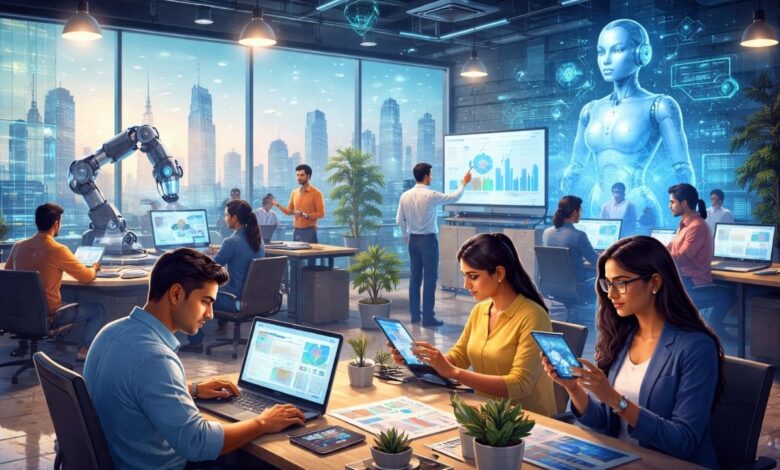
Work across India keeps shifting in surprising ways. Bengaluru’s new companies, along with global firms based in Mumbai, show how deeply machines now shape jobs and what people choose to do each day. Games such as Tongits, long shared during quiet moments at home, have started moving online, mirroring how fast gadgets reshape routine habits. A virus changes when and where tasks get done—yet deeper changes come from smart systems, self-running processes, web-based storage, and number-crunching tools that keep rewriting job needs. Staying capable means seeing clearly what these movements mean, whether you’re still learning or already building a career.
AI and Automation: Redefining Jobs Across Industries
Out there in India’s work world, artificial intelligence isn’t just a promise of tomorrow—it’s already at play today. Tools driven by smart systems now handle jobs once done by hand, like answering queries online or sorting paperwork without human touch. In factories and delivery networks, machines take over predictable steps, cutting down mistakes while speeding things up. As some familiar job paths fade, different kinds of openings appear—ones needing sharper skills and deeper knowledge.
A good example? Finance and insurance now need people who understand data science, train AI systems, or check how algorithms behave. Take manufacturing—robots require skilled engineers, while keeping machines running smoothly calls for experts in forecasting breakdowns. Those who blend deep industry insight with tech abilities tend to do well here.
Remote Work and the Rise of Digital Collaboration
Now comes the move toward working from home or splitting time between the office and house. Firms in tech, financial software, and internet promotion rely on platforms such as Slack, Trello, and Zoom—so being far away matters much less. People in India find it easier to join overseas businesses without moving abroad. This change brings more jobs where you travel while working, handle tasks online, or give expert advice through freelancing.
Working from home pushed people to get better at using tech for teamwork. What counts most today is how well someone shares ideas online and stays on schedule, not just their technical know-how. In India, workers find ways to stay sharp without fixed office hours. Companies respond by tracking progress through software tools while keeping staff involved in new ways.
New Career Paths Emerging in Tech
Technology is creating entirely new career trajectories in India. Some notable examples include
- AI and Machine Learning Specialists: Designing and training algorithms for sectors like healthcare, finance, and e-commerce.
- Cybersecurity Analysts: Protecting digital assets in an era of rising cyber threats.
- Cloud Architects and Engineers: Building and managing cloud infrastructure for businesses of all sizes.
- Data Analysts and Business Intelligence Professionals: Turning vast amounts of data into actionable insights.
- Digital Transformation Consultants: Helping traditional businesses transition to tech-enabled models.
Out there beyond Silicon Valley, changes quietly unfold. Stores now seek minds tuned to online flows instead of just shelves. Clinics bring in helpers focused on remote check-ins, not only front desks. Farms start relying on sensors and sharp data watchers rather than guesswork alone. One thing stands out—tools reshape who gets hired and what they must know. Skills shift without announcement, guided by circuits and code.
Upskilling and Lifelong Learning
Faster changes at work mean learning new skills matters more than ever. Not a choice, really—just part of staying relevant. Workers across India now turn to tools such as Coursera or Udemy, alongside efforts like NASSCOM’s Skill India push. These help build abilities in areas like artificial intelligence, handling data, and working with cloud systems. Quick certifications and brief programs—these give people room to shift toward growing fields while still holding on to present positions.
Learning new skills means changing how you think. Staying sharp comes from curiosity, not just courses. People grow by doing real work, joining challenges, and trying things out. Growth happens when effort never stops. The ones who keep moving adapt before they must.
Sector-Specific Impacts
Technology’s influence on career paths varies across industries:
- IT and Software: Coding jobs aren’t what they used to be—now it’s more about smart systems, teaching machines, or managing how software runs behind the scenes.
- Finance & Fintech: Robots that handle money tasks now work alongside humans in banks. Hidden digital ledgers reshape how value moves between people. Smart software learns patterns to suggest where cash should go next.
- Healthcare: Medicine now includes virtual care visits from home. Machines that learn can help spot sickness early. Handling patient details safely is becoming more important every day.
- Manufacturing & Logistics: Factories and supply chains now seek experts who handle robots and smart devices that share data, as well as those predicting machine failures before they happen.
A fresh look at particular fields shows staying strong in careers means matching your skills to what each industry needs. Not every path works the same way everywhere. Change follows where demand grows, not fixed formulas.
Preparing for the Future
For Indian professionals, preparing for the future of work requires a multi-pronged approach:
- Stay Technologically Literate: Understand the tools and platforms transforming your industry.
- Upskill Strategically: Focus on skills with long-term relevance, such as AI, cloud, cybersecurity, and data analytics.
- Embrace Flexibility: Be open to remote work, hybrid roles, and cross-functional responsibilities.
- Network and Collaborate: Digital networking and online collaboration can open doors to emerging opportunities.
- Adopt a Growth Mindset: Be willing to pivot and learn continuously as tech reshapes roles and career paths.
Conclusion
Out ahead of old routines, machines and smart software reshape how jobs get done across India. Instead of just changing tasks, they’re birthing roles nobody knew existed a decade ago. People building careers—whether fresh out of school or running their own ventures—must track these turns closely. Staying sharp means learning new skills, bending without breaking, and then mapping moves ahead. With mindset and effort, working life here could grow stronger than before.
Facing change head-on, it’s obvious—jobs aren’t vanishing because of tech, just shifting form. Whoever adjusts well finds themselves building the work world that comes next.