5000 Crore IPO Dream Of India’s Most Controversial Real Estate Company BPTP

In the bustling world of Indian real estate, few stories encapsulate the highs of meteoric growth and the lows of persistent scandals as vividly as that of BPTP Limited. Founded in the mid-2000s, BPTP has transformed from a modest developer into a major player in the Delhi-NCR region, boasting a land bank of over 2,500 acres at its peak and now eyeing a staggering Rs 5,000 crore-plus Initial Public Offering (IPO). Yet, this ambition is shrouded in controversy.
Led by its enigmatic chairman, Kabul Chawla, BPTP has been plagued by allegations of fraud, fund diversion, project delays affecting thousands of homebuyers, and regulatory violations, culminating in high-profile Enforcement Directorate (ED) raids in 2025. As of January 2026, with the company’s unlisted shares trading at around Rs 346 and revenue projections soaring to Rs 5,500 crore for FY26, the upcoming IPO represents not just a financial milestone but a potential pivot point—where past sins might be whitewashed through market legitimacy, or exposed to greater scrutiny.
This article delves deep into the saga of BPTP and its founder, drawing on extensive public records, court documents, media investigations, and recent developments. We explore Chawla’s personal journey, the company’s evolution, the aborted 2009 IPO attempt, a exhaustive catalog of legal entanglements, the renewed IPO push, and the shadowy political connections that have allegedly insulated BPTP from accountability. At its core, this is a tale of ambition intertwined with systemic flaws in India’s real estate sector, where political patronage, lax regulations, and investor optimism often collide.
1. Detailed History of Kabul Chawla
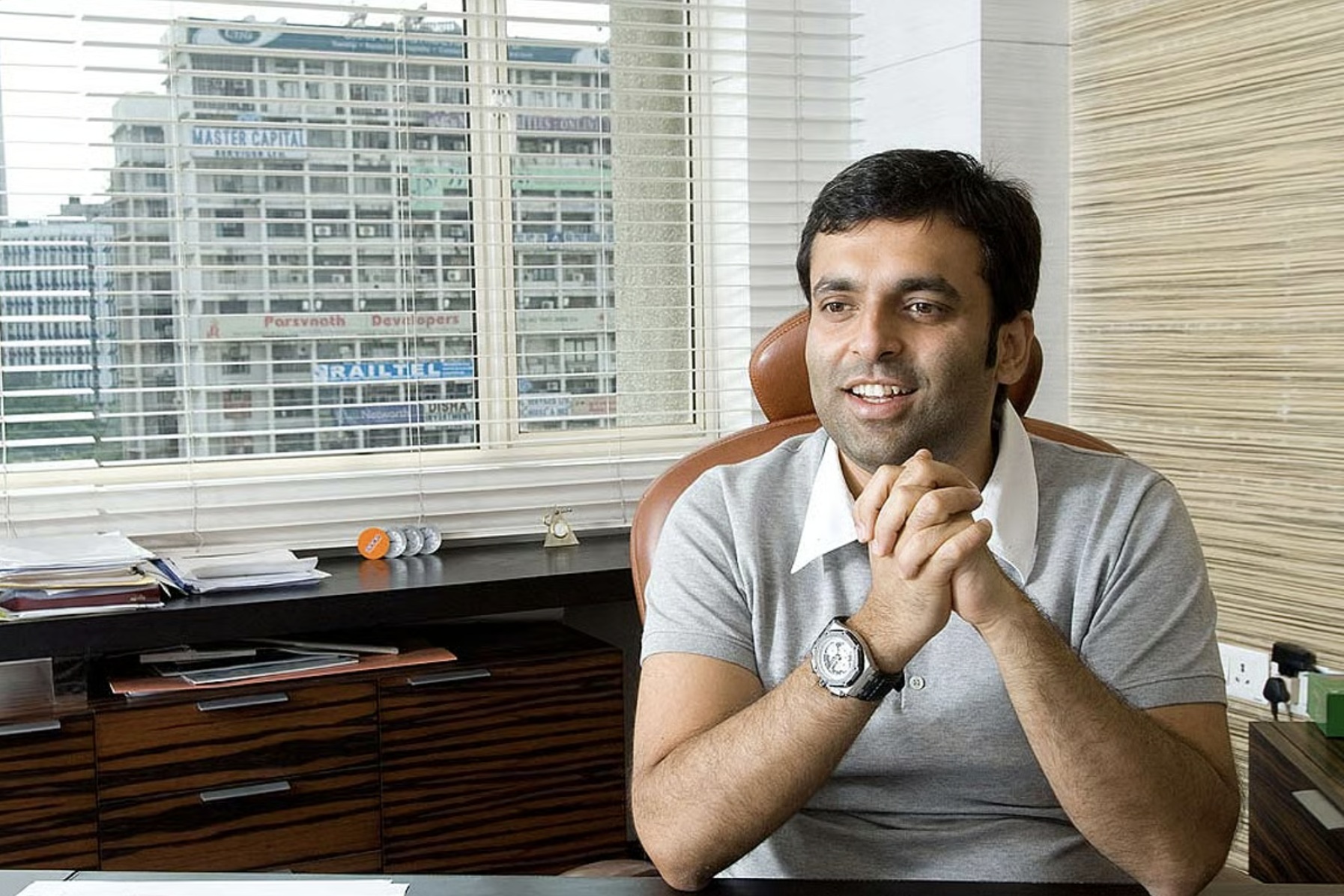
Kabul Chawla, born in 1983 in Karnal, Haryana, is a quintessential self-made entrepreneur whose rise mirrors the explosive growth of India’s real estate boom in the early 2000s. Coming from a middle-class business family with no prior deep roots in politics or property development, Chawla’s early life was unremarkable. His father was involved in modest local businesses in Karnal, a town known more for its agricultural heritage than skyscrapers. However, Chawla’s family ties extended to notable figures; he is a cousin of the late astronaut Kalpana Chawla, a connection that has occasionally been highlighted in media profiles to add a layer of prestige to his persona.
Chawla’s entry into real estate was influenced by his in-laws, the Tanejas of the TDI Group, a Sonepat-based developer known for township projects. Marrying into this family in the early 2000s provided him with insights and networks in the sector. At age 23, in 2006, Chawla founded Business Park Town Planners (BPTP) Limited with a small team of just 20 employees. Starting modestly, he focused on acquiring land in the burgeoning Delhi-NCR suburbs, particularly in Gurgaon (now Gurugram), Faridabad, and Noida—areas exploding with demand due to urbanization, IT hubs, and infrastructure like the Delhi Metro.
By 2008, Chawla had catapulted into the spotlight. BPTP outbid giants like DLF for a prime Noida plot, paying a record sum that signalled his aggressive expansion strategy. This move, however, was marred by payment delays, foreshadowing future financial strains. Chawla’s personal wealth ballooned; by 2011-12, his net worth was estimated at Rs 2,071 crore, with BPTP’s turnover hitting Rs 1,400 crore. He resided in a lavish home on Delhi’s upscale Amrita Shergil Marg, a symbol of his rapid ascent.
Chawla’s leadership style was hands-on and visionary. BPTP’s website espouses a mission to become “the most trusted and admired real estate company in the country,” emphasizing residential, commercial, and township developments. Under him, the company attracted blue-chip investors like CPI India (Citigroup affiliate), Gurgaon Investments (Blackstone), Harbour Victoria (J.P. Morgan), Kellorzo Holdings (Cyprus), and Kotak Advisors. These infusions, totalling hundreds of crores, fuelled a land bank exceeding 2,500 acres and 35+ projects.
Yet, Chawla’s story took a darker turn in the 2010s. Allegations of fraud and non-delivery surfaced, leading to FIRs and warrants. A 2011 non-bailable warrant for cheating an accountant of Rs 40 lakh marked the beginning. By 2015, a New York Times investigation exposed his ties to a $19 million Manhattan condo at the Time Warner Center, purchased through opaque entities like NYC Real Estate Opportunities (Delaware-registered, Singapore address). Chawla denied ownership, claiming it belonged to a cousin and he only stayed there occasionally. This contrasted sharply with BPTP’s claims of financial shortages delaying Indian projects, raising questions about fund diversion.
Amid mounting legal troubles—including over a dozen FIRs for cheating and conspiracy—Chawla reportedly relocated to the United States around 2011-2012, evading arrest while living luxuriously in New York. Reports suggest he absconded after the 2011 warrant, with red-corner notices rumoured but unconfirmed. Despite this, he remains BPTP’s Chairman and Managing Director, overseeing operations remotely. Kabul Chawla’s evasion has fuelled accusations of political protection, particularly from his alleged ties to Congress leaders during Haryana’s Bhupinder Singh Hooda era (2005-2014).
Chawla’s personal life remains low-profile; he avoids media interviews, with BPTP handling communications. In 2025, ED raids targeted his residences, probing undisclosed foreign assets and FEMA violations. As of January 2026, no arrests have been made, but the scrutiny intensifies. Chawla’s journey—from Karnal boy to billionaire builder—exemplifies the real estate sector’s opportunities and pitfalls, where ambition often outpaces accountability.
2. Detailed History of BPTP
BPTP Limited, originally incorporated as Business Park Town Planners Private Limited in 2006, emerged as a disruptor in India’s real estate landscape during the post-liberalization boom. Founded by Kabul Chawla in Gurgaon (now Gurugram), the company started with a focus on affordable and mid-segment housing in the National Capital Region (NCR). Its early operations were bootstrapped, leveraging Chawla’s in-law connections to the TDI Group for initial land deals.
By 2007, BPTP had secured significant foreign direct investment (FDI), including Rs 322.5 crore from CPI India Ltd. (Mauritius) and Rs 215 crore from Harbour Victoria Investment Holdings Ltd. (Mauritius)—funds later scrutinized for FEMA violations. These infusions enabled rapid expansion: a land bank of over 2,500 acres, primarily in Gurgaon, Faridabad, and Noida. Key projects included Parklands (a 2,000-acre township in Faridabad), Park Serene, Discovery Park, Park Elite, and commercial ventures like SEZs.
BPTP’s growth was exponential. From a turnover of negligible figures in its infancy, it reached Rs 1,400 crore by FY12, developing 35 residential and commercial projects. The company positioned itself as a “trusted” developer, emphasizing integrated townships with amenities. High-profile bids, like the 2008 Noida plot win over DLF, underscored its ambition. Investors flocked: Blackstone affiliates, J.P. Morgan, Kotak, and Cyprus-based entities, attracted by NCR’s realty surge.
The 2010s brought challenges. Economic slowdowns, regulatory changes (e.g., RERA in 2016), and internal issues led to delays. Projects like Parklands sold to 22,000+ buyers but remained incomplete, with land still agricultural. Park Serene, booked in 2008 by 400+ buyers (including military personnel), saw protests after years of non-delivery despite near-full payments. BPTP cited “external reasons” like approvals and market conditions, but critics alleged fund diversion.
By 2015, BPTP claimed deliveries of 9,990 units, with 5,000 families moved in. Yet, controversies mounted: consumer complaints, FIRs, and a 2015 NYT probe linking company funds to Chawla’s overseas luxuries. The company restructured, focusing on luxury segments like a Rs 6,000 crore project on 150 acres in Gurugram’s Sector 102.
As of January 2026, BPTP’s land bank stands at 45-50 million sq ft (~600 acres), concentrated along Dwarka Expressway and Faridabad. Revenue hit Rs 3,000 crore in FY25, projected at Rs 5,500 crore for FY26 and Rs 10,000 crore annually at 55% CAGR. Recent moves include a Rs 87.27 crore Gurugram land buy and a Rs 100 crore sale to Central Park. BPTP is also building a rental portfolio and investing Rs 3,000 crore in a 12-acre Gurugram housing project (July 2025 announcement).
Despite growth, BPTP’s history is tainted by unfulfilled promises. Over 310 buyers from Discovery Park filed complaints for 8+ year delays; Supreme Court cases like BPTP Spacio Park Serene (2023) highlighted non-delivery. The company’s evolution—from startup to scandal-plagued giant—reflects NCR’s realty woes: overambition, regulatory gaps, and buyer exploitation.
3. Failed IPO Attempt of 2009
BPTP’s first brush with public markets came in 2009, amid the global financial crisis’s aftermath. The company filed a Draft Red Herring Prospectus (DRHP) with SEBI in December 2009, aiming to raise funds for expansion. The DRHP painted a rosy picture: a land bank of ~2,500 acres, ongoing projects, and FDI inflows. It detailed litigations under “Outstanding Litigation and Material Developments” (pages 258-320), summarizing ~100+ cases involving the company, subsidiaries, group companies, promoter (Chawla), and directors.
At the time, controversies were minimal compared to later years. Criminal suits included one complaint under the Standards of Weights and Measures Act (2009, compounded with Rs 0.001 million fine) and a cheque bounce case against director Sudhanshu Tripathi. No ED, CBI, FIRs, or raids were mentioned. Civil suits (~70) focused on land disputes, like specific performance for Gurgaon land sales involving Chawla. Consumer cases (~20) involved delays in possession and refunds, totaling Rs 10-20 million claims, mainly for Gurgaon/Faridabad projects. Tax appeals were non-criminal. Overall, ~10 criminal, ~70 civil, ~20 consumer cases with low financial impact.
The IPO sought to capitalize on NCR’s growth, but it faltered. Market volatility post-2008 crisis, coupled with emerging payment issues (e.g., Noida plot delays), led to withdrawal. BPTP cited “market conditions” but internal strains—rising debts and early buyer complaints—played a role. The failed attempt highlighted BPTP’s opacity; the DRHP downplayed risks, setting the stage for future escalations. Post-2009, as projects stalled, the company’s reputation soured, making a relisting seem improbable until recent revival talks.
4. List of Controversies, Court Cases, Criminal Cases, FIRs, Raids by ED and CBI, Disputes of Kabul Chawla and BPTP
BPTP and Kabul Chawla’s controversies span over a decade, evolving from minor disputes to major probes. Here’s a comprehensive list, categorized for clarity, based on public records, court filings, and media reports.
Consumer Complaints and RERA/NCDRC Cases
BPTP faces hundreds of consumer disputes for delays, non-delivery, and deficiencies, affecting thousands. Key cases:
- BPTP Limited v. Terra Flat Buyers Association (2024): Supreme Court upheld NCDRC orders for Gurgaon Terra project delays; buyers sought compensation.
- Raghbir Singh v. BPTP (2021): NCDRC ordered refund for undelivered unit under Consumer Protection Act.
- Shahin Akhtar v. BPTP (2020): Ruled deficiency in service for non-execution of agreement.
- Neeraj Chowdhary v. BPTP (2023): Park Serene delays; refunds with interest ordered despite BPTP’s “not consumers” argument.
- Manju Sharma v. BPTP (post-2016): Refund of Rs 1 crore+ with 9% interest for Park Grandeura.
- Anoop Agarwal v. BPTP (2021): Rs 1.19 crore refund for Parklands plot.
- NCDRC Parklands Directive (2023): Rs 77.77 lakh refund to buyer.
- Haryana RERA (2025): Dismissed extra claims in Park Elite Floors but noted prior delay interest.
- Multiple (2011-2016): Over 100 wins for cheating; refunds ordered. E.g., 310 Discovery Park buyers complained of 8+ year delays.
- Unnamed (2021): Refund for 92% paid but delayed possession.
- Haryana RERA (2018-2019): Possession and interest ordered in Complaint No. 2051.
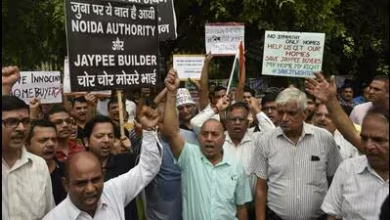
Protests: 2014 Jantar Mantar by 200+ army officers for Park Serene; ongoing buyer associations demand arrests.
Civil Suits
~50+ land-related, breach of contract cases:
- Land Irregularities (2011-2016): Suits for master plan manipulations, collusion.
- Parklands Dispute (2016): Civil claim by Mithun Aggarwal for smaller plot allotment.
- Ongoing (Delhi HC): Non-completion in Park Grandeura, Terra; class actions for performance/damages.
- Investor Disputes: CPI India v. BPTP; share subscription misrepresentations.
- Supreme Court (2025): Rajnesh Sharma v. BPTP for Park Land delays; refund with 18% interest ordered, criticizing unjust enrichment.
- US Court (2015): Harbour Victoria sued Chawla over assets; dismissed on jurisdiction.
Criminal Suits and FIRs
~10+ criminal proceedings, escalating post-2009:
- 2011 Faridabad FIR: Cheating 1,000+ buyers in Sector 85 (Rs 400 crore); non-bailable warrant against Chawla; he absconded.
- 2014 Faridabad FIR: Fraud on Rohit/Mamta Kapoor; incomplete plots.
- 2016 Gurgaon FIRs: Duping three investors of Rs 3 crore (Sector 102); IPC 420, 406, etc., against Chawla, Tripathi, others.
- 2016 Delhi FIR: Cheating Mithun Aggarwal (Rs 22.38 lakh).
- Multiple Delhi-NCR FIRs (2011-2025): Non-completion, fund diversion; e.g., 2024 FIR No. 193 (murder negligence in pool drowning).
- Pending Complaints (2025): Salary forgery, theft near BPTP station, dog relocation, buyer harassment.
No convictions; cases ongoing.
ED Raids and Probes
- August 2025 Raids: Searches at BPTP offices/residences in Delhi-NCR; FEMA violations on Rs 500+ crore FDI from Mauritius (2007-08) via prohibited put/swap options. Seized documents, froze lockers. Allegations: Chawla’s undisclosed New York property, fund diversion. Ongoing as of Jan 2026; no chargesheet.
CBI Raids
No credible reports of CBI raids on BPTP or Chawla. Searches yield only ED references; e.g., 2015/2018 mentions were misattributed or unconfirmed.
Other Controversies
- Environmental Violations: FIRs for green norm breaches (sector-wide, but BPTP implicated).
- Offshore Allegations: Mauritius shells, siphoned funds ($35 million+ per NYT).
- Protests: Buyer groups label BPTP “fraudsters”; Change.org petitions.
These issues have caused emotional and financial harm to buyers, with BPTP often settling or delaying resolutions.
5. Upcoming IPO of BPTP
As of January 2026, BPTP is gearing up for a landmark IPO, potentially raising over Rs 5,000 crore, amid a real estate IPO boom that saw Rs 319 billion raised since 2021. Reports from November 2025 indicate the company is appointing merchant bankers for listing, with talks in preliminary stages. This follows a FY25 revenue of Rs 3,000 crore, projected to hit Rs 5,500 crore in FY26 and Rs 10,000 crore annually.
Key drivers: A 45-50 million sq ft land bank, annual launches worth Rs 10,000 crore, and a luxury focus (e.g., Rs 6,000 crore Sector 102 project). CEO Manik Malik emphasizes strategic acquisitions and growth at 55% CAGR. Unlisted shares at Rs 346 reflect market confidence.
The IPO aims to fund expansion, reduce debt, and enhance transparency. However, ongoing ED probe and past litigations pose risks; disclosures will be scrutinized. Part of 2026’s mega IPO pipeline, including Jio Platforms, it could value BPTP highly but test investor appetite amid controversies.
6. Connection of Kabul Chawla with Congress Leaders and How the Scam Becomes a Legal Systematic Scam After IPO
Kabul Chawla’s ties to Congress leaders, particularly during Bhupinder Singh Hooda’s Haryana tenure (2005-2014), are well-documented and central to BPTP’s controversial rise. Media investigations portray a nexus where political patronage facilitated land acquisitions worth thousands of crores, turning alleged irregularities into a “systematic scam” legitimized through business growth—and potentially sanitized via IPO.
Hooda, Congress CM, oversaw a real estate boom in Haryana, issuing licenses and changing land use for developers. BPTP, unknown pre-2005, acquired vast parcels under his regime, benefiting from policies like subsidized allotments. Reports allege Chawla was part of Hooda’s “kitchen cabinet,” alongside figures like DLF’s KP Singh and Indiabulls’ Sameer Gehlaut (Hooda’s brother-in-law via marriage ties).
Rumors link BPTP to Robert Vadra, Sonia Gandhi’s son-in-law, whose Haryana ventures (e.g., Sky Light Hospitality) drew scrutiny for quick profits via DLF deals. A 2012 Hindu report notes Vadra’s first plot from Satyanand Yajee, a Hooda associate; speculative ties suggest BPTP benefited from similar networks. BPTP denies Vadra links, but critics cite a “you scratch my back” ecosystem.
This patronage allegedly shielded BPTP: No major actions during Congress rule despite early complaints. Post-2014 BJP shift, probes intensified, but Chawla’s non-arrest raises questions of lingering influence.
Post-IPO, this could evolve into a “legal systematic scam.” Listing provides fresh capital to settle debts, compensate buyers, and bury past via disclosures. Funds could legitimize diverted assets, with stock market validation masking irregularities. Investors might overlook history for growth potential, perpetuating a cycle where political-enabled gains are “washed” through public markets. However, SEBI scrutiny and ED probe could unravel this, risking value erosion.
In essence, Chawla’s Congress connections allegedly enabled BPTP’s empire; an IPO might institutionalize it, highlighting India’s realty-regulatory gaps.