BPTP Limited: Can a Company Under ED Probe And An Absconding Promoter Be IPO-Ready? Can A Man With An Active Arrest Warrant Receive Awards In India?
As BPTP Limited prepares for a Rs 5,000 crore-plus IPO, it does so under the shadow of an ED investigation and unresolved criminal cases against its promoter. The contradiction raises troubling questions about investor protection, regulatory vigilance, and how easily public honour can coexist with legal accountability in India.

The case of BPTP Limited forces many questions into uncomfortable focus.
Can a real estate company facing an Enforcement Directorate probe credibly ask public market investors to trust its numbers and governance? And more disturbingly, can a promoter with active non-bailable arrest warrants still appear in public and receive an excellence award in India?
Founded in the mid-2000s, BPTP rose swiftly during the real estate boom that reshaped Haryana and the wider Delhi-NCR region. At its peak, the company controlled a land bank of over 2,500 acres and positioned itself among the region’s major developers. Nearly two decades later, BPTP is reportedly preparing a Rs 5,000 crore-plus Initial Public Offering, projecting itself as a growth-oriented real estate story ready for market validation.
But behind the perfect picture of scale and ambition lies a long history of legal disputes, buyer complaints, and regulatory scrutiny that refuses to fade.

A Growth Story With Deep Fault Lines
BPTP is led by its chairman and managing director, Kabul Chawla, a promoter whose name has been linked to controversy for more than a decade. The company has repeatedly faced allegations of fund diversion, stalled or delayed projects, and failure to deliver homes to thousands of buyers across Delhi-NCR.
These concerns intensified in 2025, when the Enforcement Directorate conducted searches across multiple premises linked to BPTP in Delhi, Noida, and Faridabad. The action pushed the company back into the regulatory spotlight at a time when it was quietly preparing the groundwork for a public listing.
As of January 2026, BPTP’s unlisted shares are reportedly trading around Rs 346, while management projects revenues of nearly Rs 5,500 crore for FY26. The contrast is striking: rising valuations and IPO ambition on one side, and deepening regulatory heat on the other. The proposed IPO now falls either as a moment of genuine scrutiny or as a mechanism to repackage a troubled past for new investors.

Ambition On Paper
On paper, BPTP’s expansion plans are aggressive. The company claims a current land bank of 45–50 million square feet and has announced intentions to launch projects worth roughly Rs 10,000 crore annually. Alongside residential development, it plans to build a rental portfolio to generate recurring income.
Management has gone further, stating that existing land reserves could support projects worth up to Rs 40,000 crore in the years ahead. Financial projections mirror this optimism: revenues of Rs 3,000 crore in FY23 are expected to nearly double to Rs 5,500 crore.
Yet these projections sit uneasily alongside the reality of a promoter group under investigation by multiple agencies.
The ED Probe And FEMA Allegations
The Enforcement Directorate’s investigation into BPTP relates to alleged violations of the Foreign Exchange Management Act. According to official sources, the company received foreign investments exceeding Rs 500 crore during 2007–08 from Mauritius-based entities under the automatic route.
Investigators allege that these funds were structured through put and swap options that were not permitted under FEMA regulations at the time. The searches covered offices and premises linked to Business Park Town Planners Private Limited, the group’s flagship entity. Authorities are also examining allegations that Kabul Chawla held undisclosed foreign assets. Multiple FIRs registered against BPTP and its directors across Delhi-NCR have reportedly been linked to the ongoing probe.
BPTP has denied wrongdoing, stating that it is cooperating fully with authorities and remains confident that it will clarify its position in due course.
Disputes That Refuse To Go Away
Regulatory scrutiny is not the only challenge facing the company. Buyer and resident disputes continue to surface across BPTP projects. At Astaire Gardens, homeowners recently protested against the company’s maintenance arm, alleging arbitrary hikes in maintenance charges, lack of transparency, and delays in handing over control of the society.
The company has rejected these allegations, claiming that charges are supported by third-party audits and that residents themselves owe significant dues. Yet such disputes reinforce a pattern that has followed BPTP for years – conflict with buyers long after projects are sold and payments collected.
Celebration Amid Controversy
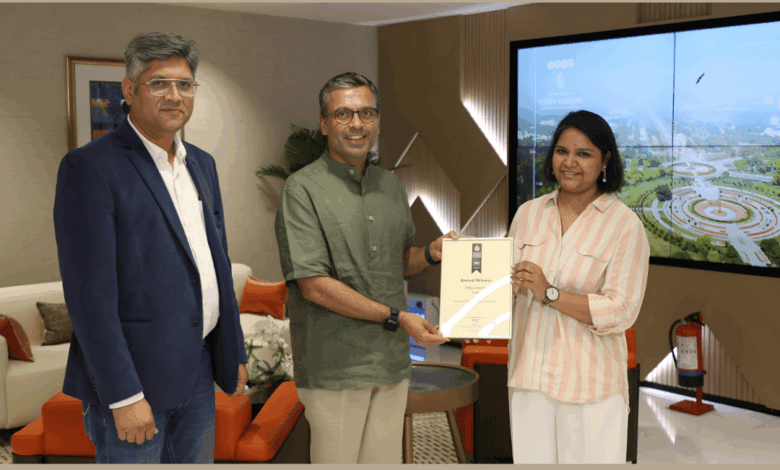
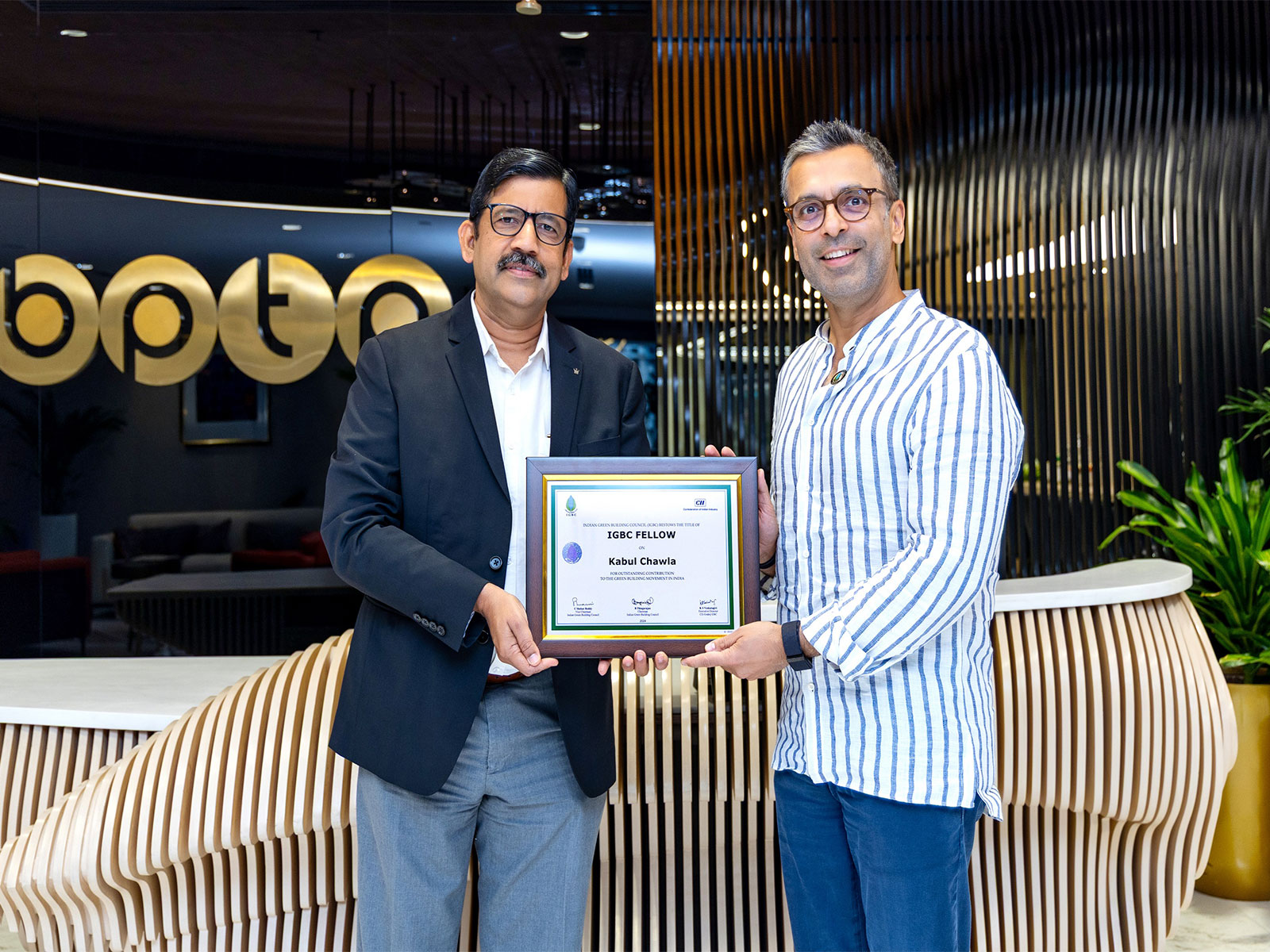
Against this backdrop, Kabul Chawla was recently conferred the IGBC Fellow Award by the Indian Green Building Council for his contributions to sustainable real estate development. The award ceremony was held at BPTP Capital City in Noida, an IGBC Platinum-certified project.
Awards may not constitute legal endorsements, but what is impossible to ignore is this – a promoter under ED investigation, facing multiple criminal cases, was publicly honoured for excellence. The episode raises uncomfortable questions about institutional due diligence, reputational gatekeeping, and the ease with which social legitimacy can be bestowed even when legal accountability remains unresolved.
The Other Side Of The Record
A closer look at Chawla’s legal history sharpens the contradiction. In 2011, he was accused of cheating more than a thousand homebuyers in a Faridabad housing project that allegedly never materialised. The amount involved was estimated at around Rs 400 crore. Around the same period, media reports linked him to the purchase of a luxury apartment in New York valued at approximately $19 million.
More critically, Kabul Chawla continues to face active non-bailable warrants issued by Indian courts. A Delhi court first issued such a warrant in December 2011, and it remains in force. Over the years, more than a dozen FIRs relating to cheating, misappropriation of funds, and failure to deliver projects have been registered against him across Delhi-NCR.
In 2024, another FIR was filed following the drowning of a child at a BPTP residential property, reigniting calls for his arrest. Despite this, Chawla is reported to be living abroad, having relocated to the United States over a decade ago, and is officially described as absconding.

The SEBI Lens: Is BPTP IPO-Ready?
Viewed through the lens of SEBI’s IPO eligibility framework, BPTP’s ambitions raise serious questions.
SEBI does not explicitly bar companies under investigation from filing a Draft Red Herring Prospectus. However, the regulatory framework places heavy emphasis on governance standards, promoter credibility, risk disclosure, and investor protection. Promoters and directors are expected to meet basic thresholds of compliance and integrity at the time of listing.
Active non-bailable warrants, multiple FIRs, and ongoing central-agency probes may not constitute an automatic disqualification, but they undeniably raise red flags. A company entangled in prolonged litigation, unresolved buyer grievances, and regulatory investigations sits uncomfortably with the spirit of SEBI’s governance and disclosure norms.
SEBI’s eligibility rules are not meant to be a box-ticking exercise. They exist to ensure that retail and institutional investors are not exposed to risks that are opaque, structural, or conveniently buried under projections and valuations.
The Larger Question
This brings the debate back to its core.
—How does India’s legal and regulatory system allow a situation where a promoter with active non-bailable warrants remains beyond the reach of law, while simultaneously being publicly honoured?
—And how does a company facing an ED probe and a trail of unresolved allegations position itself as IPO-ready without a clear resolution of these risks?
These are not questions limited to BPTP or Kabul Chawla. They go to the heart of enforcement, accountability, and whether market legitimacy is increasingly being allowed to outrun legal responsibility.
The Last Bit.
ED, Arrest Warrant, FIRs, Legal Disputes, Complaints, Absconding, Awards, IPO, Markets, Trust, Investors. These are the contradictions in BPTP’s trajectory.
On one hand, the company is preparing for what it describes as a transformational IPO – one that could unlock capital, reward early investors, and elevate its market stature. On the other, it faces an ED probe involving hundreds of crores, multiple FIRs alleging fraud and negligence, and a promoter with active non-bailable warrants who is officially listed as absconding.
SEBI’s IPO framework places governance, transparency, and regulatory compliance at the centre of investor protection. These are not procedural formalities; they are the foundation on which market trust is built.
Yet even as these unresolved legal concerns persist, the same promoter is able to receive public honours and institutional recognition. The disconnect is troubling.
If regulators allow a company wrestling with such unresolved credibility issues to access public capital, they owe investors a clear explanation of how risk, disclosure, and accountability have been reconciled.
Because markets ultimately run on trust. And trust is not created by projections, valuations, or awards. It is earned through accountability, transparency, and respect for the rule of law – principles that every IPO must satisfy before it invites ordinary Indians to buy into its story.