BPCL Corporate Card Fraud: The Fatal Gap Between The Swipe And The Dispenser!
How Corporate Fuel Card Fraud Is Bleeding India's Petroleum Sector: A Deep Dive into Systemic Vulnerabilities, Collusive Networks, and the Erosion of Trust in Corporate Fleet Programs


In the intricate machinery of India’s petroleum distribution system, where billions of rupees flow daily through digital payment instruments, a troubling pattern has emerged that threatens not merely individual corporate customers but the integrity of an entire ecosystem. Some cases have illuminated what appears to be a sophisticated network of fraudulent activity centered on corporate fuel cards, revealing vulnerabilities that may be far more widespread than initially apparent. This article examines how these schemes operate, who benefits, where oversight fails, and what the implications are for India’s economy, tax revenues, and the future of cashless fuel distribution.
Understanding the Corporate Fuel Card Ecosystem of BPCL
Before examining the mechanics of fraud, it is essential to understand the legitimate purpose and structure of corporate fuel card programs. Major petroleum companies like Bharat Petroleum Corporation Limited (BPCL) operate what are known as SmartFleet or corporate prepaid cards, designed to streamline fuel procurement for businesses operating vehicle fleets. These instruments serve multiple purposes. They eliminate the need for cash transactions and physical reimbursements, create auditable digital trails for accounting and tax purposes, enable centralized billing and expense management, and provide companies with consolidated statements that simplify reconciliation.
The economic scale of these programs is substantial. Corporate fuel cards represent a significant portion of organized petroleum retail sales in India, with thousands of businesses ranging from logistics companies to small enterprises relying on these instruments daily. The convenience they offer has made them indispensable in modern fleet management, but this same convenience, when combined with inadequate safeguards, creates opportunities for exploitation.
Then , what is the anatomy of the alleged Fraud, involving the The Cash-Out Mechanism?
The fraud pattern revealed follows a disturbingly systematic methodology that appears to have been refined over months of operation. The scheme operates through what critiques describe as a progressive escalation model, beginning with small test transactions and graduating to sophisticated cash extraction operations.
In this case under examination, the pattern began innocuously in the early months of 2025 with small-value transactions that might represent unauthorized refuelling of personal vehicles such as motorcycles or scooters. These initial transactions served dual purposes, testing whether the cardholders were monitoring their statements closely and establishing a baseline of activity that would not immediately trigger suspicion. The amounts were modest enough to blend into legitimate operational expenses, particularly for busy professionals managing multiple vehicles and trusting employees with day-to-day fuel procurement.
By mid-2025, the operation had evolved significantly. Transactions began appearing in round figures, specifically multiples of one thousand rupees. This represented a critical shift from opportunistic misuse to deliberate cash extraction. Round-figure transactions are statistically anomalous in genuine fuel purchases, where the final amount typically reflects whatever volume was needed to fill the tank, resulting in odd rupee and paise combinations. The appearance of these round figures suggests that fuel was not being dispensed at all, but rather that the transaction was being processed as a cash withdrawal disguised as a fuel purchase.
The sophistication increased further as the year progressed. By the latter months, transactions in multiples of five thousand rupees became common, with frequency intensifying at specific retail outlets. The geographic pattern also shifted, with high-value transactions occurring at locations that were not on the normal routes of the cardholder’s personal or professional travel. This geographic displacement is a critical red flag because legitimate fuel purchases cluster around predictable patterns, following commute routes, business locations, and residential areas.
The operational methodology, as allegedly described by retail outlet staff under questioning, reveals the mechanics of the cash-out process. The perpetrator would arrive at participating outlets, notably not in the vehicle associated with the fuel card but in a different vehicle entirely. An associate, would present the card and enter the personal identification number. The point-of-sale terminal would process the transaction as a standard fuel purchase, debiting the corporate account and crediting the merchant’s settlement account. However, instead of fuel being dispensed into a vehicle, cash would be handed over to the participants, minus a commission retained by the outlet staff who facilitated the transaction.

This commission structure is particularly revealing because it demonstrates that the alleged fraud required active participation (of parties) rather than mere negligence. Retail outlet employees were not simply looking the other way but were active participants in the scheme, receiving financial compensation for their role in converting digital fuel credits into physical cash. The fact that such arrangements became routine, suggests either complete absence of supervisory oversight or, more troublingly, awareness and complicity at management levels within the retail operations.
The Collusive Network Activates When Trust Systems Fail!
The success of such alleged fraud schemes depends fundamentally on the breakdown of trust relationships at multiple levels. The case reveals at least three distinct layers of complicity, each representing a failure of institutional controls that are supposed to prevent exactly this type of malfeasance.
The first layer involves the immediate perpetrator, in this case an employee entrusted with vehicle custody and fuel card access. Employment relationships inherently involve trust, particularly for positions like drivers who have access to valuable assets and financial instruments. The onboarding process typically includes document verification, but background checks on character and financial history are often cursory, especially for what are perceived as routine service positions.
Once employed, drivers and other fleet operators often receive fuel cards with personal identification numbers, either directly or through exposure during normal use. The assumption is that the employee’s self-interest in maintaining employment will prevent malfeasance, but this calculation fails when the potential financial gain exceeds the perceived value of the job, particularly if the employee believes detection is unlikely.
The second layer involves the retail outlet staff who actively enabled the cash-out transactions. This represents perhaps the most troubling aspect of the scheme because it suggests that what should be a control point in the system has instead become a vulnerability. Retail outlets are supposed to be the first line of defense against payment card fraud. Employees operating point-of-sale terminals are, in theory, required to ensure that fuel is actually being dispensed before processing a transaction. The fact that staff members not only ignored this requirement but established routine procedures for cash extraction indicates either inadequate training, absent supervision, or active corruption incentivized by the commission structure.
Consider the practical mechanics of what these transactions required. An outlet employee had to either override system protocols that should link POS authorization to fuel dispenser activation, or manually process transactions without any fuel being pumped. This is not a momentary lapse or an accidental error but a deliberate series of actions repeated across multiple transactions. The employee then had to handle the cash disbursement, maintain the false records showing fuel sales that never occurred, and presumably coordinate with colleagues to ensure consistency in the deception. Such elaborate procedures could not have been sustained over months without either the knowledge or the willful blindness of outlet management.
The third layer involves potential failures at the institutional level within the petroleum company itself. Corporate fuel card programs are not unmonitored. Petroleum companies maintain sophisticated data analytics capabilities that track transaction patterns, identify anomalies, and flag potential fraud. The question that emerges from cases like this is why these systems did not detect or did not act upon the obvious red flags present in the transaction data. Round-figure transactions clustered at specific outlets, geographic inconsistencies, transaction frequencies exceeding normal vehicle refuelling intervals, and transaction volumes inconsistent with vehicle fuel tank capacities should all trigger automated alerts in any competently designed fraud detection system.
The Geographic Red Flag: Location as a Fraud Indicator
One of the most revealing aspects of the case is the geographic pattern of fraudulent transactions. Legitimate fuel purchases create predictable spatial patterns. Vehicles refuel near their base locations, along regular commute routes, and at stops during longer journeys. When transactions suddenly begin appearing at outlets far from these established patterns, particularly outlets located away from major highways or in areas the vehicle owner does not frequent, this represents a significant deviation that should immediately attract scrutiny.
In this examined case, high-value transactions began appearing at an outlet described as not being on the normal routes of the cardholder’s household or office travel. This geographic displacement is particularly suspicious when combined with the round-figure transaction pattern and the increased frequency. The logical question becomes: why would a driver consistently travel out of their way to refuel at a distant location when multiple outlets exist along their normal routes? The answer, as the investigation suggests, is that geography was selected not for convenience but for complicity. The outlets where fraud occurred were chosen because staff there were willing to participate in the cash-out scheme.
This geographic selection also serves a practical purpose for the perpetrators. By conducting fraudulent transactions away from the cardholder’s normal area of operation, the perpetrators reduced the likelihood of chance encounters or recognition. If the cardholder happened to visit one of these outlets legitimately, they might notice familiar faces or be recognized by staff, potentially exposing the scheme. Distance provided operational security for the fraud network.
The Technology Gap: How Digital Systems Enable What They Should Prevent
The fundamental irony of corporate fuel card fraud is that it exploits digital payment systems that were specifically designed to prevent cash-based corruption, theft and inconvenience. The migration from cash to digital instruments in fuel procurement was driven by the recognition that cash transactions created opportunities for pilferage, false accounting, and tax evasion. Corporate fuel cards were meant to solve these problems by creating transparent, traceable records of every fuel purchase.
However, the digitization of payment has not been accompanied by adequate digitization of verification. The critical vulnerability lies in the gap between payment authorization and fuel dispense confirmation. In the current system at most outlets, a card swipe and PIN entry are sufficient to process a transaction. The point-of-sale system does not independently verify that fuel was actually dispensed into a vehicle. There is no automated linkage between the POS terminal and the fuel dispenser that would prevent transaction completion without corresponding fuel flow.
This gap exists because petroleum retail operations have evolved incrementally rather than being designed holistically. Fuel dispensers have electronic controls and measurement systems, and POS terminals have card processing capabilities, but these systems often operate independently rather than as integrated components of a unified transaction platform. The result is that the human operator becomes the linking element, and when that human operator is corrupt, the entire verification chain breaks down.
Advanced fraud prevention would require what is known as transaction triangulation, where multiple independent data sources must align for a transaction to be considered legitimate. In the fuel context, this would mean requiring the POS authorization, the fuel dispenser activation record, and potentially even the vehicle identification to all match before finalizing the transaction. Some modern systems implement vehicle-mounted transponders or geolocation verification to ensure that the vehicle associated with the card is actually present at the outlet. However, these advanced systems are far from universal in India’s petroleum retail network, particularly at smaller or independently operated outlets.
The Commission Economy: How Fraud Becomes Systematic
One of the most disturbing revelations from the case is the existence of a commission structure for facilitating fraudulent transactions. According to statements allegedly obtained from outlet staff, cash was disbursed to perpetrators minus a commission retained by the facilitating employees. This commission structure transforms what might be isolated incidents of fraud into a sustainable underground economy.
The economics of this arrangement are instructive. From the perpetrator’s perspective, even after paying the commission, the net proceeds from fraudulent transactions substantially exceed any legitimate earnings they might receive. A driver earning perhaps fifteen to twenty thousand rupees monthly can extract many times that amount through systematic fraud, making the risk-reward calculation appealing, particularly if they perceive detection as unlikely.
From the outlet staff’s perspective, the commission represents additional income with relatively low personal risk. The staff member is not stealing directly from the petroleum company or the cardholder but is merely facilitating a transaction that the computer system processes as legitimate. If questioned, the employee could potentially claim ignorance, arguing that they simply processed the transaction as requested without knowledge of the fraud. This plausible deniability, even if thin, reduces the perceived risk of participation.
The existence of such commission arrangements also suggests that this is not an isolated phenomenon but may be widespread. If retail outlet staff have established protocols and pricing structures for facilitating cash-out transactions, this implies either prior experience with similar schemes or knowledge that such services are in demand. The question becomes: how many other corporate cardholders are being similarly defrauded but have not yet detected the pattern or have not pursued the matter legally?
The Detection Delay: Why Fraud Persists Unnoticed
Perhaps the most troubling aspect of such fraud schemes is how long they can continue before detection. In this examined case, the fraudulent activity allegedly continued for approximately seven to eight months before being discovered, during which time the accumulated losses reached several hundred thousand rupees. This detection delay is not accidental but reflects several structural factors in how corporate fuel expenses are monitored and managed.
First, corporate fuel card statements serve primarily accounting and tax documentation purposes. They are used to categorize expenses, claim input tax credits, and prepare financial statements. In this context, the focus is on ensuring that total expenditures are accurately recorded and properly documented, not on verifying whether each individual transaction represents a legitimate fuel purchase. Accountants reviewing these statements are looking for mathematical errors, missing invoices, or tax calculation issues, not for fraud patterns requiring geographic analysis or statistical anomaly detection.
Second, busy professionals managing multiple vehicles and various operational aspects of their businesses often delegate fuel procurement entirely to drivers or fleet managers. The implicit trust relationship means that as long as vehicles are available when needed and statements appear generally reasonable, there is little incentive to conduct forensic review of individual transactions. The assumption is that employees will not jeopardize their employment for relatively small gains, an assumption that proves incorrect when the gains are actually quite substantial and the perceived risk of detection is low.
Third, the gradual escalation of fraud helps avoid detection. If transactions had immediately jumped to high values, this might have triggered immediate attention. By starting with small amounts and progressively increasing over time, the fraudulent transactions could potentially be rationalized as reflecting increased fuel prices, additional vehicle usage, or other legitimate factors. The human tendency to normalize gradual changes means that what might appear obvious in retrospect can be invisible as it unfolds.
The Revenue Impact: Beyond Individual Victims
While the immediate victims of corporate fuel card fraud are the individual businesses whose accounts are debited for fuel they never received, the broader economic impact extends far beyond these direct losses. The existence of systematic fraud in the petroleum retail sector has implications for government revenue, tax collection, market competition, and the integrity of India’s digital payment ecosystem.
Consider first the tax implications. Corporate fuel card transactions generate tax revenues at multiple points. The petroleum products themselves are subject to excise duties and state taxes, which constitute a significant portion of both central and state government revenues. When fuel is genuinely purchased and consumed, these taxes are paid, recorded, and contribute to public finances. However, in cash-out fraud schemes where no fuel is actually dispensed, the tax picture becomes murky.
If the transaction is recorded as a fuel sale but no fuel leaves the outlet’s inventory, this creates a discrepancy between reported sales and actual stock depletion. Honest outlets would notice this discrepancy during inventory reconciliation because their physical fuel stocks would not match their sales records. However, outlets participating in fraud schemes must necessarily engage in false accounting to conceal the mismatch. This might involve showing fuel sales that actually did occur to other customers as going to different accounts, effectively laundering the fraudulent transactions through the books. Alternatively, outlets might under-report legitimate sales to match the inventory depletion, which would result in tax evasion on those genuine transactions.
The revenue impact extends to input tax credit chains under the Goods and Services Tax regime. Businesses claiming input tax credits for fuel expenses rely on the validity of their purchase documentation. If those purchases are fraudulent, the input tax credits are illegitimate, effectively meaning the government is subsidizing fraudulent transactions through reduced tax liability. When aggregated across many businesses and many fraudulent transactions, the cumulative revenue loss to the exchequer could be substantial.
The Institutional Response Doubt That Why The Vigilance Fails?
The case in question calls upon the petroleum company’s Chief Vigilance Officer, Business Head, General Manager for Legal Affairs, and Chairman to initiate investigations, preserve evidence, and take corrective action. This appeal to institutional leadership raises fundamental questions about why such fraud could occur and persist within a major public sector enterprise with established governance structures.
Bharat Petroleum Corporation Limited (BPCL), like other major petroleum companies, maintains vigilance departments specifically tasked with detecting and preventing fraud, corruption, and malfeasance. These departments have access to transaction data, audit capabilities, and investigative powers. The existence of systematic fraud despite these institutional safeguards suggests either inadequacy of the vigilance mechanisms or insufficient prioritization or ignorance of retail-level fraud prevention.
Well, being honest, ignorance in Indian investigative and public sector institutions is not a new thing-
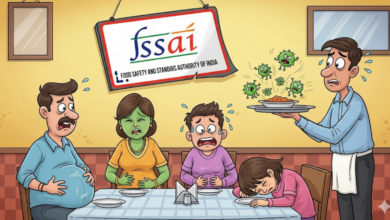
- take FSSAI for example, which allow the hazardous chemical loaded products to roam into Indian food market;
- or DGCA punishing in peanuts to Indigo that harasses the customers;
- or SEBI allowing criminal cases laden companies to launch their IPOs to implode the Indian securities market!
Seems like Indian agencies are entities or regulators on paper, and toothless tigers otherwise…
We are not saying that these kind of alleged corporate fraud is done intentionally. We understand that several factors may contribute to institutional vigilance failures.
First, the sheer volume of transactions processed daily through corporate fuel card programs makes comprehensive monitoring challenging. Millions of swipes occur across thousands of outlets, generating vast datasets that require sophisticated analytics to identify patterns. If the analytical tools are not adequately designed or if anomaly detection thresholds are set too broadly to avoid false positives, genuine fraud can slip through unnoticed.
Second, organizational incentives may not adequately prioritize fraud prevention at the retail level. For petroleum companies, major concerns typically centrE on wholesale-level issues like adulteration, theft from depots, or large-scale accounting irregularities. Retail fraud involving individual cardholders and relatively small transaction values may not receive the same level of attention or resource allocation, even though the aggregate impact across all instances could be substantial.
Third, the relationship between petroleum companies and their retail dealers creates potential conflicts of interest in fraud detection and enforcement. Dealers are, in many cases, independent business operators who have invested significantly in establishing and operating their outlets. They are also key partners in the petroleum company’s distribution network. Taking strong action against dealers implicated in fraud could disrupt these relationships, potentially affecting supply chain operations. This creates an institutional disincentive to aggressively pursue dealer-level malfeasance, particularly if individual cases can be quietly resolved without public exposure. But, again, ignorance from the top management or not taking cognizance of what is happening inside the institution is more of a concern!
The Legal Labyrinth: Pursuing Criminal Accountability
The legal aspects of corporate fuel card fraud present complex challenges that help explain why such schemes may persist despite being clearly criminal in nature. The case examined involves allegations that could potentially constitute cheating, criminal breach of trust, theft, and conspiracy under the Indian Laws. However, converting these allegations into formal criminal proceedings and ultimately convictions requires navigating a complex legal landscape.

Criminal breach of trust provisions require establishing that the accused was entrusted with property or dominion over property and dishonestly misappropriated or converted that property. In the fuel card context, this means demonstrating that the driver or employee had legitimate custody of the card for authorized purposes but intentionally diverted it to unauthorized use. The prosecution must prove both the entrustment relationship and the dishonest intention, which requires documentary evidence and often witness testimony.
Cheating charges require demonstrating that someone was deceived and that the deception caused them to deliver property or value. Here, the question becomes who exactly was deceived. The cardholder who provided the card to their driver may have been deceived about how the card would be used, but they voluntarily entrusted it. The petroleum company processing the transaction was arguably deceived into believing fuel was being dispensed when it was not, but they are not the direct victims of the property loss. This complexity in identifying the precise victim and the precise deception can complicate prosecution.
The involvement of multiple parties across different jurisdictions adds further complexity. If the perpetrators, the retail outlets, and the cardholder are all located in different police jurisdictions, questions arise about which police station has authority to investigate and where charges should be filed. Each jurisdiction may have different approaches to handling such cases, and transferring matters between jurisdictions can cause significant delays.
Perhaps most significantly, the classification of such offenses can affect police response. If police view the matter as primarily a civil dispute between a cardholder and their employee over misuse of company resources, they may be reluctant to register criminal cases, preferring instead that the parties resolve the matter privately. This reluctance is compounded when the amounts involved, while substantial to individual businesses, are not enormous in absolute terms. Police and judicial resources are limited, and economic offenses involving lakhs rather than crores of rupees may receive lower priority.
The Systemic Solution: What Needs to Change?
Addressing corporate fuel card fraud effectively requires interventions at multiple levels, from technology implementation to regulatory frameworks to institutional practices. The problem is not simply about catching individual perpetrators but about redesigning systems to prevent fraud from occurring in the first place.
At the technological level, the most critical need is for integrated transaction verification systems that link payment authorization directly to fuel dispense confirmation. Modern fuel dispensers are equipped with electronic flow meters and control systems that can communicate digitally with point-of-sale terminals. Implementing mandatory integration between these systems would ensure that a payment transaction cannot be completed unless the dispenser records confirm that fuel was actually delivered. This would eliminate the ability to process “swipe for cash” transactions because the system would not allow completion without fuel flow.
Vehicle identification systems could provide an additional layer of verification. Technologies ranging from RFID tags to mobile app-based geolocation could confirm that the specific vehicle associated with a fuel card is actually present at the outlet when a transaction is processed. This would prevent the use of cards at locations where the associated vehicle is not present, as allegedly occurred in the examined case where the perpetrator arrived in a different vehicle than the one registered to the card.
Real-time anomaly detection systems should be standard features of corporate fuel card programs. These systems should automatically flag transactions that deviate from established patterns, including round-figure amounts, geographic inconsistencies, frequency anomalies, and volumes inconsistent with vehicle specifications. Rather than relying on cardholders to manually review statements and identify problems, the system itself should proactively alert them to suspicious activity, potentially even requiring additional verification before unusual transactions are approved.
From a regulatory standpoint, petroleum companies should be required to maintain comprehensive transaction audits including CCTV footage preservation at retail outlets for specified periods. Current practices regarding CCTV footage are often inconsistent, with many outlets overwriting footage after brief retention periods. For corporate fuel card transactions, particularly those above certain value thresholds, petroleum companies should be required to maintain footage for extended periods such as six months or a year, providing evidentiary support if fraud allegations later emerge.
The relationship between petroleum companies and retail dealers requires greater scrutiny and clearer accountability frameworks. Dealer agreements should explicitly address fraud prevention responsibilities, including staff training requirements, system integrity obligations, and consequences for facilitating fraudulent transactions. Periodic audits should specifically examine whether transaction patterns at particular outlets suggest systematic irregularities, with dealers required to provide satisfactory explanations or face suspension.
The Human Element: Trust, Verification, and Accountability
While technological and regulatory solutions are essential, the human dimensions of fraud prevention cannot be ignored. The fundamental tension in employment relationships involves the balance between trust and verification. Employers must trust their employees to perform their duties honestly, yet must also implement verification mechanisms that do not undermine that trust or create hostile work environments.
For positions involving access to financial instruments or valuable assets, enhanced due diligence at the hiring stage is prudent. This includes not only document verification but also meaningful reference checks, employment history validation, and potentially background screening for financial irregularities or criminal records. The incremental cost and time required for such screening is minimal compared to the potential losses from fraud, yet many employers skip these steps for what they perceive as routine positions.
Once employed, the relationship should involve both clear expectations and reasonable monitoring. Employees provided with fuel cards should receive explicit instructions about authorized uses, prohibited practices, and the consequences of misuse. These instructions should be documented, with employees acknowledging their understanding in writing. Simultaneously, employers should inform employees that transaction patterns are monitored and that anomalies will be investigated, creating a deterrent effect without requiring surveillance that might be seen as intrusive or demeaning.
The question of PIN security requires particular attention. In the examined case, PINs were reportedly written on card sleeves by an accountant for convenience, and the same PIN was used across multiple cards. While this does not legalize unauthorized transactions, it dramatically facilitates them. Best practices for PIN security include never writing PINs down, using different PINs for different cards, and periodically changing PINs. For corporate cards where multiple authorized users exist, consideration should be given to assigning each user a unique sub-PIN or requiring mobile app authentication rather than simple PIN entry.
Conclusion: The Price of Systemic Failure
The case of corporate fuel card fraud illuminated by recent case proceedings represents far more than an isolated incident of employee dishonesty. It reveals a systemic vulnerability in India’s petroleum retail payment ecosystem, a vulnerability that combines technological gaps, institutional failures, and human factors to create opportunities for sophisticated fraud that can persist for extended periods while extracting substantial value.
The direct victims are the businesses whose accounts are debited for fuel they never received, losses that can amount to hundreds of thousands or even millions of rupees over time. These losses affect business operations, reduce profitability, and undermine confidence in digital payment instruments that were supposed to make transactions more secure and transparent.
The indirect victims include honest retail outlets whose reputations suffer when fraud taints the sector, petroleum companies whose corporate customer relationships are damaged by inadequate fraud prevention, and ultimately the government and taxpayers who lose revenue when fraudulent transactions create tax accounting irregularities and facilitate evasion.
The solution requires coordinated action across multiple domains. Petroleum companies must invest in integrated verification systems, real-time anomaly detection, and robust vigilance mechanisms. Regulatory authorities must establish and enforce standards for transaction security, evidence preservation, and dealer accountability. Businesses using corporate fuel cards must implement better controls over card custody, PIN security, and transaction monitoring. And law enforcement must treat such fraud as serious economic crime warranting thorough investigation and prosecution rather than as private disputes to be settled between parties.
Until these systemic changes occur, corporate fuel card fraud will likely persist as a lucrative underground economy, benefiting a network of corrupt employees and complicit retail staff while imposing costs on legitimate businesses, honest dealers, and the public revenue. The question is not whether reform is necessary, but whether institutions will act decisively before the problem metastasizes further, ultimately undermining trust in digital payment instruments and forcing businesses back toward cash-based systems with all their attendant inefficiencies and corruption risks.
The hemorrhage continues. The only question is when those responsible for the system’s integrity will finally apply the tourniquet.
This analysis is based on documents and is presented in the public interest to illuminate systemic vulnerabilities in corporate fuel card programs. The examination focuses on institutional practices and systemic failures rather than making allegations against specific individuals or organizations.