A Producer’s Budget In A Consumer Economy. Reading Between The Lines Of Budget 2026
The Union Budget 2026–27 lays out an ambitious, supply-side vision anchored in three Kartavyas - growth, human capacity, and inclusion. Heavy on manufacturing, infrastructure, and strategic self-reliance, the Budget makes a clear trade-off: long-term economic capacity over immediate middle-class relief.

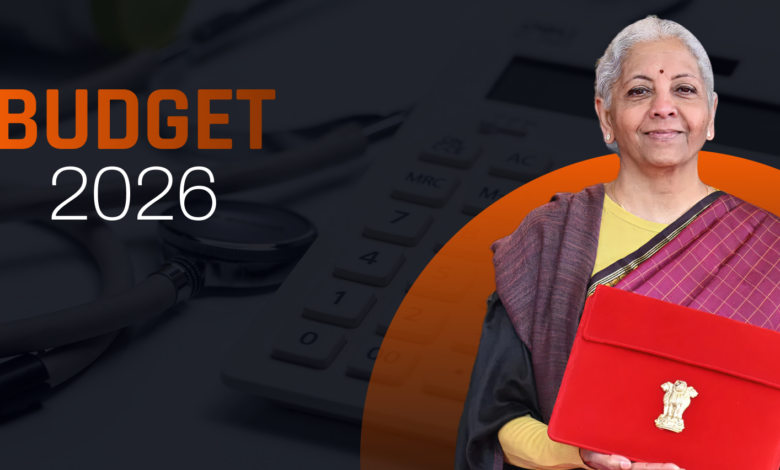
When Finance Minister Nirmala Sitharaman rose to present the Union Budget 2026–27, the government framed its economic vision around three clearly articulated Kartavyas – accelerating growth, building human capacity, and ensuring inclusive development.
At first glance, the architecture of the Budget appears expansive, ambitious, and unapologetically long-term. But beneath the policy heft and sectoral announcements lies a clear philosophical choice: this is a Budget that prioritises production, capacity creation, and strategic self-reliance over immediate consumption relief. India’s path to Viksit Bharat @2047 will not be paved with short-term tax giveaways, but with factories, corridors, clusters, and supply chains.
First Kartavya: Accelerating and Sustaining Economic Growth
The first Kartavya anchors the Budget’s core economic strategy – boosting productivity, competitiveness, and resilience. This is where the government has placed its biggest bet, both financially and ideologically.
Manufacturing Moves to the Centre Stage
Manufacturing is no longer just a slogan in this Budget; it is the organising principle.
The government has rolled out the Biopharma SHAKTI initiative with a ₹10,000 crore outlay over five years, aiming to position India as a global biopharma and biosimilars hub. The creation of new NIPER institutions, the upgradation of existing ones, and the establishment of over 1,000 accredited clinical trial sites signal a serious attempt to move India up the pharmaceutical value chain – from volume-driven generics to innovation-led manufacturing.
In electronics and semiconductors, India Semiconductor Mission 2.0 marks a shift from assembly-centric incentives to a broader ecosystem play – covering equipment, materials, full-stack IP development, and industry-led R&D. The enhanced ₹40,000 crore allocation for electronics component manufacturing further reinforces this direction.
Equally strategic is the push on critical minerals and chemicals. Dedicated rare-earth corridors across Odisha, Kerala, Andhra Pradesh, and Tamil Nadu are meant to reduce India’s dependence on geopolitically vulnerable supply chains. Alongside this, a cluster-based chemical parks scheme seeks to strengthen domestic production of essential industrial inputs.
Capital goods manufacturing – often the missing backbone of industrial economies – also receives focused attention. From hi-tech tool rooms run by CPSEs to schemes for construction equipment and container manufacturing, the Budget attempts to rebuild India’s industrial depth rather than just its breadth.
Textiles, both traditional and technical, get a comprehensive makeover through fibre self-reliance, modernised clusters, mega textile parks, and renewed support for khadi and handicrafts. The idea is not merely preservation but integration into global markets.
Rejuvenating the Old, Not Just Building the New
Beyond frontier sectors, the government has announced a scheme to revive 200 legacy industrial clusters. This is a recognition that India’s industrial decay is as much about neglect as it is about underinvestment. Infrastructure upgrades, technology adoption, and cost competitiveness form the backbone of this revival effort.
Champion SMEs and the Micro Enterprise Push
Small and medium enterprises are positioned as future growth leaders rather than policy afterthoughts. A ₹10,000 crore SME Growth Fund aims to create “Champion SMEs” based on performance benchmarks, while additional capital has been infused into the Self-Reliant India Fund to support micro enterprises.
The proposal to create “Corporate Mitras” through professional bodies like ICAI and ICSI is particularly notable. If implemented well, it could address the advisory and compliance vacuum faced by MSMEs in Tier-II and Tier-III towns.
Infrastructure: The Relentless Engine
Public capital expenditure has been raised to ₹12.2 lakh crore, reaffirming infrastructure as the government’s preferred growth lever. New freight corridors, expanded national waterways, ship repair hubs, and coastal cargo promotion reflect a logistics-first mindset.
Aviation connectivity, including seaplane manufacturing and viability gap funding for tourism-linked operations, points to a willingness to experiment with unconventional mobility solutions.
The creation of City Economic Regions (CERs) – with ₹5,000 crore per region over five years- ties urban reform to funding, an approach that rewards outcomes rather than intent.
Energy security also enters the long-term conversation with a ₹20,000 crore push for carbon capture technologies, underscoring the government’s view that climate action must coexist with industrial growth.
Second Kartavya: Fulfilling Aspirations and Building Human Capacity
If the first Kartavya is about machines and markets, the second is about people.
The government has proposed a high-powered Education–Employment–Enterprise Standing Committee, aimed at aligning skills, services, and labour market outcomes. This reflects an admission that India’s demographic dividend will not monetise itself automatically.
Healthcare and allied services receive a substantial boost. The addition of one lakh allied health professionals, new regional medical hubs, and expanded medical tourism infrastructure positions healthcare as both a social service and an export opportunity.
AYUSH systems are strengthened through new institutes of Ayurveda, while veterinary and animal husbandry services are scaled up to support rural livelihoods and agribusiness.
Creative industries – often overlooked in traditional budgets – find recognition through support for AVGC labs across schools and colleges, signalling an understanding of the orange economy’s employment potential.
Tourism is treated as a skill-intensive sector, with structured guide training, digital heritage mapping, and the development of archaeological sites into experiential destinations.
Third Kartavya: Sabka Saath, Sabka Vikas Through Targeted Inclusion
The third Kartavya focuses on ensuring that growth is not geographically or socially lopsided.
Farmers are targeted through water infrastructure, high-value crop promotion, and Bharat-VISTAAR, an AI-driven digital agriculture platform integrating data, advisory, and best practices.
Persons with disabilities receive focused skilling support under the Divyangjan Kaushal Yojana, while mental health infrastructure gets a boost with new apex institutions, including a second NIMHANS campus in North India.
The Purvodaya and North-Eastern focus – spanning industrial corridors, tourism, e-buses, and Buddhist circuit development – reflects an attempt to correct decades of regional imbalance.

So, What About the Middle Class?
Here lies the Budget’s most contentious gap.
Unlike last year’s significant tax relief, Union Budget 2026–27 offers no direct income tax concessions to salaried or self-employed middle-income households, despite persistent urban inflation and rising living costs.
Yes, certain items get cheaper—cancer drugs, lithium-ion cells, solar glass, critical minerals, and select consumer goods. But the relief is scattered and indirect. Meanwhile, higher levies on alcohol, cigarettes, and market transactions – especially the increased Securities Transaction Tax – have rattled investors and traders.
The government’s belief is clear: strengthen supply chains today, and consumer relief will follow tomorrow. Whether this trickle-down logic holds politically and economically remains an open question.
Make in India: Strategic, Slow, and Conditional
The Budget sharpens the Make in India and Atmanirbhar Bharat agenda by ringfencing strategic sectors – from semiconductors and biopharma to EV batteries and clean energy components.
Duty exemptions on key inputs and improved MSME financing reduce cost pressures. However, concerns remain that innovation and R&D are still underemphasised, risking an “assemble in India” model rather than genuine indigenous manufacturing.
Execution, as always, will decide outcomes.
The Fiscal and Environmental Undercurrents
Even as capital expenditure surges, populist spending continues, with a fiscal deficit hovering near ₹17 lakh crore. Free food grain allocations alone account for ₹2 lakh crore, raising long-term sustainability concerns.
More troubling is the cut in pollution control funding, reduced to ₹1,091 crore despite worsening urban air quality and climate vulnerabilities. While the overall environment ministry budget has risen modestly, experts argue that these increases merely restore deferred spending rather than meet future challenges.
Opposition leaders, environmental activists, and public health advocates have questioned the government’s priorities, especially as cities choke under toxic smog.
.webp)
The Last Bit, A Budget of Conviction, Not Comfort
Union Budget 2026–27 will likely be praised by investors, corporations, and growth-oriented policymakers. It lays out a clear ambition for India to compete globally.
But for ordinary citizens – the middle class, salaried taxpayers, casual workers, and rural households – the absence of tangible, immediate relief will be hard to dismiss.
If India’s economic story over the next few years combines execution clarity with rising real incomes, this Budget will be remembered as visionary. If not, it may be seen as too clever for its own good.