U.S. Builds Military Armada Near Iran While Nuclear Talks Hang In Balance. Why A War Would Be Long, Costly And Strategically Uncertain
The most probable outcome, should diplomacy falter, is not total war but calibrated escalation - limited strikes designed to demonstrate resolve while avoiding a prolonged regional conflagration.

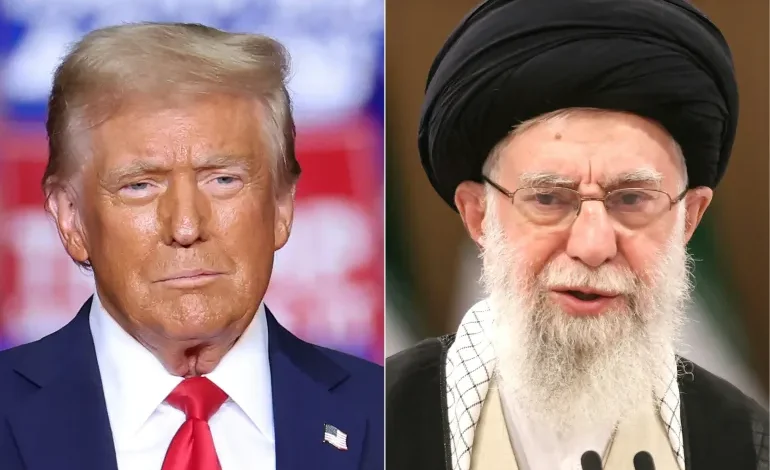
As diplomats shuttle between Muscat, Washington and regional capitals, the Pentagon is quietly assembling one of its most significant force postures in the Middle East in recent years. What appears on the surface as renewed diplomacy with Tehran is unfolding alongside contingency planning for sustained military operations that could last weeks rather than days and perhaps not an outright war.
According to U.S. officials cited by Reuters, military planners are preparing for the possibility of a prolonged campaign should President Donald Trump order strikes against Iran. This would not resemble the limited, one-off “Midnight Hammer” operation of June, when U.S. stealth bombers struck Iranian nuclear facilities in a discrete mission. The current planning, officials suggest, envisions a broader set of targets and a longer timeline.
The Military Posture Taking Shape
The United States has moved additional assets into the region:
- Two aircraft carriers and accompanying strike groups
- Multiple guided-missile destroyers capable of ballistic missile interception
- Expanded Patriot and THAAD air defence systems
- Additional fighter aircraft, including F-15E and F-35 platforms
- Elevated alert status for long-range bombers
- Expanded ISR (intelligence, surveillance, reconnaissance) coverage
This is not merely an offensive build-up. It is defensive layering.
Senior officials acknowledge privately that any strike on Iran would trigger retaliation. The United States maintains bases across Qatar, Bahrain, Kuwait, Jordan, Iraq, Saudi Arabia, the UAE and Turkey – all within range of Iranian ballistic missiles, cruise missiles and drones. Protecting 30,000 to 40,000 U.S. personnel dispersed across the region requires significant air defence capacity before any offensive operation begins.
That defensive emphasis is revealing. It signals that Washington expects duration, not spectacle.
Meanwhile, diplomatic talks in Oman have resumed in parallel. Iranian Foreign Minister Abbas Araghchi described the latest round as “a good start.” Turkish Foreign Minister Hakan Fidan has suggested that Washington may be willing to tolerate limited Iranian enrichment within defined boundaries. Moscow, through Deputy Foreign Minister Sergei Ryabkov, has warned that a new U.S. military operation cannot be ruled out.
The result is strategic ambiguity: visible preparation for escalation, simultaneous signalling of diplomatic flexibility. The question is not whether the United States can strike Iran. It can. The deeper question is what follows the first wave.

The Illusion of a Short War
Modern war between technologically capable states is less about spectacle and more about inventory. Specifically, it is about the exchange rate between offensive munitions and defensive interceptors – and the depth of stockpiles behind them.
Iran possesses the largest ballistic missile arsenal in the Middle East. Its strategy is not built around rapid territorial conquest or decisive battlefield victories. It is designed for endurance.
Ballistic missile defence (BMD) systems such as THAAD and ship-based SM-3 interceptors are expensive and slow to produce. Interception rates – often spoken about in public discourse – are only part of the equation. In practice, defenders frequently fire two interceptors per inbound missile to ensure a higher probability of kill.
The arithmetic becomes problematic quickly.
Even if 80–90% of missiles are intercepted, the small percentage that penetrates can inflict economic damage, close airspace, disrupt shipping or impose psychological costs. Over time, as defensive inventories deplete and maintenance cycles strain readiness, the penetration rate rises.
Replenishing advanced interceptors takes years, not months. Some analysts project that U.S. inventories expended during previous regional crises will not be fully restored until around 2027 – overlapping with broader strategic competition in the Western Pacific.
Every interceptor launched in the Middle East carries opportunity costs elsewhere.
Iran understands this dynamic. Its doctrine is not centred on overwhelming defences in a single dramatic salvo. It is designed to exhaust them through sustained pressure.
Endurance by Design, Iran’s Military Ecosystem
Iran’s strike architecture is often assessed piecemeal – ballistic missiles, cruise missiles, drones – but these systems are intended to function as an integrated ecosystem.
Ballistic missiles provide speed and range. Cruise missiles offer accuracy and low-altitude penetration. Strike drones impose persistent attritional pressure at lower cost. None of these systems is decisive alone, but together, they create operational fatigue.
Continuous small-scale launches – interspersed with periodic larger salvos – force defenders to remain on constant alert. Air defence crews fatigue. Maintenance cycles compress. Combat air patrols consume flight hours that could otherwise support offensive missions. Therefore, Iran does not need to win quickly. It needs to ensure that the conflict becomes drawn out and expensive.

The Geography of Escalation
Geography compounds this endurance logic.
The Strait of Hormuz remains one of the most critical maritime chokepoints in the world. Roughly 20% of globally traded crude passes through Hormuz. Even temporary disruption – or credible threats – would trigger immediate spikes in insurance premiums, freight rates and crude prices.
Similarly, the Bab al-Mandeb Strait links the Red Sea to the Gulf of Aden and the Indian Ocean. Disruption there affects European-Asian trade routes.
Iran’s ability to influence maritime corridors does not require sinking aircraft carriers. It requires creating risk.
In confined waters, land-based anti-ship systems – even those less sophisticated than Chinese counterparts – can be strategically meaningful. U.S. carriers can operate farther from shore to reduce vulnerability, but that increases flight times, sortie cycles and tanker dependence.
No ships need to be destroyed for costs to rise.
The Airpower Question
There remains a belief in some policy circles that precision airpower can neutralize Iran’s capabilities through decapitation strikes, destruction of launch sites and elimination of production facilities.
This assumption underestimates dispersion and mobility.
Ballistic missile launchers are difficult to locate and destroy. Cruise missile and drone systems are cheaper, more mobile and easier to conceal. Hardened underground facilities require specialized munitions that are neither unlimited nor easily replaced.
Airpower can impose costs but it cannot guarantee decision.
Political Constraints and Strategic Risk
President Trump has repeatedly declared that “all options are on the table.” He has also emphasized the need to show strength.
But war is not solely a military equation. It is a political one. A prolonged Middle Eastern conflict would carry domestic economic consequences – oil prices, market volatility, defence expenditures – in an election-sensitive environment. A drawn-out war risks eroding political capital far more than a calibrated demonstration of force.
Trump’s strategic preference historically has favoured pressure tactics that generate quick leverage. Iran represents a more complex adversary – one that has structured its doctrine around absorbing pressure and prolonging confrontation.
The risk is asymmetry of expectations: a search for decisive outcomes confronting a strategy built on endurance.

The Oil Market Lens – Five Scenarios
Energy markets are already modelling possible trajectories.
Rystad Energy recently outlined five plausible scenarios for Iran’s geopolitical trajectory and corresponding oil market implications.
Diplomatic breakthrough: Sanctions ease gradually. Iranian exports rise incrementally. Oil prices decline modestly as risk premiums fade.
Limited U.S. strikes: Targeted military action produces a temporary price spike – typically $5–10 per barrel – before stabilizing.
Broader conflict with pragmatic stabilization: Initial price surge due to supply disruption, followed by gradual normalization.
Escalation with structural confrontation: Sustained risk premium embedded in prices due to ongoing threats to infrastructure and shipping.
Severe destabilization or collapse: Extreme volatility and potentially significant supply disruption.
The asymmetry is notable. The downside from diplomacy is gradual and contained. The upside from escalation is sharp and potentially structural. Markets are pricing not only physical supply risks but geopolitical persistence.
The Hormuz Factor
If escalation extended to even temporary closure of the Strait of Hormuz, the consequences would be immediate and global.
Asian economies – including India, China, Japan and South Korea – would bear disproportionate impact. Insurance markets would reprice risk instantly. Strategic petroleum reserves could cushion supply temporarily, but the shock to sentiment and shipping logistics would reverberate.
Even credible threats – absent closure – can move markets. This is leverage Iran does not need to exercise fully to make effective.
The Last Bit, Strategic Equilibrium
Taken together:
- The Pentagon is preparing for sustained operations.
- Iran is structured for attrition.
- Defensive inventories are finite.
- Maritime chokepoints amplify economic risk.
- Oil markets price escalation asymmetrically.
- Political incentives favour calibrated force over open-ended war.
This creates a constrained equilibrium.
The most probable outcome, should diplomacy falter, is not total war but calibrated escalation – limited strikes designed to demonstrate resolve while avoiding a prolonged regional conflagration. Symbolic force, backed by visible readiness, paired with sustained economic and political pressure.
Total war remains possible. But it would likely be long, costly and strategically uncertain – with consequences extending far beyond the battlefield into energy markets, global supply chains and great-power competition.