AI Summit In India Takes Center Stage Even As Wall Street Questions AI Returns
As global technology CEOs gather in New Delhi for India’s AI Impact Summit, Wall Street is sending a different signal. Billions have been wiped off Big Tech valuations in 2026 as investors question whether massive AI spending can deliver timely returns. The industry is expanding operationally even as markets recalibrate expectations.


Even as markets wobble and technology valuations face scrutiny, the global AI buildout is accelerating and India is emerging as a central arena. At the upcoming AI Impact Summit in New Delhi, CEOs including Sam Altman and Sundar Pichai are expected to engage with policymakers and industry leaders in what is being seen as a strategic convergence of capital, policy and technology.
India offers three structural advantages that few markets can replicate: expanding digital infrastructure, one of the world’s largest technology-savvy user bases, and a deep reservoir of engineering talent.
The government has approved billions of dollars in semiconductor investments as it works to build a domestic supply chain and reduce reliance on external manufacturing ecosystems. OpenAI counts India among its fastest-growing markets for ChatGPT adoption, while multinational corporations are rapidly expanding Global Capability Centers focused on AI development, data engineering and product innovation.
The shift is telling. Even as Wall Street debates valuations and investors reassess capital expenditure, global technology leaders are doubling down on physical infrastructure, talent pipelines and long-term positioning in India.
Yet while boardrooms in New Delhi discuss expansion, markets in New York are confronting a different reality. The same AI revolution driving investment commitments in India is simultaneously triggering a valuation reset across global equities.
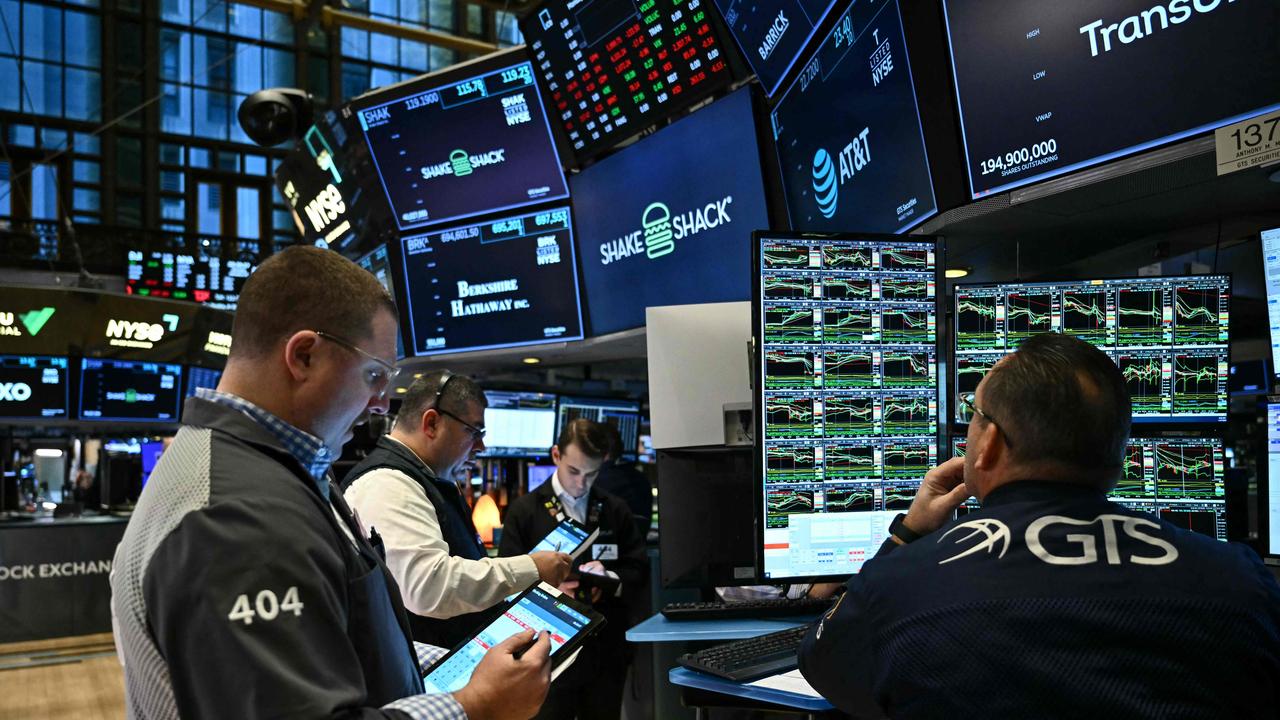
In 2026, some of the world’s most valuable technology companies have seen hundreds of billions of dollars erased from their market capitalisations as investors begin asking a harder question: when does AI spending translate into dependable returns?
The Great AI Repricing
The selloff has been sharp and symbolic.
Microsoft has fallen roughly 17% year-to-date, wiping out nearly $613 billion in market value and bringing its valuation down to about $2.98 trillion. Concerns range from intensifying competition — including Google’s Gemini and Anthropic’s Claude models — to whether Microsoft’s massive AI investments will deliver the scale of monetisation the market once assumed was inevitable.
Amazon has declined nearly 14%, erasing approximately $343 billion in value, even as it signaled that capital expenditure could jump more than 50% this year. Heavy infrastructure spending may secure long-term positioning, but investors are increasingly wary of near-term earnings compression.
Nvidia, Apple and Alphabet have also experienced valuation declines, though Nvidia remains the most valuable among them at $4.44 trillion. Alphabet and Apple now sit at roughly $3.7 trillion and $3.76 trillion respectively.
The pullback signals something deeper than routine volatility. After years of rewarding long-term AI ambition, markets are shifting toward demanding earnings visibility and capital discipline.
From Speculation to Scrutiny
This shift in psychology has been visible beyond mega-cap tech.
The Roundhill Magnificent Seven ETF has slipped over 2% this week. The broader indices have fared only marginally better: the S&P 500 is barely positive this year, and the Nasdaq Composite has been largely flat. Even strong economic data has failed to spark enthusiasm.
A stronger-than-expected jobs report, instead of boosting markets, raised expectations that the Federal Reserve may delay rate cuts. In a market priced for optimism, even good news can complicate things.
More importantly, attention is now focused on spending. AI hyperscalers are collectively projected to spend approximately $660 billion this year. Yet the entire global software sector’s projected revenue is roughly $780 billion. The mismatch has triggered uncomfortable questions about monetisation timelines and capital efficiency.
At the height of the AI enthusiasm cycle, markets celebrated investment. Now they are questioning cash burn.
AI Is “Coming For” Everyone Or Is It?
Over the past week, sectors as diverse as insurance brokerage, wealth management, logistics and commercial real estate experienced selloffs driven largely by AI disruption fears.
Insurance brokers such as Aon and Marsh were hit. Wealth managers including Charles Schwab saw pressure. Real estate firms and logistics companies followed. The underlying anxiety is straightforward: if AI can replicate specialised knowledge at lower cost, margins compress long before entire professions disappear.
Carl Benedikt Frey of Oxford University describes this dynamic succinctly – AI turns once-scarce expertise into scalable output, challenging pricing power.
Yet, evidence of wholesale labour displacement remains limited. Analysts at Forrester argue that much of the market reaction is sentiment-driven rather than data-backed. Adoption lags, regulatory friction and enterprise integration challenges suggest that transformation will be uneven rather than instantaneous.
The market, however, often prices change long before it is fully realised.
The Valuation Alarm Bell
Valuation metrics are again in focus.
The Shiller cyclically adjusted price-to-earnings (CAPE) ratio for the S&P 500 is hovering just below 40 – levels last seen during the dot-com era. The comparison is uncomfortable. The late 1990s were marked by exuberance untethered from profitability.
But there are differences.
Unlike the dot-com boom, today’s AI leaders are profitable, cash-generating enterprises. Microsoft, Alphabet, Amazon and Nvidia are not speculative startups selling ideas; they are mature businesses integrating AI into already dominant platforms.
Cloud infrastructure, semiconductor manufacturing and enterprise software revenues are real and measurable. The AI wave is built on operating businesses, not vaporware.
Yet, even real businesses can be overvalued.

The $660 Billion Question
The core tension is not whether AI works. It does.
The question is whether current levels of spending – and market valuations – accurately reflect the timing and scale of future returns.
Recent reports that Nvidia and OpenAI scaled back what was once rumored to be a $100 billion deal have reinforced the perception that even the largest players are recalibrating. Investors are watching closely for signs of moderation.
Markets are struggling with two thesis simultaneously:
- AI is transformative and underpriced long term.
- AI spending may be front-loaded and profit realisation delayed.
These positions are not mutually exclusive but they create volatility in the interim.
The Real Economy Rotation
While technology stocks wavered, capital quietly rotated toward tangible businesses.
TSMC and Samsung Electronics have added significant market value this year. Walmart has also gained strongly, reflecting investor preference for predictable cash flows.
Within the Dow, companies such as Caterpillar, Sherwin-Williams, McDonald’s and Home Depot outperformed during the tech pullback. Dividend-paying stocks including Verizon and Johnson & Johnson also attracted interest.
When uncertainty rises, investors often gravitate toward companies with visible earnings, durable demand and steady dividends. The message is subtle but clear: physical demand, essential goods and tangible cash flows are regaining favour.
Jobs, Hype and Adoption Gaps
Fears of mass white-collar displacement have resurfaced following viral commentary suggesting AI will disrupt coding and knowledge work imminently.
Yet economists caution against extrapolating laboratory capability into immediate macroeconomic disruption. History shows that adoption cycles lag technological breakthroughs. Integration, regulation, trust and cost all influence speed.
The labour market impact, for now, remains ambiguous. There are likely to be shifts in how certain roles are structured. But widespread unemployment waves among lawyers, accountants or financial advisers appear unlikely in the near term.
Markets, however, do not wait for clarity.
Will 2026 Bring a Crash?
The S&P 500 is up modestly this year. The Nasdaq has stalled. Rate-cut expectations are fluid. The Shiller CAPE ratio is elevated.
These are ingredients for volatility – not necessarily collapse.
The AI rally differs from the dot-com bubble in fundamental strength, but valuations still matter. The market is not rejecting AI; it is repricing expectations. That distinction is critical.
The Last Bit, The Investor Playbook
In periods when markets feel frothy, prudence often outperforms bravado.
Reducing exposure to speculative names that rely purely on forward positions may provide stability. Increasing allocation toward companies with durable earnings, strong balance sheets and pricing power can cushion volatility.
Maintaining liquidity offers optionality – the ability to buy quality assets at discounts during pullbacks.
Artificial intelligence remains one of the defining technological shifts of this generation. But markets oscillate between optimism and doubt. The era of unquestioned AI enthusiasm appears to be giving way to something more mature: scrutiny.
The real story is not that AI has failed. It is that capital markets are beginning to demand proof. And in financial markets, proof – not promise – ultimately determines value.