Do We Even Know What We Are Eating Anymore? From Baby Formula To Kitchen Staples, A Global Reckoning On Food Safety And The Trust We’ve Handed To Corporations
Food recalls are no longer rare disruptions, they are recurring headlines. From contaminated baby formula in Europe to pesticide-laced spices in India and pathogen-linked frozen foods in the United States, the modern food chain is under strain. In a system built on scale and speed, have we outsourced trust too easily?

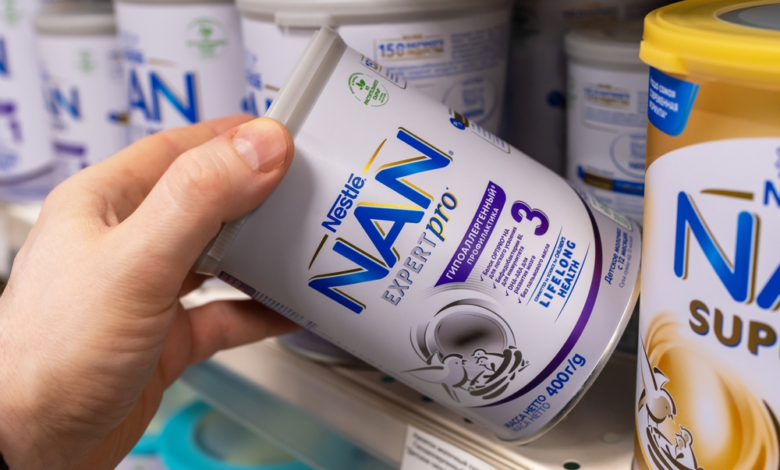
The crisis began with baby formula – the one product parents assume is beyond compromise.
In France, prosecutors opened investigations into several major dairy and nutrition companies after batches of infant formula were suspected of contamination. Judicial authorities began examining whether products placed on the market may have posed a danger to human health. The French health ministry also confirmed that it was reviewing reports of infant deaths in cases where affected formula had been consumed. While no direct causal link has yet been legally established, the mere possibility was enough to send a chill through households across Europe.
Baby formula is not an indulgence. It is not a processed snack or an occasional purchase. It is sustenance for the most vulnerable.
Yet even as that investigation unfolded, recall notices began surfacing elsewhere. Peanut butter products were pulled from shelves across 40 U.S. states after plastic fragments were discovered in production filters. Bottled water faced recall warnings over potential glass contamination. Cinnamon and turmeric products were withdrawn due to elevated lead levels. Breakfast staples such as Cheerios and snack brands like Pringles were caught in a broader recall linked to rodent contamination at a U.S. distribution facility. Pet food, too, was flagged.
Different countries. Different brands. Different regulators.
The pattern, however, was the same.
What initially appeared to be an isolated formula scare in France quickly revealed itself as something broader and more unsettling: contamination is not confined to one geography or one category. It is surfacing across the global food chain.
And that is the question that should disturb us. If baby formula can be questioned, if spices and cereals and bottled water can be recalled in rapid succession – do we even know what we are eating anymore?
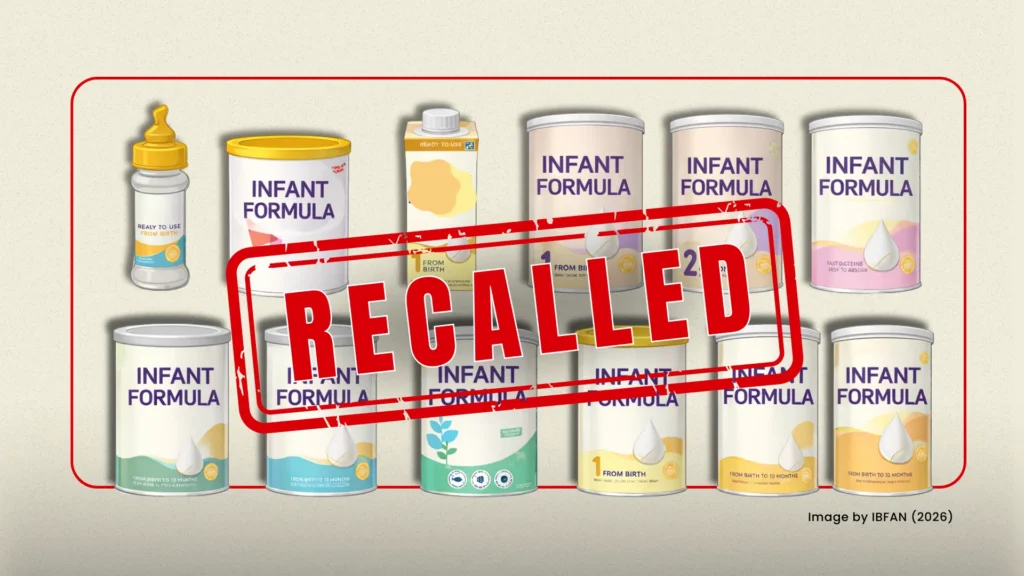
The 2026 Infant Formula Crisis
At the centre of the European storm are three of the world’s largest dairy and food groups: Nestlé, Danone and privately held Lactalis. French prosecutors have launched investigations into potentially contaminated infant nutrition products distributed across Europe and beyond.
The suspected contaminant is cereulide, a heat-stable toxin produced by certain strains of Bacillus cereus. Unlike many pathogens that can be neutralised by heat, cereulide survives typical processing temperatures. Consumption can trigger nausea, vomiting and diarrhoea within hours. In rare cases, severe complications may occur.
The recalls spread quickly. More than 60 countries were affected as batches were withdrawn from supermarkets and pharmacies. Companies issued public apologies and published timelines detailing when contamination was detected and when authorities were informed.
Investigations traced the issue back to a supplier of arachidonic acid (ARA) oil — an ingredient commonly added to infant formula to support development. The supplier has not been publicly named, but the implication: a single ingredient source, embedded deep within a complex global supply chain, was able to affect multiple brands across continents.
For corporations of this scale, the financial exposure is measurable. Infant formula accounts for roughly 5% of total revenue at Nestlé, while for Danone it represents approximately 21% of group revenues and an even larger share of profitability. Analysts noted that while the directly recalled batches may account for a small fraction of turnover, the broader reputational impact could be far more significant.
Markets reacted, then stabilised. Shares dipped during the height of recall announcements before recovering part of their losses. Earnings calls loomed, and investors sought clarity on financial impact.
But the deeper issue is not quarterly revenue. Infant formula is among the most tightly regulated food categories in the world. It is tested, audited and monitored with far greater scrutiny than most packaged goods. If contamination can still breach that system, it raises an uncomfortable inference: if baby food can fail, what does that say about the rest of the food chain?
A Global Recall Wave
The French formula crisis may have captured headlines, but it sits within a broader wave of international food recalls that has intensified over the past year.
Peanut Butter: Plastic Contamination Across 40 U.S. States
More than 20,000 peanut butter products manufactured by Ventura Foods and sold under various private labels were recalled after inspectors discovered pieces of blue plastic in a production filter. The U.S. Food and Drug Administration later classified the recall as Class II, indicating potential temporary or medically reversible health effects.
The contamination was not bacterial. It was mechanical. A fragment from the production process had entered the supply chain.
Chia Seeds: Salmonella Risk
Navitas Organics recalled batches of chia seeds over potential Salmonella contamination linked to a supplier. Salmonella outbreaks remain among the most common triggers for food recalls, capable of causing serious illness, particularly among children and the elderly.
Bottled Water: Glass Contamination
Retailer-branded bottled water products were withdrawn after the risk of glass fragments was identified. Even products perceived as “pure” or minimally processed are not immune to production or packaging failures.
Lead in Cinnamon and Turmeric
Ground cinnamon and turmeric products were recalled after testing revealed elevated lead levels. Toxic contamination is particularly troubling because it often signals deeper supply chain lapses – either adulteration or environmental contamination at the source.
Listeria in Salmon and Frozen Foods
Listeria monocytogenes continues to trigger repeated recalls in ready-to-eat meats, salmon and frozen meals. Unlike many bacteria, Listeria can survive refrigeration, making it especially dangerous in products assumed to be safe once chilled.
Rodent Contamination at a U.S. Distribution Facility
Nearly 2,000 products distributed by Gold Star Distribution were recalled after regulators documented rodent excreta, rodent urine and bird droppings at a storage facility. Household brands, including Cheerios and Pringles, were among the items affected.
The scale of these events is reflected in the data.
In 2024, there were 296 total recalls recorded by U.S. authorities. While that figure represents only a slight change from the previous year, the severity tells a more alarming story. Hospitalisations linked to recalled food more than doubled. Deaths more than doubled. Just 13 outbreaks accounted for 98% of reported illnesses.
The number of recalls may not be dramatically rising. But their impact is and that distinction matters.
The Supply Chain Problem
At the heart of many of these crises lies a structural weakness that rarely makes headlines: the modern food supply chain is vast, layered and often opaque.
In the infant formula case, a single supplier of arachidonic acid (ARA) oil was linked to products sold under multiple brands across more than 60 countries. One ingredient, sourced from one point in the chain, moved silently through factories, packaging plants and distribution networks before it reached supermarket shelves. By the time contamination was detected, its footprint was global.
This is not unusual. Today’s food products are rarely made in one place using locally sourced inputs. Ingredients travel across borders before being blended, fortified, processed and packaged elsewhere. A spice may be grown in one country, processed in another and sold under a multinational label in a third. A frozen vegetable mix may contain produce harvested from several regions, stored in multiple facilities and transported through complex cold chains.
Efficiency has made food affordable and accessible. It has also made the system interdependent to a degree that leaves little room for error.
Delays between contamination and recall further expose this fragility. The Salmonella outbreak linked to cucumbers in 2024 is a telling example. The first illness was reported in March. The recall was issued on May 31. Illnesses continued into July. During that window, contaminated produce remained in circulation, consumed by individuals who had no reason to suspect risk.
Consumer watchdog groups have repeatedly highlighted weaknesses in traceability and public communication. They argue that companies often issue warnings only after regulatory pressure mounts, and that supply chain transparency remains limited despite technological advances.
Regulators are attempting to respond. In the United States, the Food Safety Modernization Act’s updated Food Traceability Rule is scheduled to take effect in 2026. The rule is intended to improve record-keeping and speed up outbreak investigations by requiring more detailed tracking of high-risk foods.
Yet the broader reality remains unchanged: modern food systems are extraordinarily efficient, but they are also dangerously interconnected. When one link fails, the ripple effect is swift and far-reaching.

Corporate Response: Apologies, Voluntary Recalls, Damage Control
When contamination surfaces, corporate response follows a familiar pattern.
Chief executives issue apologies. Statements emphasise that consumer safety is the highest priority. Companies reassure customers that corrective actions have been taken and that affected batches represent only a small portion of total production.
In many recall announcements, a recurring phrase appears: “No illnesses have been reported at this time.” The sentence is legally cautious and factually precise. Yet it also shows a reality that companies know too well — reputational damage can occur even in the absence of confirmed harm.
Most recalls are described as voluntary. Companies frame them as proactive steps taken in coordination with regulators. Products are withdrawn, refunds are offered and hotlines are established.
Markets react quickly. Share prices dip when recall announcements peak, particularly when the affected category represents a meaningful share of revenue. Analysts calculate exposure. Investors ask whether the issue is contained or systemic. Earnings calls become platforms for reassurance.
In the case of infant formula, where the category contributes approximately 5% of revenues for Nestlé and roughly 21% for Danone, the financial implications differ in magnitude. But in both cases, recovery in share price often precedes full restoration of public confidence.
Financial recovery, in other words, frequently outpaces consumer trust recovery.
That gap is not easily measured on a balance sheet.
India’s Own Vulnerabilities
It would be mistaken to frame the current food safety anxieties as exclusively Western failures.
India has its own vulnerabilities.
In January 2025, the Food Safety and Standards Authority of India directed Patanjali Foods Ltd to recall four tonnes of red chilli powder after laboratory tests found pesticide residue levels exceeding permissible limits. The company complied, urging customers to return affected packs and claim refunds. The recall process functioned as intended.
But the episode illuminates an uncomfortable truth. Even a widely consumed kitchen staple can breach safety thresholds before being detected.
Separately, recalls involving elevated lead levels in cinnamon and turmeric have raised concerns about contamination and adulteration in spice supply chains. India has long battled food adulteration, from milk dilution to synthetic colouring in sweets. Regulatory oversight has improved significantly over the past decade, yet enforcement capacity varies across states and jurisdictions.
There remains a persistent gap between compliance on paper and compliance in practice.
The globalised nature of food trade further complicates matters. Imported products enter Indian markets, and Indian ingredients travel abroad. A contamination event anywhere along the chain can have domestic consequences.
We cannot assume that “this is a Western problem.” The same structural pressures — scale, cost efficiency, complex sourcing – operate here as well.
The Pattern Beneath the Headlines
Beyond individual incidents lies a broader pattern.
Data from recent recall reports show that 39% of recalls were driven by pathogens such as Listeria, Salmonella and E. coli. Undeclared allergens accounted for 34%. Foreign materials, including plastic and metal fragments, triggered additional recalls. Toxic contaminants, including heavy metals, surfaced with increasing frequency.
These are not exotic risks. They are recurring ones.
Supplier oversight failures continue to emerge as a common thread. Weak environmental monitoring within facilities allows contamination to go undetected. Cross-contact in shared production lines results in undeclared allergens. Documentation gaps delay traceability during outbreaks.
What is striking is not the novelty of the hazards but their persistence. Despite advances in testing, auditing and regulatory standards, the same categories of failure resurface year after year.
This raises a deeper question: are we primarily reacting to crises rather than preventing them? Are systems designed to respond efficiently once contamination is discovered, but not necessarily to eliminate risk at its root?
If so, then recall announcements may represent the visible symptom of a more entrenched structural challenge.
The Take, We Are Living in the Age of Industrialised Trust
Consumers place confidence in multinational logos. Certification marks are widely accepted as assurances of quality. There is an underlying assumption that laboratories have tested what ultimately reaches children’s plates.
The origins of ingredients and the complexity of the routes they travel are rarely scrutinised in everyday purchasing decisions. Regulatory approval is often equated with safety, and scale is assumed to guarantee oversight.
Convenience has, in many cases, replaced scrutiny.
Shoppers gravitate toward clean labels and simplified marketing claims, even as the underlying supply chains remain intricate and opaque. Products promoted as natural or wholesome may still rely on globally sourced inputs that pass through multiple intermediaries before reaching a processing facility.
Scale has, in several respects, outpaced oversight. The sheer volume of goods moving daily through global supply chains makes comprehensive inspection a formidable challenge.
Within such a system, responsibility is frequently delegated to corporations and regulators, while the consumer’s role is reduced to purchase and consumption.
In such a system, are we outsourcing responsibility too easily? Have we accepted that vigilance belongs to corporations and regulators, while our role is simply to purchase and consume?
The Last Bit, The Consumer Dilemma
Most consumers do not have the tools to audit supply chains or verify laboratory testing. They cannot independently assess pesticide residues or microbial contamination. They rely, almost entirely, on systems designed and monitored by others.
This creates a dilemma. We are both participants in and dependents on a system too complex for individual oversight – ask more questions, push for stronger accountability, remain alert to recall notices. But ultimately, the safety of what we consume rests on structures far beyond our immediate control.
Which brings us back to the question that frames this entire reckoning: Do we even know what we are eating anymore or have we simply decided not to ask?