How Galgotias University Turned India’s AI Moment Into A Global Humiliation And Damaged The Nation’s Credibility
Galgotias University walked onto the India AI Impact Summit 2026 claiming innovation. It walked off under scrutiny. On a global stage meant to showcase India’s technological ambition, imported hardware was presented as breakthrough work. In that moment, a campus display became something far larger, a question mark over national credibility.


Galgotias University walked onto one of India’s most important AI platforms claiming innovation. It walked off having triggered international ridicule. At the India AI Impact Summit 2026 – a stage meant to project India’s technological rise – the university’s actions did not just embarrass an institution. They damaged the credibility of the nation it stood there representing.
This was supposed to be a defining moment. Global technology leaders were in attendance. Policymakers were watching. International media was covering it. India was presenting itself as the AI voice of the Global South – confident, capable, ready.
And then came the exhibit.
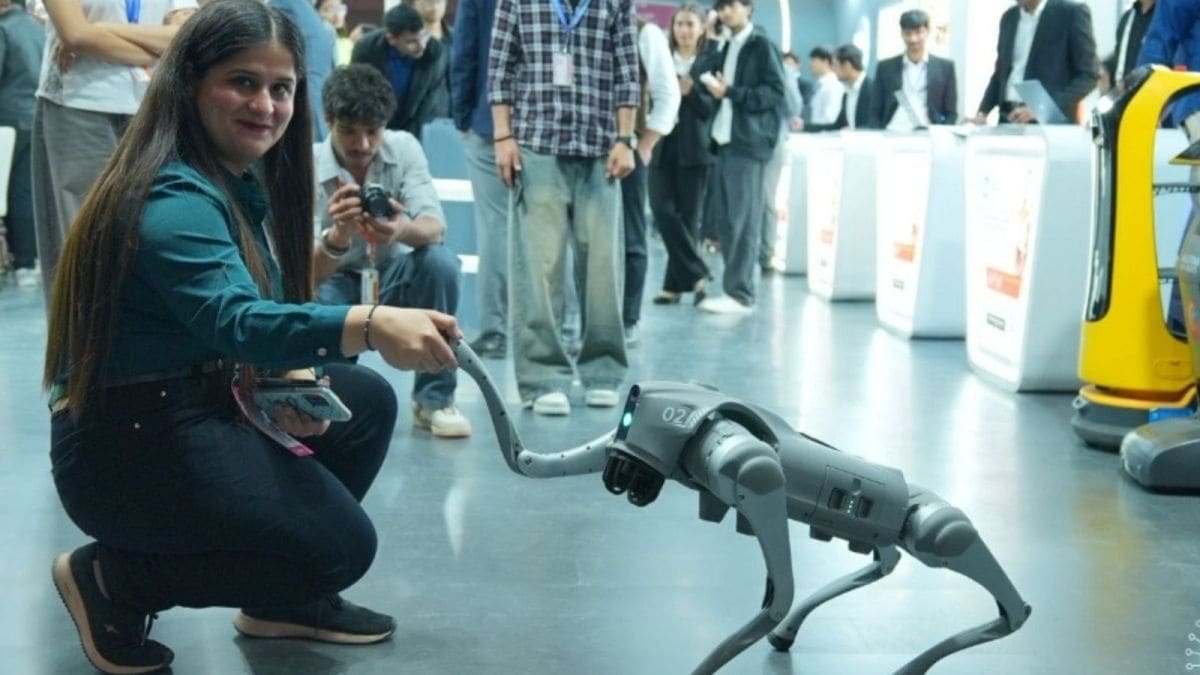
Galgotias University showcased what it described as an advanced in-house robotic dog named “Orion,” part of what it claimed was a Rs 350+ crore AI ecosystem. The machine was presented as original work – capable of navigation, interaction and advanced mobility. It was positioned as proof of institutional innovation.
Within hours, observers began pointing out something uncomfortable: the robot appeared to be a commercially available Unitree Go2 manufactured by a Chinese company. The design matched. The hardware matched, and the branding matched too!
It did not stop there. A second exhibit — described as a “soccer drone” — was also identified as a pre-existing foreign-made model.
The exposure did not come from investigative authorities. It came from attendees. From technologists. From social media users who simply compared what was being claimed with what was publicly available.
Soon after, the Union Ministry of Electronics and Information Technology directed the university to vacate its stall. Power was cut. The exhibit was dismantled.
A summit meant to showcase India’s technological strength had instead produced an avoidable, self-inflicted embarrassment.

Galgotias University, The Deceptive Act
Institutions do not casually display imported hardware at an international summit and describe it as in-house innovation. Either the leadership knew what was being presented, or they did not. Neither explanation inspires confidence.
If they knew, it was misrepresentation.
If they did not, it suggests a worrying absence of oversight inside the institution itself.
The subsequent clarification – that an “unauthorised and ill-informed” representative had mischaracterised the exhibit – does little to resolve the issue. Claims of a Rs 350+ crore AI ecosystem are not offhand remarks. They are deliberate positioning statements. They reflect institutional intent and innovation cannot be reframed as a misunderstanding once the evidence becomes public.
The World Was Watching And This Is the Impression We Gave
This is where the incident stops being a campus controversy and becomes something larger. India has invested heavily in projecting itself as a rising technology power. Artificial intelligence sits at the centre of that ambition. Policy initiatives, venture capital flows and startup momentum all reinforce the idea of indigenous capability.
So what happens when a university stands on a global platform and presents imported machinery as original innovation?
It reinforces the worst assumptions – that we prioritise presentation over depth, branding over research, optics over substance. Foreign investors notice such moments. International collaborators assess seriousness through episodes like this.
Media coverage travels quickly. And the questions that follow are uncomfortable:
- Is this our AI capability?
- Is this the level of research depth we are exporting?
- Is this how we validate innovation before putting it on display?
One institution’s decision becomes a reflection on national standards.
This Is Not an Isolated Episode
But the present controversy does not exist in isolation.
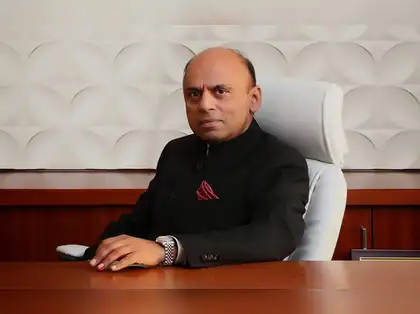
In 2014, members of the founding family were arrested over allegations including forgery, fraud and loan defaults connected to the Smt. Shakuntla Educational and Welfare Society, the university’s parent body. Judicial custody followed. Allegations included fabricated documentation and significant financial liabilities.
Bail was granted later. But reputations are cumulative. Questions linger.
Institutions with complicated financial histories should be especially careful before positioning themselves as symbols of national technological capability.
Patterns matter.
Education as Branding, Not Scholarship
The deeper issue extends beyond a single summit stall.
Over the past two decades, private universities in India have expanded rapidly. Campuses have grown larger. Infrastructure has improved. Marketing has become more sophisticated.
What has not expanded at the same pace is original, peer-reviewed research.
Placement percentages dominate brochures. Rankings are selectively emphasised. Labs are showcased in promotional videos.
But serious innovation is measured differently:
- Peer-reviewed publications.
- Patents.
- Long-term R&D commitments.
- Faculty depth.
- Academic transparency.
When institutions prioritise enrolment numbers and brand-building over scholarship, exhibitions begin to replace experimentation. And what these incidents reflect is an intellectual shortcut.
What Message Does This Send to Students?
If institutions exaggerate capability, what are students truly graduating with – skill, spectacle, or, sadly, deception? Young Indians deserve institutions that build competence, not carefully staged reputations.
Students enrol believing they are entering ecosystems of genuine innovation. Parents invest substantial savings in the promise of future-ready education.
Artificial intelligence is not a marketing phrase. It demands rigour, mathematics, engineering discipline and sustained research effort. If we blur the line between procurement and invention, we risk normalising the wrong benchmark for achievement.
Where Was Oversight?
This episode also exposes regulatory gaps.
- How are institutional claims verified before representation at national platforms?
- What scrutiny exists for publicly declared technology investments?
- What accountability mechanisms activate when misrepresentation occurs?
The University Grants Commission and the Ministry of Education cannot treat such incidents as isolated embarrassments. Transparency audits, financial scrutiny and research validation processes are not optional in a sector that shapes national capability.
Moreover, silence or inaction sends a message of tolerance.
The Last Bit, Credibility Is Hard to Build, Easy to Lose
Nations do not become technology leaders through exhibition stalls. They become leaders through laboratories, peer review, intellectual honesty and institutional discipline.
India’s AI ambitions are legitimate. Its talent pool is real. Its entrepreneurial ecosystem is dynamic.
But credibility cannot be staged.
When a university like Galgotias University presents imported technology as indigenous innovation on a global stage, it does more than embarrass itself. It weakens the trust that underpins investment, collaboration, and long-term technological leadership.
More dangerously, it sets a precedent – for its own students and for the wider academic community. When institutional leadership has previously faced serious allegations of financial misconduct, and the present controversy involves demonstrable misrepresentation, the message being sent is deeply troubling. It suggests that branding can override truth, that claims can precede capability, and that exposure is merely a public relations problem.
Universities are meant to teach rigour, integrity and intellectual honesty. If misrepresentation becomes normalised at the institutional level, what are students being trained to value – research or reputation management? Innovation or impression management?
The danger is not just reputational. It is cultural. And once that culture takes root, it spreads far beyond one campus.