Israel Strikes Iran While Washington Calculated, Israel Acted. The Strike That May Drag The U.S. In
Israel’s pre-emptive strike on Iran has jolted the Middle East back to the edge of open war. As Washington weighed its options amid faltering nuclear talks, Jerusalem moved first altering the tempo of escalation and raising the stakes for an already fragile regional order.

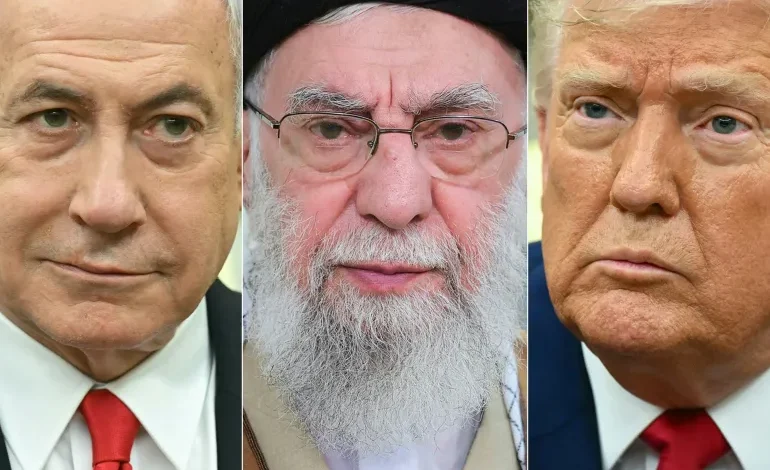
Israel launched what it described as a “pre-emptive” missile strike against targets in Iran, jolting the region back into open confrontation and signalling that the shadow war between the two states has once again turned kinetic.
Explosions were reported in Tehran, including near sensitive government zones. Iranian media indicated that Supreme Leader Ali Khamenei was moved to a secure location shortly after the strike – a precautionary measure that indicates how seriously the leadership views the escalation.
In Israel, sirens wailed across major cities. Airspace was immediately closed. Civilian flights were suspended. Schools were shut nationwide. The government declared a state of emergency, bracing the population for retaliatory missile fire.
Defence Minister Israel Katz framed the action as a necessity: the removal of imminent threats to the state. The wording was deliberate. “Pre-emptive” implies intelligence indicating immediate danger. It is also language designed to justify escalation under international law.
This strike does not exist in isolation. It follows a 12-day aerial confrontation in June and a series of increasingly direct exchanges between the two adversaries over the past two years. What once unfolded through proxies and covert operations has now entered a more explicit phase.
The strategic signal is unmistakable, Israel is willing to act alone if it believes its red lines are being crossed particularly on the nuclear front.
Why Now? The Timing Behind the Trigger
The question is not only why Israel struck but why it struck now.
Diplomatic negotiations between Washington and Tehran had resumed in recent months in an attempt to revive a framework limiting Iran’s nuclear activities. But the talks were fragile. Deep gaps remained over enrichment levels, missile restrictions, and verification mechanisms.
Israel’s position has consistently been more uncompromising than that of its American ally. While Washington has appeared open to curbs and phased compliance, Israeli leadership has insisted that dismantlement – not merely suspension – of Iran’s nuclear infrastructure is the only acceptable outcome.
Tehran, for its part, signalled willingness to discuss enrichment caps in exchange for sanctions relief but categorically rejected linking its ballistic missile programme to nuclear talks. From Israel’s perspective, that separation is artificial. Delivery systems matter as much as fissile material.
Compounding matters, the International Atomic Energy Agency reported uncertainty regarding the whereabouts and status of highly enriched uranium stockpiles, including approximately 400 kilograms enriched to 60 percent purity — dangerously close to weapons-grade levels.
For Israeli planners, this may have looked like a narrowing window. Diplomacy was dragging. Enrichment continued. Verification remained incomplete. Waiting could mean confronting a more fortified and dispersed nuclear infrastructure later.
In strategic terms, pre-emption is often about timing asymmetry. Strike before the adversary crosses a threshold that permanently alters the balance of power. Israel appears to have concluded that moment was approaching.
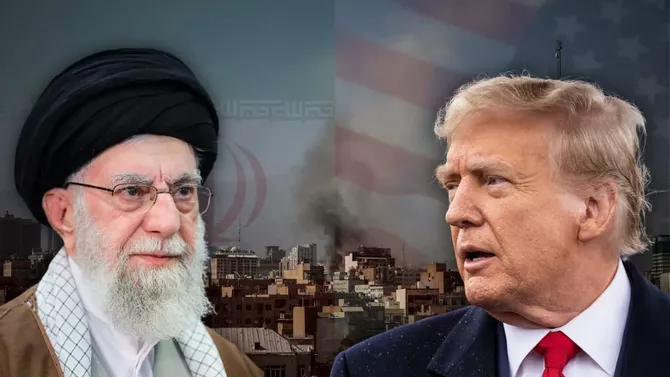
The U.S. Factor, Between Diplomacy and Deterrence
No analysis of this escalation is complete without examining Washington.
United States President Donald Trump has publicly maintained that Iran cannot be allowed to obtain a nuclear weapon. Yet he has stopped short of committing to immediate military action, emphasising that diplomacy remains preferable – though force remains an option.
Carrier strike groups have reportedly been positioned within operational range. Non-essential U.S. personnel in Israel were authorised to depart. These are not routine signals; they are preparatory steps.
At the same time, mediation efforts led by Oman – under Foreign Minister Badr Albusaidi – suggested that incremental progress in talks was possible. Technical meetings were scheduled in Vienna under the oversight of the International Atomic Energy Agency.
Within the U.S. administration, there appear to be competing instincts. Some argue that limited strikes could set back Iran’s programme without triggering prolonged war. Others caution that once kinetic escalation begins, containment becomes unpredictable.
Israel’s action complicates that calculus.
If Iran retaliates directly against Israeli territory, Washington faces pressure – strategic and political – to stand by its ally. If Tehran instead targets U.S. assets in the Gulf, the decision becomes less optional.
The alliance between Israel and the United States is deeply institutionalised. Intelligence cooperation, missile defence integration, and regional basing arrangements bind the two militaries closely. In practice, escalation involving one often implicates the other.
The strike, therefore, is not just about Israel and Iran. It tests the elasticity of American deterrence and whether Washington can remain strategically patient while its closest regional ally accelerates events.
Iran’s Position, Strategic Patience or Controlled Escalation?
For Tehran, the present confrontation is neither sudden nor unexpected.
Iran has long prepared for the possibility of direct strikes on its nuclear and military infrastructure. Facilities have been hardened, dispersed, buried, and layered with air defence systems. Retaliation doctrines have been refined over years of observing Western military interventions across the region.
The leadership under Ali Khamenei has consistently framed the nuclear programme as a sovereign right, not merely a bargaining chip. Iranian officials maintain that enrichment, even at higher levels, is for civilian and research purposes. Western governments remain unconvinced.
A key point of friction is the roughly 400 kilograms of uranium enriched to 60 percent purity – materially below weapons-grade but technically within reach of rapid breakout if further processed. The lack of full transparency with the International Atomic Energy Agency has deepened suspicion.
Last year, Iran’s parliament passed legislation restricting cooperation with the IAEA unless sanctions relief and recognition of its right to enrich were guaranteed. This institutionalised mistrust and reduced monitoring access.
Yet Tehran’s strategy has rarely been reckless escalation. Instead, it has often relied on calibrated responses – enough to deter, not enough to provoke overwhelming retaliation.
When the United States previously targeted Iranian-linked assets, Tehran responded through measured missile strikes and proxy pressure rather than open-ended war.
That pattern suggests Iran may now weigh options carefully:
- Direct missile retaliation against Israel
- Proxy activation via regional allies
- Targeting U.S. bases in the Gulf
- Or symbolic escalation paired with diplomatic messaging
Iran understands that full-scale war with Israel – and potentially the United States – would carry enormous costs. Its approach historically has been to stretch confrontation across time, not compress it into a single decisive clash.
Whether that restraint holds will determine how wide this conflict spreads.

From Shadow War to Open Confrontation
The Israel–Iran rivalry did not begin with missiles over Tehran. It is rooted in ideology, geography, and regional power competition.
After the 1979 Islamic Revolution, Iran ceased recognising Israel’s legitimacy. The conflict, however, remained indirect for decades. Instead of conventional war, both sides fought through sabotage, cyber operations, intelligence campaigns, and proxy forces.
Israel targeted Iranian nuclear scientists and infrastructure in covert operations. Iran expanded its influence across the Levant, backing armed non-state actors designed to encircle Israel strategically.
Groups such as Hezbollah in Lebanon and Hamas in Gaza became central pillars of what Israeli officials describe as a “ring of fire.” Further afield, Tehran supported the Houthis in Yemen and various militias in Iraq and Syria.
For years, this remained a shadow war – deniable, compartmentalised, and geographically fragmented.
That began to shift in 2024 when Iran launched a large-scale drone and missile barrage directly toward Israeli territory, marking an unprecedented overt strike. Israel retaliated. In 2025, operations expanded further, with strikes on nuclear-linked facilities and military installations.
By 2026, the veneer of indirect confrontation had largely eroded.
The current strike reflects a broader pattern: incremental erosion of deterrence barriers. Each round lowers the threshold for the next.
What once would have been unthinkable – open state-to-state missile exchange – is now within operational planning on both sides.
The Nuclear Flashpoint, Threshold or Tipping Point?
At the centre of this confrontation lies a technical reality: uranium enrichment levels.
Weapons-grade uranium typically requires enrichment above 90 percent purity. Iran’s 60 percent stockpile does not cross that threshold but it dramatically shortens the timeline to do so if a decision were made.
That is what alarms Israel.
From Jerusalem’s perspective, the difference between 60 percent and 90 percent is measured not in political intention but in centrifuge capacity and time. Once enough highly enriched material exists, breakout becomes a matter of weeks rather than years.
Key facilities such as Natanz and Fordow – deeply buried and hardened – have been focal points of previous strikes and sabotage campaigns. Activity observed through satellite imagery has raised concerns, but without direct inspector access, the exact nature of those operations remains uncertain.
Iran also operates a civilian nuclear power facility at Bushehr, built with Russian assistance. That plant functions under international safeguards and is not typically central to proliferation concerns. The flashpoint instead revolves around enrichment infrastructure and stockpiles.
One possible diplomatic off-ramp remains the “downblending” option – diluting enriched uranium back to lower purity levels under international supervision, as occurred under the 2015 nuclear agreement.
But trust has eroded since then. Verification regimes are weaker. Political patience is thinner.
Israel’s calculation appears rooted in preventing a threshold moment – a point beyond which Iran’s nuclear capacity becomes too resilient or too advanced to neutralise without major war.
Whether this strike delays that threshold or accelerates it remains to be seen.
The Regional Domino – If One Front Ignites, Others May Follow
The Middle East rarely contains conflict neatly. Escalation has a way of radiating outward.
If Iran chooses direct retaliation against Israel, the confrontation may remain geographically bounded – at least initially. But Tehran’s strategic depth lies in its network.
Hezbollah in southern Lebanon possesses one of the largest non-state missile arsenals in the world. Even limited activation along Israel’s northern border would stretch Israeli air defence systems and force multi-front military management.
In Gaza, Hamas remains degraded but not extinguished. Any flare-up there would complicate Israeli operational focus.
Further south, the Houthis have demonstrated capability to disrupt Red Sea shipping routes with missiles and drones. A widening conflict could again endanger one of the world’s most critical maritime trade corridors.
Then there is the Gulf.
Iran has explicitly warned that U.S. bases in the region could be targeted if Washington joins the fight. The American military footprint across Qatar, Bahrain, Kuwait, and the United Arab Emirates is significant. Even symbolic strikes on U.S. facilities would transform this from an Israel–Iran confrontation into a direct U.S.–Iran clash.
Oil markets would react instantly. The Strait of Hormuz remains a strategic chokepoint through which roughly one-fifth of the world’s petroleum flows. Even temporary disruption could trigger price shocks with global economic consequences.
Regional governments – particularly Gulf monarchies – face a delicate dilemma. Many have improved ties with Tehran in recent years while simultaneously deepening security coordination with Washington and quietly aligning with Israel. An open war forces choices.
What makes this moment precarious is not simply the possibility of retaliation – it is the architecture of interconnected deterrence systems. A strike on one node activates responses across multiple theatres.
The conflict, in other words, does not expand linearly. It multiplies.

The Last Bit, Limited Strike or Prelude to Something Larger?
The central strategic question now is whether this strike represents signalling or sequencing.
If Israel’s objective was narrowly defined (to degrade specific facilities, reassert deterrence, and reset negotiations) escalation could plateau. Iran may choose calibrated retaliation designed to save face without triggering overwhelming counterstrikes.
That scenario preserves space for diplomacy. Technical talks in Vienna under the supervision of the International Atomic Energy Agency could still proceed. Downblending arrangements could be revived. A tense equilibrium could re-emerge.
But there is another possibility.
Repeated cycles of strike and retaliation risk eroding deterrence logic itself. Each round raises domestic political stakes for leaders in Tehran, Jerusalem, and Washington. Public declarations harden positions. Military assets remain mobilised. Miscalculation becomes more likely.
For the United States and President Donald Trump, the dilemma is acute. If Iran responds forcefully against Israel, alliance credibility pressures Washington toward involvement. If Iran strikes U.S. assets, restraint becomes politically untenable.
Yet a full-scale war would be long, costly, and strategically uncertain. Iran’s geography, missile inventory, and asymmetric capabilities ensure that even superior conventional forces cannot guarantee a swift resolution.
Israel’s decision to act while Washington was still deliberating changes the tempo of events. It compresses timelines. It narrows diplomatic space. It shifts initiative from negotiation rooms to operational command centres.
This does not mean war is inevitable. But it does mean the margin for error has thinned.
The strike may prove to be a controlled assertion of red lines. Or it may be remembered as the moment when containment gave way to confrontation on a scale the region has long feared.
For now, the missiles have flown. The calculations continue.