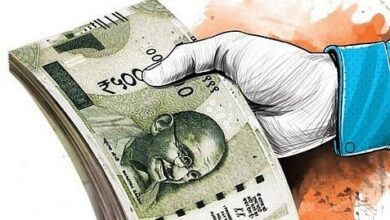
Trump Didn’t Just Change America. He Changed How The World Sees American Democracy. Has America Started To Look Like India Politically?
For much of the post-war era, America stood as the democracy others were measured against. the United States positioned itself as the world's democratic benchmark, evaluating the strength of institutions, elections and the rule of law across the globe. Today, it finds itself under the same global scrutiny it once directed at nations across the world. Donald Trump's second presidency has sparked a debate that reaches far beyond Washington: Has America changed, or has the world simply begun looking at it differently? And more importantly - Is the world's oldest modern democracy beginning to look more like the democracies it once judged?

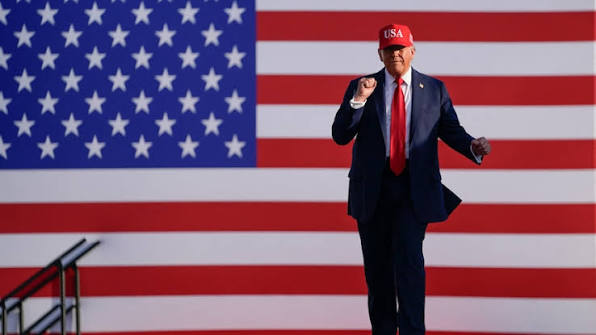
For much of the post-war era, the United States occupied a unique position in global politics. It was not merely another democracy; it was the democracy that championed constitutional checks and balances, independent institutions and the rule of law. From Washington’s perspective, democratic backsliding was something that happened elsewhere. Whether it was media freedom, judicial independence or the concentration of political power, America rarely hesitated to scrutinise other nations (including India) through that lens.
Donald Trump’s return to the White House has complicated that image. Less than a year into his second term, Washington finds itself confronting debates that once seemed reserved for other democracies. Cabinet members have become lightning rods for controversy, federal institutions face unprecedented political scrutiny, business interests increasingly intersect with public office, and governance often unfolds in the glare of social media rather than traditional statecraft.
The question is no longer whether Trump has changed American politics. It is whether he has changed how the world sees American democracy
America Once Set The Democratic Standard
Long before Donald Trump became the defining figure in American politics, the United States had carefully cultivated its image as the world’s democratic benchmark. Through diplomacy, economic influence and military alliances, Washington projected itself as the custodian of a liberal international order built on constitutional governance, free elections and institutional independence. Successive administrations, irrespective of political party, argued that these principles were not merely American ideals but universal values.
That belief found expression in policy as much as rhetoric. The U.S. State Department’s annual human rights reports routinely assessed countries on issues ranging from electoral integrity and judicial independence to press freedom and civil liberties. Organisations such as Freedom House, headquartered in Washington, became widely cited reference points for measuring the health of democracies across the globe.
American diplomats frequently raised concerns over democratic standards in allied and rival nations alike, reinforcing the perception that the United States occupied a position of moral authority in these conversations.
India was no exception. During the Emergency imposed by Prime Minister Indira Gandhi between 1975 and 1977, Washington voiced concern over the suspension of civil liberties and democratic processes. In the decades that followed, debates around press freedom, religious tensions, institutional independence and the functioning of investigative agencies periodically featured in American government reports, congressional hearings and assessments by U.S.-based think tanks and advocacy groups. While New Delhi often rejected these observations as external interference, they reflected a broader belief that the United States had both the standing and the responsibility to comment on the democratic health of other nations.
That confidence rested on a simple assumption: America’s own institutions were seen as resilient enough to withstand political pressure. The White House changed hands, but the FBI, the Department of Justice, the courts and other federal institutions were widely regarded as operating above partisan politics. Presidential transitions were viewed as orderly, constitutional norms appeared deeply embedded, and despite fierce electoral contests, the system itself inspired confidence at home and abroad.
It is this reputation – not America’s constitutional framework – that now finds itself under renewed examination.
The debate unfolding today is not about whether the United States remains a democracy. Rather, it is about whether the image of American exceptionalism has become harder to sustain as politics grows increasingly personalised, polarised and centred on the individual occupying the Oval Office.
Trump’s Return Changed More Than Government. It Changed The Rules Of Politics
Donald Trump’s first presidency disrupted many of Washington’s political conventions. His return to the White House, however, has done something arguably more significant – it has reshaped the centre of American politics itself.
The conversation is no longer just about Republican versus Democrat or conservative versus liberal. Increasingly, it revolves around one individual whose influence extends well beyond the office he occupies.
That shift is evident within the Republican Party. Traditional party heavyweights who once criticised Trump have either fallen in line, stepped aside or found themselves politically sidelined. Loyalty to the President has become an important measure of influence, often carrying more weight than ideological consistency or long-standing party credentials. The Make America Great Again (MAGA) movement, once viewed as a campaign slogan, has evolved into a political identity with its own ecosystem of supporters, media personalities, donors and policy priorities.
The style of governance has evolved alongside it. Major policy announcements frequently arrive through social media, campaign-style rallies remain a defining feature of presidential politics even after elections, and political messaging often reaches supporters directly, bypassing traditional media channels. The presidency has become as much a platform for shaping the daily news cycle as it is for governing.
Trump’s cabinet reflects this transformation. Several appointments have attracted sustained public attention not simply because of their portfolios, but because they have become central figures in political and cultural debates.
Defence Secretary Pete Hegseth has faced repeated scrutiny over his leadership of the Pentagon and decisions taken during his tenure. FBI Director Kash Patel has drawn questions over the bureau’s independence and allegations surrounding his use of government resources. Health Secretary Robert F. Kennedy Jr. continues to divide opinion with his approach to vaccines and public health, while Attorney General Pam Bondi and Homeland Security Secretary Kristi Noem have found themselves at the centre of contentious debates over law enforcement, immigration and the role of the federal government. Rather than remaining administrators operating largely behind the scenes, cabinet officials have become recognisable political personalities in their own right.
For observers outside the United States, the picture is strikingly familiar. In countries such as India, national politics has increasingly revolved around charismatic leaders whose personal appeal often shapes the identity of their parties and governments. Elections become contests of personalities as much as policies, cabinet ministers develop their own public followings, and political debates are driven by individuals capable of dominating headlines day after day.
That does not mean the United States has adopted the same political model. Its constitutional framework, federal structure and institutional safeguards remain fundamentally different. Yet the style of politics has undeniably shifted. Washington today feels less like a capital governed quietly through institutions and more like a political stage where personalities, public perception and constant engagement have become central to the exercise of power. It is against this backdrop that many of the controversies surrounding Trump’s administration are now unfolding.
When The Presidency Became The Story
For much of modern American history, the presidency and the individual occupying the Oval Office were often viewed as separate entities. Presidents certainly attracted criticism, but the office itself retained an institutional gravitas that stood above the daily churn of politics. Public attention was typically focused on legislation, foreign policy, economic decisions and national crises. Personal lives occasionally made headlines, but they rarely became a permanent feature of the political conversation.
Trump’s return has blurred that distinction. Today, the presidency is discussed almost as much through the lens of personality as policy.
A single post on Truth Social can dominate global headlines, move financial markets or reset the day’s political agenda. Questions surrounding the President’s health, public appearances and personal relationships routinely compete for attention alongside debates over tariffs, immigration and foreign policy. The office no longer simply produces news – it has become one of the news stories itself.
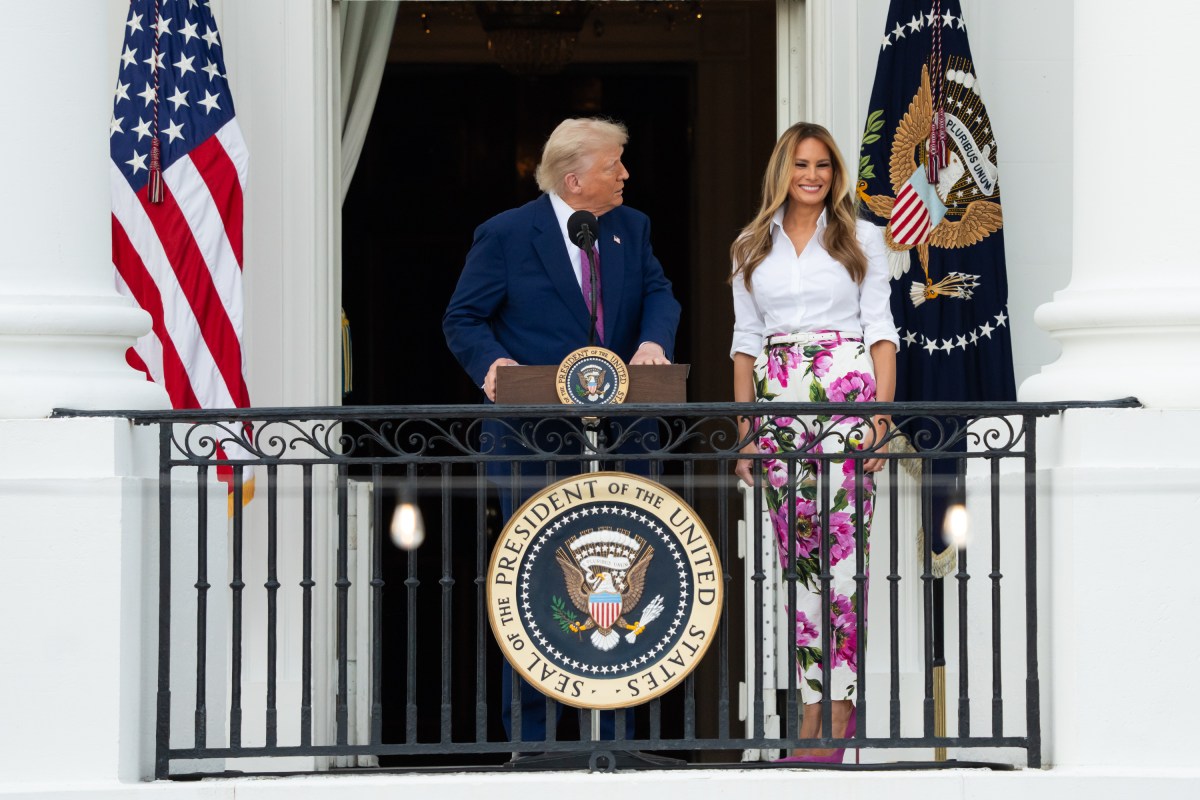
The First Family has become part of that transformation. Melania Trump‘s relatively limited presence at the White House has sparked an unusual level of public discussion, with media outlets closely tracking where the First Lady spends her time and what role she intends to play during Trump’s second term. Such scrutiny is uncommon in modern American politics, where First Ladies have traditionally maintained a visible presence in Washington regardless of how politically active they chose to be.
The renewed attention surrounding the Jeffrey Epstein files has further intensified the focus on Trump’s personal life. While Trump has acknowledged knowing Epstein socially decades ago and has repeatedly denied any wrongdoing, the release of additional records and continuing public debate have ensured that the issue remains part of the broader political conversation. Claims regarding how Trump and Melania first met have also resurfaced in public discourse, even as the First Lady has firmly rejected suggestions linking her introduction to Epstein or Ghislaine Maxwell. The persistence of these debates illustrates how questions about the President’s personal associations increasingly intersect with the public’s assessment of the presidency itself.
That scrutiny extends beyond family and friendships. Every golf outing, every public appearance, every late-night social media post and every unscripted remark is dissected in real time across television studios, podcasts and social media platforms. Political supporters amplify them. Critics weaponise them.
Financial analysts watch them for clues about trade policy and markets. The personal and the presidential have become almost impossible to separate.
For many outside observers, the pattern is strikingly familiar. In India and several other large democracies, politics has increasingly evolved into a leader-centric spectacle where image, symbolism and personality command as much attention as governance itself. Leaders are judged not only by the laws they pass but by the stories that surround them, the narratives built around their families and the public persona they cultivate. Political communication becomes continuous, and the individual often overshadows the institution.
America’s constitutional system remains very different, and the presidency still operates within well-defined legal limits. Yet the way the office is experienced by the public has unmistakably changed. The President is no longer simply the country’s chief executive. He is the central character in an ongoing political drama that unfolds every day, ensuring that governance and spectacle increasingly occupy the same stage.

When The Cabinet Becomes The Headline
In most administrations, cabinet secretaries rarely command sustained public attention outside their respective departments. Defence, justice, health or homeland security typically generate headlines when major policies are announced or crises unfold, but the individuals leading those institutions seldom dominate the political conversation. Trump’s second administration has unfolded differently.
Several of his senior appointees have become headline-makers in their own right, drawing scrutiny that extends far beyond the responsibilities of their offices. Whether it is questions surrounding ethics, management, policy decisions or political loyalty, the cabinet has become an extension of the broader debate surrounding Trump’s presidency rather than remaining in the background of government.
—Defence Secretary Pete Hegseth has been among the administration’s most closely watched figures. His tenure has been marked by controversies ranging from the Signal messaging leak involving military discussions to reports of internal turmoil at the Pentagon, the dismissal of senior officials and criticism over his management style. More recently, his decision to introduce routine testosterone deficiency screenings for service members and expand access to hormone therapy sparked debate among lawmakers and medical experts, who questioned both the scientific rationale and the message such a policy sends about military readiness.
—FBI Director Kash Patel has also found himself under sustained political and congressional scrutiny. Allegations surrounding his use of FBI aircraft for personal travel, questions over travel reimbursements and criticism from Democratic lawmakers have fuelled concerns about ethics and accountability. Patel has strongly denied any wrongdoing, insisting that his travel complied with federal rules and portraying the accusations as politically motivated. Even so, the controversy has reinforced a broader debate over the perceived independence of one of America’s most powerful investigative agencies.
—Health and Human Services Secretary Robert F. Kennedy Jr. has remained one of the administration’s most polarising figures. Long before entering government, Kennedy was known for challenging established public health positions on vaccines. His appointment placed those views at the centre of federal health policy, prompting resignations, criticism from sections of the scientific community and renewed concerns over the direction of agencies responsible for public health, medical research and disease control.
—Attorney General Pam Bondi has faced repeated questions over the Department of Justice’s handling of politically sensitive investigations, while Homeland Security Secretary Kristi Noem has become a central figure in the administration’s aggressive immigration agenda. Border enforcement, deportation policies and the deployment of federal resources have placed her department under constant political and legal scrutiny, ensuring that homeland security remains one of the defining flashpoints of Trump’s second term.
Taken individually, each controversy belongs to a different department and raises a different set of questions. Viewed together, however, they reveal something more significant.
The administration’s senior officials are no longer perceived merely as managers of government departments. They have become political actors whose decisions, public statements and personal conduct shape the national conversation almost as much as the President himself.
For many outside observers, that evolution feels familiar. In several democracies, cabinet ministers have increasingly become public-facing political brands, expected not only to administer their portfolios but also to defend the government’s broader political project. Washington appears to be moving in that direction, with cabinet members occupying a far more visible – and far more contested – place in public life than has traditionally been the case.

When Business And Politics Begin To Overlap
The relationship between political power and private business has long been a point of contention in democracies around the world. In countries such as India, questions over corporate influence, politically connected business groups and the overlap between public office and private enterprise have frequently dominated political discourse. For years, American policymakers and commentators often viewed those concerns as problems associated with other political systems. Trump’s second term has brought similar debates much closer to home.
Unlike many of his predecessors, Trump returned to office with a globally recognised business empire, an active social media company and a family whose commercial interests span real estate, finance and, more recently, cryptocurrency. While federal ethics rules require safeguards and the administration has repeatedly maintained that appropriate legal structures are in place, critics argue that the sheer scale of these commercial interests has created recurring questions about perception, transparency and potential conflicts of interest.
Nowhere has that debate been more visible than in cryptocurrency. Trump’s administration has embraced a markedly friendlier approach towards the digital asset industry, easing regulatory pressure and signalling support for broader crypto adoption. At the same time, Trump and members of his family have been associated with cryptocurrency ventures that have attracted significant investment and generated substantial financial interest. Opponents contend that the overlap between policymaking and private financial interests creates an appearance of conflict, while supporters argue there is nothing improper about backing an industry in which the President’s family also happens to invest. Regardless of where one stands, the discussion itself marks a notable shift in American politics.
Financial markets have also found themselves reacting to presidential announcements with unusual intensity. Whether it involves tariffs, trade negotiations or major policy reversals, statements from the White House increasingly trigger immediate movements across equities, currencies and commodities. Market volatility following presidential posts or public remarks has become part of the rhythm of modern American politics, further reinforcing the idea that political communication itself now carries significant economic consequences.
Questions surrounding politically connected business interests extend beyond the White House. Jared Kushner’s proposed luxury resort development on Albania’s Sazan Island (a former military installation strategically located in the Adriatic Sea) has drawn criticism from opposition politicians and environmental groups. Although Kushner is no longer a government official, the project has revived familiar questions about how former political influence, international relationships and private investment intersect after leaving public office.
None of these developments, taken individually, proves wrongdoing. Many remain matters of political disagreement rather than legal conclusion, and those involved have consistently defended their actions. Yet together they point to a broader reality: the boundary between political authority and private enterprise has become an increasingly prominent subject of public debate.
That debate is not unique to the United States. It has played out in democracies across Asia, Europe and Latin America for years. The difference is that America once positioned itself as the country asking those questions of others. Today, it is increasingly being asked to answer them itself.
Institutions Are No Longer Above The Political Fight
Perhaps the most significant shift in American politics is not who occupies the White House, but how the country’s institutions are increasingly viewed through a partisan lens. For decades, agencies such as the FBI, the Department of Justice, the Federal Reserve and even the Supreme Court enjoyed a level of institutional credibility that allowed them to function above day-to-day political battles. They were criticised, certainly, but they were rarely seen as political players in the way they are today.
That perception has changed dramatically.
The FBI and the Department of Justice have become recurring subjects of political debate, with investigations, appointments and prosecutorial decisions routinely scrutinised through partisan filters.
Republicans have accused the agencies of targeting conservatives, while Democrats have alleged that the Trump administration is seeking to reshape them through loyalist appointments and political influence. The result is that institutions once viewed as arbiters of the law are increasingly discussed as participants in America’s political contest.
The judiciary has faced similar pressures. Decisions by the Supreme Court are now dissected not only for their legal reasoning but also for what they are believed to signal politically. Confirmation battles have become among the most polarising events in Washington, with judicial appointments often treated as victories or defeats for competing political ideologies rather than additions to an independent branch of government.
The debate extends well beyond law enforcement and the courts.
Universities have found themselves at the centre of clashes over free speech, diversity programmes, federal funding and campus protests. The Federal Reserve has repeatedly come under public criticism from political leaders over interest rates and monetary policy. Intelligence agencies, too, have faced growing scepticism from sections of the political establishment, further blurring the line between institutional authority and partisan disagreement.
None of this suggests that America’s institutions have ceased to function independently. The country’s constitutional framework remains robust, and its checks and balances continue to distinguish it from many other democracies. What has changed is public perception. Institutions that were once broadly trusted to operate above politics are now regularly viewed through political identities, with confidence often depending on which side of the ideological divide one occupies.
For Indian readers, the pattern is difficult to ignore. Over the past decade, debates surrounding agencies such as the Enforcement Directorate (ED), the Central Bureau of Investigation (CBI), the Election Commission and even the judiciary have become deeply intertwined with partisan politics.
Supporters and critics frequently interpret the actions of these institutions through political loyalties rather than purely legal or constitutional reasoning. The comparison is not that the institutions themselves are equivalent. America’s constitutional safeguards, legal traditions and federal system remain distinct from India’s. The parallel lies elsewhere. In both countries, public trust is increasingly shaped not by what institutions do, but by who is perceived to benefit from their actions.
That may be one of the clearest signs of how political culture has evolved. Once institutions become protagonists in the political story rather than neutral referees, every investigation, every judgment and every policy decision risks being interpreted as another move in an ongoing political contest.
America First… But At What Cost?
“America First” was more than a campaign slogan. It became the defining philosophy of Donald Trump’s political movement, promising a decisive break from decades of American interventionism and global policing. Trump argued that Washington had spent too much money, too many resources and too much political capital defending allies, fighting distant wars and underwriting an international order that no longer served American interests. The message resonated with millions of voters who believed successive administrations had prioritised the world over their own citizens.
Yet governing has proved far more complicated than campaigning.
Trump entered his second term pledging to avoid foreign entanglements and focus on rebuilding America at home. But global crises rarely wait for campaign promises. Tensions in the Middle East, the war in Ukraine, China’s growing influence in the Indo-Pacific and continued instability across multiple regions have repeatedly tested the limits of an “America First” doctrine. Every decision has reignited an old question: can the world’s most powerful nation truly step back from global leadership without creating new risks for itself?
The administration’s approach to Iran illustrates that dilemma. Trump has long criticised what he describes as costly foreign interventions and has consistently argued that American interests should come before overseas conflicts. Yet renewed military action involving Iran sparked criticism not only from Democrats but also from prominent voices within Trump’s own political coalition. Commentators such as Tucker Carlson and Steve Bannon openly questioned whether the administration was drifting away from the non-interventionist message that had become central to the MAGA movement. The debate exposed ideological fault lines within Trump’s own support base, with some arguing that projecting American strength required military action, while others insisted that “America First” meant staying out of another Middle Eastern conflict altogether.
Trade policy has generated similar contradictions. Trump’s sweeping tariff strategy was presented as a way to revive American manufacturing, reduce dependence on China and protect domestic industries. Supporters viewed it as a long-overdue correction to decades of globalisation. Critics, however, argued that tariffs also increased costs for American businesses and consumers, disrupted supply chains and injected uncertainty into financial markets. The economic debate became inseparable from the political one, with every tariff announcement scrutinised for both its strategic impact and its electoral appeal.
America’s traditional alliances have also undergone a period of reassessment. Trump’s repeated calls for NATO members to shoulder a greater share of defence spending have found support among voters who question why American taxpayers should continue underwriting European security. At the same time, allies have expressed concern over the predictability of U.S. commitments, particularly as Washington’s foreign policy increasingly reflects the priorities of the President rather than the bipartisan consensus that shaped previous administrations.
For decades, America’s foreign policy was often portrayed as an extension of its institutional stability. Allies expected continuity even when administrations changed. Under Trump, policy has become more closely associated with the President’s personal worldview, making leadership style itself a factor in international diplomacy.
That evolution once again draws an interesting comparison with countries such as India, where foreign policy has increasingly become intertwined with the political identity of the leader in power. The histories, strategic priorities and geopolitical circumstances remain vastly different. Yet in both cases, diplomacy is no longer viewed solely through the actions of the state. It is increasingly interpreted through the personality, political messaging and electoral priorities of the individual leading it.
For America’s allies and rivals alike, that may be the most significant transformation of all. The question is no longer simply what the United States will do. Increasingly, it is how Donald Trump chooses to do it.
In Trump’s America, The Campaign Never Really Ends
American elections were once defined by clear beginnings and equally clear endings. Candidates campaigned, voters decided and, once the ballots were counted, attention shifted back to governing. The next election was always on the horizon, but it did not dominate every political decision made in Washington.
That rhythm has all but disappeared.
Donald Trump has blurred the line between campaigning and governing in a way few modern American presidents have attempted. Campaign rallies have continued well beyond election victories, political branding remains a constant feature of public life, fundraising rarely pauses, and policy announcements are often delivered with the cadence of campaign speeches rather than administrative briefings. Even while occupying the Oval Office, Trump continues to communicate like a candidate determined to energise his political base.
The pace has only accelerated during his second term. Conversations about the 2028 presidential race surfaced within months of the 2024 election, with media networks, political strategists and party insiders already speculating about successors, alliances and the future of the MAGA movement. Every major policy decision (from tariffs and immigration to tax reforms and foreign policy) is analysed not only for its governing impact but also for its electoral consequences. Politics has become a continuous cycle in which the next campaign begins almost as soon as the previous one ends.
Social media has amplified that transformation. Platforms such as X and Truth Social allow political leaders to bypass traditional media, respond instantly to critics and keep supporters engaged around the clock. Every court ruling, cabinet appointment, international summit or economic announcement quickly becomes part of a larger political narrative, ensuring that the campaign machinery rarely falls silent.
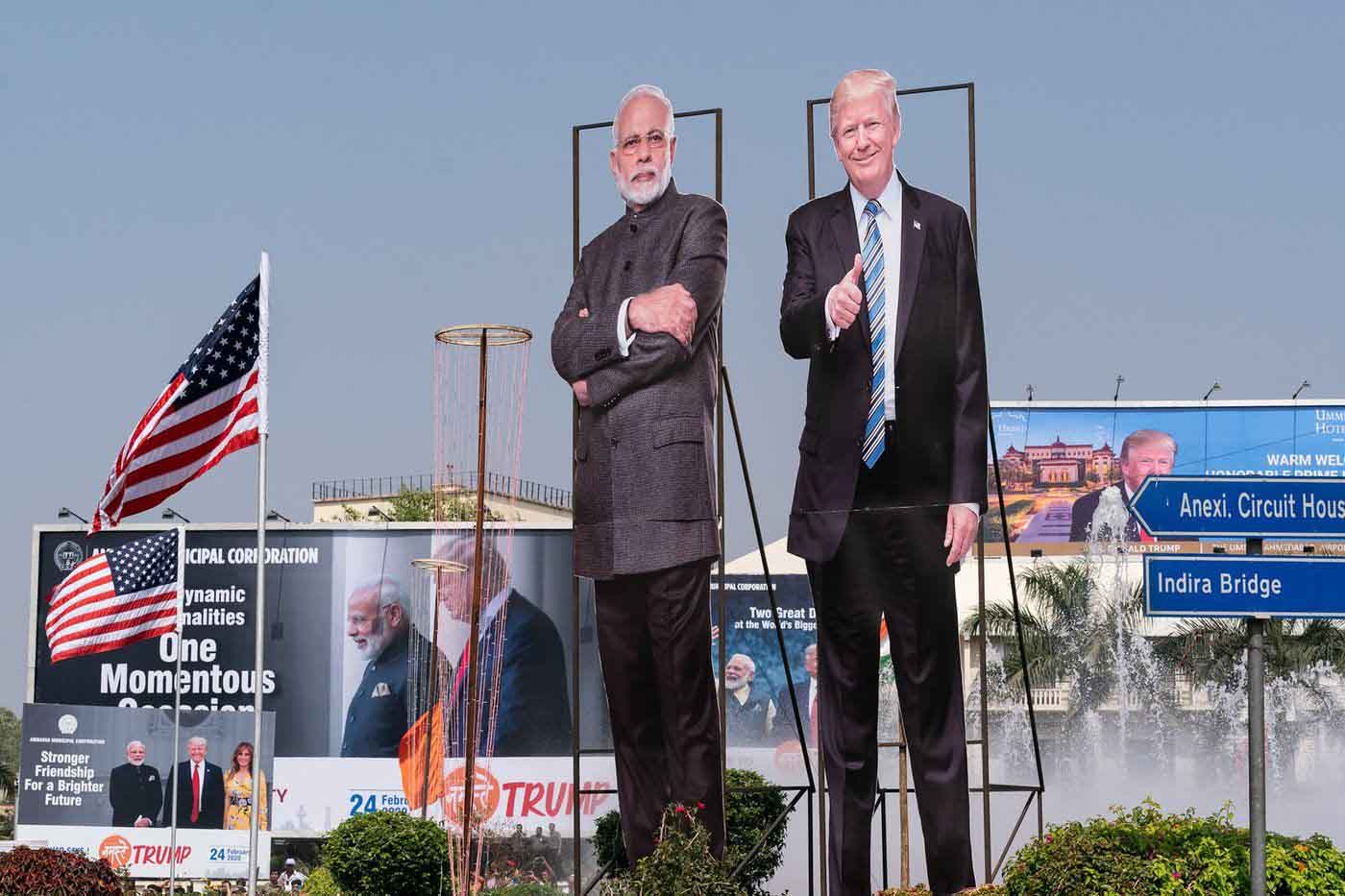
For Indian audiences, the pattern is strikingly familiar. Elections in India have increasingly evolved into year-round exercises. National campaigns seamlessly merge into state elections, which are followed by municipal contests, leadership roadshows and extensive digital outreach. Political parties remain in mobilisation mode, maintaining volunteer networks, fundraising efforts and social media campaigns long after votes have been counted.
The similarities extend beyond campaign schedules. In both countries, politics increasingly revolves around visibility. Every public appearance, interview, online post and policy announcement is viewed through an electoral lens. Governing and campaigning no longer operate as separate activities; they have become two sides of the same political strategy.
This constant state of mobilisation has consequences. It leaves little room for political consensus, rewards confrontation over compromise and encourages governments to prioritise public perception as much as policy outcomes. When every day feels like election day, politics ceases to be an event. It becomes a permanent condition.

The Media Is No Longer Watching Politics. It Is Part Of It.
For much of modern American history, the media’s primary role was to observe politics, question those in power and report events to the public. Newspapers, television networks and later digital platforms certainly influenced public opinion, but they largely remained separate from the political process itself. Politicians sought media coverage; they did not usually possess the ability to dominate the information ecosystem every hour of the day.
That distinction has steadily eroded.
Donald Trump has transformed the relationship between politics and the media in ways few presidents before him attempted. Long before returning to the White House, he understood that political influence no longer depended solely on press conferences or televised addresses. Social media, podcasts, online creators and partisan news outlets had become equally powerful platforms for shaping public opinion. His second presidency has reinforced that strategy, allowing the administration to communicate directly with millions of supporters without relying on traditional gatekeepers.
Truth Social has become one of the most visible examples of that shift. Presidential statements are frequently issued on the platform before formal government briefings take place, ensuring that social media often drives the day’s political agenda. A single post can trigger hours of television debate, influence financial markets, dominate online conversations and force political opponents to respond almost immediately. Rather than reacting to the media cycle, the White House increasingly sets it.
Traditional news organisations have also become participants in America’s political polarisation. Networks such as Fox News, CNN, MSNBC and Newsmax are often viewed through ideological lenses, with audiences gravitating towards outlets that reinforce their existing political beliefs. The result is a fragmented information landscape in which competing versions of the same political event frequently coexist, making consensus increasingly difficult even on basic facts.
At the same time, podcasts and independent online personalities have emerged as influential political actors in their own right. Long-form interviews, livestreams and creator-led discussions now reach audiences that once relied primarily on television news. Political leaders increasingly choose these platforms to announce policies, defend controversies and connect with younger voters, recognising that influence is no longer confined to traditional journalism.
The transformation extends well beyond the United States. Indian politics has undergone a remarkably similar evolution. Television debates, YouTube channels, WhatsApp networks, X, Instagram and independent digital creators now shape political discourse alongside mainstream news organisations. Election campaigns are fought as much through viral videos, hashtags and influencer networks as through newspaper editorials or campaign speeches. Information travels faster, reaches wider audiences and often becomes intertwined with political identity itself.
That does not mean the American and Indian media arena are identical. Their regulatory environments, ownership structures and political histories differ significantly. Yet both democracies illustrate the same broader trend: the media is no longer simply reporting politics. It has become one of the arenas in which politics is contested, amplified and, increasingly, defined.
In Trump’s America, winning the political argument is no longer enough. Winning the information battle has become just as important.
Why America Now Feels Familiar
Taken individually, each of these developments can be explained on its own. Cabinet controversies are hardly unique to the Trump administration. Political polarisation has existed in America for decades. Business leaders have entered politics before, and fierce election campaigns are hardly a new phenomenon. Yet viewed together, they reveal a broader transformation in how American democracy is perceived, both at home and abroad.
The presidency has become deeply personalised. Cabinet secretaries command public profiles that often rival elected politicians. Business interests and political power are scrutinised side by side. Institutions are increasingly viewed through partisan lenses. Election campaigns no longer appear to end, while social media has become one of the primary battlegrounds for political influence. Foreign policy itself is increasingly interpreted through the personality of the President rather than solely through the enduring interests of the American state.
For observers in countries such as India, these developments do not necessarily appear extraordinary. Indian politics has long been characterised by powerful leaders, continuous election cycles, intense media scrutiny, debates over institutional independence and political narratives shaped as much by personality as by policy. The comparison is not that the two democracies function in the same way or face identical challenges. Their constitutional systems, political histories and institutional structures remain fundamentally different.
What has changed is the direction of the conversation.
For decades, discussions about democratic resilience often flowed in one direction. American officials, researchers and media organisations assessed the strengths and weaknesses of democratic institutions elsewhere, while the United States itself was largely treated as the benchmark against which others were measured. Today, that distinction has become less clear. America increasingly finds itself confronting many of the same debates about political polarisation, institutional trust, media fragmentation and leader-centric politics that it once examined abroad.
That shift is significant not because it proves American democracy is weakening beyond repair, but because it challenges the idea of American exceptionalism. The United States remains one of the world’s oldest and most influential constitutional democracies, with institutions that continue to exercise meaningful checks and balances. Yet it is no longer viewed as standing entirely outside the global trends reshaping democratic politics.
Perhaps that is the most enduring consequence of Trump’s political legacy. Whether one supports him or opposes him, his presidency has changed the way American democracy is discussed around the world. The United States is no longer seen only as the country evaluating the health of other democracies. Increasingly, it has become part of the same global conversation.

The Last Bit,
Donald Trump’s second presidency has reignited debates that extend far beyond party politics or individual policy decisions. It has prompted a broader reassessment of how American democracy functions, how its institutions are perceived and how political power is exercised in an age of constant media scrutiny and deep ideological division. Whether it is the growing prominence of personality-driven politics, the politicisation of institutions, the overlap between business and government, the permanence of election campaigning or the increasingly fragmented media, the United States now finds itself confronting questions that it once more commonly asked of others.
That does not mean America has become another country, nor does it suggest that its democratic institutions are equivalent to those elsewhere. The United States retains constitutional safeguards, an independent judiciary, a federal system and checks and balances that continue to distinguish it from many democracies. Equally, India’s political evolution has been shaped by its own history, institutions and social realities. Drawing comparisons between the two is not about suggesting they are the same; it is about recognising that democracies across the world are increasingly wrestling with similar pressures.
Perhaps that is the most profound shift of all. For decades, America occupied a position of democratic exceptionalism, often acting as the world’s principal commentator on the health of democratic institutions beyond its borders. Today, it is no longer viewed solely as the observer. It has become one of the democracies under observation.
Whether this represents a temporary phase driven by one extraordinary political figure or the beginning of a lasting transformation in American political culture remains uncertain. Historians and political scientists will debate that question for years to come. What is already clear, however, is that Donald Trump has altered more than the course of American politics. He has changed how the world talks about American democracy itself.
And perhaps that is the central question this moment leaves behind: Has America merely elected an unconventional President, or has it entered a new political era in which the world’s oldest modern democracy increasingly resembles the democracies it once believed it could teach?