Will Adani Launch An Airline? Should The Owner Of Critical Aviation Infrastructure Also Become A Competitor Within That Same Ecosystem?
Adani's reported interest in launching an airline is about far more than adding another carrier to India's skies. It raises a larger question: should the country's largest private airport operator also become a direct competitor within the aviation ecosystem it has spent years building?


The idea of an Adani-owned airline seemed far-fetched just a few months ago. In December 2025, Jeet Adani, director of Adani Airports and son of Gautam Adani, publicly dismissed the possibility, saying the group had no interest in entering the airline business because it was a low-margin industry that did not align with the company’s strengths. Instead, he said, Adani’s expertise lay in building and operating long-term infrastructure assets rather than running passenger airlines.
That position appeared to shift dramatically this week after two separate reports suggested the conglomerate was at least evaluating the possibility of launching a carrier. Reuters, citing sources familiar with the matter, reported that the group was internally discussing an airline as India struggles with an aviation market dominated by IndiGo and Air India. The report added that the government had informally encouraged large business groups to consider strengthening competition following operational disruptions at IndiGo and the continuing scrutiny surrounding Air India.
A story reported that Adani Airport Holdings had written to the Airports Authority of India seeking changes to rules that currently prevent operators of certain airports from owning more than a 10% stake in a scheduled airline.
In the letter, reportedly written by Adani Airports CEO Arun Bansal, the group argued that India needed another strong airline to reduce concentration in the domestic market, improve connectivity to Tier-2 and Tier-3 cities, and strengthen the country’s aviation ecosystem.
Yet, within hours of those reports, Adani Enterprises issued an exchange filing categorically denying that it was evaluating any proposal to launch an airline, calling the media reports “entirely baseless and factually incorrect.”
Whether the group ultimately enters the airline business remains uncertain. But the reports have already triggered a much broader discussion. Unlike a conventional airline startup, Adani is not beginning with a blank slate. Over the past several years, it has steadily built businesses across almost every major segment of India’s aviation ecosystem. That existing footprint is precisely why the possibility of an Adani airline is being viewed as more than just another corporate expansion.

Vertical Integration Already Exists
For most companies, launching an airline would mean entering one of the world’s most capital-intensive and unpredictable industries from scratch. Adani’s position is markedly different.
If the group were to eventually operate a carrier, it would not be building an aviation ecosystem around an airline. Instead, it would be adding an airline to an ecosystem that is already largely in place.
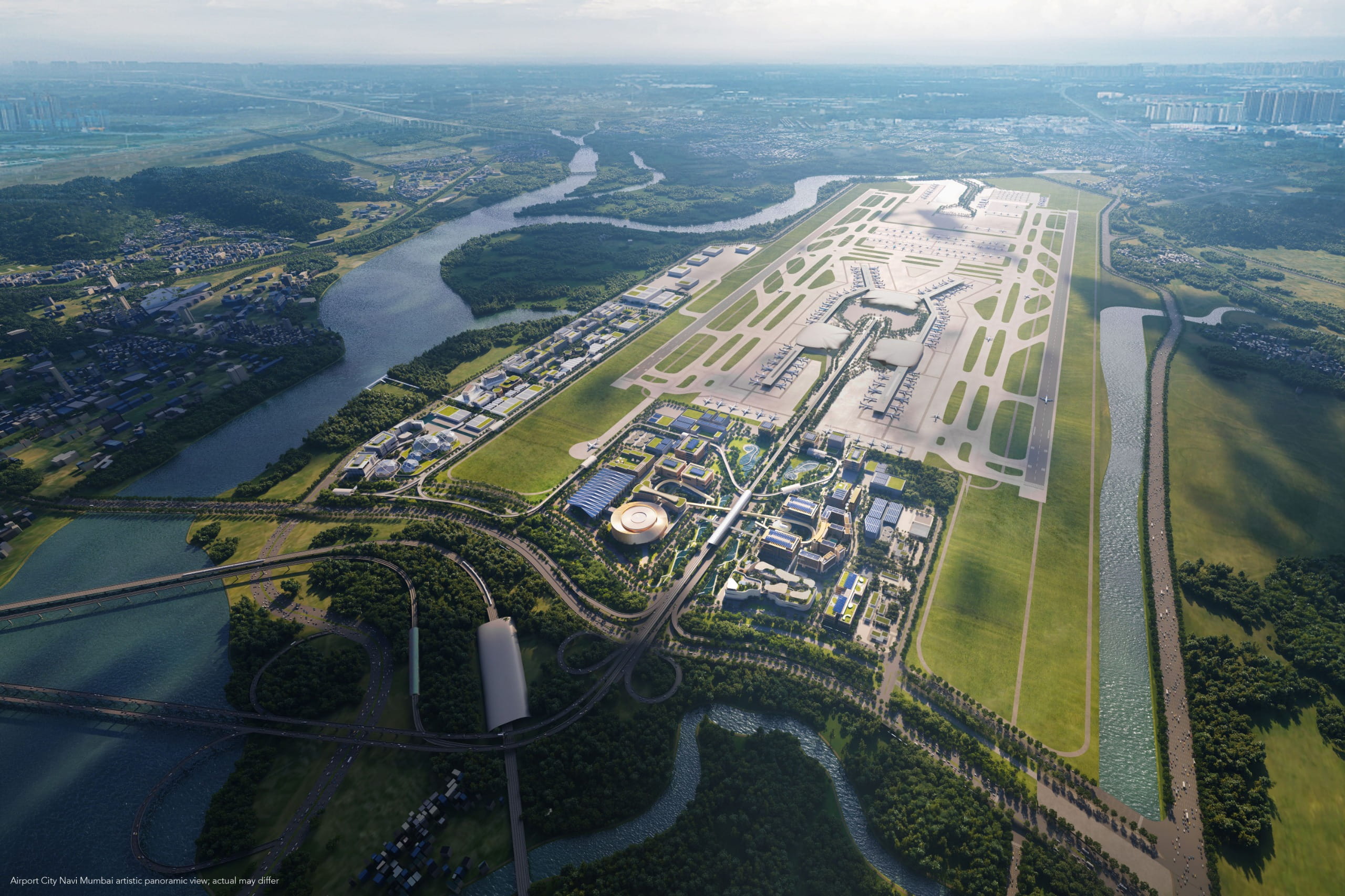
That transformation began in 2019 when Adani Group won the rights to operate six airports under the government’s privatisation programme. The portfolio later expanded with the acquisition of Mumbai International Airport, giving the conglomerate control of one of the country’s busiest aviation hubs, while work on the greenfield Navi Mumbai International Airport continues. Today, Adani Airports Holdings operates eight airports that collectively handle millions of passengers every year, making it India’s largest private airport operator.
But airports were only the beginning. Over the past few years, the group has systematically expanded into nearly every major component of the aviation value chain.
—It now manages airport operations, provides ground handling services through partnerships, is building maintenance, repair and overhaul (MRO) capabilities, has entered pilot training, is investing in cargo and logistics infrastructure, and is developing airport-linked commercial districts that combine retail, hospitality, office spaces and other real estate around its aviation assets.
—Its partnership with Brazilian aircraft manufacturer Embraer to explore aircraft manufacturing in India further extends that footprint beyond airport infrastructure and into aerospace manufacturing.
Viewed individually, each of these investments appears to be a logical extension of the previous one. Collectively, however, they form an integrated aviation ecosystem that few private companies anywhere in the world have assembled. The missing piece is the airline itself.
That is what makes the current reports so significant. Unlike a traditional airline startup that must first secure aircraft, develop infrastructure and build supporting services, Adani would enter the business with much of that ecosystem already surrounding it. In many ways, the debate is not about whether the group can build an airline from scratch. It is about whether a company that already owns and operates significant parts of the aviation ecosystem should also become a direct competitor within it.
Massive Investments Already Made
Adani’s growing presence in aviation has been backed by equally ambitious capital commitments. Over the past few years, the group has transformed itself from a new entrant in airport operations into one of the country’s largest private aviation infrastructure players, investing billions of dollars across airports, commercial developments and aviation-linked businesses.
At the heart of that strategy is Adani Airport Holdings Ltd. (AAHL), which today manages eight airports across India, including Mumbai’s Chhatrapati Shivaji Maharaj International Airport and the under-construction Navi Mumbai International Airport. Together, these airports handle tens of millions of passengers annually and serve as critical gateways for both domestic and international travel.
Unlike traditional airport operators that focus largely on aviation services, Adani has pursued a broader infrastructure strategy aimed at turning airports into integrated commercial hubs.
That vision extends well beyond runways and terminals. Earlier this year, Adani Airports announced plans to invest more than $2 billion in developing airport-linked commercial districts across six cities. These so-called “airport cities” are expected to include hotels, office spaces, retail centres, logistics parks and entertainment zones designed to generate revenue long after passengers have boarded their flights. Similar models have been successfully adopted by some of the world’s largest airports, where non-aeronautical businesses increasingly account for a significant share of earnings.
The group has also continued expanding into cargo handling, logistics, maintenance infrastructure and aviation services, steadily building businesses that complement its airport operations. Its partnership with Brazilian aircraft manufacturer Embraer to explore aircraft production in India further demonstrates that the company’s aviation ambitions extend beyond infrastructure ownership into manufacturing and aerospace capabilities.
Viewed together, these investments raise an obvious commercial question. After spending billions of dollars creating an aviation ecosystem, would operating an airline improve utilisation across those assets?
More flights would mean higher passenger traffic, greater demand for cargo services, increased spending across airport retail outlets, stronger occupancy in airport hotels and offices, and potentially better returns on the group’s long-term infrastructure investments.
From that perspective, an airline is not merely another business vertical. It could become the final commercial link connecting a network of airports, aviation services, logistics and airport-city developments into a single integrated ecosystem.
Government Wants More Competition
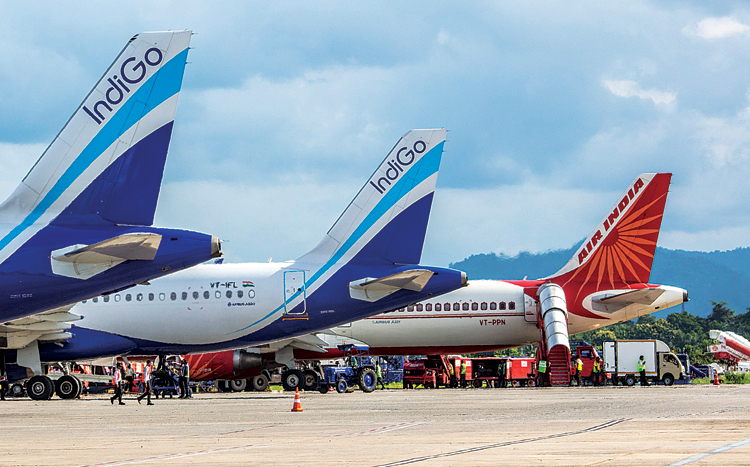
The timing of these reports is significant because they come at a time when India’s aviation market has become increasingly concentrated. For years, competition among multiple full-service and low-cost carriers kept fares in check and expanded consumer choice. That arena has changed dramatically following the collapse of airlines such as Kingfisher, Jet Airways and Go First, leaving IndiGo and Air India as the country’s two dominant players.
Today, the two airlines together account for nearly 90% of India’s domestic aviation market, giving them an overwhelming influence over capacity, connectivity and pricing. While consolidation has helped create financially stronger carriers, it has also raised concerns about whether the market has become too dependent on a handful of operators.
Those concerns became more pronounced over the past year. IndiGo’s large-scale operational disruptions, which resulted in thousands of flight cancellations and stranded passengers, exposed how heavily India’s aviation network relies on a single airline. Air India, meanwhile, has continued to operate under intense regulatory and public scrutiny following the fatal Ahmedabad crash and a series of operational and compliance challenges. Together, the episodes reinforced an uncomfortable reality: disruptions at one major airline can quickly ripple across the country’s entire aviation system.
It is against this backdrop that reports suggesting the government has informally encouraged well-capitalised business groups to consider launching new airlines become more understandable. A financially strong third carrier could reduce dependence on two dominant players, improve network resilience during disruptions, increase seat capacity and potentially exert downward pressure on fares over the long term.
The argument extends beyond competition alone. India is one of the world’s fastest-growing aviation markets, with passenger traffic expected to rise steadily over the coming decades. The government has outlined ambitious plans to expand the country’s airport network to between 350 and 400 airports by 2047, a dramatic increase from just 74 airports in 2014. Building the infrastructure, however, is only one part of the equation. Those airports also need airlines willing to operate routes, particularly to Tier-2 and Tier-3 cities that remain underserved despite growing demand.
That is precisely the case Adani reportedly made in its communication to the government. Rather than positioning a new airline as another commercial venture, the group argued that a third major player could strengthen regional connectivity, reduce concentration risks and support India’s long-term aviation ambitions. Whether regulators ultimately agree is another matter entirely. But the proposal reflects a broader policy question: as India rapidly expands its aviation infrastructure, who will fly the aircraft needed to make that infrastructure economically viable?
Conflict Of Interest – Should An Airport Owner Also Own An Airline?
For all the arguments supporting the emergence of a third major airline, critics believe the debate cannot be separated from one fundamental question: should the owner of critical aviation infrastructure also compete within that same ecosystem?
Adding an airline would effectively place the company on both sides of the aviation business – as the owner of the infrastructure and as one of the airlines using it.
That overlap has become the central concern raised by competitors and industry experts. Airport operators play a critical role in allocating resources such as landing and take-off slots, aircraft parking bays, terminal facilities, gate access and other operational infrastructure. These decisions are governed by regulations and involve multiple authorities, but airlines argue that ownership alone creates an inherent conflict when the airport operator is also competing for passengers on the same routes.
IndiGo has been among the most vocal critics of any move to relax cross-ownership rules. Its co-founder Rahul Bhatia recently warned that allowing airport operators to own airlines could create a “massive conflict of interest” that would ultimately work against consumers. Even if regulatory safeguards and independent oversight mechanisms are put in place, critics argue that maintaining a level playing field becomes significantly more challenging when one company occupies multiple positions within the same value chain.
Supporters of the proposal counter that such concerns can be addressed through structural safeguards. In its reported communication to the government, Adani Airport Holdings said it was willing to implement governance standards, ring-fencing mechanisms and non-discriminatory access policies to ensure equal treatment for all airlines operating from its airports. Similar models exist in a handful of international markets where airport operators and airlines coexist under regulatory oversight.
Ultimately, the debate is less about whether Adani would deliberately favour its own airline and more about whether the market should ever be placed in a position where such questions arise.
In sectors as strategically important as aviation, perception can be almost as important as reality. Even the appearance of preferential access or unequal treatment has the potential to influence investor confidence, competitive behaviour and public trust in the regulatory framework.
At What Point Does Diversification Become Concentration?
Over the past two decades, the Adani Group has transformed from a ports-focused business into one of India’s largest infrastructure conglomerates. Today, its presence stretches across ports and logistics, airports, roads, power generation, transmission and distribution, renewable energy, coal mining, natural gas, cement, data centres, defence and aerospace, media, warehousing and urban infrastructure. An airline, if it eventually materialises, would not represent a move into an unrelated business. It would add another strategic layer to a portfolio that already touches some of the country’s most critical economic assets.
That concern becomes even more pronounced when those businesses are interconnected. Ports feed logistics networks. Logistics supports manufacturing and trade. Airports connect with cargo operations, commercial real estate and, potentially, airlines. Each additional layer can strengthen the overall ecosystem, but it can also increase the group’s influence across supply chains that are central to economic activity.
The debate, therefore, extends well beyond aviation. It raises broader questions about India’s infrastructure model and the role large conglomerates are expected to play within it.
Should the country’s next phase of growth continue to rely on a handful of diversified business groups capable of mobilising capital and executing projects at scale? Or does long-term competition require ensuring that ownership of strategic assets remains more widely distributed, even if that slows the pace of expansion?
There are no easy answers. Around the world, governments have often relied on large corporate groups to deliver infrastructure that smaller companies simply cannot finance. At the same time, regulators have consistently faced the challenge of ensuring that scale does not gradually evolve into excessive market concentration.

The Last Bit, Adani….Airlines?
Whether Adani ultimately launches an airline remains uncertain. The group has publicly denied evaluating such a proposal, even as reports based on internal correspondence and people familiar with the discussions suggest that the idea has at least been explored. If the company eventually decides to move forward, however, the proposal would almost certainly face an extensive regulatory process before the first aircraft ever takes to the skies.
Any change would require more than just corporate approval. Existing rules restricting airport operators from owning significant stakes in scheduled airlines would need to be revisited, a process likely to involve the Airports Authority of India, the Ministry of Civil Aviation, the Competition Commission of India and, potentially, the Union Cabinet. Industry participants, particularly competing airlines, would also be expected to closely scrutinise any proposal that alters the current regulatory framework.
The debate is also unlikely to end with aviation alone. If regulators eventually conclude that robust governance mechanisms, independent slot allocation systems and strict ring-fencing measures can adequately address concerns over conflicts of interest, the decision could influence how India approaches ownership across other strategic infrastructure sectors as well. Conversely, if policymakers determine that infrastructure operators should remain neutral service providers, it could reinforce the principle that competition is best preserved by keeping ownership of critical infrastructure separate from the businesses that depend on it.
For Adani, the commercial rationale is relatively straightforward. After years of investing in airports, logistics, maintenance, training, cargo and airport-linked real estate, an airline could complete a vertically integrated aviation ecosystem.
For regulators, however, the calculation is far more complex. Their challenge is not simply deciding whether another airline is needed, but whether India’s aviation market can accommodate a model in which one company owns significant portions of the infrastructure while also competing within it.
That is ultimately why this story extends far beyond the possibility of another airline entering the market. It raises a broader question about the future of India’s infrastructure model: should the country’s largest conglomerates continue expanding across interconnected strategic sectors in the name of scale and efficiency, or should regulators draw clearer boundaries to preserve competition?