For The First Time In Years, Modi Blinked. How India’s Gen Z Forced A Political Retreat And Raised Questions About His Invincibility
Narendra Modi rarely finds himself on the defensive. Dharmendra Pradhan's resignation closed one chapter, but opened another. The NEET paper leak protests has sparked questions about Modi's political invincibility and revealed India's Gen Z as a force that can no longer be ignored.

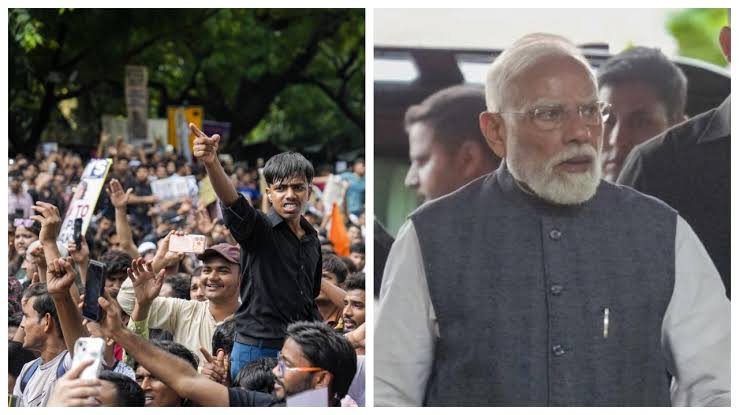
For more than a decade, one thing had become almost synonymous with Narendra Modi’s government: it rarely gave in to public pressure. Ministers stayed put through controversies, protests were weathered, and political concessions were few and far between. That made what unfolded over the past week all the more remarkable.
After weeks of nationwide demonstrations over the NEET examination paper leak, Education Minister Dharmendra Pradhan stepped down – a rare ministerial resignation under the Modi government and the central demand of thousands of protesting students.
Within hours, Prime Minister Narendra Modi announced a sweeping review of India’s examination system, unveiling a task force headed by Infosys co-founder Nandan Nilekani and promising stricter laws against paper leaks, greater transparency and wider use of technology in conducting examinations.
On the surface, the government appeared to be responding to an education crisis. But the resignation and the reform package reflected something far bigger than a flawed entrance exam. The NEET paper leak had become the spark for a nationwide youth movement that questioned not only the credibility of India’s examination system, but also whether young Indians were being heard at all. The protests rapidly expanded beyond demands for accountability over one exam to include calls for education reforms, compensation for families of students who died by suicide following the scandal, and the withdrawal of police cases against demonstrators – demands the government eventually accepted.
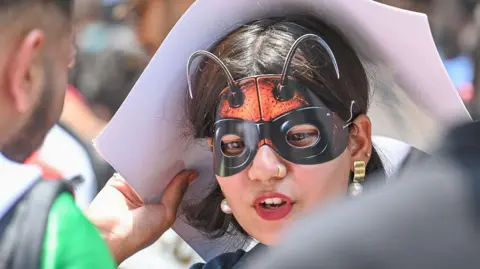
Much of that momentum came from an unlikely source: the Cockroach Janta Party (CJP), a youth-led movement that transformed online satire into street mobilisation. What began as a digital campaign quickly evolved into one of the largest youth-led protests India has witnessed in years, drawing thousands onto the streets and placing sustained pressure on a government that has rarely altered course in response to public demonstrations.
The immediate political battle may have ended with Pradhan’s resignation, but the larger story was only beginning. For perhaps the first time in years, the Modi government was not simply responding to a policy failure – it was responding to a generation that had discovered the power of collective action. The exam leak may have ignited the protests, but what emerged was a far broader challenge to the way India’s youngest citizens engage with politics.

Why This Protest Succeeded When So Many Others Didn’t
The resignation of Dharmendra Pradhan was significant not simply because a cabinet minister lost his job, but because it broke a pattern that had come to define the Modi government. Since coming to power in 2014, the administration has projected an image of decisiveness, rarely appearing to bend under public pressure. Even prolonged nationwide agitations have seldom resulted in ministerial exits. Until Pradhan’s departure, only one Union minister had resigned during Modi’s tenure, and that too over allegations of personal misconduct rather than a policy failure.
The government’s response suggested it understood that this was not another protest it could simply outlast. Modi, who had remained silent as demonstrations gathered momentum, released a rare Instagram video expressing concern over students’ hardships and promising reforms. His government not only accepted the protesters’ central demand for the education minister’s resignation but also agreed to overhaul the examination system, withdraw police cases against demonstrators and compensate families of students who died by suicide following the NEET paper leak.
Political analysts argue that the shift was driven by the nature of the movement itself. Unlike many previous protests that were organised around established political parties, trade unions or farmer organisations, this one was overwhelmingly youth-led, digitally coordinated and difficult to pigeonhole. While opposition parties attempted to associate themselves with the demonstrations, the movement retained its identity as one driven primarily by students and young Indians frustrated with a system they believed had failed them.
That distinction mattered. Many of those marching in the streets were not lifelong political activists or committed opposition supporters. Some analysts believe they included young people who had previously voted for the BJP or had remained politically disengaged. Their grievances extended beyond a leaked examination paper; they reflected a broader sense that institutions responsible for education, employment and opportunity were no longer delivering on their promises.
For the Modi government, the immediate crisis may have been contained through reforms and political concessions. But the larger lesson was harder to ignore. This was no longer simply about managing a controversy. It was about responding to a generation that had demonstrated it could organise rapidly, sustain national attention and compel one of India’s most politically dominant governments to change course.
Meet India’s New Political Force – Gen Z
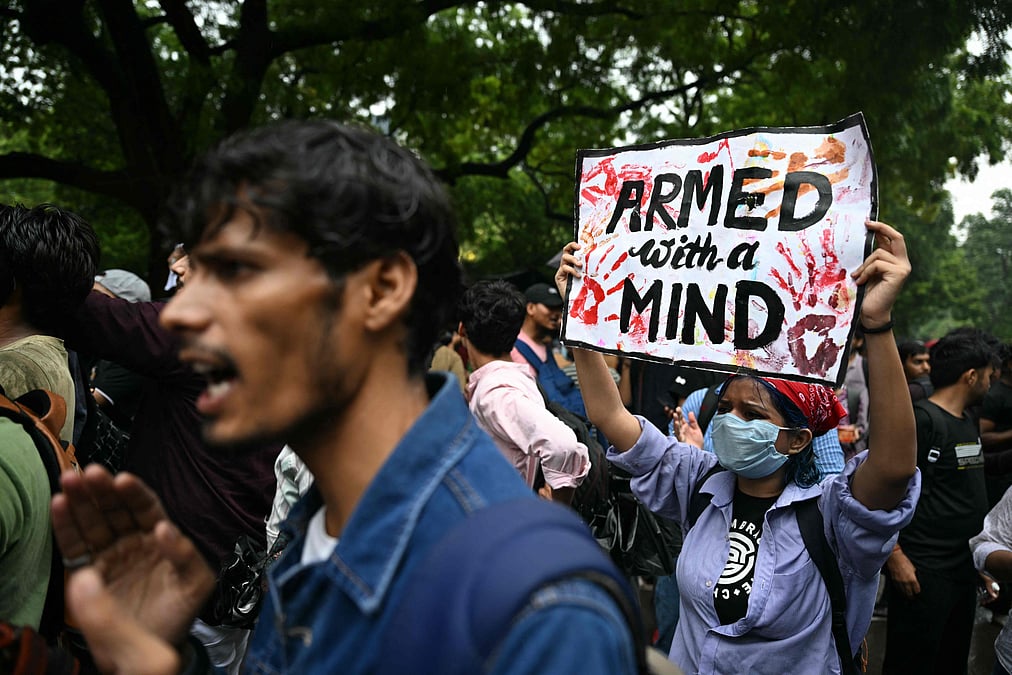
The most striking aspect of these protests wasn’t simply their scale – it was who led them and how they mobilised. Unlike earlier mass movements that relied on student unions, political organisations or traditional media coverage, this one was organised by a generation that communicates differently, consumes information differently and, increasingly, views politics differently.
At the centre of that shift was the Cockroach Janta Party (CJP), a movement that began as online satire but rapidly transformed into a nationwide youth campaign. In a matter of days, its Instagram account attracted around 22 million followers, eclipsing the Bharatiya Janata Party’s presence on the platform, which has taken years to build. Its content wasn’t made up of lengthy political speeches or ideological debates. Instead, it relied on memes, reels, rap videos, humour and short-form videos that resonated with millions of young Indians who spend far more time on Instagram than on television news or even X.
That difference in communication proved to be more than a marketing advantage – it became a political one. Protesters documented police action in real time, uploaded videos from demonstrations within minutes and turned individual encounters into viral moments that drew national attention. One such video, filmed by an 18-year-old protester in Mumbai while he was being detained by police, amassed nearly 10 million views and ultimately led to the suspension of the police constable involved. Instead of discouraging participation, each viral clip appeared to draw more young people into the movement.
Analysts argue that the BJP underestimated this shift because its digital strategy remained rooted in platforms that dominated political discourse over the past decade.
While the party continues to command enormous followings on X and Facebook – and Modi himself remains one of the world’s most followed political leaders – much of India’s youngest electorate has migrated elsewhere. Instagram has become less about polished messaging and more about authenticity, humour and immediacy, making it far harder for carefully managed political communication to dominate the conversation.
The implications extend well beyond social media. India’s population is overwhelmingly young, yet its political leadership remains considerably older. Analysts note that while people between the ages of 18 and 40 account for roughly 40% of the country’s population, they occupy only around 10% of seats in the Lok Sabha, and the average age of the Union Cabinet is over 60. That disconnect has fuelled a growing perception among many young Indians that those making decisions are increasingly removed from the realities they face.
For years, India’s youth have often been viewed as a demographic that could be mobilised during elections. These protests suggest they may now be evolving into something more consequential – a constituency capable of setting the political agenda itself. The exam leak brought them together, but what kept the movement alive was the realisation that collective pressure could produce tangible political results.
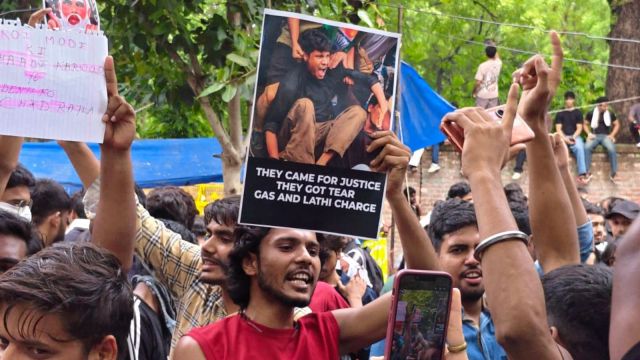
The Real Anger Was Never Just About An Exam
The NEET paper leak may have triggered the protests, but it did not create the frustration that fuelled them. For many young Indians, the scandal became proof of something they had long suspected – that the system they had trusted to reward merit was becoming increasingly unreliable.
For decades, education has been sold as India’s great social equaliser. Families invested their savings in coaching classes, private schools and competitive examinations believing that hard work would eventually translate into stable employment and upward mobility. But that promise has begun to weaken. When one of the country’s biggest entrance examinations was compromised, many students saw it not as an isolated administrative failure but as evidence that even merit could no longer guarantee opportunity.
The concerns extended far beyond admissions. India is home to the world’s largest youth population, yet unemployment among people aged 15 to 29 climbed to 16.2% in June, up from 13.8% a year earlier. Even earning a university degree offers little certainty. A 2026 study by Azim Premji University found that fewer than 7% of job seekers secured permanent salaried employment within a year, while less than 4% found white-collar jobs. For millions of graduates, the path from classroom to career has become increasingly uncertain.
Adding to that anxiety is the rapid rise of artificial intelligence. As AI tools become more capable, many young Indians worry that entry-level roles in sectors such as IT services, customer support and back-office operations – jobs that have traditionally absorbed large numbers of graduates – could shrink or change dramatically.
Analysts cited these fears alongside unemployment as one of the underlying reasons the protests resonated far beyond students preparing for the NEET examination.
The voices emerging from the protests reflected this broader unease. Demonstrators spoke not only about paper leaks but about rising education costs, increasing privatisation, limited employment opportunities and a growing sense that the social contract had broken down. For many, the issue was no longer whether one examination had been compromised; it was whether years of studying, financial sacrifice and personal ambition still offered a realistic path to a better future.
That helps explain why the movement continued to grow even after its original demands gained national attention. The examination scandal was the catalyst, but the protests became a vehicle for expressing far deeper economic and generational anxieties. In that sense, the government was not simply confronting angry students. It was confronting a generation increasingly uncertain about what lies ahead – and increasingly willing to say so publicly.
Is Modi Losing His Political Invincibility?
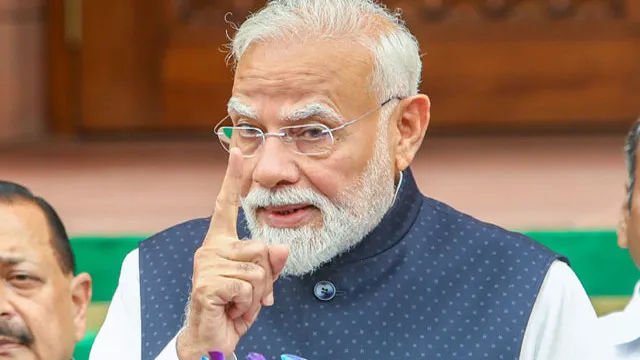
It would be premature to suggest that one protest has fundamentally altered India’s political arena. Narendra Modi remains the country’s most dominant political figure, the BJP continues to govern much of India, and his personal popularity still dwarfs that of most rivals. But the events surrounding the education protests have raised a question that would have seemed unlikely only weeks ago: has the perception of political invincibility begun to crack?
For much of the past decade, Modi cultivated the image of a leader who rarely reversed course. Whether dealing with opposition attacks or public demonstrations, the government projected confidence that it could withstand political pressure without making major concessions. This time, however, it responded differently. A minister resigned, reforms were announced, protesters’ demands were accepted and the Prime Minister personally addressed the issue.
Even if these decisions were driven by pragmatism rather than political weakness, they marked a notable departure from the government’s usual approach.
The electoral implications are equally significant. Political observers believe the first real test of this youth mobilisation could come in next year’s state elections in Uttar Pradesh, Punjab and Gujarat. While the Cockroach Janta Party insists it has not decided whether to enter electoral politics, its ability to mobilise millions of young Indians has already attracted the attention of opposition parties eager to tap into the growing dissatisfaction.
Whether that energy translates into votes remains uncertain. Protest movements often struggle to sustain momentum once their immediate objective has been achieved, and converting online popularity into electoral organisation is a far more complex challenge. Yet the significance of the CJP may not lie in whether it contests elections, but in what it has already demonstrated – that young Indians can influence the national political conversation without relying on traditional party structures.
Perhaps the most consequential lesson is psychological rather than electoral. For many participants, Dharmendra Pradhan’s resignation served as proof that sustained public pressure could force even a powerful government to respond. That experience has the potential to reshape political behaviour far beyond this single movement. A generation that once viewed protests as largely symbolic has now witnessed a campaign deliver tangible results.
Whether this becomes a turning point for Indian politics or remains an isolated episode will depend on what follows. But one thing is already clear: the Modi government is no longer dealing with a generation content to express its frustrations privately. It is confronting one that has discovered its collective voice and, perhaps more importantly, its ability to make itself heard.
The Last Bit, A Generation That Found Its Voice
The resignation of an education minister will not, by itself, redefine Indian politics. The examination system still needs reform, unemployment remains high, and the deeper anxieties that brought millions of young Indians onto the streets have not disappeared. Those structural challenges cannot be resolved by one cabinet reshuffle or a new task force.
What has changed, however, is the confidence of the generation that led these protests. For many young Indians, this was the first time they witnessed sustained public pressure produce a measurable political outcome. A government long regarded as politically unyielding was forced to acknowledge their demands, replace a senior minister and promise reforms. That experience is likely to shape how this generation engages with politics in the years ahead.
It has also exposed an important shift in how political influence is built in India. Traditional party machinery, television debates and carefully managed messaging no longer dominate public discourse in the way they once did.
A movement born on Instagram demonstrated that humour, short videos and decentralised organising could mobilise millions, set the national agenda and compel the country’s most powerful political leadership to respond.
For Narendra Modi, the immediate political crisis may have passed. But the larger challenge is only beginning. The question is no longer whether India’s Gen Z has entered the political conversation – it already has. The real question is whether India’s political establishment is prepared for a generation that has realised it can shape that conversation, and perhaps the country’s future, as well.