Extraordinary True Story of How Michael Jackson’s 1996 Brazil Video Required Negotiation with Rio’s Drug Traffickers
When the Parallel Power Protected the King of Pop

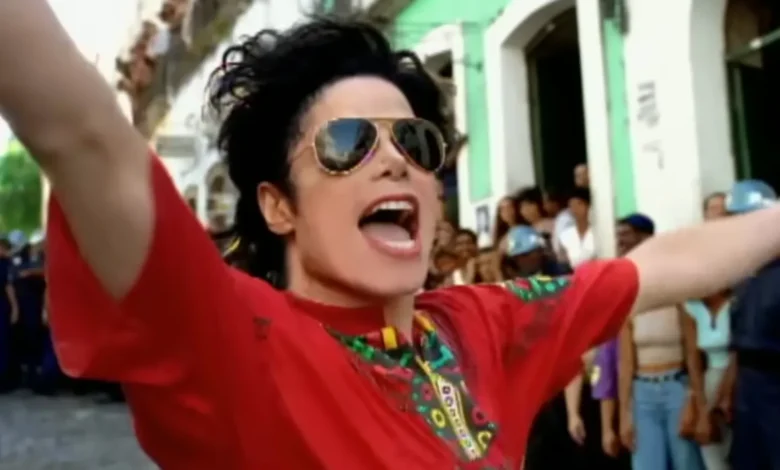
In February 1996, the world’s most famous entertainer stepped into one of Rio de Janeiro’s most tightly controlled favelas to film a music video about social injustice. What followed was not a simple celebrity shoot. It became a collision between global celebrity culture, Brazilian political image-making, judicial authority, police power, and the armed drug-trafficking structure that exercised practical control over the territory. The episode is often reduced online to the sensational claim that “the Brazilian mafia protected Michael Jackson.” The reality is more complex, more revealing, and fully documented in contemporary Brazilian reporting.
The Song, the Vision, and the Choice of Location
“They Don’t Care About Us,” from Michael Jackson’s 1995 album HIStory: Past, Present and Future, Book I, was one of the most politically charged songs of his career. Its themes were explicit: poverty, racism, police violence, institutional neglect, and the invisibility of the marginalized. Jackson and director Spike Lee wanted imagery that matched the message. They chose two Brazilian locations that embodied inequality and cultural resilience: the historic center of Pelourinho in Salvador, Bahia (with the Afro-Brazilian percussion group Olodum), and the hillside favela of Morro Dona Marta (also known as Santa Marta) in the Botafogo neighborhood of Rio de Janeiro’s South Zone.
Dona Marta was not a neutral backdrop. In 1996 it was under the territorial influence of local drug traffickers associated with Comando Vermelho (Red Command). The man identified by police and the press as the local leader of the drug trade there was Márcio Amaro de Oliveira, known as Marcinho VP. He was not the overall head of Comando Vermelho — that claim is a later exaggeration — but he exercised practical authority inside the community. Nothing of significance happened in the favela without the approval of that structure.
Why the Brazilian State Opposed the Filming
Rio officials feared the international broadcast of poverty and violence would damage the city’s image at a moment when it was pursuing a bid for the 2004 Olympic Games. Politicians and tourism authorities argued that the video would portray Rio as a place of misery rather than beaches, samba, and natural beauty. A temporary court injunction was granted on February 5, 1996, by Judge Luís Felipe da Silva Haddad of Rio’s 5th Public Treasury Court, suspending the filming. The prohibition was later overturned, allowing the production to proceed. The legal and political battle itself became part of the story, amplifying the very contradictions the song addressed.
The Practical Reality of Territorial Control
The decisive problem was not legal entry into Brazil or formal permission from municipal authorities. It was the question of who actually controlled the interior of Dona Marta. The Brazilian police and courts held formal authority. The drug-trafficking structure held practical territorial power: the ability to determine who entered, who moved freely, whether filming could occur without disruption, and who provided security inside the alleys and stairways.
Contemporary reporting from February 1996 makes the arrangement clear. Spike Lee acknowledged that the production had negotiated with the people who controlled the location. In statements reported by Folha de S.Paulo, O Globo, Jornal do Brasil, Inter Press Service, and UPI, Lee indicated that producers had to deal with “the right person” — the one who held effective authority. Police chief Hélio Luz publicly denounced the approach, calling Lee an “otário” (fool) for paying or negotiating with traffickers and insisting that the police could have provided protection. Lee’s pragmatic reply was that the police had limited authority inside the favela.
Reports described a dual security arrangement: approximately 50 military police officers positioned at principal entrances, while around 50 to 60 security personnel recruited from within the community handled internal security. Contemporary accounts linked that internal layer to the local trafficking structure. One report noted that a house connected to the traffickers served as a temporary base or dressing area. The production effectively operated under a hybrid system in which the state controlled the perimeter and the local criminal power structure authorized and helped secure the interior.
Timeline of the Critical Days
- Early February 1996: Political and judicial opposition intensifies. Visa issues and public statements against the project circulate.
- February 5: Temporary court injunction suspends filming.
- Around February 10: Filming takes place in Pelourinho, Salvador, with Olodum.
- February 11: Michael Jackson arrives in Dona Marta by helicopter. He spends roughly five hours in the community, walking alleys, performing on rooftops and lajes, interacting with residents. The scene is chaotic with crowds, yet the production proceeds.
- February 12 onward: Brazilian newspapers explode with coverage. Headlines declare that traffickers controlled Michael’s security. Spike Lee’s acknowledgments of negotiation become national controversy.
- February 14: Marcinho VP gives his own account to the press, offering a different version of who handled payments and how much was involved. Conflicting figures (including claims involving the residents’ association and sums such as R$5,000) appear.
- February 18–19: BOPE and police arrest Marcinho VP in Dona Marta. The arrest is widely understood as a response to the public embarrassment the episode caused authorities.
- Later 1996: Marcinho VP escapes custody in October.
- 2003: Márcio Amaro de Oliveira is found dead in Bangu 3 prison (strangled; body discovered in a trash bin). His death is linked in reporting to internal Comando Vermelho dynamics and possible retaliation after he spoke extensively to journalist Caco Barcellos for the book Abusado.
Fact Versus Mythology
The claim that “the Brazilian mafia protected Michael Jackson” contains a kernel of documented truth but requires precise language. There was no Italian-style Mafia organization. There was a local drug-trafficking faction exercising quasi-governmental control over a specific territory. The production did not simply hire private bodyguards from organized crime; it negotiated access and internal security with the power that already controlled the ground. Michael Jackson himself is not shown in contemporary evidence to have sat down and bargained personally with Marcinho VP. The negotiations were handled by the production team, with Spike Lee publicly acknowledging the necessity of dealing with territorial controllers. Later statements by Lee sometimes softened or reframed the payment aspect, but the 1996 contemporaneous reporting remains the strongest primary record.
Payment details were never fully settled. Lee’s early comments indicated money changed hands. Marcinho VP and residents’ association representatives offered competing accounts. Exact amounts and recipients remain disputed. What is not disputed is the necessity of the negotiation and the resulting security arrangement.
Why the Traffickers Cooperated
For the local leadership, Jackson’s presence offered prestige, a demonstration of territorial sovereignty, temporary community goodwill, and international visibility. A violent incident involving the King of Pop would have invited overwhelming state response. Maintaining order during the shoot was therefore in their self-interest. The episode itself became a public illustration of the dual power structure that defined many Rio favelas in the 1990s: the formal state outside, the armed parallel authority inside.
The Deeper Significance
The filming of “They Don’t Care About Us” in Dona Marta was never only a music video. It exposed the limits of state control in parts of Rio, the political sensitivity of poverty imagery, and the practical necessity of negotiating with non-state power when the state does not fully govern the territory. The controversy that Brazilian officials tried to suppress ultimately made the location more famous. Years later Santa Marta became one of the first favelas to receive a Pacifying Police Unit (UPP) in 2008, and the Michael Jackson connection remained part of its public identity.
The story endures because it is not simply celebrity anecdote. It is a documented moment when global entertainment, social protest art, political image management, and urban criminal power briefly occupied the same narrow hillside. The King of Pop walked the alleys of a favela where a drug lord’s structure held practical authority, and for a few hours the cameras rolled under an arrangement that neither the courts nor the police alone could fully dictate.
That is the historically grounded account. The popular shorthand “Michael Jackson was protected by the Brazilian mafia” is too crude. The more accurate description is that in February 1996, in Rio’s Dona Marta favela, Michael Jackson’s production navigated a territory where formal state authority and local criminal territorial power existed side by side — and the latter had to give its authorization for the filming to proceed safely.