Karnataka Takes Ola, Uber And Rapido To The Supreme Court Over Bike Taxis And Passenger Safety
Karnataka’s bike-taxi battle has reached the Supreme Court, with the state challenging the legal basis for services run by Ola, Uber and Rapido. At the heart of the dispute are passenger safety, insurance, permits and whether motorcycles can legally carry paying passengers without a dedicated regulatory framework.

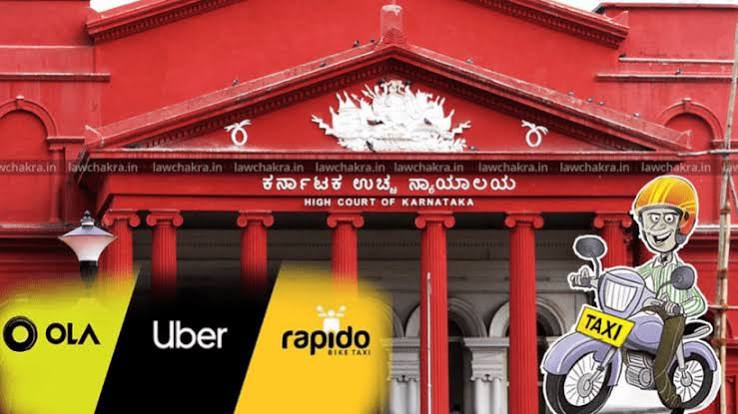
The Karnataka government has told the Supreme Court that motorcycles do not have the safety features required to carry passengers commercially, raising concerns over accident risks, insurance coverage and women’s safety.
The arguments form part of Karnataka’s challenge to a January 23, 2026 order of the Karnataka High Court that cleared the way for bike taxi services to resume in the state.
In its petition, Karnataka argued that motorcycles should not be allowed to carry paying passengers without a comprehensive regulatory framework covering safety, insurance and operating standards. The state also cited traffic congestion, pollution, passenger security and the higher fatality risk associated with two-wheelers.
“Motorcycles lack essential passenger safety features that are present in autos and cabs,” the state said in its petition, according to Bar & Bench.
The case has put the operations of platforms including Ola, Uber and Rapido under the Supreme Court’s scrutiny, with the court’s eventual decision likely to determine how bike taxi services can operate in Karnataka.
Why Karnataka Says A Bike Cannot Simply Become A Taxi
Karnataka has argued that the Motor Vehicles Act, 1988 does not give operators an automatic right to use any category of vehicle as a taxi.
According to the state, the authority to grant contract carriage permits rests with transport authorities, which can consider factors including public safety before approving such applications.
The government has also challenged the Karnataka High Court’s interpretation that motorcycles can fall within the definitions of a “motor cab” and “contract carriage” under the Act.
Karnataka maintains that motorcycles are primarily designed for personal use and cannot automatically be treated as vehicles constructed or adapted for the commercial carriage of passengers.
The state’s position is that the absence of an express ban on bike taxis does not itself create a legal entitlement for operators to obtain permits and run motorcycles as passenger taxis.
The Rulebook Was Written For Cars, Not Bikes
Karnataka has also pointed to what it says is a regulatory gap in the state’s existing framework for app-based transport.
The Karnataka On-Demand Transportation Technology Aggregator Rules, 2016 were framed around four-wheeled motor cabs, the state has argued, and do not specifically provide for motorcycles being operated as passenger taxis.
The state has also relied on a March 18, 2026 response by the Union Ministry of Road Transport and Highways in the Rajya Sabha, which said that the term “bike taxi” is not defined under the Motor Vehicles Act or the rules framed under it.
Karnataka has argued that this absence of a specific definition does not, by itself, create a legal right to operate bike taxis.
Karnataka Says This Is Not A Ban On Motorcycle Livelihoods
Karnataka has sought to draw a distinction between restricting motorcycles from carrying passengers for a fare and preventing riders from using two-wheelers to earn a livelihood.
The state has argued that motorcycles can continue to be used for delivery and logistics work through platforms such as Swiggy, Zomato, Amazon and Flipkart.
It has also pointed to the Karnataka Platform-Based Gig Workers (Social Security and Welfare) Act, 2025, which provides for social security and occupational safety measures for platform-based workers.
“The restriction is not a blanket prohibition on the use of motorcycles for livelihood,” Karnataka said in its petition.
The state’s challenge, therefore, is directed at the use of privately owned motorcycles for paid passenger transport rather than the broader use of two-wheelers for platform-based work.
The White-Board Problem
Karnataka has also raised a practical issue over how the High Court’s January order would be implemented.
The state has argued that privately registered white-board motorcycles being used as bike taxis would need to be converted into yellow-board transport vehicles before they could legally operate as commercial passenger vehicles.
According to Karnataka, however, the existing regulatory framework does not provide a mechanism for converting such motorcycles or allowing them to carry both private and commercial registrations.
The state has therefore argued that the High Court’s direction to consider applications for registering motorcycles as transport vehicles or contract carriages cannot simply be implemented without addressing the underlying registration and permit framework.
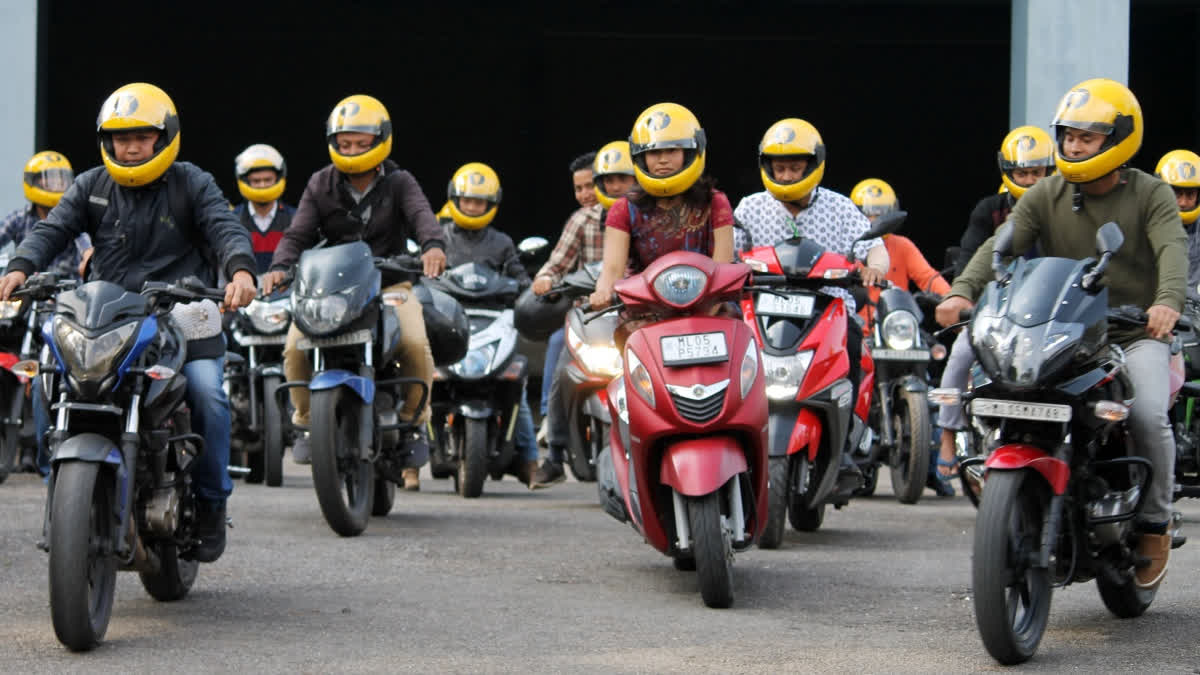
Karnataka Brings Traffic And Pollution Into The Case
Karnataka has also cited the wider impact of allowing motorcycles to operate as passenger taxis, pointing to traffic congestion, pollution and road safety.
The state has argued that restricting bike taxi operations could help reduce congestion and strengthen the use of public transport, while also lowering emissions.
In its petition, Karnataka estimated that keeping such restrictions in place could prevent around 1.39 Mn tonnes of carbon dioxide emissions annually.
The government has also referred to the higher fatality rate associated with two-wheelers as part of its broader argument that motorcycles do not offer the same level of passenger protection as autos and cabs.
How Karnataka’s Bike-Taxi Battle Began
The dispute over bike taxis in Karnataka goes back to 2019, when aggregators including Ola, Uber and Rapido began facing regulatory hurdles over their two-wheeler services in the state.
Karnataka subsequently stepped up restrictions on the service. In March 2024, the state banned bike taxis, citing non-compliance with its electric vehicle policy.
The matter then moved to the Karnataka High Court. In April 2025, a single-judge bench of Justice B M Shyam Prasad ruled that bike taxis could not operate in the state without a policy specifically permitting such services.
That order was challenged by Ola, Uber, Rapido, motorcycle owners and the Bike
Taxi Welfare Association.
The dispute eventually reached a division bench, setting the stage for a ruling that would reverse the earlier decision and reopen the question of whether bike taxis could operate under the existing legal framework.
The January HC Order Changed The Equation
On January 23, 2026, a division bench of the Karnataka High Court comprising Chief Justice Vibhu Bakhru and Justice C M Joshi set aside the earlier order and cleared the way for bike taxi operations to resume in the state.
The High Court directed the authorities to consider applications for registering motorcycles as transport vehicles or contract carriages and for granting permits to operate them as bike taxis.
The court also held that operating taxis is a legitimate business protected under Article 19(1)(g) of the Constitution, which guarantees the right to practise a profession or carry on a trade or business.
It further found that Karnataka’s prohibition on bike taxis was not backed by an express law, rule or notification. The court held that an unwritten prohibition could not be treated as a reasonable restriction on the right to carry on a business.
The ruling effectively reopened the door for bike taxi operators in Karnataka and prompted the state government to approach the Supreme Court.
Karnataka Takes The Fight To The Supreme Court
Karnataka filed its Special Leave Petition before the Supreme Court on April 22, challenging the High Court’s January 23 ruling.
At the centre of the state’s challenge is the argument that the High Court effectively turned the transport authorities’ discretion to grant permits into a mandatory obligation.
Karnataka has maintained that transport authorities must retain the power to examine applications for commercial passenger services and decide whether permits should be granted based on the applicable law and public-safety considerations.
The respondents in the petition include Ola parent ANI Technologies, Uber India, Rapido and the Bike Taxi Welfare Association.
Meanwhile, Karnataka Is Still Seizing Bike Taxis
While the legal battle continues, enforcement against bike taxis has not stopped in Karnataka.
On August 5, the state transport department seized 263 privately registered two-wheelers that were allegedly being used for commercial purposes, including as bike taxis.
The action comes as the legality of such operations remains before the Supreme Court, leaving operators caught between the High Court’s January order and Karnataka’s continued enforcement of its existing transport rules.
The seizures also spotlight the practical uncertainty surrounding the registration and permitting of motorcycles being used for passenger services.
Karnataka May Still Frame A Separate Bike-Taxi Policy
The legal battle does not necessarily mean Karnataka is opposed to bike taxis in principle.
The state is reportedly considering a separate policy to regulate and potentially legalise such services. A senior government official told The Economic Times that the Supreme Court petition focuses on what the state considers technical flaws in the High Court’s January 23 judgment.
The official also indicated that the pending SLP would not prevent Karnataka from introducing a dedicated policy for bike taxis.
Such a framework could address issues including vehicle registration, permits, safety standards, insurance requirements and the conditions under which motorcycles can be used for commercial passenger transport.
For now, however, the state continues to maintain before the Supreme Court that existing law does not automatically permit motorcycles to operate as taxis.
One Rapido Crash Puts The Safety Question In Sharp Focus
The safety concerns raised by Karnataka also have a real-world example in Bengaluru, where a bike-taxi passenger suffered severe injuries in a June 17 accident.
Sani Krishna, a 32-year-old interior designer, was travelling from Byrasandra to Domlur on a Rapido scooter when the rider allegedly crashed into a tractor near Bagmane Tech Park. According to the FIR, the rider was travelling at high speed and was riding recklessly, while the tractor driver was also allegedly negligent.
The crash left Krishna with multiple serious injuries, including fractured ribs, a damaged spleen, facial injuries and a collapsed lung. She underwent several surgeries and was later moved to a facility in Kozhikode as treatment costs rose. Her family has said the medical expenses have crossed ₹20 lakh.
Krishna had also chosen Rapido’s women’s safety option for the ride. Following the accident, she publicly sought accountability from the platform, alleging that the company had not provided adequate support while she was undergoing treatment.
Rapido, however, said it had remained in contact with the family, visited the hospital and helped initiate the insurance claim process with its insurance partner under the applicable policy for bike services.
The Last Bit, What The Supreme Court Decides Could Set The Rules
The Supreme Court’s decision will go beyond the immediate dispute between Karnataka and the bike-taxi platforms.
At the heart of the case is whether motorcycles can be used for paid passenger transport under the existing motor-vehicle framework, or whether operators must wait for a dedicated state policy governing bike taxis.
For Karnataka, the issue is also about whether transport authorities retain discretion over permits and can regulate commercial passenger services on safety and other public-interest grounds.
For Ola, Uber, Rapido and riders, the outcome could determine whether bike taxis can continue operating under the existing framework or whether a separate regulatory regime will be required.
With Karnataka enforcing restrictions while also considering a dedicated policy, the Supreme Court’s ruling could ultimately determine the legal road ahead for bike taxis in the state.