Ola Electric, One Broken Trunk Lock, One Consumer Court Verdict, But The Bigger Story Is Why The Company Never Seems To Learn
Buying an electric scooter shouldn't come with a law degree. Yet for one Ola Electric customer, a faulty trunk lock, two years of unanswered complaints and a consumer court battle were apparently the only way to get the company to honour its own warranty. And that's just where this story begins.

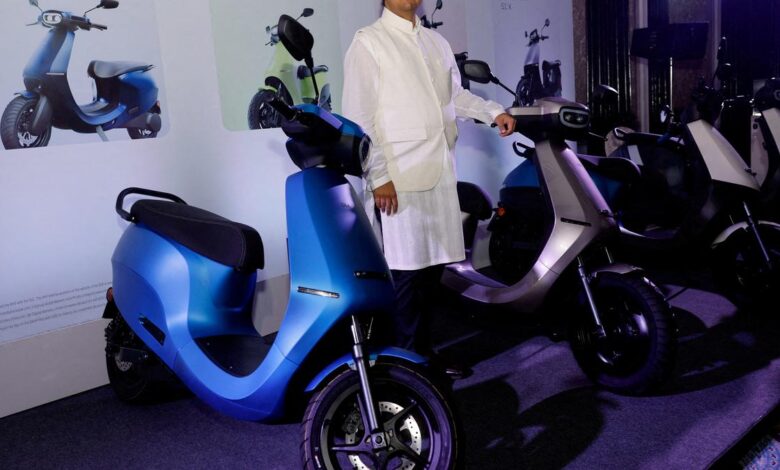
It began with something that, on the face of it, appeared almost trivial – a faulty trunk lock on an electric scooter. But after nearly two years of unsuccessful repair attempts, unanswered complaints and repeated assurances that never translated into action, the issue eventually found its way to a consumer court, resulting in an embarrassing legal setback for Ola Electric.
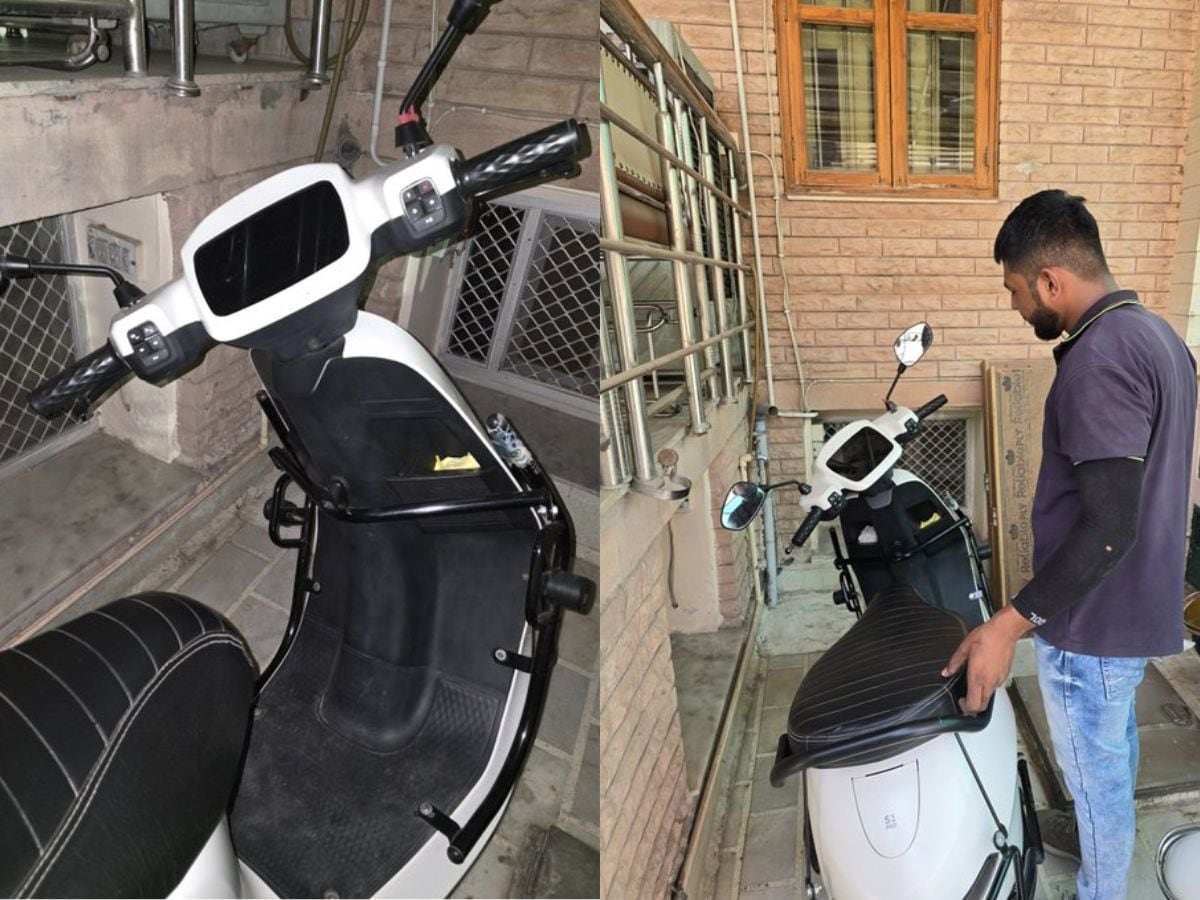
The case was filed by M. Murali Mohan, a practising advocate from Andhra Pradesh’s Ananthapuramu district, who purchased an Ola S1 Pro scooter in October 2022. During the warranty period, the scooter’s trunk lock developed a defect, making it impossible to open or securely close the storage compartment. What followed was a long and frustrating battle that would ultimately expose much more than a faulty lock.
Mohan first approached Ola’s authorised service centre, where technicians acknowledged the defect and reportedly attempted to resolve it by rebooting the scooter. When that failed, he returned to the showroom, only to be told that the required spare parts were unavailable and that the repair would be carried out once they arrived. Days turned into weeks, but the promised fix never materialised.
For Mohan, the problem was far from cosmetic. As a practising lawyer, he relied on the scooter’s storage compartment to carry court files and legal documents. With the trunk remaining unusable, transporting important case papers became both inconvenient and risky, affecting his professional work. Even after multiple visits to the service centre, several emails to Ola Electric and a formal legal notice, the defect remained unresolved.
Left with no other option, Mohan approached the District Consumer Disputes Redressal Commission. While Ola Electric initially engaged legal counsel after receiving notice, neither the company nor its representatives filed a written response within the statutory period or effectively contested the case. The Commission therefore proceeded on the basis of the complainant’s documentary evidence, which included email correspondence acknowledging the complaint and records showing repeated attempts to secure repairs.
In its order, the Commission held that Ola Electric had failed to honour its warranty obligations and was guilty of deficiency in service.
It directed the company and its local service centre to repair the trunk free of cost within 45 days and awarded Mohan ₹45,000 towards compensation and litigation expenses. Should the repair not be completed within the stipulated period, the Commission ordered that the trunk be replaced and the compensation paid with interest.
Viewed in isolation, it is a fairly straightforward consumer dispute involving an unresolved warranty claim. Yet the significance of the judgment lies elsewhere.
The case is merely the latest reminder of a problem that has followed Ola Electric for years – persistent questions over product quality, after-sales service and, above all, its ability to retain the trust of the very customers who helped make it India’s biggest electric scooter brand.
This Was Never Just About A Broken Trunk Lock
If the Ananthapuramu verdict had been Ola Electric’s first brush with unhappy customers, it might have been dismissed as an isolated case of poor service. Every automobile manufacturer, after all, faces the occasional warranty dispute. But that is precisely what makes this case different. It wasn’t an exception – it fit into a pattern that has been unfolding almost since Ola Electric rolled out its first scooters.
For years now, the company has found itself battling one controversy after another. At different points, customers have complained about scooters catching fire, front suspension failures, software glitches, delayed repairs, shortage of spare parts, overcrowded service centres and poor customer support.
Each incident generated headlines, prompted assurances from the company and eventually faded from public attention. Yet another issue would soon emerge, keeping Ola in a seemingly endless cycle of crisis management.
Over the past four years, Ola Electric’s journey has been punctuated by a series of controversies that have gradually shifted the conversation from innovation and disruption to quality, reliability and customer trust. The latest verdict is simply the newest chapter in that story.
One Controversy Ended Another Began
When Ola Electric burst onto India’s electric two-wheeler scene, it promised nothing less than to rewrite the rules of urban mobility. Bhavish Aggarwal promised to disrupt an industry long dominated by traditional manufacturers, positioning Ola as a technology company that would redefine personal mobility. The company’s sleek scooters, aggressive marketing and direct-to-consumer model quickly made it the face of India’s EV revolution.
But the excitement didn’t last long.
The first major setback came in early 2022, when videos of an Ola scooter catching fire in Pune went viral across social media. The incident, followed by similar EV fire cases involving other manufacturers, prompted the Centre to constitute an expert committee to investigate battery safety. Amid mounting scrutiny, Ola announced a voluntary recall of 1,441 scooters as a precautionary measure. While the company maintained that customer safety remained its highest priority, the episode marked the first serious dent in its reputation.
Before the company had fully moved past the battery fire controversy, another issue emerged. Customers began reporting problems with the front suspension, with some alleging that the front fork had snapped while the scooter was being ridden. Images and videos once again spread rapidly online, raising fresh questions about product quality and testing standards. Ola eventually announced a replacement programme for the front fork arms on affected scooters, but by then the narrative surrounding the company had already begun to shift.
Then came the software problems.
Unlike conventional scooters, Ola’s vehicles relied heavily on software, connectivity and over-the-air updates. While this gave the company the flexibility to continuously add features, it also introduced a new set of challenges. Owners reported frozen dashboards, connectivity failures, riding mode glitches, scooters refusing to start and sudden shutdowns. Many of these issues were eventually addressed through software updates, but for customers dealing with them in real time, the experience was far from seamless.
If these controversies primarily raised questions about the product, what followed would expose a much deeper problem – one that arguably proved even harder for Ola Electric to fix. As sales surged, complaints about the company’s after-sales service began multiplying. Customers across the country reported long waiting periods for repairs, shortages of spare parts, overcrowded service centres and poor communication from customer support. In many cases, the grievance was no longer that a scooter had developed a fault; it was that getting the fault rectified had become an ordeal in itself.
Individually, each controversy might have been manageable. Collectively, however, they began creating an uncomfortable perception – that Ola Electric wasn’t dealing with isolated setbacks but was caught in a recurring cycle where one problem was resolved only for another to surface. And that perception would eventually draw the attention of regulators themselves.

When Customer Complaints Became A Regulatory Problem
By 2024, Ola Electric was no longer dealing with scattered complaints on social media or isolated customer grievances. The issue had grown large enough to attract the attention of regulators.
The tipping point came when the Central Consumer Protection Authority (CCPA) issued a show-cause notice to the company after receiving more than 10,000 consumer complaints over a one-year period.
The complaints painted a remarkably consistent picture. Customers spoke of delayed repairs, prolonged waiting periods for spare parts, unresolved warranty claims, incorrect invoices, deficient service and what the regulator described as potential unfair trade practices.
For any automobile manufacturer, customer complaints are inevitable. But when they begin running into five figures and attract the attention of India’s consumer watchdog, they cease to be merely operational issues. They become questions of governance, execution and, ultimately, credibility.
Perhaps more damaging than the numbers themselves was the consistency of the complaints. Regardless of where they originated, many customers described strikingly similar experiences. A scooter would develop a fault, appointments would be difficult to secure, spare parts would remain unavailable for weeks, communication would become sporadic and the repair process would drag on far longer than expected. The latest consumer court verdict from Ananthapuramu follows a pattern that many Ola customers would find painfully familiar.
The frustration occasionally spilled beyond consumer forums and courtrooms. In one of the most dramatic incidents, an aggrieved customer allegedly set an Ola Electric showroom on fire after repeatedly failing to obtain satisfactory service for his scooter. While the incident itself was a criminal act and cannot be justified, it underscored the level of anger that poor after-sales support had begun generating among sections of the company’s customer base.
The consumer court case involving advocate M. Murali Mohan is therefore significant for another reason. It demonstrates how complaints that once played out on social media are increasingly finding their way into legal forums, where companies are judged not on marketing promises or ambitious vision statements but on whether they honoured their warranty commitments and fulfilled their obligations to customers.
Can Ola Electric Win Back Customer Trust?
Ironically, all of this comes at a time when there are signs that Ola Electric may finally be turning a corner – at least on paper.
Analysts expect the company to return to revenue growth in FY27 after two difficult years marked by falling sales, shrinking market share and operational restructuring. Consensus estimates project a recovery in both revenue and vehicle volumes, driven by expectations that Ola’s cost-cutting measures, expanded product portfolio and renewed focus on execution will begin yielding results. The company itself has repeatedly stated that it is prioritising operational stability over breakneck expansion, signalling a shift from chasing growth at any cost to fixing the fundamentals.
But financial recovery is only one part of the equation.
The much bigger challenge lies in rebuilding customer confidence – a task that is considerably harder than improving quarterly earnings. Market share can recover through aggressive pricing, new product launches and better distribution. Trust, however, is earned much more slowly. It is shaped by thousands of customer experiences, each one influencing how the brand is perceived by existing owners and prospective buyers alike.
That is precisely where Ola Electric finds itself today. The company isn’t competing only against rivals like TVS, Bajaj or Ather anymore. It is also competing against its own reputation. Every new customer now arrives with memories of battery fires, front suspension concerns, software glitches, service delays, viral customer complaints and, most recently, consumer court verdicts. Whether entirely fair or not, these incidents have collectively become part of the brand’s identity.

The Last Bit,
For Bhavish Aggarwal and Ola Electric, the road back to growth will therefore depend on far more than launching better scooters or posting stronger financial numbers.
It will depend on convincing customers that the company has finally learned from the mistakes that have repeatedly overshadowed its remarkable ambition. Until that happens, every fresh controversy (no matter how small) will continue to be viewed not as an isolated incident, but as another chapter in a story that many believe has been repeating itself for far too long.
The consumer court’s order over a broken trunk lock may appear insignificant in the context of India’s rapidly growing electric vehicle market. But viewed against Ola Electric’s journey over the past four years, it tells a much bigger story.
Battery fires raised questions about safety. Front suspension failures sparked concerns over quality. Software glitches exposed the risks of building a software-first scooter. Thousands of customer complaints, regulatory scrutiny and repeated allegations of poor after-sales service gradually eroded something far more valuable than market share—customer confidence. The latest consumer court verdict simply adds another chapter to that growing list.
To its credit, Ola Electric appears to recognise that the next phase of its journey cannot be driven by aggressive expansion alone. The company has spoken about improving execution, strengthening service infrastructure and returning to sustainable growth. Whether those efforts succeed, however, will be judged less by investor presentations or quarterly earnings and more by the everyday experiences of the customers who buy its scooters.
For Bhavish Aggarwal, the challenge has never been building an electric scooter company. He has already done that. The real challenge now is building a company that customers can trust long after the sale is complete. Because in the automobile business, innovation may win the first customer, but service determines whether there will be a second.