Who Is Bank Of Baroda Trying To Save?
Bank of Baroda Writes Off Rs 35,715 Crore of Loans Above Rs 100 Crore, Refuses to Disclose Big Defaulters’ Names Under RTI

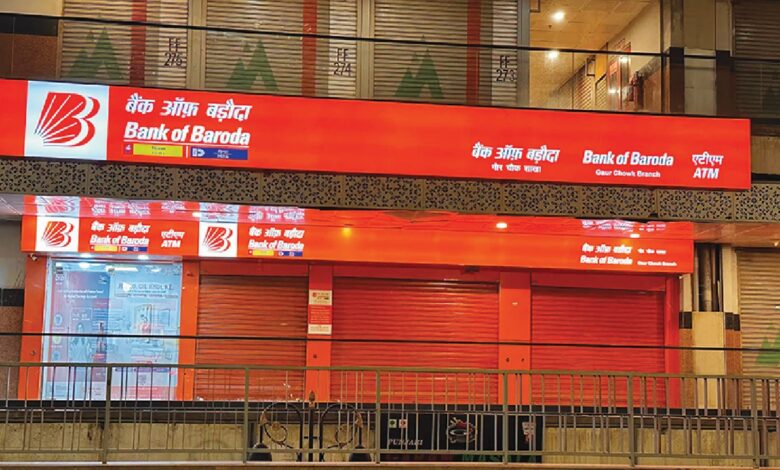
Bank of Baroda writes off ₹35,715 crore in jumbo loans, recovers barely a quarter, and then hides behind the RTI Act when asked for names
There is a particular kind of courage that Indian public-sector banks display when the borrower is small, late, and visible. Notices go into newspapers. Houses go under the hammer. Photographs of locked gates become a morality play about “credit culture.”
There is another kind of courage — quieter, legalistic, and infinitely more expensive — that the same banks display when the account is north of ₹100 crore. Then the language changes. The debt becomes “technically written off.” The loss becomes a “haircut.” The name becomes “third-party information.” Privacy, suddenly, is sacred.
Bank of Baroda has just given the country a masterclass in that second kind of courage.
The number that should have emptied a boardroom
In an RTI reply dated 30 July 2026, answering an application filed on 21 June 2026 by Pune activist Vivek Velankar, Bank of Baroda admitted that between FY2020-21 and FY2025-26 it technically wrote off ₹35,715 crore in loan accounts where the outstanding was ₹100 crore or more. Against that mountain it recovered ₹9,946 crore — about 28 per cent. Separately, it reported ₹7,817 crore as the write-off taken while settling such jumbo accounts after haircuts, typically through the NCLT and other forums.
Read that again, slowly. A state-owned bank, capitalised over years by the Indian taxpayer, wiped thirty-five thousand seven hundred and fifteen crore rupees off its books in the large-borrower category and then declined to name a single beneficiary of that generosity.
The peak years are not a mystery. They are a confession in columns:
- FY2020-21: ₹11,916 crore technically written off
- FY2021-22: ₹11,261 crore
- FY2022-23: ₹8,733 crore
- FY2023-24: ₹2,055 crore
- FY2024-25: ₹1,750 crore
- FY2025-26: nil in the figures disclosed
Recoveries dribbled in the other direction: ₹1,892 crore, ₹1,597 crore, ₹1,993 crore, ₹1,708 crore, ₹1,392 crore, ₹1,364 crore. Haircuts were fattest when the write-offs were fattest — ₹3,132 crore in FY2021-22, ₹2,331 crore in FY2020-21, ₹1,831 crore in FY2022-23.
BoB will say, correctly as a matter of accounting, that a technical write-off is not a legal funeral. Recovery can continue. Fine. Then produce the obituaries that still have a pulse. Produce the names. Produce the sanctioned limits, the dates, the consortium partners, the haircut percentages, the resolution plans. The bank produced none of that. It produced a total, a shrug, and three sections of the RTI Act.
Privacy for the powerful, publicity for the powerless
Velankar asked for the identities of borrowers whose loans above ₹100 crore were technically written off, and for borrower-wise details of NCLT and other settlements after haircuts. BoB refused. For names, it cited Section 8(1)(j) — personal information, third-party information, unwarranted invasion of privacy. For settlements it added Sections 8(1)(d) and 8(1)(e) — commercial confidence, fiduciary relationship. For years before FY2020-21 it hid behind Section 7(9): the data was not sitting in the format requested, and compiling it would “disproportionately divert resources.”
Resources. The bank that can process a ₹11,916-crore write-off in a single year cannot, apparently, print a list.
This is the obscenity at the centre of the story. Indian banks have never been shy about naming the kirana owner, the small transporter, the salaried defaulter whose flat is worth a fraction of one large account’s interest overdue. Those names appear in recovery advertisements. Those addresses appear on auction notices. Those families discover that “privacy” is a luxury good, rationed by ticket size.
Velankar put it without varnish: banks that rush to publish the names and addresses of small borrowers and auction their homes go soft, accommodating and anonymous when the borrower is large. He also asked the question the RTI reply is designed never to answer — what happened to the boards that sanctioned these loans, failed to recover them after write-off, and then signed off haircuts running into thousands of crores. The reply, as even sympathetic reporting notes, does not establish that any particular account was a wilful default, that a sanction was reckless, or that any director was punished. That absence is not exoneration. It is the point. The public is given the corpse of the loan and denied the identity of the patient.
So the question in the headline is not rhetoric. It is operational. Who is Bank of Baroda trying to save? The borrower whose name would explain the ₹35,715 crore? The officials who originated and monitored the book? The board that approved the settlements? Or the political convenience of a banking system that has learnt to celebrate falling NPA ratios while keeping the guest list of the write-off banquet in a locked drawer?
A cleaned-up system that still needs a mop
The official story of Indian banking in the mid-2020s is a success story, and parts of it are real. Collective PSB write-offs, which peaked at ₹1.27 lakh crore in FY2022-23, fell 45 per cent to ₹70,528 crore in FY2025-26, with a reported recovery rate of 46 per cent, according to a government reply in Parliament. Banks have not needed a fresh infusion from the exchequer since FY2022-23. Commentators have noted that NPAs at listed public and private banks have, on paper, slipped below 1 per cent.
Bank of Baroda would like to stand inside that photograph and smile. The RTI numbers refuse to pose.
A 28 per cent recovery on jumbo technical write-offs is not a clean-up. It is a discount sale in which the seller will not identify the goods. And the wider system’s “good numbers” have already required embarrassing footnotes. The Reserve Bank found it necessary, in 2024 and 2025, to warn banks against dressing up stressed small loans — rolling them at tenure with a token payment, tagging gold-loan top-ups as fresh business, “netting off” instalments about to bounce. SEBI caught banks and large NBFCs using alternative investment funds to park roughly ₹30,000 crore of stress: the AIF bought paper, the stressed borrower repaid the original loan on schedule, the account looked healthy. The RBI then barred regulated lenders from investing in AIFs that held their own borrowers. The same industry now taking a bow for sub-1 per cent NPAs had to be told, by two regulators, to stop playing costume drama with bad debt.
Credit growth running about six percentage points ahead of deposit growth is not a footnote either. It is the raw material for the next round of creativity. When the music is that fast, write-offs become the official way of changing the subject.
Abu Dhabi, NMC, and a $600 million silence
If the RTI is the domestic scandal, the NMC settlement is the overseas one — and together they describe an institution that can lose a fortune in two geographies and still treat curiosity as bad manners.
In July, Bank of Baroda told the exchanges it would pay US$600 million, about ₹5,700 crore, roughly an entire quarter’s net profit, to settle claims tied to the 2020 collapse of NMC Health, once the UAE’s largest private hospital group and a FTSE 100 name. BoB’s Abu Dhabi branch was accused of failing anti-money-laundering and KYC checks going back to 2012. The claims were cited at US$5.4 billion. Facing a court outcome that looked ugly, the bank settled before judgment, capped the bleed, and denied wrongdoing.
NMC did not collapse in a fog. A short-seller, Muddy Waters, alleged in December 2019 that cash was inflated and liabilities understated. Investigations then found more than US$4 billion — by some accounts closer to US$6.6 billion — in previously undisclosed debt. That is the wreck BoB’s Gulf outpost had been banking.
Sucheta Dalal has asked the questions that a listed public-sector bank should have been forced to answer in Parliament: what does an eight-year failure of controls say about internal audit and about the RBI’s own inspections? Was Cabinet clearance sought? Was the law ministry consulted? Has the Central Vigilance Commission opened a file? As of her writing, no parliamentary question had been tabled. The Opposition, she noted, had not bothered either.
A public-sector bank does not wire six hundred million dollars in settlement money because a branch manager felt generous. That cheque cleared a chain of authority. The public has been given the size of the cheque and a denial. It has not been given the inspection trail, the names of the relationship managers, the dates the red flags were ignored, or the reason a problem born in 2012 became a 2026 line item.
Stack that beside the other recent embarrassments Dalal lists — the BobWorld episode, in which staff allegedly inflated app registrations by linking strangers’ numbers without consent; a claimed leak of roughly a terabyte of customer data waved away as “business email compromise” — and a pattern appears. Each scandal gets a news cycle, a statement, and a change of subject. The jumbo defaulter remains unnamed. The overseas settlement remains unexplained. The small depositor who misses a KYC update still discovers how quickly a bank can freeze a life.
This is not only Baroda. It is a method.
The method is visible at another state-owned lender, and the contrast is even uglier.
Central Bank of India, answering the same activist over FY2016-17 to FY2025-26, reported technical write-offs of ₹26,701.55 crore on accounts above ₹100 crore and recoveries of only ₹3,874.41 crore — about 14.5 per cent. In FY2018-19 alone it wrote off ₹7,002.58 crore in that bucket and recovered ₹761.01 crore. In FY2024-25 it wrote off ₹2,255.61 crore and recovered ₹53.42 crore. Names: refused, as third-party information. Yearly haircut totals versus recoveries: “Query is not clear.”
On loans below ₹1 crore, the same bank wrote off ₹6,774.23 crore and recovered ₹5,004.28 crore — nearly 74 per cent. Almost all of that small-loan activity sat in FY2022-23 and FY2023-24.
The headline writes itself, and it has been written: seventy-four per cent from the small borrower, fifteen per cent from the large one. A serious investigator will add the caveats the activists sometimes skip. Large accounts travel through IBC, consortia and court-supervised haircuts; small accounts travel through notices and auctions. Recoveries in a later year can belong to an earlier write-off. The data are loan-size buckets, not a census of rich and poor.
Those caveats do not rescue the banks. They make the refusal to name names more damning. If the jumbo book is genuinely harder, legally messier, more entangled in NCLT mathematics, then the public interest in seeing which groups received which haircuts is greater, not smaller. Opacity is not a by-product of complexity. It is the product the complexity is being used to sell.
The regulator said disclose. The banks ran to the CIC.
This fight did not begin in July 2026. In January, Bank of Baroda, RBL Bank, Yes Bank and State Bank of India went to the Central Information Commission to stop the Reserve Bank from releasing NPA lists, defaulter lists, penalties and inspection reports under the RTI Act. RBI, in those matters, had called the records “liable to be disclosed.” The banks said regulatory disclosure would harm their commercial interests. Information Commissioner Khushwant Singh Sethi sent the dispute to a larger bench.
The applicants in that case — Dheeraj Mishra, Vathiraj, Girish Mittal, Radha Raman Tiwari — had asked for things as specific as Yes Bank’s wilful defaulters, inspection reports of SBI and RBL, and papers on a ₹4.34 crore penalty after statutory inspection of Bank of Baroda.
Watch the choreography. The central bank says the file can be opened. The commercial banks say opening it will hurt business. Months later, Bank of Baroda, answering a citizen, opens only the aggregate and slams the file on the names. Commercial interest, privacy, fiduciary duty, disproportionate diversion of resources — the exemptions change with the question. The outcome does not. The large borrower remains a statistic.
A banking system that needs a larger bench of the CIC to decide whether the public may see the wreckage of its own money is not a system that has “cleaned up.” It is a system negotiating the terms of its own amnesia.
What the law is being asked to do
Section 8 of the RTI Act was not drafted as a VIP lounge. Personal privacy exists. Commercial confidence exists. Fiduciary duty exists. Public-sector banks exist too — as institutions that take public capital, public deposits and public forbearance. When the loss is ₹35,715 crore in one size-bucket at one bank, the claim that a name is an “unwarranted invasion” is not a legal subtlety. It is a political choice dressed as compliance.
NCLT settlements make the choice even harder to defend. Those are public proceedings about public losses. Haircuts are not gossip. They are the price at which a state-owned creditor agreed to walk away. Velankar’s observation is the one that should follow every such settlement: cases go to the tribunal to recover money from defaulters; the bank then waives thousands of crores and still guards the defaulter’s anonymity as if it were a medical record.
Meanwhile Parliament found the voice-vote energy to pass the Bankers’ Books Evidence Bill, 2026 — expanding the state’s ability to pull digital bank records in bulk — and could not, by Dalal’s account, find the energy to ask how a public-sector bank settled a $600 million overseas case or whose loans constitute a ₹35,715-crore hole. The citizen’s ledger is becoming easier to open. The defaulter’s ledger is becoming easier to close.
The investigative gap that should embarrass everyone
An honest article must say what this file does not yet prove.
It does not name a conglomerate.
It does not prove wilful default in any specific BoB account.
It does not prove a corrupt sanction.
It does not prove that the ₹7,817 crore haircut figure is a second loss sitting neatly on top of the ₹35,715 crore; some of that haircut stock may already live inside the technical-write-off number.
It does not prove that BoB’s 28 per cent and Central Bank’s 14.5 per cent are the product of identical recovery toolkits.
Those gaps are not a reason to lower one’s voice. They are the indictment. After six years, tens of thousands of crores, a $600 million foreign settlement, a data-leak controversy and a CIC battle over the same principle, the Indian public still cannot answer the only question that matters in a democracy that funds its banks:
Whose loan was this?
Until that question has a name, every press release about sub-1 per cent NPAs is a before-and-after photograph with the “before” locked in the vault. Until the RBI’s instinct toward disclosure defeats the banks’ instinct toward commercial embarrassment, write-off will remain what it has become in this country: not the end of a bad loan, but the beginning of a cover story.
Bank of Baroda has the data. It has the board minutes. It has the sanction notes, the monitoring reports, the resolution plans, the haircut approvals, the Abu Dhabi inspection file. It has chosen, under colour of the RTI Act, to give the country a total and keep the guest list.
That is not privacy.
That is protection.
And the only remaining question — the one the bank has spent ₹35,715 crore refusing to answer — is the title of this piece.
Who is Bank of Baroda trying to save?