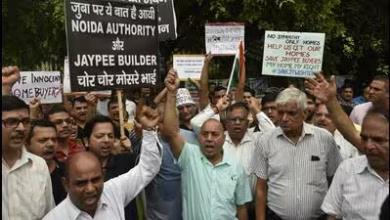
ED, PMLA Searches, An FIR And Thousands Of Waiting Buyers: The BPTP Record That Demands Attention
Official records show Enforcement Directorate searches under FEMA in August 2025 and a CBI FIR registered in April 2026 concerning a Gurugram project and related bank arrangements. The Supreme Court has enhanced refund interest to 18 percent in one prolonged-delay case. A Delhi High Court order maintained a 251.2 crore rupee escrow direction in an investor dispute, and Haryana RERA issued a consolidated decision covering 45 complaints. Multiple consumer forums have directed refunds with interest. These are serious documented steps, not final convictions. For the families who paid for homes, the practical reality remains delayed possession and the need to pursue formal remedies.

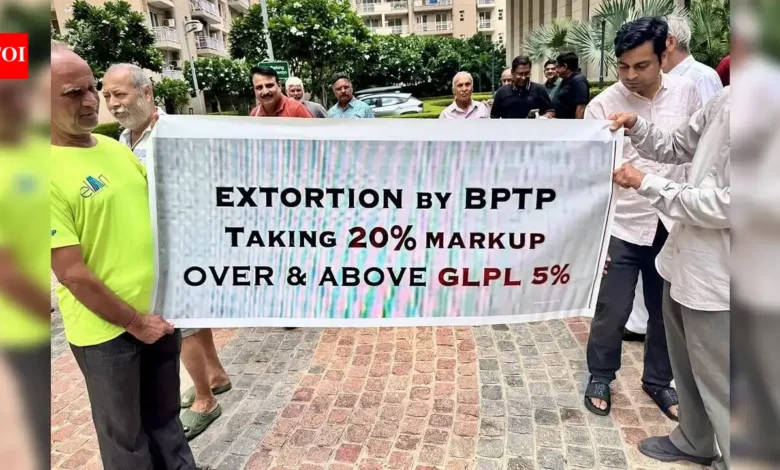
BPTP Saga: The Cost of Waiting for a Home That Does Not Arrive on Time
A home is not an abstract investment. It is the place where children grow up, where EMIs are calculated against monthly salaries, and where the promise of security is supposed to become brick and mortar within a defined period. When that promise stretches into years of delay, refund battles and regulatory notices, the burden falls on ordinary families. The public record concerning BPTP Limited contains repeated instances of precisely that burden.
Enforcement agencies have conducted searches and registered a criminal case. Appellate courts have enhanced interest on refunds. A High Court has upheld a large escrow direction. A real-estate regulator has issued consolidated directions across dozens of complaints. Consumer forums have ordered refunds with interest and costs. None of these steps by itself proves criminal guilt. Collectively they describe a pattern that should concern every citizen who expects the housing sector to deliver what it sells.
In August 2025 the Enforcement Directorate’s Gurugram office carried out searches under the Foreign Exchange Management Act at BPTP offices and at the residences of Kabul Chawla, described as chairman and managing director, and Sudhanshu Tripathi, described as whole-time director. The official release records foreign investment during 2007-08 from two Mauritius entities totalling 537.5 crore rupees. It alleges that the arrangements contained put and swap features providing guaranteed exit returns and that the company failed to amend the relevant agreement despite Reserve Bank directions. Bank lockers were frozen and documents and digital evidence were seized.
The release further states that examination was under way into foreign entities allegedly linked to beneficial ownership and into a New York property. These remain the investigating agency’s allegations and procedural steps. No final FEMA adjudication, penalty order or closure has been located in the materials reviewed. The company has maintained that foreign-investor exits followed court directions. That explanation forms part of the public discussion and must be noted. It does not erase the fact that a specialised agency found sufficient material to search offices and residences and to place the foreign-investment structure under formal scrutiny.
In April 2026 the Central Bureau of Investigation registered FIR RC2192026E0001. The recorded provisions include conspiracy and cheating under the Indian Penal Code together with provisions of the Prevention of Corruption Act. The project named is Pedestal Floors in Sector 70A, Gurugram. The schedule of accused identifies BPTP Limited, unknown directors and promoters of BPTP, unknown officials of a named bank, and unknown others. It does not individually name the two senior executives whose residences were searched the previous year.
The FIR refers to a “No Pre-EMI till delivery” arrangement, upfront disbursement of loan amounts, alleged default in the builder’s pre-EMI obligations, and non-delivery or non-refund. Distinct figures appear for sale consideration, sanctioned loan and amount disbursed. None of those figures should be treated as a judicially determined loss. What the registration itself establishes is that a premier investigating agency has opened a criminal case arising from a homebuyer-and-bank arrangement connected to a BPTP project. A Supreme Court petition by BPTP against the CBI was located by case number; the operative order was not successfully retrieved, so no claim is made that the Court either quashed or upheld the FIR.
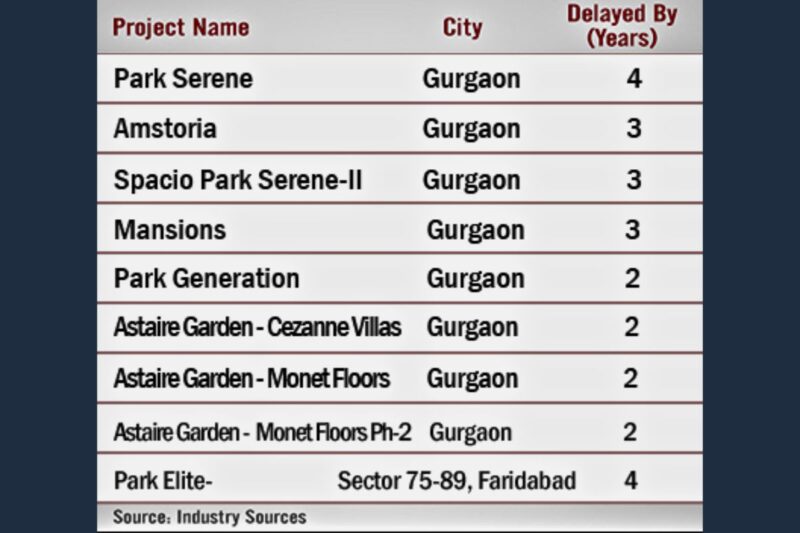
Judicial outcomes on the consumer and civil side are more concrete. In September 2025 the Supreme Court enhanced the rate of interest on a refund from 9 percent to 18 percent per annum in a prolonged-delay dispute. The operative principal was fixed at just over 43 lakh rupees, with other directions retained. An 18 percent rate is not a routine commercial figure; it is a judicial signal that the delay was treated as sufficiently serious to justify a higher compensatory return.
In an earlier investor dispute the Delhi High Court upheld a direction requiring BPTP to place 251.2 crore rupees in escrow, dismissed the company’s appeal with costs, and noted that a substantial sum had been used for other projects contrary to the relevant memorandum. That order is an interim civil finding, not a final award or a criminal confiscation. It nevertheless records judicial dissatisfaction with the handling of project-related funds at the relevant time.
Haryana’s real-estate regulator issued a consolidated order in April 2022 covering 45 complaints connected with BPTP and Countrywide. Material directions included delayed-possession interest at 9.30 percent, a super-area adjustment, a cap on escalation charges, and the disallowance of holding charges. Buyers did not succeed on every contention, yet the scale of the consolidated proceeding itself shows how many households felt compelled to approach the regulator.
Additional consumer decisions from the National Commission and State Commissions have directed refunds of deposited amounts ranging from several lakhs to more than a crore of rupees, often with interest at 9 or 10 percent, compensation and costs. One recent order expressly recorded findings of deficiency in service and unfair trade practice. Another refused a belated request to convert a refund claim into a possession claim. The pattern is consistent: purchasers who paid money for units have repeatedly needed formal orders to obtain either possession on acceptable terms or the return of their money with interest.
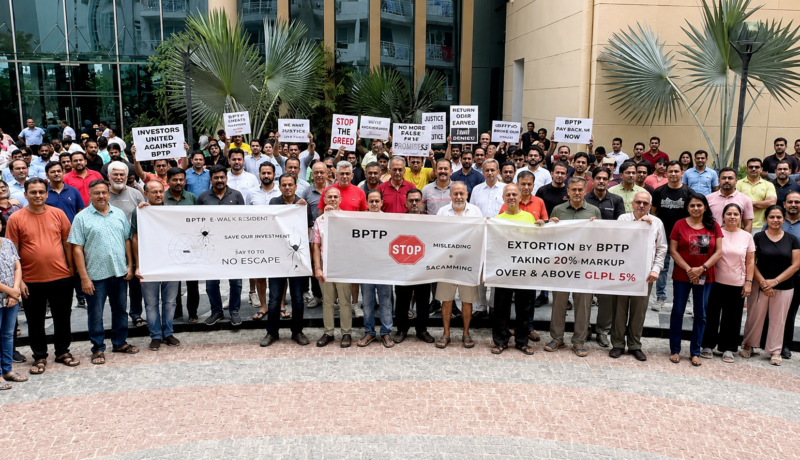
The record also contains important reversals and favourable outcomes that any balanced account must include. An insolvency admission in 2022 was stayed within days and set aside the following month. A 2016 criminal FIR was quashed by the Delhi High Court in 2024 following settlement. A GST anti-profiteering proceeding concerning one project was closed in January 2026 after the tribunal accepted a report of no contravention and recorded settlement of the original complaints. Tax reassessment notices were quashed by the Delhi High Court in 2019.
An execution-related direction for the arrest of directors was stayed by the Real Estate Appellate Tribunal and the protection was continued by the High Court; the reviewed materials do not establish that any actual arrest occurred. These developments demonstrate that adverse steps can be reversed, settled or stayed. They do not restore the years of uncertainty already experienced by the families whose complaints produced the original proceedings.
From a public standpoint the cumulative picture is one of persistent delivery and recovery friction. Money was collected for homes. Delays led to refund claims. Forums ordered interest and, in one Supreme Court case, a significantly enhanced rate. An investor dispute produced a large escrow direction. A regulator addressed dozens of complaints in a single consolidated order.
An enforcement agency searched offices and residences under foreign-exchange law. Another agency registered a criminal case arising from a home-loan and construction-linked arrangement. Some earlier coercive or investigative steps have been set aside or closed. The net effect for many ordinary purchasers remains the same: the home they paid for did not arrive on the promised schedule, and obtaining either the home or the money has required sustained legal effort.
The housing sector’s social legitimacy rests on a simple bargain. Buyers commit large portions of their savings and future income; developers commit to deliver a completed unit within a defined time and on the terms advertised. When that bargain is repeatedly tested in the Supreme Court, High Courts, RERA, consumer commissions and specialised investigation agencies, public confidence erodes. Honest developers are forced to operate under a cloud created by the unresolved cases of others. Buyers begin to treat every brochure with caution. Regulators are pushed into reactive enforcement rather than preventive supervision.
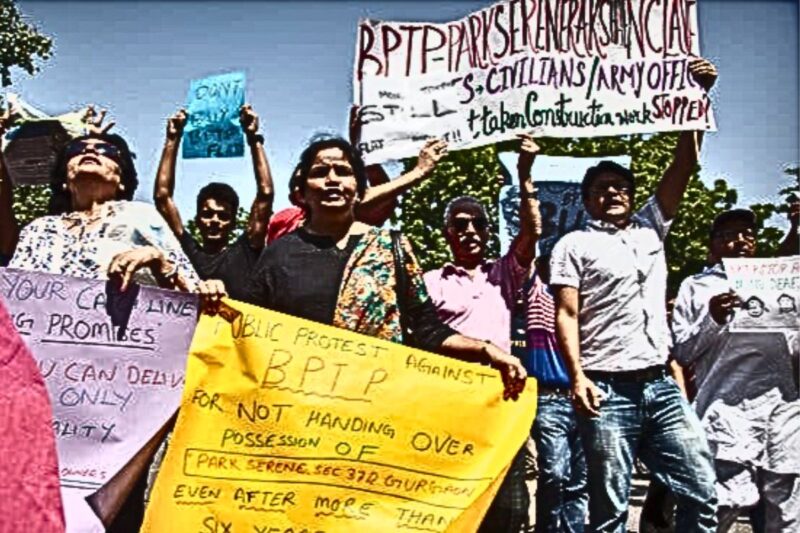
No responsible account can convert provisional searches, an FIR still under investigation, or civil and consumer orders into proven criminal convictions. The strongest supportable conclusion is narrower and still serious: BPTP has faced significant enforcement scrutiny and repeated adverse findings on delay, refunds and the handling of project-related funds. Families who entered into contracts for homes have had to pursue formal remedies to obtain either possession or their money back with interest. Until those remedies are fully satisfied and projects are completed on terms that no longer require litigation, the public concern remains fully justified. The gap between the sums paid and the certainty still missing is the measure of that concern.