The Indian Real Estate Mafia: How Banks And Builders Join Together To Harass The Indian Homebuyers?
Builder Banker Nexus Exposed Again As CBI Raids 12 Locations And Files Fresh Cases Against Homebuyer Fraud: The Entire System Protects Developers While Homebuyers Pay EMIs for Homes That Never Arrive

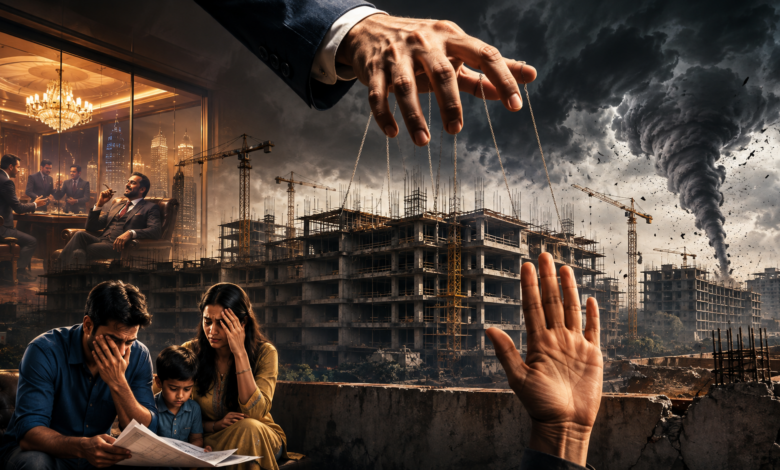
CBI Uncovers Systematic Harassment of Homebuyers Through False Promises Fund Diversion and Official Collusion
On 10 September 2026 the Central Bureau of Investigation registered five new criminal cases on the orders of the Supreme Court and conducted searches at 12 locations across Bengaluru Mumbai and Pune. Four of the cases target the Ozone group and its related entities for projects in Bengaluru and Mumbai. One case is against M/s Vivansaa Baalsam for its Bengaluru project.
Unknown officials of various financial institutions have also been named for offences of criminal conspiracy cheating criminal breach of trust and criminal misconduct. With these registrations the total number of cases filed by the CBI pursuant to Supreme Court directions has risen to 55 from the earlier 50.
CBI searches stated that the action aims to gather evidence of a larger conspiracy involving alleged diversion of funds, financial irregularities and fraudulent practices in the housing sector for harassing homebuyers.
Searches resulted in the seizure of documents digital devices and other materials now under examination.

This latest operation is not an isolated enforcement action. It is the continuation of a long and disturbing pattern in which builders and officials of financial institutions allegedly work together to extract money from homebuyers and then leave them stranded. The same day the CBI also filed its 20th chargesheet in the wider homebuyer fraud investigation naming Ajnara India Limited its promoters and directors along with 15 public servants associated with ICICI Bank, HDFC Bank, and PNB Housing Finance in connection with the Ajnara Ambrosia project in Noida Sector 118. The agency has alleged that the accused induced homebuyers through false assurances and fraudulent representations and obtained financial benefits by illegal means.
The builder financial institution nexus is the central mechanism through which families are systematically harassed. Homebuyers are drawn in with attractive marketing claims of timely possession competitive pricing and payment plans that often include no pre EMI until delivery. Once substantial payments are made the project stalls. Funds that should have been used for construction are allegedly diverted. Banks that sanctioned the loans continue to demand EMIs. Buyers are forced to pay both the loan instalment and rent for alternative housing while the apartment they paid for remains incomplete or non existent. This dual burden can last for years and in many cases for more than a decade.
Earlier chargesheets filed by the CBI under the same Supreme Court monitored probe reveal how widespread and consistent this conduct has been. The agency has already chargesheeted companies including Rudra Buildwell Constructions, Dream Procon, Jaypee Infratech, AVJ Developers, CHD Developers, Sequel Buildcon, Logix City Developers, Manju J Homes, Shubhkamna Buildtech, Ninex Developers, Decent Buildwell and others along with their directors. In multiple cases officials of banks and financial institutions have also been named. The common allegations are criminal conspiracy cheating and criminal breach of trust. Homebuyers were induced through false assurances and misleading representations. Money was collected. Projects were not completed. Funds were allegedly diverted. In some instances already sold flats were resold while earlier loan accounts remained open.

In one detailed chargesheet against Rudra Buildwell Constructions the CBI found that 672 flats had been sold on the basis of false possession promises. Properties that already had owners were resold and the previous sale was concealed from new buyers and from the lending banks. Buyers who cancelled bookings and sought refunds were refused. Bank officials were allegedly induced to sanction loans on the misrepresentation that the flats were free from encumbrances. Similar patterns appear in chargesheets relating to projects in Greater Noida Gurugram Bengaluru and other cities. Builders are accused of using proxy buyers to secure loans routing funds through related entities and colluding with financing institutions to keep the money flowing even when construction had stalled.
The involvement of bank officials and in some cases public servants turns what might appear as private commercial failure into something more systemic and more dangerous. When lending institutions allegedly fail to verify end use of funds or actively facilitate loans on the basis of false representations the protective role of the financial system collapses. Home loans that should enable ownership become tools of extraction. Buyers find themselves pursued by recovery agents of the same banks that helped finance the incomplete project. The legal remedies available through RERA consumer forums or civil courts are slow expensive and often ineffective against well resourced developers who can prolong litigation for years.
What emerges from the successive chargesheets and the latest searches is a picture of an industry that has institutionalised the harassment of its customers. The real estate mafia does not need to resort to open violence in most cases. It operates through contracts that favour the developer marketing that creates false expectations payment schedules that front load the buyer’s risk and a regulatory environment that is fragmented and slow to enforce. When problems arise the buyer is left alone to fight multiple opponents the developer the bank the local authorities and the passage of time itself. Families that planned for stability find their savings drained their credit scores damaged and their mental health under sustained pressure.
The Supreme Court monitoring that produced these 55 cases and 20 chargesheets is itself an admission that ordinary regulatory mechanisms failed. Large numbers of homebuyers had to approach the highest court because lower forums and state authorities could not or would not protect them. The CBI has been directed to investigate and has responded with a growing body of chargesheets and now fresh searches. Yet the filing of chargesheets does not automatically restore the homes or the years lost. Conviction rates in complex economic offences remain low. Recovery of diverted funds is uncertain. New projects continue to be launched with the same marketing language that has already been shown to be deceptive in earlier cases.
The collusion between builders and financial institutions is particularly concerning because it multiplies the power imbalance. A developer acting alone can delay a project. A developer acting with the cooperation or negligence of lending institutions can lock buyers into long term financial obligations while the underlying asset never materialises. The latest CBI action against Ozone group entities Vivansaa Baalsam and unknown financial institution officials is an attempt to break into this nexus. Whether it produces lasting accountability will depend on the quality of evidence recovered the speed of prosecution and the willingness of the system to impose real consequences on both the builders and the officials who enabled them.

For the thousands of families still waiting the pattern is already clear. They paid in good faith. They were given assurances that proved false. They continue to pay while the project remains incomplete. The builder financial institution nexus has turned the dream of home ownership into a mechanism of sustained financial and emotional harassment. The CBI chargesheets and searches document the methods. The real test is whether the institutions of the state will move beyond documentation to dismantle the machinery that continues to operate across cities and across years. Until that happens homebuyers will remain the primary victims of an industry that has learned how to extract maximum value while delivering minimum accountability.