Is Nestlé A Dangerous Brand? From Lactogen And Cerelac In India To Formula Investigations Abroad, Why Does Its Infant-Nutrition Business Keep Coming Under Scrutiny?
Nestlé sells nutrition on the strength of a name parents trust. But regulators, laboratories and investigators in India and overseas have repeatedly raised questions around its infant products, from marketing claims and formulation to product safety. The latest FSSAI action adds another uncomfortable chapter to that record.

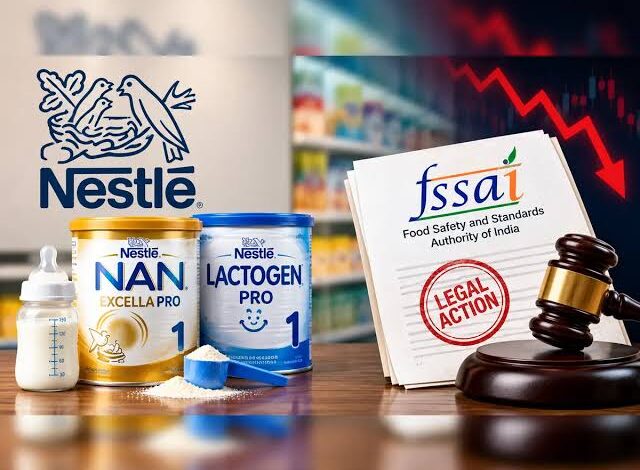
Nestlé India is facing fresh regulatory action over the way it markets some of its infant nutrition products, with the Food Safety and Standards Authority of India filing three adjudication cases concerning NAN Excella Pro Stage 1 and Lactogen Pro 1.
The action follows scrutiny of promotional material and product listings on e-commerce platforms, putting claims made around infant formula back under the regulator’s lens.
Two of the cases concern NAN Excella Pro Stage 1, where promotional material referred to “5 HMOs” and “Whey Protein”. Lactogen Pro 1, meanwhile, was promoted with a claim describing its protein component as “easy to digest”. On the surface, these may look like the kind of claims routinely seen across the food industry.
Infant nutrition, however, operates under a much tighter regulatory framework because promotional messaging can influence how parents choose products for babies who cannot make that choice themselves.
FSSAI’s action is therefore not simply a dispute over advertising language. The regulator has invoked Regulation 4(2) of the Food Safety and Standards (Foods for Infant Nutrition) Regulations, 2020, which places restrictions on promotional claims and promotional material intended to increase the marketability of infant foods.
The authority has also referred to Section 3 of the Infant Milk Substitutes, Feeding Bottles and Infant Foods (Regulation of Production, Supply and Distribution) Act, 1992, a law that places stringent restrictions on the advertising and promotion of infant milk substitutes and infant foods.
There is another issue running alongside the promotional cases. A separate laboratory examination of a follow-up formula sample found that its biotin content did not meet the prescribed nutritional requirements. The sample was subsequently sent to a designated Referral Laboratory for re-analysis, which confirmed that the product did not conform to the nutritional composition prescribed under the 2020 regulations. That matter is being dealt with separately under the applicable statutory process.
The current proceedings do not amount to a finding that Nestlé’s infant nutrition products are broadly unsafe to consume. Two sets of proceedings concern promotional claims and statutory restrictions on how infant foods can be marketed, while the separate laboratory finding concerns nutritional composition. Treating all three as the same allegation would make the story simpler, but it would also make it less accurate.
Nestlé, for its part, has rejected the allegations and maintained that its products comply with applicable statutory requirements. The company has said that NAN Excella Pro and Lactogen Pro, along with their labels, had been approved by an expert committee constituted by the food regulator. It has also argued that the statements appearing on its packaging and promotional material were factual representations supported by scientific literature, while maintaining that it complies with mandatory packaging and declaration requirements.
The company has said it will continue cooperating with regulatory authorities. But that defence leaves the central question of the present dispute intact: when does information about an infant product remain a factual description, and when does it become promotional material designed to make the product more attractive to consumers?
The Problem Is Not That Nestlé Sells Formula. It Is What The Company Is Saying About It
For most consumer products, a manufacturer describing a product as easy to digest, highlighting a protein source or pointing to a particular nutritional component would be treated as ordinary marketing. Infant nutrition is different. Indian law places specific limits on how such products can be promoted precisely because parents are making decisions on behalf of infants and because commercial claims can carry more weight when presented as nutritional or developmental benefits.
Regulation 4(2) of the 2020 infant-nutrition rules is therefore central to the current dispute. The provision restricts promotional claims and promotional material for infant foods where the purpose is to increase their marketability. The 1992 law provides an older and broader statutory framework governing the promotion and distribution of infant milk substitutes and infant foods. Together, these provisions reflect a basic regulatory principle: infant nutrition cannot simply be marketed in the same manner as breakfast cereal, biscuits or packaged beverages.
The biotin issue creates a separate compliance question altogether. Here, the argument is not about whether a phrase crosses the line between information and promotion. It is about whether a tested product sample met the nutritional composition prescribed by law. The Referral Laboratory’s finding gives that issue a different evidentiary basis from the promotional cases, and it should be assessed on those terms.
That leaves Nestlé facing two different kinds of regulatory scrutiny at the same time: what it tells consumers about its infant products, and whether at least one tested product met the nutritional standard required of it.
Nestlé Says The Products Were Approved. The Regulator Is Looking At What Happened After That
Nestlé’s defence in the latest proceedings rests partly on a distinction that is likely to become important as the cases move forward: the company says the products and their labels had already been examined and approved through the regulatory process, and that the disputed statements were factual rather than promotional claims designed to sell more formula.
That is a substantive defence, because the question before the regulator is not whether Nestlé was permitted to manufacture NAN Excella Pro or Lactogen Pro. It is whether the way those products were presented to consumers crossed the restrictions imposed specifically on infant foods.
The distinction between a product being permitted for sale and the manner in which it can subsequently be promoted is not unique to Nestlé. A food company can comply with formulation and labeling requirements and still face questions about a particular advertising statement, online listing or promotional presentation.
That is essentially the regulatory territory FSSAI has entered here. Nestlé’s argument is that the statements were scientifically supportable and part of approved product communication; the regulator’s action indicates that approval of the underlying product has not prevented it from examining whether those claims amounted to prohibited promotion.
Lactogen Has Been In India’s Legal Record Before
The regulatory dispute involving Lactogen today has a much older Indian precedent.
In 1994, the Association on Consumer Action on Safety and Health, or ACASH, filed a complaint against Nestlé India concerning its infant-food products Lactogen and Cerelac. The complaint alleged violations of the Infant Milk Substitutes, Feeding Bottles and Infant Foods (Regulation of Production, Supply and Distribution) Act, 1992, including the wording used in mandatory notices on the products.
Among the allegations was that the packaging used the wording “BREAST MILK IS BEST FOR YOUR BABY” instead of the statutory wording “MOTHER’S MILK IS BEST FOR YOUR BABY.” The complaint also alleged that the required notice was not provided in Hindi in the prescribed manner, that mandatory warnings concerning infant nutrition had not been properly displayed, and that certain lettering and age-related wording did not meet the requirements of the law then in force.
The matter did not disappear quickly. The legal record shows that a criminal complaint followed, and in 2012 a Metropolitan Magistrate framed charges against Nestlé India in relation to the alleged labeling and advertising violations concerning Lactogen and Cerelac. Nestlé subsequently challenged the proceedings, arguing in part that there had been inconsistencies between the Infant Milk Substitutes Act and the then-existing food-adulteration rules.
There is an important complication here, and it should not be buried.
- The Delhi High Court record shows that the government itself had acknowledged inconsistencies between the two statutory frameworks in the period when the original complaint arose.
The Prevention of Food Adulteration Rules were subsequently amended in 1997 to align them with the infant-food legislation. The court therefore dealt with a genuine legal conflict over the applicable framework rather than simply treating the allegations as a straightforward case of a company ignoring an unambiguous rule.
That history matters for a different reason today. It shows that the regulatory tension around Nestlé’s infant-food business in India is older than the current dispute over HMOs, whey protein and digestibility.
Lactogen and Cerelac were already at the centre of questions about how infant products were labeled, presented and advertised under India’s infant-food laws more than three decades ago.
There was another episode around the same products in the early 1990s.
In an Odisha case arising from samples collected in 1992, authorities tested Lactogen and Cerelac Wheat Apple after suspecting food-adulteration and misbranding.
The Public Analyst reported that the Lactogen sample was neither adulterated nor misbranded, while the Cerelac sample was reported as misbranded and deficient in crude-fibre content. The subsequent proceedings against Nestlé were ultimately quashed by the Orissa High Court on procedural and evidentiary grounds, including the loss of the manufacturer’s statutory opportunity for an effective re-analysis because of the delay.
Then Came The Cerelac Sugar Question
If the latest FSSAI action is about what Nestlé says about its infant products, the Cerelac controversy that erupted in 2024 was about something more basic: what was actually going into them.
In April 2024, Swiss investigative organisation Public Eye and the International Baby Food Action Network published an investigation alleging that Nestlé was adding sugar to Cerelac products sold in lower-income countries, including India, while products sold in several European markets did not contain added sugar.
The investigation tested 15 Cerelac products sold in India and reported that they contained nearly 3 grams of added sugar per serving. The findings immediately raised a question that went beyond a single ingredient: why should the formulation of an infant food product differ so significantly depending on the market in which it is sold?
The issue quickly moved from an NGO investigation into the Indian regulatory system. The Central Consumer Protection Authority asked FSSAI to examine the allegations, and the food regulator said it would investigate whether Nestlé had violated applicable requirements. The scrutiny therefore centred not merely on whether sugar was present, but on the nutritional composition of a product marketed specifically for young children and on whether the company’s practices complied with the rules applicable in India.
Nestlé rejected the suggestion that it had breached Indian requirements. The company said its products complied with local regulations and international standards and pointed out that it had reduced the amount of added sugar in its infant cereal portfolio in recent years. It also argued that comparisons between products in different markets needed to take account of differences in local regulations, product composition and consumer preferences.
That response is important because the Cerelac episode does not establish that Nestlé sold an illegal product in India simply because an investigation found added sugar. The presence of added sugar and the legality of that formulation are separate questions.
The more difficult issue was whether parents should have to discover through an external investigation that a product marketed to feed young children contained an ingredient that differed from formulations sold elsewhere.
The controversy also exposed a larger feature of the global food business. Multinational companies do not necessarily sell identical formulations in every country. Products are adapted to local regulations, ingredients, manufacturing systems, pricing and consumer preferences. That is normal. But infant nutrition is a category where such differences attract unusually intense scrutiny because the consumer is a child and because parents may assume that a globally recognised brand represents a consistent nutritional standard wherever it is sold.
That assumption is precisely what made the Cerelac controversy significant. Nestlé’s argument was essentially one of regulatory compliance: if the formulation meets the rules applicable in India, it can be sold in India. Critics were asking a different question: should a multinational company set different nutritional standards for different populations when the product is being fed to infants?
The two questions are not legally identical. But they collide at the point where a global brand asks consumers to trust its reputation.
And that brings us beyond India.
India Was Not The Only Market Asking Questions
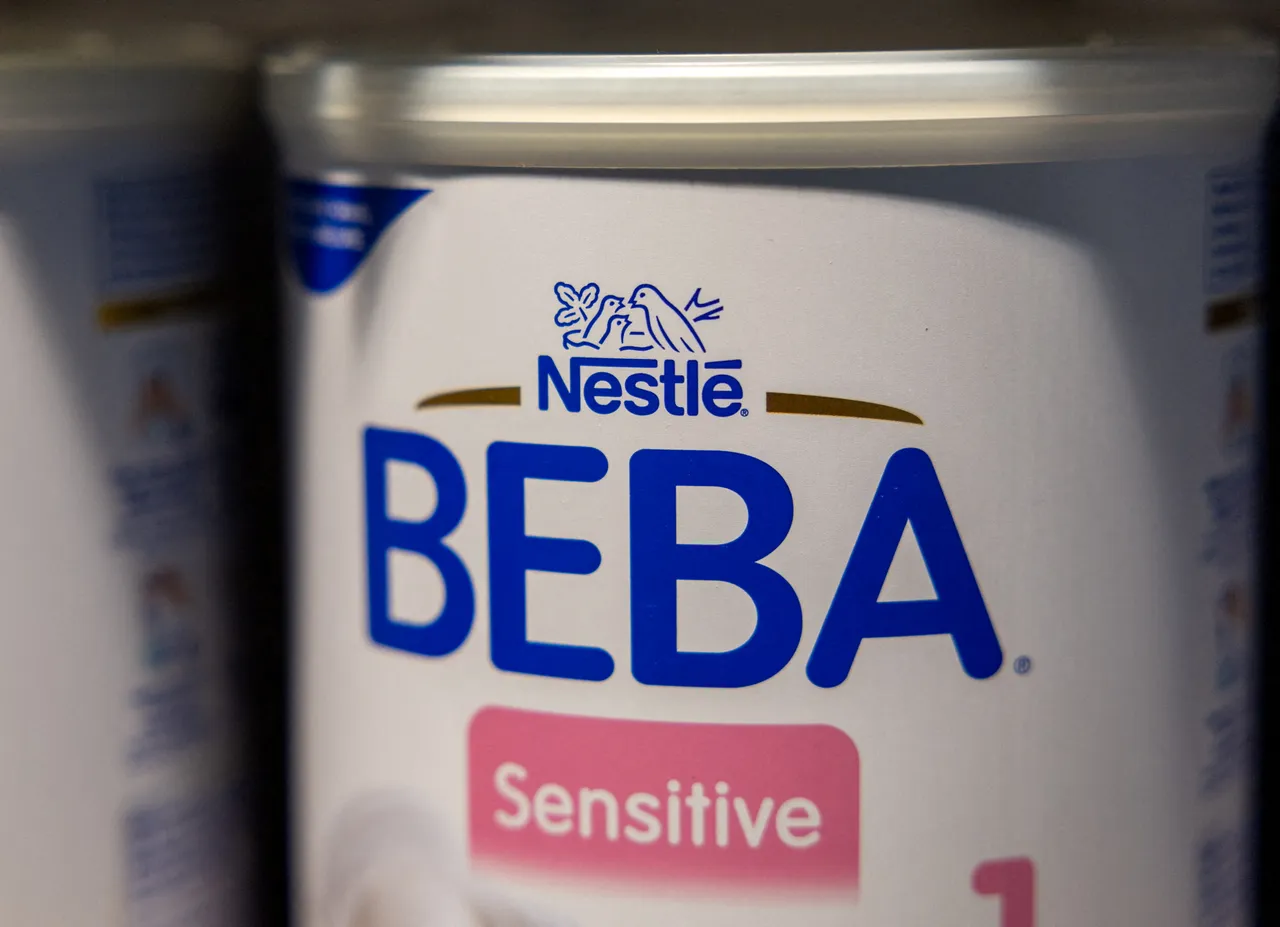
Nestlé’s infant-nutrition business has faced scrutiny in other markets over several years, although the nature and status of those cases vary considerably. Some have involved allegations by campaign groups, some academic research, some regulatory examination and others actual product recalls. Treating all of them as proof of the same wrongdoing would be inaccurate. Taken together, however, they show why infant nutrition has become a recurring area of scrutiny for one of the world’s largest food companies.
One recurring issue has been marketing. Infant formula and complementary foods are not treated like ordinary packaged foods in many jurisdictions because governments have adopted rules based in part on the World Health Organization’s framework governing the marketing of breast-milk substitutes. The concern is straightforward: a company selling a product to parents has a commercial incentive to make that product appear desirable, while public-health policy attempts to prevent marketing from undermining breastfeeding or turning nutritional claims into sales tools.
Independent investigations have repeatedly examined how Nestlé and other major manufacturers operate within that space. Research into digital marketing in the Philippines, for example, found extensive promotion of infant and young-child milk products online and examined how companies used digital channels, product claims and promotional techniques in a market with specific restrictions on infant and young-child feeding promotion. The study included Nestlé among the companies whose marketing practices were examined.
Separate investigations by Public Eye and IBFAN have also examined Nestlé’s marketing and product practices across multiple countries. Their work has focused on claims made for infant and young-child products, the use of health and nutrition messaging and differences in products sold across markets. These are campaign organisations’ findings and allegations rather than judicial findings against Nestlé, and that distinction matters. Nestlé has disputed a number of the conclusions and has repeatedly maintained that its products and marketing comply with applicable laws and standards.
There is nevertheless a common thread running through these investigations. The more a product depends on the consumer trusting a manufacturer’s nutritional expertise, the more important the information surrounding that product becomes.
A parent cannot independently test an infant formula in the kitchen, verify a scientific claim on a packet or determine whether a particular formulation meets every applicable nutritional requirement. The parent is effectively buying both the product and the manufacturer’s representation of what that product is.
That creates an unusually powerful role for regulation. A regulator is not simply checking whether a company has produced something that can technically be sold. It is also policing the information environment around a product whose consumers are particularly dependent on the manufacturer’s claims.
This is where the Indian cases begin to resemble the international debate. The current FSSAI action concerns promotional claims. The older Indian cases involved labeling and marketing. The Cerelac controversy involved nutritional composition and differences between markets. Abroad, investigators have examined marketing practices and product claims under national laws and international guidelines.
None of these cases can simply be added together and called proof that Nestlé’s infant products are dangerous. They involve different products, different countries, different laws and different standards of evidence.
But they do point to a recurring question that is difficult to avoid: when a company operates one of the world’s most recognisable food brands, how much of the consumer’s decision is being made by the product itself, and how much by the trust attached to the name on the packet?
When Does Information Become Promotion?
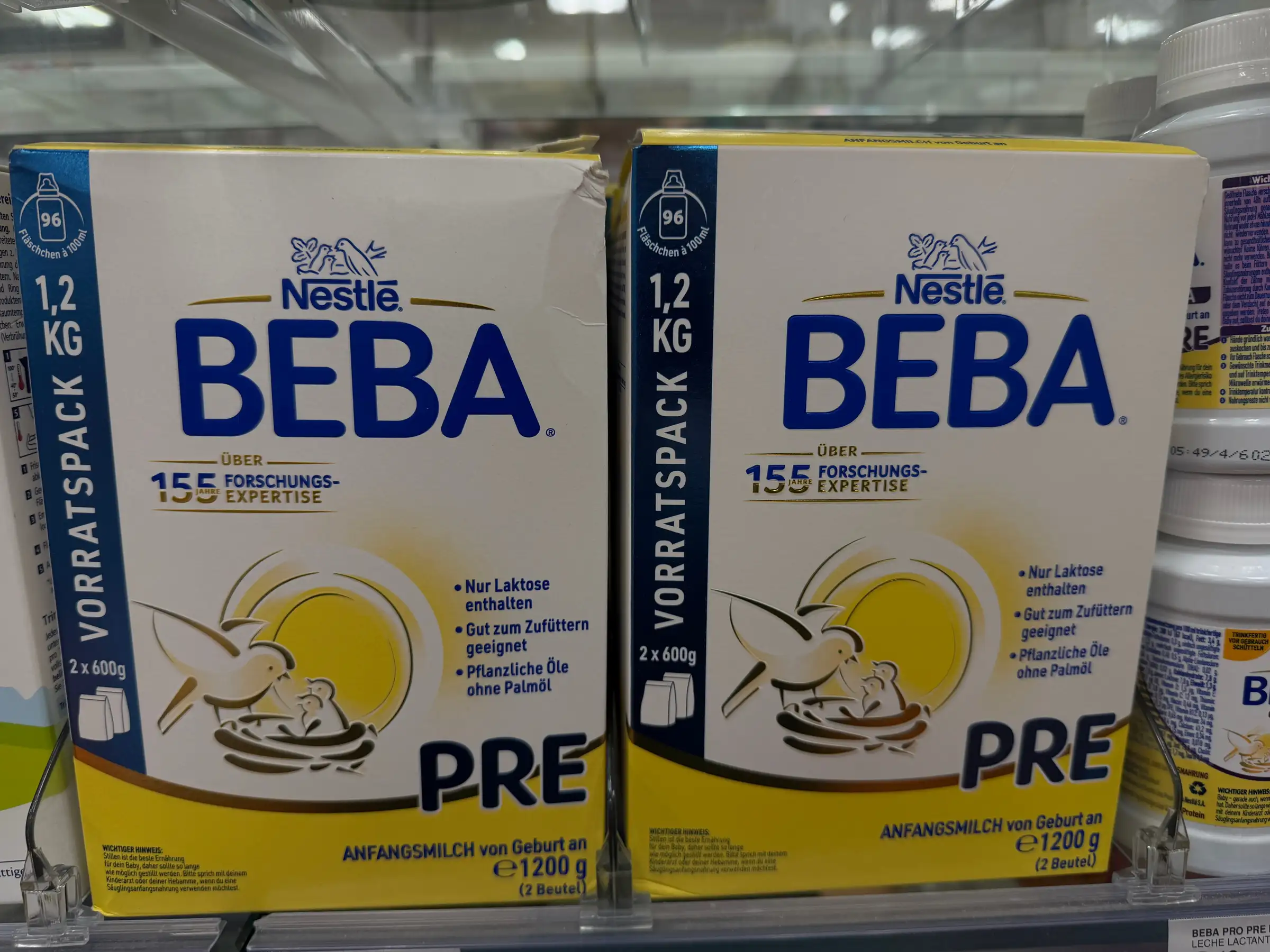
The international scrutiny of Nestlé’s infant-nutrition business has repeatedly returned to one basic problem: a company is selling a product while also controlling the information used to persuade parents to buy it. That becomes particularly sensitive when the information concerns immunity, development, digestion or other attributes that sound less like advertising and more like medical or nutritional advice.
Research from the Philippines illustrates the issue. A study examining online marketing of infant and young-child milk products found extensive promotion through digital channels and examined how manufacturers used online material, product claims and promotional techniques in a market where the promotion of these products is subject to specific restrictions. Nestlé products featured prominently in the material examined.
The study was not a government finding that Nestlé had committed an offence, but it demonstrated how difficult enforcement becomes when traditional advertising restrictions meet social media, websites and other forms of digital promotion.
The problem is obvious. A television advertisement is easy to identify. A product page describing an infant formula as easier to digest, containing particular nutritional components or offering specific benefits can look like information. A parenting article or social-media post can look like advice.
A message distributed through a healthcare professional can appear even more authoritative. The commercial objective does not necessarily disappear simply because the advertisement has been repackaged as information.
That distinction sits at the centre of the current Indian cases. FSSAI is not arguing that Nestlé cannot tell consumers what ingredients are present in its products. The question is whether particular claims and the way they are presented amount to promotional material intended to increase the marketability of infant food. The same basic tension has appeared in international debates over infant formula for decades: manufacturers want to communicate product attributes, while regulators want to prevent commercial messaging from influencing decisions in a category where public-health considerations are unusually important.
Nestlé has consistently maintained that it complies with applicable laws and the World Health Organization’s marketing framework as implemented in individual countries. The company also publishes information about external audits and compliance assessments covering its breast-milk-substitute marketing practices in numerous markets. Those records matter because they show that the company operates under an extensive compliance system. They do not, however, mean every allegation made against Nestlé has been proven, nor do they eliminate the need to examine individual cases.
The deeper issue is therefore not whether every Nestlé health or nutrition statement is misleading. There is no evidence to support such a sweeping conclusion. It is whether a system that allows manufacturers to provide increasingly sophisticated nutritional claims can reliably distinguish genuine consumer information from marketing that is designed to make a product more attractive.
For ordinary packaged food, that may be a relatively narrow advertising dispute. For infant nutrition, the consequences of getting the balance wrong are considerably more serious. Parents are not merely choosing between two snack brands. They are making decisions about what an infant consumes, often relying heavily on the information supplied by the manufacturer.
And then, in 2025 and 2026, the Nestlé infant-formula story moved into a different category altogether.
Then The Question Became Product Safety
The cereulide contamination crisis that began with infant-formula recalls in late 2025 changed the nature of the scrutiny. This was no longer primarily about what a company claimed on a label or how it marketed an infant product. It became a food-safety issue involving contaminated batches, international recalls and investigations into how a toxin had entered the supply chain.
The World Health Organization reported that infant formula and other products containing arachidonic acid oil had been affected by cereulide contamination and that implicated products had been distributed across 99 countries and territories.
The organisation said the first recalls began on December 10, 2025, and that by February 25, 2026, 144 suspected and confirmed cases had been reported across ten countries. Belgium had reported eight laboratory-confirmed intoxications linked to the implicated products at that point.
WHO assessed the overall public-health risk as moderate, citing the vulnerability of infants, the international distribution of affected products and continuing uncertainty around the full extent of contamination and exposure.
Nestlé was among the manufacturers affected. The company said it detected very low levels of cereulide during routine checks following the installation of new equipment at a production line in the Netherlands in late November 2025. Further testing confirmed the presence of trace amounts in finished products, after which Nestlé said it halted production and initiated a precautionary recall.
According to the company’s timeline, it informed Dutch authorities and potentially affected countries on December 10 and initiated a public recall of batches produced at the affected facility.
Nestlé has maintained that it acted responsibly and that the contamination originated from an ingredient supplied to manufacturers across the industry. The company says the initial recall covered potentially affected batches as a precaution and that its subsequent measures included extensive testing and the use of alternative suppliers. Nestlé has also said that no medically confirmed link has been established between consumption of recalled Nestlé formula and reported illnesses or fatalities.
That last point is critical. Reports of illnesses and deaths should not automatically be converted into a claim that Nestlé formula caused them. WHO’s published account describes suspected and confirmed cases associated with the wider contamination event, while investigations into individual cases and the complete distribution and exposure picture have continued.
The appropriate conclusion is therefore narrower: Nestlé infant formula was caught up in an international contamination event serious enough to trigger recalls across multiple markets, while questions about individual health outcomes and causality remained under investigation.
The episode nevertheless exposes the problem that makes infant food regulation so unforgiving. A contamination event involving an ordinary packaged food can be serious. A contamination event involving infant formula is different because the consumer is especially vulnerable and because formula may be a primary source of nutrition. WHO specifically noted that cereulide can cause acute vomiting and rapid dehydration, with potentially severe consequences in very young infants.
There is also a revealing detail in Nestlé’s own account. The company says cereulide testing was not previously part of routine legally required microbiological testing because its occurrence in oils was considered extremely rare. Nestlé says that from February 2026, all batches of the relevant LC-PUFA oil mixes used in its infant-formula production have been systematically tested for cereulide.
That is precisely where the broader corporate question begins to emerge.
A company can comply with the rules that exist. But what happens when the risk itself changes faster than the rules?
And more importantly, who is responsible for finding that gap before an infant, rather than a laboratory or regulator, becomes the test case?

The Brand Behind The Baby Food
It is worth understanding the size of the company at the centre of these disputes. Nestlé is not simply another packaged-food manufacturer fighting over the wording on a product page.
The Swiss multinational describes itself as the world’s largest diversified food and beverages company, selling products in 185 countries, with 271,000 employees and 335 factories across 75 countries. In 2025, it reported global sales of CHF 89.5 billion.
Nutrition is not a peripheral business for Nestlé either. The company reported CHF 17.9 billion in nutrition sales in 2025, while its broader Nutrition and Health Science category accounted for 16% of group sales. The portfolio includes products for different stages of life, with infant-nutrition brands such as NAN and NIDO sitting alongside medical and active-nutrition businesses.
That global scale matters because Nestlé’s products do not reach consumers as anonymous commodities. They arrive carrying a name that has been built over more than a century, a vast distribution network and the implicit reassurance that a company of this size has the resources, scientific expertise and regulatory systems required to put a product on a supermarket shelf.
India is an important part of that business. Nestlé India’s revenue from operations reached ₹23,154.6 crore in the financial year ended March 2026, compared with ₹20,201.6 crore in the previous financial year. Profit after tax was ₹3,544.6 crore. The company reported ₹23,071.5 crore in product sales during the year.
More importantly for this story, Nestlé India’s Milk Products and Nutrition category recorded ₹7,716.8 crore in product sales in FY2025-26. That category is broader than infant nutrition alone and includes dairy products, maternal and infant formula, baby foods and healthcare nutrition, so the figure cannot be presented as revenue from formula or baby food. But it establishes the commercial weight of the broader category in India.
Globally, Nestlé’s nutrition business is even larger. The company says Nutrition and Health Science generated CHF 14.3 billion in 2025 under its reported category structure, with nutrition products including infant nutrition among the businesses contributing to that figure. The company also said infant nutrition recorded positive growth during 2025, with NAN among the brands contributing to performance.
This is the scale behind the packet of formula sitting on a shop shelf. A parent sees a tin. Nestlé sees a global category, a distribution system, a portfolio of brands and billions of francs in annual sales.
That does not make Nestlé’s products unsafe. Nor does a large revenue number prove that a company has compromised a product to protect margins. But it does establish something relevant to the investigation: infant nutrition is not an incidental activity for Nestlé. It is part of a substantial global business, and the company’s brands carry enormous commercial value.
That brings us to the uncomfortable question underneath all the individual regulatory cases.
What Happens When The Check Gets In The Way Of The Sale?
Every food manufacturer operates under commercial pressure. Products have to be formulated at a cost that makes economic sense, manufactured consistently, distributed efficiently, marketed effectively and sold at a price consumers will accept. Large companies have another pressure layered on top: they have shareholders, market-share targets, competing brands and enormous supply chains to manage.
None of that is evidence of wrongdoing. Cutting unnecessary costs is not the same thing as cutting corners on safety. Making a product more attractive to consumers is not automatically deceptive marketing. And complying with the minimum legal requirement is not, by itself, a regulatory failure.
The problem begins when the commercial objective collides with the reason a particular rule exists.
That is why the Nestlé cases need to be looked at individually rather than converted into one sweeping accusation. In the latest Indian proceedings, the regulator is examining whether promotional claims crossed a statutory boundary. In the Cerelac controversy, investigators and campaigners questioned the nutritional composition of products sold in different markets. In the international formula recall, the issue was contamination and product safety. These are different problems, with different evidence and different consequences.
But there is a common feature running through all of them: the consumer is not in a position to perform the check independently.
A parent cannot test the biotin content of a formula at home. They cannot determine whether a claim about HMOs or digestibility is being presented in a legally permissible way. They cannot identify a contaminant that is invisible, odourless and present at trace levels. They cannot compare every formulation sold in 185 countries to determine whether the product in front of them is materially different from the one sold elsewhere.
They have to trust somebody.
Usually, that somebody is the brand.
And that is where the economics of reputation become important. Nestlé’s own global reporting emphasises its investment in brands and describes its portfolio as built around large global businesses, with Nutrition among its core areas. Its 2025 results reported CHF 89.5 billion in sales and an underlying trading operating profit of CHF 14.4 billion.
For a company operating at that scale, trust is not an abstract public-relations asset. It is part of the commercial machinery.
The danger, therefore, is not simply that a corporation might deliberately decide that safety does not matter. That is too simplistic and, without evidence in a particular case, unfair. The more realistic concern is what happens when commercial incentives, complex supply chains, scientific claims and regulatory limits meet each other – and each side assumes another layer of the system is doing the checking.
That is how gaps can emerge.
A manufacturer can say it followed the rules. A regulator can say the rules were breached. A laboratory can identify a nutritional discrepancy. A campaign group can identify a difference between markets. A recall can expose a previously unrecognised contamination risk.
And throughout all of it, the consumer is still looking at the same thing: the Nestlé name on the packet.

How Many Checks Does A Consumer Have To Rely On?
The Nestlé story ultimately exposes a problem that is much bigger than one company or one product. Modern food manufacturing works through layers of checks. The manufacturer tests the ingredients. Scientists assess formulations. Quality-control teams examine production. Regulators prescribe standards. Laboratories conduct independent testing. Retailers put products on shelves. Consumers are then expected to trust that the system has worked.
On paper, that looks like several lines of defence.
In practice, every line has limits.
A manufacturer can comply with the rules that exist while a regulator later decides that a particular marketing claim went beyond what those rules permit. A product can meet the nutritional specifications declared on paper while a laboratory later identifies a deficiency in a tested sample. A supply chain can operate within established testing protocols while a contaminant that was not routinely tested for is discovered after the risk becomes apparent.
None of this automatically means that a company deliberately cut corners. That distinction matters. Corporate negligence, regulatory gaps, scientific uncertainty and unforeseen manufacturing failures are not interchangeable. But neither should the existence of those distinctions become an excuse for treating every regulatory problem as somebody else’s responsibility.
- The commercial system has a built-in reason to keep pushing in the opposite direction.
- Companies compete on price, margins, market share, product differentiation and consumer attention.
- Marketing exists to make products more attractive. Product development exists to create advantages over competitors.
- Supply chains are constantly being made more efficient.
- And regulation exists to place boundaries around those commercial incentives when the consequences for consumers become unacceptable.
The problem is that the consumer usually sees only the final product.
A parent does not see the internal compliance meeting where a marketing claim was debated. They do not see the laboratory report sitting inside a regulatory file. They do not see the supplier audit or the batch-release documentation. They do not know which tests were legally required and which additional tests a company chose to conduct voluntarily.
They see the brand. That makes the brand both an asset and a potential blind spot.
The bigger the brand, the easier it is to assume that the necessary checks have already happened. The more established the company, the less likely an ordinary consumer is to question whether a claim is technically precise, whether a formulation differs from one sold elsewhere or whether an ingredient has been independently tested for every conceivable risk.
That is why the regulatory system cannot be built around reputation.
Nestlé may have decades of experience, enormous scientific resources and extensive internal compliance systems. Those facts are relevant, but they do not make external scrutiny unnecessary. In fact, the scale of the company makes independent scrutiny more important because the consequences of a mistake can extend across multiple markets before consumers have any reason to suspect that something is wrong.
The latest Indian action therefore deserves to be viewed in that context. FSSAI is not simply checking whether a packet of formula exists on a shelf. It is examining whether a global food company has stayed within the unusually strict boundaries India places around the marketing of infant nutrition. At the same time, a separate laboratory finding has raised a question about whether a particular follow-up formula met the nutritional composition required by law.
So, Is Nestlé A Dangerous Brand?
The regulator’s job is to answer those questions. Nestlé’s job is to defend its products and demonstrate compliance. The consumer’s job should not be to perform either function.