India’s Economy Grew 7.8% But Can One Number Really Capture The Economy Of 1.4 Billion People? What Exactly Is India Measuring And Why The Number Deserves A Closer Look
India’s economy grew 7.8 per cent, beating most forecasts and reinforcing its position as a global growth engine. Yet the stronger the headline looks, the more complicated the underlying picture becomes. From GDP deflators to informal businesses, the real question is not whether India is growing, but how accurately we are measuring it.

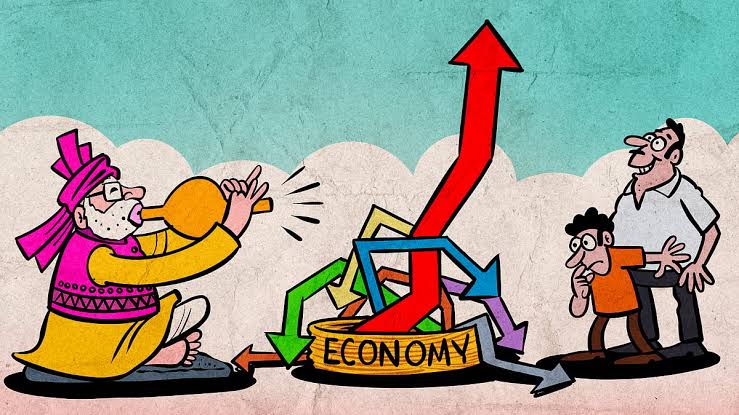
India’s economy grew 7.8 per cent in the first quarter of FY27, exceeding most forecasts and retaining its position among the fastest-growing major economies. The June-quarter expansion, reported by the National Statistical Office, came despite external pressures from geopolitical tensions and uncertainty across global markets.
The latest growth rate was lower than the revised 8.6 per cent recorded in the March quarter of FY26, but significantly higher than the 6.9 per cent expansion recorded in the June quarter of FY26. Forecasts for the latest quarter had ranged from 6.9 per cent by India Ratings & Research to 8 per cent by the State Bank of India, while the Reserve Bank of India had projected growth of 7 per cent.
Manufacturing and services remained the principal drivers of the expansion. Manufacturing output grew 9.2 per cent during the quarter, while services continued to expand at a double-digit pace for the third consecutive quarter. Financial, real estate and information technology-related activity grew 12.1 per cent.
On the expenditure side, investment demand was particularly strong, growing 11.9 per cent in the June quarter. Private consumption expanded 7.1 per cent, while government spending grew 4.3 per cent. Exports of goods and services increased 12 per cent in real terms, while imports contracted 1.1 per cent.
The supply-side picture was also relatively broad. Agriculture grew 3.6 per cent, although this represented a moderation from the previous quarter. Economists attributed some of the pressure on farm output to weather and monsoon-related uncertainty.
Gross value added, or GVA, grew 8.2 per cent, ahead of real GDP growth. Nominal GDP, meanwhile, increased 10.3 per cent from a year earlier, compared with 9.1 per cent in the preceding quarter.
The headline numbers therefore point to an economy that entered FY27 with strong manufacturing, services, investment and external-sector activity. The government has highlighted the figures as evidence of continued economic resilience, while economists have also pointed to risks from inflation, trade uncertainty, geopolitics and weather conditions.
At first glance, it is a strong growth story. But the 7.8 per cent figure is also the starting point for a more complicated question: how exactly is India measuring the growth of its economy?
The GDP Number Has Already Changed
There is an important detail behind the latest GDP release that is easy to miss. India is no longer calculating national output using the same statistical framework that produced many of the growth numbers investors and policymakers have become accustomed to reading.
The Ministry of Statistics and Programme Implementation has introduced a new national accounts series with 2022-23 as the base year, replacing the earlier 2011-12 base. The revision incorporates newer data sources, updated weights and changes in the methodology used to estimate output across different parts of the economy.
The reason for changing a GDP base year is straightforward. An economy changes over time. Industries that were relatively small in 2011-12 can become major contributors a decade later, while the importance of older sectors can decline. A newer base year is therefore intended to give greater weight to the structure of the economy as it exists today.
The new series also brings in updated measures of industrial activity and prices, including a new Producer Price Index framework, a revised Index of Industrial Production with 2022-23 as the base year, and newer information on unincorporated enterprises. The statistical authorities have also incorporated data from sources such as the Annual Survey of Unincorporated Sector Enterprises and the Periodic Labour Force Survey.
These changes matter because they do not simply produce a new number for the latest quarter. They also require the government to recalculate earlier years so that the growth series remains comparable.
That process has already altered the recent growth record.
The fourth quarter of FY26, for example, has been revised to 8.6 per cent from the earlier estimate of 7.8 per cent. Full-year FY26 GDP growth has consequently been revised to 7.8 per cent from 7.7 per cent.
Such revisions are normal in national accounts. Initial GDP estimates are based on available information and are subsequently updated as more comprehensive data becomes available. The latest series goes further by changing the underlying statistical framework itself.
That creates an important distinction. A revision does not mean that the earlier number was necessarily wrong. It means that the estimate has changed after incorporating different data, methods or information.
But it also shows something fundamental about GDP: the growth rate reported each quarter is not a directly observed figure. It is an estimate constructed from a large statistical system.
And once the way that system measures output changes, the way we read India’s growth story can change with it.
That becomes particularly important when we move from the headline GDP number to the question of how nominal economic activity is converted into real economic growth.
Real GDP Is Not The Same As Money Earned
The 7.8 per cent figure that dominates the latest GDP release is a measure of real GDP growth, which means it is intended to show how much the economy’s actual output has expanded after removing the effect of changes in prices, and this distinction is important because an increase in the value of everything produced in the economy does not necessarily mean that the economy has produced more goods and services.
If a company sells ₹100 worth of products one year and ₹110 worth the following year, for example, the additional ₹10 does not automatically represent a 10 per cent increase in production because some or all of that increase could simply have come from higher prices, which is why national statisticians have to separate the increase in the monetary value of output from the increase in the volume of goods and services being produced.
GDP therefore exists in two important forms for this discussion: nominal GDP, which reflects the value of output at current prices, and real GDP, which attempts to measure the change in the volume of output after adjusting for price movements.
This is where the calculation becomes considerably more complicated than the headline number suggests, because real GDP is not something that can simply be counted across the economy in the way one might count cars coming off a factory line; it is constructed by taking nominal economic activity and applying a series of price adjustments, sector-specific data and statistical methods designed to determine how much of the change represents higher production rather than higher prices.
The difference between nominal and real GDP is captured broadly through what economists call the GDP deflator, which measures the change in prices of goods and services included in domestic output, although the deflator is not the same thing as the Consumer Price Index that households encounter when they buy food, fuel, housing or other goods and services, nor is it simply the Wholesale Price Index used to track prices at the wholesale level.
This matters because the inflation measure used in the GDP calculation can have a direct bearing on the resulting real-growth number, meaning that the same increase in nominal economic activity can produce different estimates of real growth depending on how the underlying price change is measured.
India’s new national accounts series has attempted to improve this process by introducing more detailed price information, including the use of the Producer Price Index, alongside changes to the treatment of manufacturing output and intermediate consumption through what is known as double deflation.
The basic idea behind double deflation is that statisticians should not simply take the value of manufacturing output and adjust it using a single broad price index, because the cost of inputs used by manufacturers can move differently from the prices of the products they sell; instead, output and intermediate consumption are separately adjusted for price changes so that the resulting estimate is intended to capture the change in real value added more accurately.
On paper, this is a significant methodological improvement because manufacturing is not a simple process in which the final selling price tells us everything about the underlying increase in production, particularly when the prices of raw materials, energy, imported inputs and finished goods are moving at different rates.
But it also means that the final real GDP number depends heavily on the quality and representativeness of the price data being used throughout the calculation.
The Deflator Is Where The Debate Begins
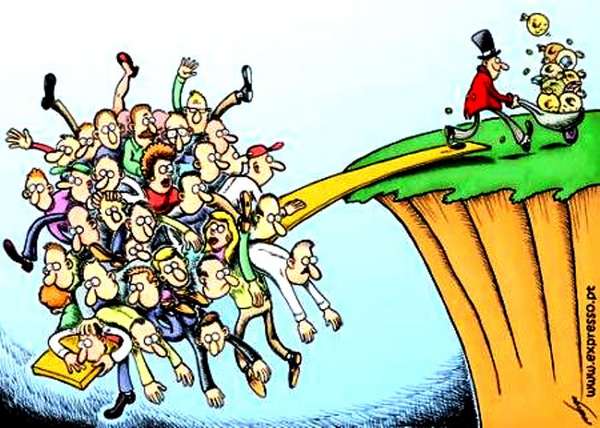
The central issue is therefore not that India is using a deflator, because every modern economy has to make some adjustment for prices when calculating real growth, but rather which prices are being captured, how they are being measured and how those price movements are being applied to different parts of the economy.
A relatively simple example shows why this matters: if an industry’s nominal output rises by 10 per cent and the statistical system estimates that prices in that industry have risen by 2 per cent, the implied real growth will be considerably higher than it would be if the underlying price increase were estimated at 6 per cent, even though the nominal value of output remains exactly the same in both cases.
That does not mean the higher real-growth estimate is automatically incorrect, because if prices genuinely increased by only 2 per cent, then the larger real increase would be justified, but it does mean that the quality of the price adjustment becomes critical to understanding the final GDP figure.
This is particularly relevant in India’s case because the GDP deflator can behave very differently from the inflation measures that are more familiar to households and businesses, reflecting the fact that GDP covers a different basket of economic activity and that its price adjustment is constructed across the entire domestic production system rather than around the consumption basket used for CPI inflation.
A household facing higher food, rent, healthcare or service costs may therefore experience a very different inflation environment from the one reflected in the deflator used to calculate real GDP, while an exporter, manufacturer or technology company may face yet another combination of prices depending on its inputs, output prices and exposure to global markets.
The result is that real GDP should not be interpreted as a simple measure of economic activity after “inflation” has been removed, because the more precise description is that it is an estimate of economic activity after applying a particular set of price adjustments to the components of national output.
This distinction has become especially important around India’s latest growth data because economists and former policymakers have questioned whether the price adjustments embedded in the new GDP series adequately capture the inflation environment across different sectors, with particular attention being paid to the relatively low GDP deflator and the gap between nominal growth and real growth.
The government, however, has argued that the new methodology improves the measurement of the economy by incorporating better and more granular data, including producer prices and separate treatment of output and intermediate consumption, which means the debate is not simply between a “real” GDP number and an invented one but between competing assessments of how accurately the statistical system is translating nominal economic activity into a measure of real output.
There is another reason this deserves attention: the more complex the economy becomes, the harder it becomes to identify one price movement that accurately represents what is happening across all sectors.
The price of software services does not behave like the price of steel, the price of financial services does not move like the price of agricultural commodities, and the price structure faced by a small unincorporated manufacturer can look very different from that of a large formal-sector company, which means that any national measure of real output necessarily involves aggregation across thousands of different economic activities and price movements.
This is why the GDP deflator should not be treated as a minor statistical footnote.
It sits directly between nominal economic activity and the real-growth number that ultimately becomes the headline, and when the difference between the two becomes large, understanding the mechanics of that conversion becomes essential to understanding what the growth rate is actually telling us.
The issue, therefore, is not whether India can claim 7.8 per cent growth simply because the calculation uses a deflator, nor is it reasonable to conclude from a disputed price adjustment alone that the economy has not grown strongly; the more useful question is whether the price data, sectoral weights and statistical methods being used are capturing the changing structure of India’s economy closely enough for the resulting real-growth figure to represent the underlying expansion with a reasonable degree of confidence.
And the deflator is only one part of that problem, because even a perfectly designed price adjustment cannot solve another fundamental difficulty facing Indian GDP measurement: a significant part of India’s economic activity takes place outside the formal corporate system, where measuring output is considerably harder.

The Economy India Cannot Easily Count
If measuring prices across a large and diverse economy is difficult, measuring the output of businesses that do not necessarily maintain detailed financial records is an even bigger challenge, and this is where India’s large informal and unincorporated economy becomes important to any discussion about the reliability of GDP.
India’s economy contains millions of enterprises that do not resemble the large companies whose financial performance can be tracked through audited accounts, regulatory filings and detailed corporate databases, including small manufacturers, neighbourhood retailers, household businesses, self-employed workers, transport operators, repair shops, small restaurants and a wide range of service providers whose economic activity may be substantial in aggregate even though individual businesses generate little formal data.
For a listed company, estimating changes in output can involve examining financial statements, production volumes, sales, inventories and other business information, whereas estimating the output of a small enterprise that may not maintain comparable accounts requires surveys, administrative information and statistical assumptions about how businesses with limited observable data are performing.
This has historically made the informal economy one of the most difficult parts of India’s national accounts to measure, particularly because its performance cannot simply be assumed to move in exactly the same way as the formal economy.
One of the methods used in national accounting has therefore been to rely on proxies, where the performance of a better-measured part of the economy is used to estimate what may be happening in another segment for which direct information is limited.
The problem with such an approach is straightforward: if formal-sector companies grow rapidly while small informal businesses struggle, assuming that both are growing at roughly the same rate can overstate the performance of the informal economy, while the reverse can happen when smaller businesses perform better than the formal companies being used as a reference point.
This became particularly important after events such as demonetisation, the implementation of the Goods and Services Tax and the COVID-19 pandemic, all of which affected different parts of India’s economy in very different ways and created the possibility that the relationship between formal and informal activity could have changed significantly.
Research by economists including Arvind Subramanian has subsequently challenged some of the historical estimates of India’s growth on precisely these grounds, arguing that the use of formal-sector proxies may have caused the performance of the informal economy to be mismeasured during periods when shocks were disproportionately severe for smaller and informal businesses.
One such analysis published by the Peterson Institute for International Economics estimated that India’s growth may have been overstated by roughly 1.5 to 2 percentage points during parts of the 2012–2023 period, while also arguing that earlier estimates had potentially understated growth, illustrating just how consequential the choice of methodology can become when the underlying economy is difficult to observe directly.
That research does not establish that the latest 7.8 per cent quarterly growth figure is wrong, and it would be misleading to use an estimate concerning an earlier period as proof that today’s GDP number is overstated, but it does demonstrate why economists continue to scrutinise the assumptions used to estimate activity in parts of the economy where direct data remains limited.
The challenge is therefore less about whether India has an informal economy, which is beyond dispute, and more about how accurately the statistical system can observe changes in that economy between major benchmark surveys.
A small business does not necessarily stop producing when the government changes its statistical methodology, nor does it suddenly become easier to measure because the national accounts have acquired a new base year, which means that improving GDP measurement requires a continuous flow of representative information rather than simply replacing one statistical framework with another.
And this is precisely where India’s latest GDP revision attempts to make a difference.
So What Does The 7.8% Actually Tell Us?
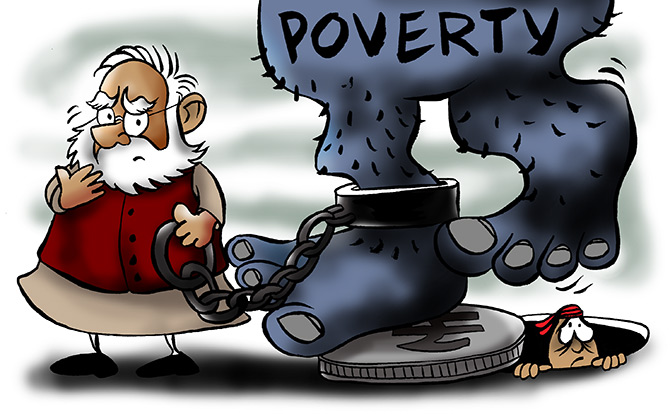
After examining the methodology, the price adjustments, the informal economy and the composition of output, the 7.8 per cent figure begins to look less like a single definitive description of India’s economic condition and more like one important measurement within a much larger statistical picture.
The number should not be dismissed simply because GDP involves estimates, because every large economy relies on national-accounting methods to convert millions of individual economic transactions into an aggregate measure of output, and revisions, updated base years and methodological changes are normal parts of maintaining such a system.
At the same time, the number should not be treated as though it were a direct physical measurement of economic growth that requires no interpretation, because real GDP depends on the quality of the underlying output data, the treatment of prices, the assumptions used where direct information is unavailable and the statistical methods used to combine activity across very different sectors.
The introduction of the 2022-23 base year and the government’s effort to incorporate newer surveys and administrative datasets are intended to make the system more representative of India’s current economy, while the introduction of producer-price information and changes to the treatment of manufacturing are intended to improve the conversion from nominal output into real value added.
Those changes are important, but they also demonstrate why GDP numbers should be read with an understanding of their construction.
A 7.8 per cent real-growth figure does not mean that every part of the Indian economy expanded by 7.8 per cent, just as the 12.1 per cent growth recorded in financial, real estate and IT-related activity does not mean that every company or worker in those sectors experienced a 12.1 per cent increase in income or output.
It is an aggregate estimate that combines very different parts of the economy into a single figure.
The more useful question, therefore, is not whether the headline number is “real” or “fake”, because that reduces a complicated statistical issue to a binary argument that the data cannot support, but whether the number provides a sufficiently accurate representation of the underlying changes in production and whether it is being interpreted within the limits of what GDP is actually designed to measure.
The Last Bit, The Number Is Not The Economy
India’s 7.8 per cent GDP growth is significant, particularly because it came in above most forecasts and was supported by strong manufacturing, services, investment and exports. But the number becomes more useful when it is viewed for what it is: an estimate of aggregate economic output produced through a complex statistical system, rather than a complete measure of the country’s economic health.
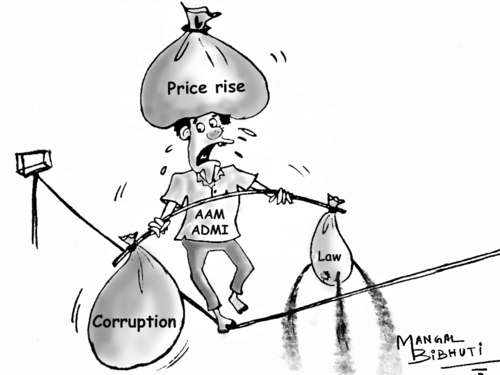
There is another question that cannot be ignored. If India’s economy is growing this quickly, why does that growth not always translate into a similar improvement in household incomes, wages, employment or purchasing power?
The answer lies partly in what GDP actually measures. GDP can rise because companies invest more, productivity improves, high-value sectors expand or corporate output increases, without wages increasing at the same pace. India’s financial services, technology, real estate and organised manufacturing sectors can generate substantial economic value while employing far fewer people than agriculture, construction, retail and the informal economy. Strong aggregate growth can therefore coexist with a much slower improvement in the incomes of a large section of the workforce.
Investment-led growth can eventually create jobs, capacity and higher incomes, but the transmission is neither automatic nor immediate. Similarly, higher corporate profits contribute to GDP, but the resulting economic value is not distributed equally between wages, profits and returns on capital. This is why a 7.8 per cent increase in GDP should never be read as meaning that Indians are collectively 7.8 per cent richer.
Even per-capita GDP, which adjusts the headline figure for population, remains an average and says little about how the gains are distributed. To understand whether growth is reaching households, GDP therefore needs to be read alongside wages, employment, consumption, productivity, investment and household purchasing power.
This brings us back to the central issue with India’s latest growth number. The question is not whether the economy is growing. The evidence clearly shows that it is. The more important questions are how accurately that growth is being measured, what is driving it, who is capturing the gains and how quickly those gains are reaching the wider economy.
The new GDP series attempts to improve the first part of that equation by changing the base year, incorporating newer datasets and updating the methodology used to measure output and prices. But even a better GDP estimate cannot answer the distribution question on its own.
India’s economy can have a genuinely strong 7.8 per cent growth rate and still have a much more uneven economic experience underneath it.
That is the contradiction worth examining.
Because ultimately, the health of an economy cannot be understood from how quickly its GDP grows alone, but from how that growth translates into income, employment, productivity and purchasing power for the people who make up that economy.