Bombay Shaving Company Changed Its Ad After A Court Order. The BSC vs Gillette Fight Is Really About How Far A Challenger Can Go After A Market Leader
A razor advertisement has landed Bombay Shaving Company in court, but the real fight is bigger than Gillette. BSC says it is giving consumers choice; Gillette says the comparison crosses into disparagement. The advertisement has changed after a court direction. The question of how far challengers can attack incumbents remains.

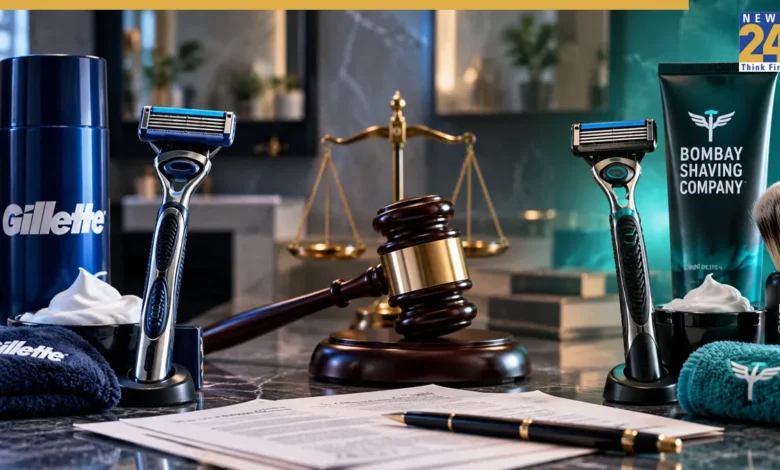
There are easier ways to sell a razor. Bombay Shaving Company chose a harder one: take aim at the economics, habits and assumptions that have kept consumers buying established shaving systems for years, wrap the argument in a provocative advertisement, and in the process find itself defending that advertisement before the Delhi High Court.
What began as a campaign for its Switch4 razor has therefore turned into something considerably more interesting than a fight over one commercial. It has become a test of how aggressively a challenger can compare itself with an entrenched competitor before comparative advertising starts looking, legally, like disparagement.
The dispute centres on BSC’s Switch4 campaign, which was built around the proposition that consumers should question the way they buy and replace razor blades rather than simply continue with the system they have always used.
Gillette India took exception to the advertisement, arguing that although BSC did not necessarily need to put the Gillette name front and centre for the target to be obvious, the commercial effectively referred to and disparaged its products. BSC, on the other hand, has maintained that the campaign was about consumer choice and comparative claims, rather than an attempt to unfairly malign a rival.
That line matters because comparative advertising exists precisely because competitors need to be able to tell consumers why their product is different, cheaper, more effective or otherwise worth considering.
The problem begins when the comparison moves beyond demonstrating an advantage for your own product and starts making assertions about another company’s product that may be difficult to substantiate.
The advertisement also managed to create a second problem, separate from the dispute over Gillette.
The commercial featured a mock courtroom sequence, and the Delhi High Court took exception to the way judicial proceedings were being portrayed, with the court describing the depiction as an “outright mockery” of the court.
BSC subsequently undertook to remove the advertisement from platforms under its control. What followed is important because the story did not end with an advertisement being taken down. BSC revised the commercial and maintained that the underlying facts and principles behind the campaign remained unchanged, while Gillette subsequently raised objections to the fresh version as well.
The court did not, at that stage, simply declare the revised commercial unlawful; the fresh objection would have to be dealt with separately.
And that is where this otherwise very Indian corporate battle over razors becomes a useful case study in advertising law.
A company challenging an incumbent needs to be able to say something more meaningful than our razor is also available. It needs to give consumers a reason to switch. But an established company has an equally legitimate interest in preventing a competitor from dressing up potentially damaging claims as advertising.
The difficult territory lies somewhere between those two positions, and the BSC-Gillette dispute is now sitting squarely in it.
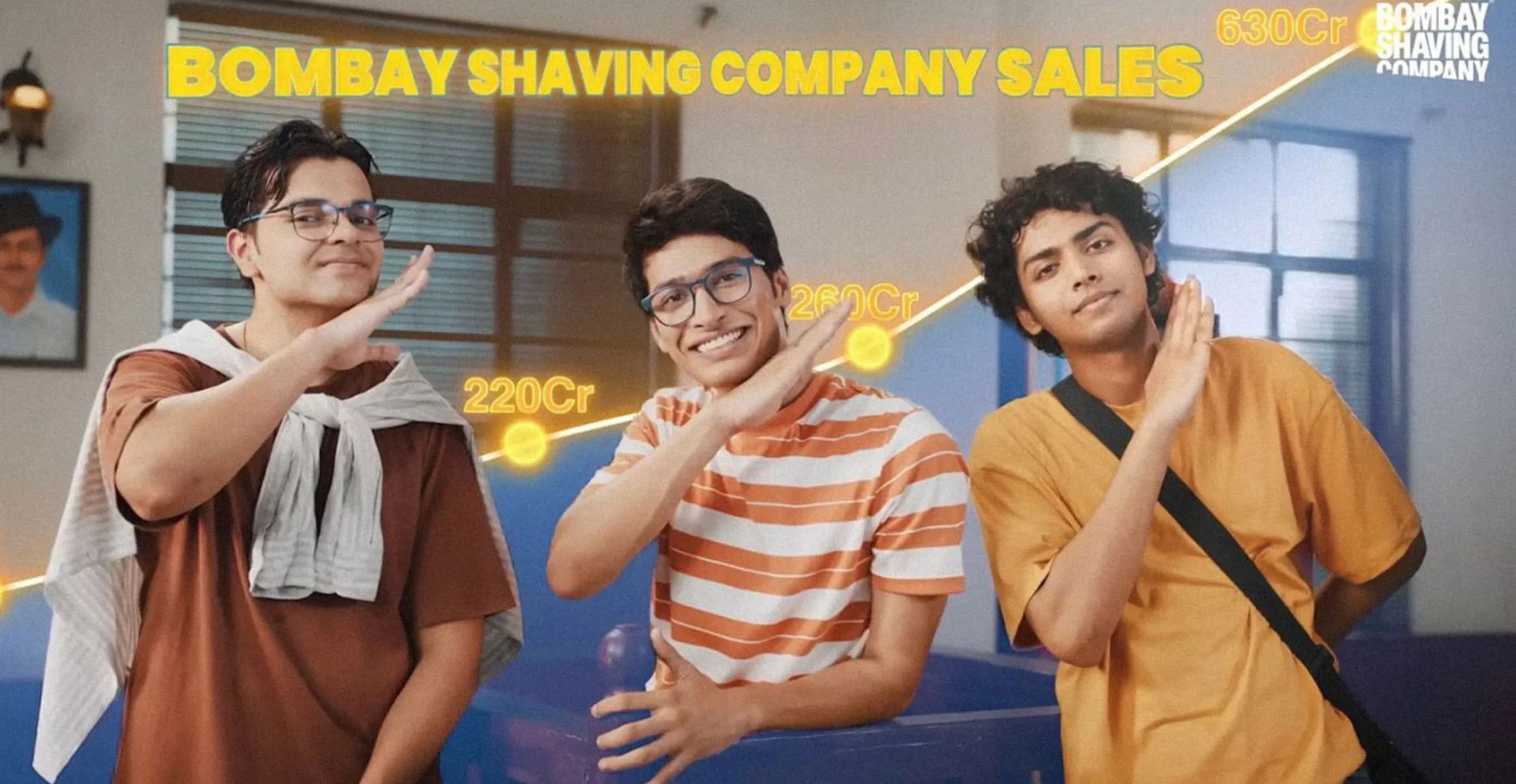
Why Gillette Felt Targeted Even Without Being Named
There is an old advertising trick that works particularly well when everyone already knows who you are talking about: you don’t actually have to say the name. A rival can be identified through the product being shown, the category being discussed, the characteristics being criticised or simply the fact that one company is so dominant that the audience fills in the blank for itself.
That is central to understanding Gillette’s objection to the Switch4 campaign. The legal question is not necessarily whether BSC printed “Gillette” across the advertisement. It is whether the overall commercial communication could reasonably be understood as referring to a particular competitor and, if so, whether the claims being made about that competitor crossed the line from legitimate comparison into disparagement.
This becomes more significant because Gillette occupies a highly established position in India’s shaving market.
A challenger entering such a category is not competing against an anonymous collection of products sitting on a supermarket shelf. It is competing against years of consumer familiarity, distribution, brand recognition and an established replacement habit in which consumers repeatedly purchase blades designed to work with the system they already own.
That makes the economics of switching part of the competitive argument itself. If BSC tells a consumer that they can move to a different razor system and potentially spend less, that is a conventional competitive proposition.
But if the same advertisement suggests that the established system is inherently flawed, wasteful or otherwise inferior, the claim becomes more complicated because the advertisement is no longer simply explaining the benefits of BSC’s product; it is making a statement about the rival’s product and business model.
That distinction is particularly important in comparative advertising because consumers are supposed to benefit from competition. And that is what makes the fight more consequential than the fate of one advertisement. If consumers can understand exactly which competitor a campaign is talking about without the competitor ever being named, then the absence of a brand name cannot by itself settle the question of whether the advertisement is comparative or disparaging.
The substance of the comparison, the factual claims supporting it and the way the rival’s product is presented become far more important. In other words, the real battle is not over whether BSC said “Gillette.” It is over what BSC was entitled to say once everyone already knew who it meant.
BSC’s Defence Is Really About Consumer Choice
For Bombay Shaving Company, the argument is not simply that it has made another razor and wants consumers to try it. The company is challenging the logic of the category itself.
Founder Shantanu Deshpande has said that consumers should have a choice rather than remain tied to a particular handle and then have their options restricted when it comes to buying replacement blades.
In defending Switch4, BSC has therefore positioned the campaign as an argument about competition and consumer choice, rather than merely a creative attack on Gillette. Deshpande has maintained that the company stands by the campaign and that the “facts and principles” behind it remain unchanged even after the advertisement was revised following the court proceedings.
That distinction is important because a challenger brand cannot realistically compete with an established player by simply whispering that its own product exists. If a consumer has already bought a shaving handle, already knows how it works and has developed a habit of buying compatible cartridges, the switching decision involves more than the price or performance of one new razor sitting on a shelf. BSC’s pitch is therefore aimed at that habit itself.
The company’s proposition is that consumers should be able to reconsider the system they have been buying into and compare the economics and functionality of an alternative. There is nothing inherently unusual about that kind of comparison. Comparative advertising, after all, exists precisely because competition becomes more meaningful when brands can tell consumers why their product offers something different from an established alternative.
The difficulty is that consumer choice and competitor disparagement can occupy the same advertisement without being the same thing.
A brand can say that its own four-blade cartridge offers a particular benefit, costs less or gives consumers another option. The legal complication begins when the same creative also communicates that the competing product is outdated, inferior or otherwise deficient.
That is why the distinction between “our product is better” and “your product is bad” matters so much in this dispute. Advertising-industry and legal experts quoted in the current debate have pointed to precisely that boundary, noting that comparative advertising is permissible but that the comparison cannot simply become a vehicle for denigrating the competitor.
There is another reason BSC’s defence matters. The company has already been through one advertising dispute with Gillette, over its Sensi Smart 3 campaign, which was eventually resolved through mediation in February 2026 after the challenged advertisement was withdrawn.
The Switch4 fight has therefore arrived with history attached to it. What might have been viewed as one isolated piece of provocative advertising now sits within an existing dispute between a challenger and an incumbent, making every subsequent creative decision considerably more sensitive.

But The Court Had A Different Problem With The Ad
The most striking part of the Delhi High Court proceedings was that the court’s objection was not confined to the question of whether BSC had gone too far in comparing its razor with Gillette’s.
The advertisement had put the legal battle itself into the creative. A courtroom appeared on screen, complete with a judge, turning an ongoing commercial dispute into part of the joke. That was where the court drew a particularly sharp line. Justice Jyoti Singh described the portrayal as an “outright mockery” of the court and questioned the company’s decision to use such a treatment in an advertisement. BSC subsequently undertook to remove the commercial from platforms under its control.
This is an important distinction because it gives the dispute two separate layers.
The first is the conventional advertising question: did BSC’s campaign cross the line between legitimate comparison and disparagement of Gillette’s products?
The second concerns the depiction of judicial proceedings themselves. The court’s intervention on the latter issue does not, by itself, amount to a final determination that every underlying comparative claim made by BSC was unlawful.
What the court objected to particularly strongly was the manner in which the courtroom and judicial process had been incorporated into the commercial. BSC agreed to remove that version without admitting the allegations against it and without giving up its legal rights and contentions.
That distinction became even more important the following day. BSC complied with the takedown and submitted a revised version, removing the courtroom setting and references to Gillette.
But Gillette did not consider the matter resolved. It objected to the revised commercial on other grounds, including disparagement, obscenity and the applicable advertising code. The court, however, did not simply approve or ban the new advertisement during that hearing; instead, it left Gillette free to challenge the revised creative through the appropriate process.
So the first advertisement may have disappeared from BSC’s controlled channels, but the underlying argument has not disappeared with it. BSC still maintains that the campaign is fundamentally about consumer choice. Gillette continues to object to the way the rival’s products are portrayed.
And the court has now been drawn into deciding not merely whether one advertisement is provocative enough to attract attention, but where the boundary lies between a challenger telling consumers why they should switch and a competitor being portrayed in a way that the law may regard as impermissible.
That is the line the rest of this story has to examine.

The Ad Was Changed. The Fight Wasn’t Over
The easiest version of this story would have ended on September 17: Gillette challenged the advertisement, the Delhi High Court objected to it, Bombay Shaving Company took it down, and the challenger came back with a revised version. But that is not quite what happened.
BSC did comply with the court’s direction and removed the original Switch4 advertisement from platforms under its control, including the references to the court and the earlier litigation. Yet the revised commercial did not bring the dispute to an end.
Gillette objected to the new version too, raising fresh concerns including disparagement and obscenity, while the court declined to pass an order against the new advertisement at that stage, making it clear that any fresh challenge would have to be brought before it properly.
That distinction matters because it would be inaccurate to describe the revised advertisement as something the court had simply “approved”. It hadn’t. The court recorded BSC’s compliance with the earlier direction; it did not give the new commercial a judicial stamp of approval.
BSC’s position remained that the fresh advertisement did not refer to Gillette or disparage its products, while Gillette maintained its objections. The court effectively separated the two issues, allowing the original dispute to proceed while leaving the door open for a separate challenge to the new creative.
In other words, BSC changed the advertisement, but it did not change the competitive argument behind Switch4, and Gillette’s objections did not disappear simply because the courtroom sequence did.
There is another modern wrinkle here that makes the dispute more complicated than a simple advertiser-versus-advertiser fight.
Gillette told the court that copies and clips of the original advertisement were continuing to circulate through social-media accounts and influencers outside BSC’s direct control.
The court allowed Gillette to approach the relevant platforms for removal and gave it the option of returning to court if the material was not taken down. This is increasingly important in an advertising environment where the original advertiser may publish a campaign once, but consumers, creators and influencers can replicate it thousands of times before a legal dispute has even reached its first hearing.
Taking something off a company’s own Instagram page is one thing; putting the internet back in the bottle is quite another.
And so the Switch4 dispute has moved beyond the question of whether one particular advertisement was too aggressive.
The more interesting question is what happens when a challenger changes the creative execution but continues to stand by the underlying comparison. BSC has already said that the “facts and principles” behind Switch4 remain unchanged. That effectively shifts the argument away from one courtroom scene and back towards the substance of comparative advertising itself.
If the underlying factual comparison is legitimate, changing the presentation may solve one problem without resolving the other. If the underlying comparison itself is considered disparaging or insufficiently supported, changing the creative wrapper will not necessarily solve that either.

The BSC-Gillette Fight Is Also A Fight Over How D2C Brands Advertise
There is a reason this kind of advertising has become particularly common among India’s direct-to-consumer brands. Many of these companies enter categories where consumers already have deeply established habits and where a handful of large companies control much of the traditional brand recognition.
The challenger does not have the luxury of waiting ten years for consumers to gradually become familiar with it. It needs attention now, and one of the fastest ways to obtain that attention is to position itself directly against the company consumers already know.
The established brand becomes the reference point, and the challenger defines itself by arguing that the old choice is no longer the only choice.
Bombay Shaving Company’s advertising has repeatedly leaned into that challenger identity. The earlier Sensi Smart 3 dispute with Gillette and the subsequent Switch4 controversy both show how the company’s marketing has sought to place itself in direct conversation with an established category leader.
This is almost the opposite of how traditional consumer advertising often worked. The old approach was to build a product identity around attributes such as quality, performance, technology or lifestyle and allow consumers to make their own comparison.
The newer D2C approach frequently makes the comparison itself part of the product story. The incumbent becomes the thing the challenger is asking consumers to reconsider. The language is sharper, the humour is more irreverent and the advertising is designed for social platforms where controversy can generate distribution without every impression having to be purchased.
There is an obvious business logic behind this. A challenger does not need to persuade every consumer to abandon an established brand. It needs to create enough curiosity for some consumers to try an alternative. If those consumers discover that the alternative works, the brand has a route into a market that might otherwise be protected by years of consumer habit.
Comparative advertising can therefore function as a shortcut through the enormous cost of building category awareness from scratch. It gives a new company something to talk about immediately: not simply what it sells, but why the consumer should reconsider what they already buy.
But that strategy also creates a structural tension. The closer the challenger gets to the incumbent, the more valuable the comparison becomes; and the more valuable the comparison becomes, the greater the incentive to make it dramatic.
A carefully worded comparison may be legally safer but commercially forgettable. A provocative comparison may travel across Instagram, YouTube and other platforms precisely because it pushes the audience into choosing sides. The creative team therefore has an obvious incentive to move towards the boundary. The legal team has an equally obvious incentive to keep the campaign away from it.
The BSC-Gillette dispute sits right inside that tension.
The Razor Is Only The Metaphor
The irony is that none of this is really about four blades.
The Switch4 dispute happens to involve razors, but the same conflict is appearing across India’s consumer economy as newer brands try to prise consumers away from companies that have spent decades becoming household names.
The challenger has a powerful incentive to say that the old way of doing things is expensive, inefficient, outdated or simply unnecessary. The incumbent has an equally powerful incentive to ensure that those claims do not become accepted as facts merely because they were packaged into a clever advertisement and distributed at scale.
The Beco-Hindustan Unilever dispute offers a useful parallel. Beco’s “War on What’s Hidden” campaign directly targeted Surf Excel and Vim and made claims concerning their ingredients and potential effects. HUL challenged those claims, and the Delhi High Court restrained the campaign at the interim stage after examining the material placed before it.
The details are different from the BSC-Gillette dispute, and the two cases should not be treated as identical. But together they demonstrate why comparative advertising becomes particularly sensitive when a challenger moves from talking about its own product to making concrete assertions about an incumbent’s product.
That tension is only going to become more visible as advertising becomes increasingly intertwined with social media. A traditional television commercial had a defined life: it was produced, broadcast and eventually replaced. A D2C advertisement can be clipped, reposted, debated by influencers, turned into memes and redistributed without the advertiser’s involvement.
That changes the economics of provocative advertising. The same controversy that makes a campaign valuable from a marketing perspective can create additional exposure from a legal perspective.

The Last Bit, The Commercial May Have Changed. The Question Hasn’t
Bombay Shaving Company has removed the original Switch4 advertisement from the platforms under its control and submitted a revised version after the Delhi High Court objected to the campaign’s courtroom portrayal.
BSC has continued to stand by the underlying proposition of Switch4, while Gillette has objected to the revised creative as well.
The court has not, in the September 17 proceedings, given the new advertisement a blanket approval; it left any fresh challenge to the revised commercial open to the appropriate legal process.
That leaves the central question remarkably intact.
A challenger needs the freedom to tell consumers that there is another way to buy, another product to try and another company worth considering. An incumbent needs protection against claims that misrepresent its products or leave consumers with a false impression. Comparative advertising sits between those two interests, and the boundary becomes harder to see when humour, social media and deliberately provocative creative are added to the mix.
The Switch4 advertisement may have been rewritten. The courtroom scene may be gone. The references to the earlier litigation may have disappeared.
But the more important argument remains.
How far can a challenger go in telling consumers to stop buying the market leader before the comparison stops being about choice and starts being about the competitor?
That is the real battle behind the razor.