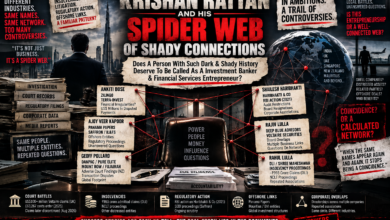
What Do Eight Legal And Corporate Records Say About Shailesh Haribhakti The Veteran Boardroom Figure At The Centre Of A Much Wider Ankiti Bose Network
He built a career around audits, boardrooms and corporate governance. Yet buried across court records, regulatory orders and professional proceedings is a very different paper trail. In the seven-person Ankiti Bose network examined here, no name appears in more directly linked matters than Shailesh Haribhakti. The question is why.

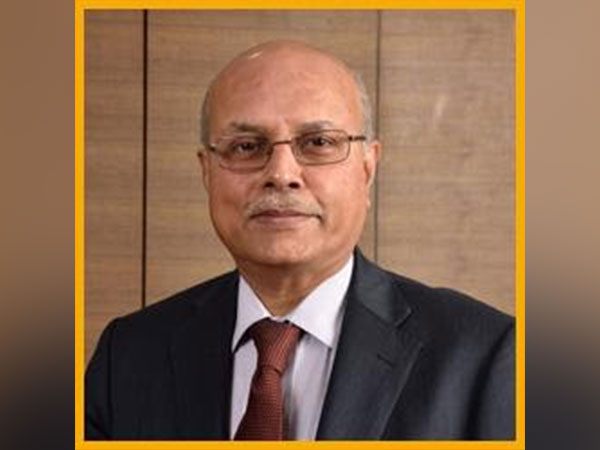
Shailesh Haribhakti is not an unfamiliar name in India’s corporate world. A chartered accountant, auditor, board member and long-time corporate-governance professional, he has spent decades occupying positions that place him firmly inside the country’s institutional establishment.
Yet when the wider network surrounding Ankiti Bose is examined through publicly available court records, regulatory documents, professional proceedings and corporate filings, Haribhakti’s name produces a surprisingly dense paper trail.
In the seven-person evidence register examined for this investigation, eight directly linked matter or proceeding entries were identified in connection with him, the highest raw count among the individuals examined.
That number sounds explosive, but it needs to be unpacked carefully because eight entries do not necessarily represent eight separate controversies. Some arise from the same underlying episode, while others involve professional or corporate entities with which Haribhakti was associated rather than establishing personal wrongdoing by him.
The real story, therefore, is not simply that his name appears eight times. It is why his name appears across such different legal, disciplinary, regulatory and corporate records, stretching back more than a decade, and what those records actually establish.

The 2011 Mangaluru Inspection That Produced Five Cases
The largest cluster in that paper trail goes back to September 2011, when a Legal Metrology inspection was carried out at a Future Value Retail outlet in Mangaluru. The inspection concerned pre-packed goods and issues relating to MRP stickers, after which five separate criminal complaints were filed in Karnataka.
Haribhakti appeared in those proceedings as petitioner No. 4 and accused No. 4, placing his name directly inside a legal dispute that originated from the retail operations of a company within the broader Future Group ecosystem.
On paper, five cases can make the record appear considerably larger than it actually is, because the proceedings arose from the same underlying inspection and therefore should not be treated as five unrelated episodes.
The matter subsequently travelled through the Karnataka High Court, where several other petitioners obtained relief, while proceedings against Haribhakti were not quashed in the same manner.
That fact is important because the existence of these cases establishes that Haribhakti was named in criminal proceedings arising from the inspection, but it does not by itself establish that he was convicted or that the allegations against him were ultimately proved.
The Karnataka episode is therefore less a simple count of “five cases” and more the first major window into a legal paper trail that would continue to surface in different forms across the years.
What The Karnataka High Court Actually Decided
The Karnataka High Court proceedings are where the 2011 episode becomes more complicated than the raw case count suggests. The complaints arising from the Mangaluru inspection eventually came before the High Court, and in 2019 the court quashed the proceedings against several of the petitioners. Haribhakti, however, did not receive the same relief, and the proceedings concerning him were directed to continue in accordance with law.
That detail matters because it is easy to take a reference to a criminal case and turn it into something much larger than the underlying record supports. The High Court order does not amount to a conviction, nor does the continuation of proceedings establish that the allegations were proved. What it does establish is that, at that stage, Haribhakti remained within the scope of the proceedings while other petitioners were granted relief.
The ICAI Disciplinary Trail
The next piece of the record moves away from criminal proceedings and into the professional world in which Haribhakti built much of his reputation. Official material from the Institute of Chartered Accountants of India identifies him as the member answerable in a disciplinary proceeding that originated from information received in 2018.
Unlike the Karnataka matters, this was not a retail inspection developing into criminal complaints but a professional matter involving the conduct of a chartered accountant and therefore potentially relevant to the standards governing the profession.
Yet here too, the wording of the record matters. The existence of a disciplinary proceeding means that the matter entered the formal professional process; it does not, on its own, establish that misconduct was ultimately proved.
The available material reviewed for this investigation identifies the proceeding and Haribhakti’s position in it, but does not provide a published final finding that can simply be presented as an established act of professional misconduct.
This becomes another important distinction in understanding the larger paper trail: Haribhakti’s name appears not only in court proceedings but also in professional scrutiny, adding another category to the record, while the available evidence still requires the reader to separate an allegation or proceeding from a final adverse finding.
The pattern is beginning to become clearer, but so is the need to examine each file on its own terms rather than allowing the accumulation of references to become a substitute for evidence.

Another Criminal Proceeding Appears In Patna
The legal trail does not end in Karnataka. A separate proceeding surfaced in Patna from a complaint dating back to 2022, involving Haribhakti and other connected parties, which later reached the Patna High Court through a criminal miscellaneous petition. The matter remained part of the judicial record into 2026, when the High Court considered the petition in January.
But, once again, the nature of the order is more important than the mere presence of Haribhakti’s name in a criminal proceeding. The material reviewed does not establish a final finding of guilt against him, and the January 2026 order was procedural rather than a determination of the underlying allegations on their merits.
That makes the Patna matter another documented entry in the chronology, but not evidence that can responsibly be described as a proven offence. What it does add to the picture is another instance, separate from the old Karnataka dispute, in which Haribhakti’s name appears in formal criminal litigation.
Taken together with the earlier cases and the ICAI proceeding, the records begin to show why his historical file attracts attention, even though each individual matter still has to be judged according to what the underlying documents actually establish.
Then Came Future Lifestyle Fashions
The story then moves from courtrooms into the boardroom, where Haribhakti’s association with Future Lifestyle Fashions provides another significant entry in his corporate history.
In April 2022, he resigned as chairman and independent director of the company at a time when Future Lifestyle was facing serious financial and legal difficulties, including pressure from creditors and proceedings connected to the wider problems engulfing parts of the Future Group.
His resignation therefore took place against a particularly turbulent corporate backdrop, but the circumstances should not be turned into an allegation that the resignation itself demonstrated wrongdoing. Haribhakti’s own explanation was that the situation had become volatile, complex and unpredictable, while he maintained that he had discharged his responsibilities diligently.
The episode nevertheless matters to this investigation because independent directors and board chairmen occupy positions of oversight, and Haribhakti’s departure forms part of the documented governance history of a company that subsequently faced an increasingly severe financial crisis.
It is another example of why his record cannot be reduced to a simple list of criminal cases: alongside litigation and professional scrutiny, there are also corporate episodes in which his role, decisions and timing become relevant to understanding the broader institutional network around him.
The question is not whether a resignation during a corporate crisis automatically proves anything; it plainly does not. The question is what the company’s filings, the circumstances surrounding his departure and the wider record tell us about his position within that corporate ecosystem.
The Haribhakti & Co Question
The paper trail becomes more complicated when Haribhakti & Co enters the picture because the firm’s regulatory history cannot simply be attributed to Haribhakti personally.
In 2021, the Reserve Bank of India took action against Haribhakti & Co LLP, restricting the firm from accepting new audit assignments involving RBI-regulated entities for a period of two years.
The action related to the firm’s compliance with a regulatory direction concerning the statutory audit of a systemically important non-banking financial company, placing the firm’s professional work under direct regulatory scrutiny. But there is an important piece of chronology here: Haribhakti had reportedly ceased to be a partner of the firm in 2018, meaning the RBI action against the LLP cannot automatically be presented as a regulatory finding against him individually.
That distinction is particularly important in an investigation built around a network of people, companies and historical records, because corporate and professional associations can easily blur into personal allegations when stripped of their context.
The RBI action establishes that the firm faced regulatory consequences; it does not, by itself, establish that Haribhakti personally committed the underlying violation. Yet the episode remains relevant because it adds another regulatory institution and another corporate entity to the wider documentary trail surrounding his professional career.
The Older Karvy Audit Trail
There is an older regulatory thread involving Haribhakti & Co that takes the investigation back to the Karvy controversy and the problems surrounding IPO financing and depository accounts.
In material relating to the matter, SEBI examined the role of the audit firm and said that it had failed to identify or report irregularities involving large numbers of depository accounts that shared common addresses.
The firm’s role as Karvy’s internal auditor subsequently became part of the regulatory record, and the findings were also reflected in material considered by the Parliamentary Standing Committee on Finance, which noted that the matter had been forwarded to the Institute of Chartered Accountants of India.
The episode is significant because it demonstrates that scrutiny of the professional ecosystem around Haribhakti did not begin with the Ankiti Bose connection or the later corporate crises; there was already a history of regulatory examination involving a firm bearing his name. But the same evidentiary line has to be maintained here as well.
A regulatory finding concerning the firm’s audit work is not automatically a personal finding against every individual associated with the firm, and the existence of criticism by SEBI does not by itself establish that Haribhakti personally engaged in the conduct described.
What it does provide is another documented chapter in the professional history of the firm and another reason why the broader paper trail deserves to be examined through primary records rather than reduced to a headline or a numerical count.
Where Haribhakti Fits Into The Ankiti Bose Networt
Only after the individual records are examined does the Ankiti Bose connection become meaningful. Haribhakti’s relevance to the wider network is not simply that two names appear somewhere in the same collection of corporate and professional records, but that his career has intersected with companies, boards, professional institutions and individuals that form part of the broader web being investigated.
That makes his historical record worth examining, but it also creates a temptation to draw connections that the documents may not actually support. A professional association, board position or corporate relationship does not establish knowledge of another person’s conduct, just as the existence of an old legal proceeding does not establish that every later relationship was connected to it.
The value of mapping Shailesh Haribhakti’s record is therefore in establishing chronology and context.
It shows what was already present in the public record before the current investigation brought these names back into focus, allowing the reader to distinguish between relationships that are documented and conclusions that would require evidence beyond association alone.

The Last Bit, The Paper Trail Is The Story
Shailesh Haribhakti’s place at the centre of this investigation – across courtrooms, professional proceedings, regulatory records and corporate filings, his name has accumulated a paper trail that stretches from a 2011 Legal Metrology dispute to proceedings and regulatory scrutiny appearing years later.
Some matters involve him directly, others involve firms or companies with which he was associated, and several do not contain final findings of wrongdoing in the material examined.
That is precisely why the records matter. They allow the story to move beyond reputation, association and headline-making case counts and into something far more useful: what happened, who was involved, what institution examined it and what the final outcome was.
The documents establish the existence of the trail. They do not automatically establish what that trail means. That part has to be determined file by file.