The Sachin Mittal Story Was In The Newspapers Years Before It Was In The Court Records. 1% A Day Was In The 2020 Pitch. By 2023, It Was In A High Court Judgment
In the beginning, the public record around Sachin Mittal and LoanWalle looked like the record around many young fintech businesses in India. There were expansion plans, short-term loans, a rapidly growing digital lending market and a founder talking publicly about the opportunity. The character of the record changed later, and it changed in stages - first through borrower complaints, then court proceedings, and eventually through criminal investigations involving companies connected to Mittal.

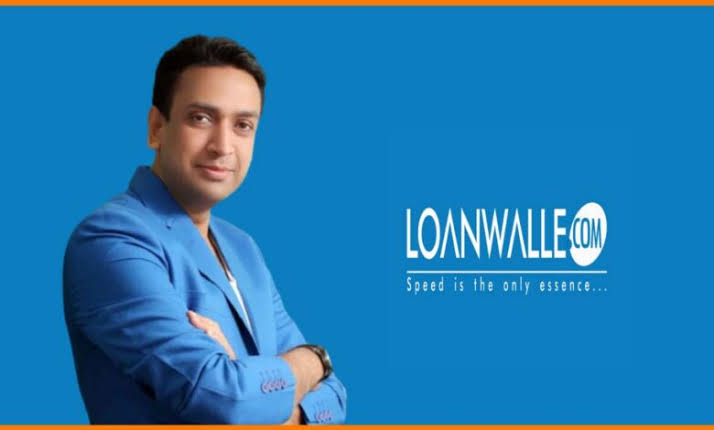
The Sachin Mittal and LoanWalle story has been around for considerably longer than the court records might suggest, although the way those names appeared in the public record has changed quite dramatically over time.
What began as a corporate association and, later, a fairly conventional fintech story about instant loans, expansion and the promise of quick credit would gradually acquire a much more complicated paper trail, raising a rather simple question: when did the story begin to change, and what was being reported about it before the complaints, court proceedings and criminal investigations arrived?
But before LoanWalle became a fintech story in the newspapers, there was already a corporate trail around the name Sachin Mittal.
Public company records show that Mittal was appointed an additional director of Loanwalle Finserve Private Limited on October 14, 2016, a position he held until July 31, 2019. The record by itself does not tell us what role he played in the business beyond the directorship, but it does establish one important point: the LoanWalle name and Mittal were connected well before the brand began appearing in mainstream fintech coverage.
The next significant corporate date comes in June 2019, when Mittal was appointed a director of Naman Finlease Private Limited. That matters to the chronology because Naman Finlease would eventually appear alongside LoanWalle in a Karnataka High Court proceeding, but at this point there is no reason to read the later legal history backwards into these earlier corporate appointments. In 2016 and 2019, these were simply entries in the corporate record.
The public-facing story arrived around the same period, and it was considerably simpler.
By November 2019, The Times of India was reporting on Loanwalle.com as a fintech company planning to invest ₹50 crore in Chennai. Sachin Mittal was identified as its founder, and the company’s plans were presented in the language that had become familiar in India’s rapidly expanding fintech sector: more customers, more locations and greater penetration into Tier-II and Tier-III markets.
There was, at this point, no courtroom in the story. There was a startup, a founder and an expansion plan. And then the business got a little more specific.
The Fintech Story Was About Speed
On January 2, 2020, The New Indian Express published a broader piece on India’s fintech startups and the growth of instant lending. Loanwalle appeared in that story as one of the businesses riding that wave. Sachin Mittal was identified as the company’s CEO and founder, and he told the newspaper that Loanwalle planned to increase its branch tally to 50 by the middle of 2020. His pitch was essentially that conventional banks, preoccupied with bringing down NPAs, would become more cautious about lending, creating room for the instant-loan segment to grow.
Three weeks later, the same newspaper went directly into the Loanwalle product.
The January 25, 2020 article was titled “Loanwalle.com offers loans in 15 minutes.” It described the Delhi-based company as a fintech startup targeting salaried millennials who needed short-term money for medical or financial emergencies. Loans ranged from ₹5,000 to ₹1 lakh, with tenures of seven to 30 days, and the company said approval could come within 15 minutes.
The pitch was easy to understand. You needed money. You did not want to wait. Loanwalle would make the process faster.
Mittal explained the proposition in similarly straightforward terms. The loan amount was deliberately short, the process was designed to be less cumbersome and the company was targeting a very particular moment in a borrower’s financial life – the point at which the month was ending, an emergency had arrived and conventional sources of money were either unavailable or too slow – and then there was the number – 1% a day.
The Number Was Already There
There is one detail in the early LoanWalle coverage that is easy to pass over because, in January 2020, it was presented simply as one of the commercial terms of a short-term loan, but which becomes considerably more interesting once the later court record is placed beside it: 1% a day.
The New Indian Express article of January 25, 2020 did not describe LoanWalle in vague terms; it laid out the product fairly plainly, saying the company offered loans ranging from ₹5,000 to ₹1 lakh for periods of seven to 30 days, with approval in as little as 15 minutes, and when Sachin Mittal explained the pricing, he said the interest rate was 1% per day, with the loan not extending beyond 30 days.
That detail matters now because it means the 1% figure did not first appear in a police complaint, a court filing or a later investigation, where it might have been presented as an allegation about how the business operated; it was sitting in a mainstream newspaper article in 2020, attributed directly to the founder while he was explaining how the LoanWalle product worked.
There is a temptation, when looking backwards at a complicated corporate or legal history, to treat an old number as though it acquired its meaning only after the later events happened, but that would be doing too much work with hindsight, because in January 2020 the number was simply part of the pitch: short-term money, quick approval, small-ticket borrowing and a price attached to getting that money quickly.

The more consequential part of the story comes later, when the same number appears in a completely different kind of document.
In Naman Finlease Private Limited v. State of Karnataka, decided by the Karnataka High Court in July 2023, the court recorded the company’s account of a loan of ₹25,000 that had been disbursed through the Loanwalle application, which Naman Finlease described as its creation, with the loan carrying interest of 1% per day and repayment due on January 3, 2023.
By then, however, the number was no longer appearing in a product feature about a young fintech company.
It was appearing inside a judicial record concerning a police complaint.
That distinction is important, because the court was not being asked to decide whether a 1% daily rate was commercially sensible, fair or lawful; the proceeding concerned Naman Finlease’s challenge to the freezing of its bank account following a complaint, and the High Court ultimately set aside the freezing order on procedural grounds concerning the manner in which the seizure had been reported, while leaving the investigating authorities at liberty to proceed in accordance with law.
So the significance of the two records is not that the 2023 judgment somehow proved what the 2020 article had said; it is almost the opposite.
The 2020 article had already said it. The difference was the setting in which the number appeared.
In 2020, it was part of the sales pitch for an instant-loan product but in 2023, it was part of a High Court’s factual recital of a disputed lending transaction that had subsequently led to a police complaint.
That is a small chronological detail, but it changes how the earlier coverage reads.
Then There Was Naman Finlease
The LoanWalle story also becomes harder to follow if the brand is treated as though it existed in isolation, because alongside the consumer-facing name there was another corporate name that would become increasingly important in the public record: Naman Finlease Private Limited.
Corporate records list Sachin Mittal as a director of Naman Finlease from June 1, 2019, while the same records show his earlier association with Loanwalle Finserve Private Limited beginning in October 2016 and ending in July 2019.
Those dates do not, by themselves, establish how the businesses operated internally, nor do they establish that every activity undertaken by one company was undertaken by the other – because corporate records can establish appointments and associations without answering every question about operational control.
What they do establish is that the names were not appearing in completely separate worlds.
By the time the Karnataka case reached the High Court in 2023, that connection was no longer something that had to be reconstructed from company directories: Naman Finlease itself told the court that the ₹25,000 loan had been disbursed through the Loanwalle application and described Loanwalle as an application created by the company.
That makes the later court record particularly useful when read alongside the earlier media coverage, because it allows us to see the business through two very different windows.
—-The first window was the newspaper story of 2020, where LoanWalle was the fintech brand, Sachin Mittal was the founder and the proposition was speed: a borrower facing an emergency could apply online, provide the required documentation and potentially have a relatively small loan approved within minutes.
—-The second window came later, through the court record, where the consumer-facing Loanwalle name and the NBFC behind the loan appeared in the same factual account, and where the transaction was no longer being discussed simply as a fintech product but in the context of a police complaint concerning recovery conduct.
LoanWalle was the name borrowers encountered. Naman Finlease was the corporate name appearing behind at least the transaction recorded by the Karnataka High Court. Sachin Mittal was associated with both at different points in the corporate record.
And this is where the story begins to move away from being simply about a fintech brand. Because once the names are connected through the records, the next question is no longer what was LoanWalle selling?
It becomes: When did people start complaining about how that product was being administered, recovered or closed, and when did those complaints move from consumer grievances into police and court records?
The First Cracks Did Not Arrive As One Big Story
The shift in the public record did not happen with one dramatic headline in which LoanWalle suddenly stopped being a fintech company and became a legal story; it happened in the more ordinary and much messier way these things tend to happen, with individual complaints, disputes and police records appearing around particular transactions, and with the names of the company and its associated entities beginning to surface in documents that had nothing to do with the earlier expansion stories.
The Karnataka case gives us one of the clearest dated markers because the underlying loan was sanctioned on November 30, 2022, when a borrower obtained ₹25,000 through the Loanwalle application, with the repayment date fixed for January 3, 2023 and the interest rate recorded at 1% per day.
The borrower subsequently approached the police on March 7, 2023, alleging that the company was harassing him in the process of recovering the loan, and that complaint became Crime No. 289 of 2023, with the FIR invoking provisions relating to cheating, criminal intimidation and offences under the Information Technology Act.
That sequence matters because it gives us something much more concrete than the broad statement that “complaints emerged”; we can actually see the progression from a particular loan, to a complaint, to a registered crime, and then to a court proceeding in which the lending company itself came before the Karnataka High Court seeking relief after its bank account had been frozen by the investigating officer.
The complaint, however, was not the same thing as a judicial finding that the allegations were true, and that distinction becomes especially important once the matter reaches court, because the High Court was not conducting a trial into the allegations of harassment or deciding whether the underlying lending practices amounted to cheating; it was dealing with Naman Finlease’s challenge to the freezing of its bank account and ultimately set aside the order on procedural grounds, while allowing the investigation to proceed in accordance with law.
What makes the case significant for the wider Sachin Mittal and LoanWalle chronology is therefore not that it settles every allegation against the company, but that LoanWalle and Naman Finlease had now moved into an entirely different part of the public record.
Then Sachin Mittal Himself Appeared In A Different Case
The next development is important precisely because it should not be folded into the Karnataka LoanWalle case as though the two proceedings were one continuous legal dispute; by 2023, Sachin Mittal was also facing a separate criminal investigation in Delhi, concerning allegations around fraudulent home-loan transactions and involving Naman Finlease, the NBFC in which the Delhi High Court later recorded him as a director and major shareholder.
The FIR in that matter, registered on March 28, 2023, was under Sections 420, 467, 468, 471, 384, 506 and 120B of the IPC, and when Mittal approached the Delhi High Court for regular bail, the court’s March 2024 order set out the prosecution’s account of his alleged role in the case.
According to that account, investigators had identified multiple alleged fraudulent home-loan transactions, involving forged property documents and loans obtained against properties, with money from one of the transactions moving into the bank account of Naman Finlease, where Mittal was described as a director and major shareholder.
The prosecution’s allegations went considerably further, alleging that Mittal and others had arranged fraudulent loans in order to bring funds into Naman Finlease and repay private money lenders, and that forged documents had been used in obtaining loans from banks; the same order records the prosecution saying that more than 16 other allegedly fraudulent home-loan cases had come to light during the investigation. Those are prosecution allegations recorded in a bail proceeding, rather than findings of guilt, and the court was considering whether Mittal should be granted bail rather than conducting the final trial of the allegations.
That distinction matters because this is where a chronology can very easily become misleading if all the legal material is compressed into one sentence.
The Karnataka proceeding concerned a borrower complaint involving a ₹25,000 Loanwalle loan, while the Delhi proceeding concerned an entirely separate alleged home-loan fraud involving Naman Finlease and several other accused persons. They should remain separate, even though Naman Finlease and Sachin Mittal appear in both records.
There is, however, a reason the second case changes the character of the story.
Until this point, Sachin Mittal’s place in the public record had largely been that of the entrepreneur explaining a fintech business, while LoanWalle was the consumer-facing brand through which the lending product was described; now Mittal himself was a named accused in a criminal case, and the court record was discussing his alleged role in the affairs of Naman Finlease.
By September 2023, the Delhi High Court record was already dealing with Mittal’s bail application while the prosecution said that some accused were absconding and that further investigation was continuing. By March 2024, the court granted Mittal regular bail, with the order recording the allegations and the prosecution’s case while not treating those allegations as a determination of guilt.

The Story Now Moves Beyond LoanWalle
By this point, there were effectively two separate legal threads around the names that had earlier appeared together in the fintech story – the Delhi case, however, marked a significant change in the public record around Sachin Mittal himself.
The March 2024 Delhi High Court order in Sachin Mittal v. State (NCT of Delhi) records that Mittal had been arrested on June 11, 2023 and that the prosecution alleged he was running Naman Finlease and, along with associates, had procured fraudulent loans in order to infuse funds into the company and meet obligations to private moneylenders.
The prosecution further alleged that associates, including an employee of Naman Finlease and a shareholder of the company, prepared forged documents to obtain loans from banks. These remain allegations recorded in the criminal proceedings, rather than findings of guilt.
The case involved two home loans totalling approximately ₹6.80 crore, according to the prosecution’s account recorded by the court, including a ₹3 crore IDBI Bank loan against a Gurugram property and a ₹3.80 crore ICICI Bank loan against another Gurugram property, with the investigation tracing various transfers through accounts associated with the people and companies involved, including an account of Naman Finlease in which the court record identified Mittal as a director and major shareholder.
There was, however, another side to the story in the same court record, because Mittal’s lawyers denied the allegations and argued that he was being falsely implicated, that his role at Naman Finlease was focused on expansion and administration rather than loan disbursement or customer documentation, and that the company had its own established client base and had disbursed loans to more than 50,000 customers over the years.
Those submissions are important not because they settle the matter, but because they show that by the time the case reached the High Court, the record contained competing versions of Mittal’s role rather than a single uncontested account.
The High Court eventually granted Mittal regular bail in March 2024, but that decision should not be mistaken for an adjudication of the underlying allegations, just as the earlier Karnataka decision should not be read as a determination of the borrower’s allegations against Naman Finlease.
What the two proceedings establish for the purpose of this chronology is something narrower and more useful: by 2023–24, Sachin Mittal and Naman Finlease were no longer appearing only in the context of a fintech business and its lending product; they were appearing in criminal proceedings involving allegations that went well beyond the original LoanWalle story.

Then The Story Reached The Crime Pages
The next shift was not another court order quietly sitting in a legal database, but a mainstream newspaper report that brought the Naman Finlease story into a much more familiar crime-reporting frame.
On October 14, 2024, The Indian Express reported that Delhi Crime Branch had arrested Swadesh Ranjan Mishra, an MCA graduate who had allegedly been absconding in connection with a financial fraud case involving approximately ₹6 crore, with police saying that Mishra had worked at Naman Finlease between 2018 and 2022 and describing the company as being owned by Sachin Mittal.
According to the police account reported by the newspaper, Mishra, Mittal and other associates had allegedly duped people on the pretext of arranging bank loans using forged property documents.
That article matters for a slightly different reason from the earlier court proceedings, because it shows the story crossing another boundary: the names were now appearing in mainstream reporting not because a fintech publication was writing about an expanding digital-lending business, and not because a legal database had recorded a petition brought by a company or an accused person, but because the police were announcing an arrest in an alleged financial-fraud case.
The Old Story Starts Getting Reassembled
That retrospective matters because it changes the question being asked about the business.
The regulatory record adds another layer to that picture, because Naman Finlease continues to appear as an active NBFC in public company information, with Sachin Mittal still listed as a director, while the current LoanWalle operation presents itself in a materially different way from the short-duration lending business described in the 2020 coverage.
The current LoanWalle website now describes the platform as a marketplace through which borrowers can compare lender options, with its personal-loan offering showing a monthly interest rate of 2.9166%, an offered APR of 35%, loan tenures of one to three years and loan amounts ranging from ₹10,000 to ₹3 lakh, which is a very different consumer proposition from the seven-to-30-day loans described in the 2020 New Indian Express report.
That difference should not be casually presented as evidence that something improper happened in between, because businesses change, brands change, corporate structures change and lending products change; but it does make the question of continuity a legitimate one, particularly because the 2023 Karnataka High Court record expressly connected Loanwalle with Naman Finlease and described the application as something created by the company.
In other words, the question is no longer simply what LoanWalle was in 2020. It is what, exactly, today’s LoanWalle is in relation to yesterday’s LoanWalle, and where Sachin Mittal and the companies associated with him sit along that journey.
The Paper Trail Is Now Longer Than The Original Story
That is perhaps the strangest part of the chronology: the original LoanWalle story was remarkably easy to understand, because it had all the familiar ingredients of a fintech pitch – a founder, a digital application, small emergency loans, fast approvals, expansion plans and a market that appeared to be waiting for exactly this kind of product.
The later public record is much harder to compress because it contains different companies, different proceedings, different allegations and different legal stages, all of which have to be kept separate if the chronology is going to mean anything.
There are also more recent proceedings involving Naman Finlease and Mittal that sit outside those two headline cases, including a cheque-dishonour complaint filed by Rajiv Kumar Saxena in which Naman Finlease, Sachin Mittal and Abhijit Banerjee are respondents; the case remained pending at the complaint-evidence stage as of February 9, 2026.
A separate 2024 Section 138 proceeding naming the same principal respondents was shown as disposed on September 9, 2026, although the docket information reviewed here does not by itself establish the substantive outcome and therefore should not be described beyond that.
And perhaps that is the cleanest way to understand the entire Sachin Mittal and LoanWalle story: a series of records accumulating around the same names until the distance between the original newspaper story and the later court record became impossible to ignore.