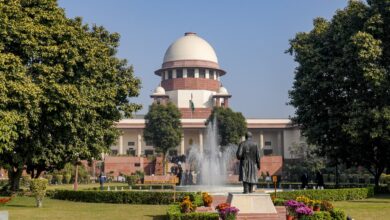
From Toothless Tiger to Leashed Dog: How the Election Commission Lost Its Integrity, Transparency and Authority in the Twelve Years of the Modi Era
Nirvachan Sadan used to growl at governments. For twelve years it has learned to sit, stay, and wag on command. The paper trail is public. The convictions are not. The questions will not go away.

There was a time when the Election Commission of India could make a sitting Prime Minister wait. T.N. Seshan did not need a press conference to prove he had a spine. The institution was designed as a referee, not a palace clerk.
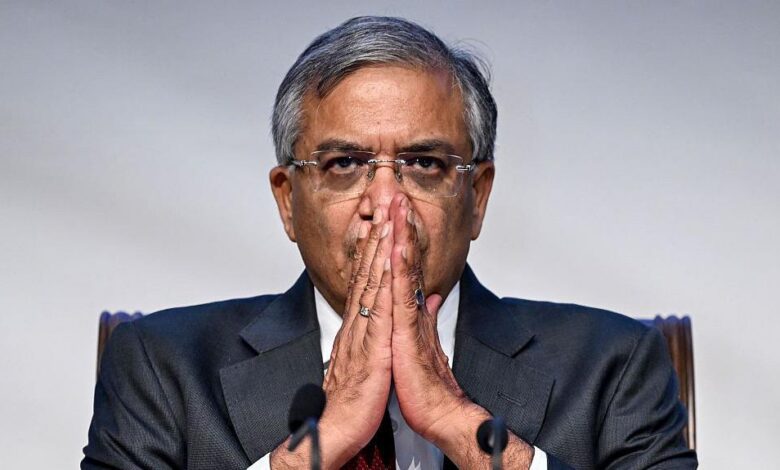
Twelve years into the Narendra Modi period, that referee looks less like a constitutional tiger and more like a dog on a short government leash: selected by a panel the executive dominates, insulated by a 2023 statute that locked the Chief Justice of India out of the appointment room, slow to publish the numbers that would let citizens audit an election, and now, if The Indian Express is to be believed, so internally fractured that two of its three Commissioners have had to write to the Cabinet Secretary about the software that decides who remains a voter.
This is not poetry. It is a charge-sheet of documented institutional capture, opacity, and self-inflicted credibility collapse. It is not a court verdict. No court has convicted the Election Commission, any Chief Election Commissioner, or the Prime Minister of “stealing an election.” Allegations remain allegations. The record below is what the public domain actually contains — and it is ugly enough without embroidery.
I. The latest wound: when the Commission starts objecting to itself
In September 2026, Ritika Chopra’s investigation for The Indian Express reported that Election Commissioners Sukhbir Singh Sandhu and Vivek Joshi had formally objected at least fourteen times in ten months — four times on a single day — to decisions issued in the Commission’s name that they said were taken without their knowledge. The notes were copied to Chief Election Commissioner Gyanesh Kumar.
The objections were not about the colour of the curtains at Nirvachan Sadan. They went to the spine of adult franchise:
- who is allowed to become a new voter;
- who is deleted and who is restored;
- who files appeals in the Commission’s name;
- who holds the keys to ERONet / ECINet, the digital vault of the roll.
The national Special Intensive Revision (SIR) — begun in Bihar in June 2025 — had by then struck more than 13 crore names off draft rolls across 30 States and Union Territories. The Commission’s public story is hygiene: dead voters, migrants, duplicates, the first intensive clean-up in two decades. The opposition’s story is “vote chori.” The new fact is more damaging than either slogan: the majority of the three-member Commission itself recorded that it was being kept in the dark.
Sandhu called a change to Form 6 — the statutory application every first-time voter must fill — “unauthorised and illegal” and demanded it be pulled down immediately. Joshi had already warned in May that Form 6 cannot be rewritten by an SIR instruction; only the Union government can amend the Registration of Electors Rules, 1960. The portal still asked whether the applicant or their parents or grandparents “exist” in the “electoral roll of last SIR,” and applicants could not proceed without answering.
Joshi flagged “gradual centralisation of the electoral roll database.” Sandhu recorded that state officers no longer had “proper and complete access” to ERONet, and that Director General (IT) Seema Khanna had no legal authority to restrict statutory Electoral Registration Officers. In Goa, after a Supreme Court direction, EROs found 97 voters eligible on documents; the software had no rollback button; eight emails in seven days to headquarters went unanswered; the 97 stayed off the final roll. In West Bengal, Sandhu asked who had authorised 16.10 lakh appeals seeking deletion of voters whom judicial officers had included — appeals filed, he recorded, without informing him, Joshi, or the State CEO.
Then the two Commissioners did something almost unheard of in this republic: they wrote separately to the Cabinet Secretary against a work-allocation change that, they said, stripped a layer of oversight from the IT backbone of the rolls. Only after that, on 9 September 2026, did the three men hold their first full meeting in four months.
The Hindu’s editorial title for this episode was not subtle: “Deep rot.” It noted that of appeals against deletion decided so far in Bengal, over nine in ten had restored the elector — which is another way of saying the machine ate first and asked questions later.
The Commission’s later line was that the notes were “operational queries” at the draft stage and that SIR decisions were unanimous. Fine. Put the fourteen notes on the website. Democracy is not allergic to sunlight. It is allergic to a referee who says “trust me” while two of his own colleagues are writing “we were not told.”
II. How you leash a watchdog: rewrite the appointment, keep the removal almost impossible
The Constitution never gave the executive a blank cheque over the Commission. Article 324 left the method of appointment to a law Parliament never bothered to write for seventy-three years. In March 2023, a five-judge Bench in Anoop Baranwal v. Union of India filled that vacuum: until Parliament legislated, the CEC and ECs would be chosen by a committee of the Prime Minister, the Leader of the Opposition, and the Chief Justice of India. The point was obvious. A referee chosen only by the batting side is not a referee.
Parliament then did what a government with a majority does when a court tries to insert a judge into the room. The Chief Election Commissioner and Other Election Commissioners (Appointment, Conditions of Service and Term of Office) Act, 2023 kept the Prime Minister, kept the Leader of the Opposition, and replaced the Chief Justice with a Union Cabinet Minister nominated by the Prime Minister. Two votes of three now sit with the government of the day. The Search Committee is headed by the Law Minister. Section 8 even lets the Selection Committee look outside the Search Committee’s panel of five. Adhir Ranjan Chowdhury recorded dissent when Sandhu and Gyanesh Kumar were appointed in March 2024. Rahul Gandhi recorded dissent when Kumar was made CEC and Joshi was appointed in February 2025.
On 23 September 2026 — the same week the internal-objection story exploded — a two-judge Supreme Court Bench split on how to hear the challenge to that Act and sent it to the Chief Justice for a Constitution Bench. The statute remains in force. The appointments made under it remain in force. The “temporary” judicial safeguard is dead. The leash is statutory.
Removal tells the other half of the joke. The CEC can still be removed only like a Supreme Court judge — proved misbehaviour or incapacity, parliamentary process, special majority. Other Election Commissioners can be removed on the recommendation of the CEC. So the one member most insulated from Parliament is also the one who can, in law, unseat the other two. Equality of Commissioners is a brochure. Hierarchy is the statute.
In March 2026 the Opposition filed the first removal notice in Indian history against a sitting CEC, signed by 130 Lok Sabha MPs and 63 Rajya Sabha MPs, alleging partisan conduct and mass disenfranchisement through SIR. A notice is not a conviction. It is a political instrument. It is also a measure of how completely the old consensus — that the Commission is above the fight — has collapsed.
III. The twelve-year catalogue: allegations, controversies, and the things this institution will not explain
What follows is not a finding of guilt. It is the public inventory of what has been put on the Election Commission since 2014. A serious democracy would have answered each item with data, not sermons.
1. The Model Code that bites everyone except the tallest man in the room
2019. Election Commissioner Ashok Lavasa dissented on multiple Model Code complaints against Prime Minister Modi and then BJP president Amit Shah. The Commission issued clean chits by 2–1. Lavasa wrote that he would stay away from meetings if minority decisions were not recorded. After the election, the Income Tax Department opened cases against his wife, son and sister; the family was later cleared. Lavasa resigned in August 2020 and went to the Asian Development Bank. He remarked that honesty comes at a price. No court has held that the tax notices were retaliation. No serious person thinks the sequence looks accidental.
2024. CEC Rajiv Kumar later said the Commission had “deliberately” decided not to “touch” the top two leaders of the BJP and the Congress — Modi and Amit Shah on one side, Rahul Gandhi and Priyanka Gandhi Vadra on the other. That is not neutrality. That is a privately negotiated ceasefire among celebrities while the Code is waved at the small fry. The Banswara speech and other communal-dog-whistle complaints sat in that freeze. The Commission’s own explanation is the confession.
NaMo TV in 2019 — a channel that appeared during the campaign to broadcast the Prime Minister — was another MCC test the Commission treated as if it were a cable-guide dispute, not an official-media problem.
2. Electoral bonds: the Commission that warned, then went quiet
The electoral-bond scheme was a Finance Act 2017 creature, not an ECI invention. That does not wash the Commission clean.
Before the scheme took flight, the Commission warned the Law Ministry that bonds could hide illegal foreign donations and push more black money through shell companies. Years later, when the Supreme Court was asked to halt fresh bonds before Assembly elections, the same institution opposed the stay. Between 2017–18 and 2022–23, bonds worth about ₹12,008 crore were sold; the BJP received roughly 55 per cent, or ₹6,564 crore, by the figures then cited. On 15 February 2024 the Supreme Court struck the scheme down as unconstitutional. SBI’s delay in producing data, and the Commission’s earlier reversal from watchdog to bystander, is part of the same story of a referee who learned which way the wind paid.
No court has convicted the Commission of running a “scam.” The Court did convict the scheme — as a violation of the voter’s right to information.
3. EVM and VVPAT: the audit that was reduced to a ritual
VVPATs exist because the Supreme Court, in 2013, would not accept an unauditable black box. The Commission then made the audit statistically meaningless: five randomly chosen machines per Assembly constituency, a sample size it has never properly justified against the population it claims to represent. ADR and others asked for machine-readable, public reconciliation. The Commission’s posture has been: the machine is sacred, the citizen is a nuisance, and anyone who wants more slips counted is a conspiracy theorist.
An RTI after 2019 found VVPAT slips discarded in four months; rules required they be kept for a year. That is not “hacking.” It is contempt for the paper trail the Court forced on the system.
4. 2024 Lok Sabha: delayed turnout, missing Form 17C, mismatched totals
Phase-1 final turnout arrived eleven days late and several percentage points above the polling-day estimate. ADR later said votes counted did not match votes polled in 538 of 543 constituencies: about 5.55 lakh fewer counted than polled in 362 seats, about 35,000 extra counted in 176 seats — a gross discrepancy it put at 5,89,691 votes. The Commission says Form 17C is given to polling agents, the turnout app is only a trend, and results are declared on statutory forms. It has refused to upload Form 17C Part I for the public within 48 hours, telling the Supreme Court that “indiscriminate disclosure” would cause “chaos.”
Chaos is what you call it when the citizen wants the same number the candidate already holds. A Commission that trusted itself would publish the scans before lunch.
5. The empty chair before a general election
9 March 2024. Election Commissioner Arun Goel resigned days before the Lok Sabha schedule, tenure running to 2027. Anup Chandra Pandey had already retired. The Commission was left with one man, CEC Rajiv Kumar, on the eve of the largest election on earth. Officially: personal reasons. Unofficially: differences, including over the Shiv Sena symbol order that awarded the name and bow-and-arrow to the Eknath Shinde faction on a legislative-majority test. Two unusual mid-term exits in one era — Lavasa and Goel — is not a staffing glitch. It is a pattern of the institution shedding the people who would not stay silent.
Gyanesh Kumar and Sukhbir Singh Sandhu were then appointed under the new Act. The Opposition’s dissent notes are on the file. The government’s two-one majority on the selection panel is also on the file.
6. “Vote chori,” Mahadevapura, Haryana, Maharashtra
From August 2025, Leader of the Opposition Rahul Gandhi alleged systematic roll fraud — the phrase “vote chori” — beginning with Mahadevapura in Karnataka (duplicate entries, invalid addresses, more than a lakh suspect entries alleged in one Assembly segment feeding a Lok Sabha seat), then Madhya Pradesh, Maharashtra, Haryana (he alleged about 25 lakh suspect entries). The Karnataka CEO asked for a signed declaration and names. The Commission demanded affidavits and treated the attack as slander. No criminal court has convicted the Commission of stuffing or deleting a single booth. The correct journalistic sentence is: the Opposition has put a fraud allegation on the table; the referee has answered with procedure and outrage, not a booth-level, machine-readable dump that would kill the allegation in a week.
7. SIR: the great deletion machine
Bihar, June–September 2025. SIR cut the roll from 7.89 crore to about 7.42 crore — roughly 6 per cent, with about 65–68.5 lakh names off the draft and further deletions at the final stage. The Supreme Court had to order the Commission to publish the list of the excluded with reasons. Sources later told The Indian Express that nearly 99 per cent of Bihar deletions were death, migration or duplication — which, if true, makes the citizenship-inquisition rhetoric look like a political trailer attached to a clerical job.
On 27 May 2026, a Supreme Court Bench headed by CJI Surya Kant upheld the constitutional validity of the Bihar SIR as within Article 324 and Section 21(3) of the 1950 Act, while directing citizenship-doubt cases to the competent authority and leaving a door open for those wrongly marked absent. Power was upheld. Manner remains the scandal.
West Bengal. About 60 lakh electors flagged for software “logical discrepancies”; about 27 lakh deleted after the judicial-officer stage. The State voted with the vast bulk of 38 lakh tribunal appeals still pending. In 49 of 294 seats, deletions exceeded the victory margin (26 BJP, 21 TMC on that subset). The Commission then showed up as a litigant against inclusions it had not, according to Sandhu, authorised from the full Commission.
Delhi. Draft SIR dropped about 47 lakh of 1.45 crore electors — roughly one in three — off the draft, with tens of lakhs more still in a claims window. The Supreme Court has noticed “mechanical,” likely machine-generated notices and told the Commission to refine the tool. When a process can flag a Chief Minister and an opposition former Chief Minister in the same software sweep, the least it owes the unknown slum voter is a human being who reads the file.
One compilation of early SIR phases across thirteen States/UTs put cumulative deletions in the region of 5 crore-plus against an electorate near 60 crore. The Indian Express national figure of 13 crore off draft rolls in 30 States/UTs is the later, larger snapshot. Draft is not final. Appeal exists. That sentence is the Commission’s favourite lullaby. A democracy that deletes first and restores later is a democracy that makes the poor run behind a portal.
8. Opacity as policy
Repeated refusals: public Form 17C scans; timely absolute turnout numbers; machine-readable electoral rolls in bulk for civil-society audit; a full account of who filed the Bengal “delete-the-included” appeals; a public audit certifying that only statutory EROs can write to the database. The Commission’s house style is to treat the Right to Information as an inconvenience and the citizen as a litigant-in-waiting.
IV. What was changed in law and practice — the “immunity” that is really impunity of process
Call the list by its right name. These are not all “scams.” They are the rule-changes and practice-changes that made the Commission harder to question and easier to staff with the executive’s men.
- The 2023 Act — CJI out, Cabinet Minister in; Search Committee under the Law Minister; power to pick outside the shortlist; government two-one on the selection panel.
- Retention of unequal removal — CEC like a Supreme Court judge; other ECs on the CEC’s recommendation.
- Salary and status restated by statute (Supreme Court judge equivalence in the enacted text), while independence of appointment was diluted.
- SIR as a mass device under Section 21(3) — a special-revision power used at national scale, with software “logical discrepancies” doing the first cut, and statutory Form 6 bent toward SIR ancestry questions despite two Commissioners calling it illegal.
- Centralisation of ERONet/ECINet access — the old defence (“the SDM on the ground is the statutory king of the roll”) colliding with Delhi IT credentials.
- Refusal to generalise Form 17C publication — a practice choice that keeps the only booth-level absolute count inside the candidate’s file and off the national website.
- VVPAT sample frozen at five per constituency — a practice that converts a Court-mandated audit into a ceremony.
- MCC enforcement doctrine of 2024 — “we don’t touch the top two on each side” — a custom, not a section, and more corrosive than a section.
There is no gazette notification titled “Immunity for the Election Commission to Rig Polls.” Anyone who prints that sentence as fact is lying. What exists is worse in a quieter way: a referee appointed by the players, protected by a near-impossible removal process, armed with a deletion software the majority of its own bench has called unauthorised in parts, and trained to answer every audit request with “chaos.”
V. The taunt the institution has earned
For ten years the line from Nirvachan Sadan has been the same: India’s elections are the gold standard; EVMs are inviolable; rolls are clean; critics are sore losers; the Commission is independent because the Constitution says so.
Then two Commissioners appointed by the same government, under the same Act, had to tell the Cabinet Secretary that the IT keys were being moved without them.
Then Form 6, a creature of the 1960 Rules, grew a question no rule had authorised.
Then 97 Goans with papers and an ERO order still could not enter a database.
Then Bengal’s Commission-as-litigant filed a mountain of deletion appeals the other two members say they never approved.
Then the Supreme Court, even while upholding SIR’s power, had to babysit the Commission into publishing deletion lists, accepting Aadhaar as a twelfth document, and noticing mechanical notices in Delhi.
A tiger that needs a judge to make it publish a list of the people it struck off is not a tiger. It is an animal that has been fed from the same hand for twelve years and has forgotten the difference between a whip and a statute.
The BJP will say the Opposition cannot count, that SIR only buried ghosts, that every losing party since 1989 has cried EVM. Some of that is true. Losing parties do cry. Ghosts do sit on rolls. None of that explains why a constitutional majority inside the Commission is writing “unauthorised and illegal” on its own files. None of that explains why the appointment law treated the Chief Justice as a problem to be drafted out. None of that explains why Form 17C is a state secret for the public and a routine carbon copy for the polling agent.
Integrity is not a press note. Transparency is not a voter-turnout app with a disclaimer. Authority is not the power to delete thirteen crore draft entries and then demand gratitude for the restorations.
VI. What must happen now — and what “faster investigation” actually means
Allegations of “vote theft,” “mass disenfranchisement,” and “treason” have been thrown at this Commission in Parliament, on the street, and in impeachment notices. Those words are political weapons until a competent forum tests them.
The demand that follows is not a lynch-mob. It is the minimum a republic owes itself.
- Place every one of the fourteen internal notes, and the Cabinet Secretary letters, on the ECI website within a week, with the Commission’s written reply beside each.
- Upload searchable scans of Form 17C Part I for every polling station in the 2024 Lok Sabha election and every SIR-period Assembly election, and do it as a standing rule within 48 hours of close of poll.
- Independent forensic and legal audit of ERONet/ECINet — who has write-access, since when, by what legal instrument — by a team the Supreme Court or a Constitution Bench can trust, not by the same DG (IT) whose authority two Commissioners have questioned.
- Restore statutory Form 6 to the 1960 Rules text until the Union government amends the Rules in the open.
- Time-bound disposal of pending SIR appeals, especially the 38-lakh Bengal pile, with a public dashboard of restore-versus-confirm rates.
- Constitution Bench disposal of the 2023 appointment law on a clock, not on the calendar of convenience. If the law is valid, say so. If it is a legislative override of Anoop Baranwal’s purpose, strike the override.
- Where specific criminal complaints already name officials, booths, or software events — Mahadevapura and the rest — the police and central agencies must stop treating them as press conferences. Investigate. Close with a reasoned closure report, or charge. Speed is not vendetta. Delay is the cover.
- Parliament should debate a true equality amendment: same appointment insulation and same removal insulation for all three Commissioners, and a selection panel that is not two-thirds executive.
Enforcement agencies that can raid a dissenter’s family in weeks and take years to finish a booth-level fraud complaint are not neutral. They are a calendar in someone else’s pocket. If the allegations against the Commission are false, a fast, public, document-heavy inquiry will bury them. If they are true, slowness is complicity.
DISCLAIMER
This is an investigative opinion based on published reporting, court orders, statutory text, and statements of public officials and political parties.
- Allegations remain allegations until proved in a competent court or a legally empowered inquiry.
- No court of law has convicted the Election Commission of India, Chief Election Commissioner Gyanesh Kumar, former CECs, Election Commissioners Sukhbir Singh Sandhu or Vivek Joshi, Prime Minister Narendra Modi, or the Bharatiya Janata Party of electoral fraud, “vote theft,” or a criminal “scam” in the conduct of elections.
- The Supreme Court of India, on 27 May 2026, upheld the constitutional validity of the Bihar Special Intensive Revision while issuing directions on process. That judgment is not a clean chit for every deletion in every State. It is also not a finding of rigging.
- The 15 February 2024 Supreme Court judgment struck down the electoral bond scheme as unconstitutional. That is a judgment on a funding statute, not a criminal conviction of the Election Commission.
- Income-tax proceedings relating to the family of former Election Commissioner Ashok Lavasa did not result in a conviction establishing that dissent inside the Commission was punished by the State.
- Removal notices, Opposition press conferences, and phrases such as “vote chori” and “treason” are political charges, not judicial findings.
- Figures on draft deletions (including “13 crore” and State-wise SIR counts) are draft-or-process figures from news investigations and official disclosures; draft is not the same as a final, unappealable striking-off of a citizen.
Demand, repeated: tightened, time-bound investigation of every specific, particularised complaint of roll fraud or software override; reasoned public closure or prosecution; and a faster constitutional adjudication of the 2023 appointment law. A referee that cannot be audited is not independent. It is only unaccountable.
The tiger was not shot. It was put on a leash, taught to heel, and told that the growl was “chaos.” The voter is still waiting for the bark.