The Great Indian Rankings Circus: Twelve Years of Speeches, Scoreboards, and a Country That Still Cannot Feed, Educate or Breathe Like It Claims
An investigative opinion on what the last twelve years of global indexes actually recorded — not what the podium said they recorded.

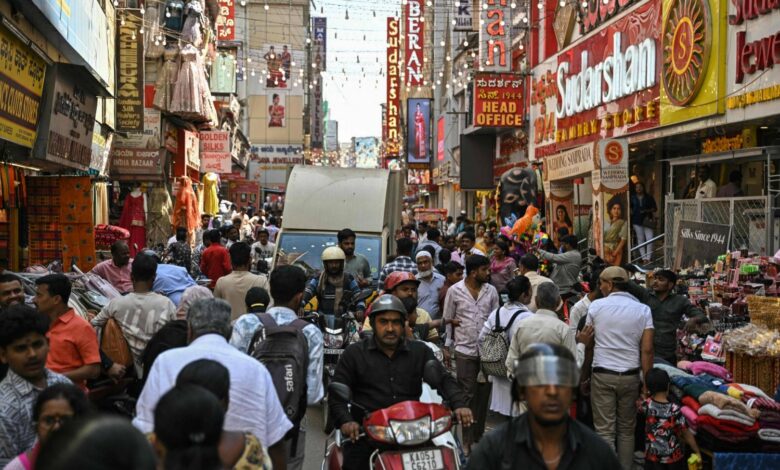
For twelve years India has been sold to itself as a civilisation on the launch pad: fastest growth, digital superpower, viswaguru, fifth-largest economy, soon third, soon first, soon unstoppable. The advertisements are loud. The ledgers are not. When the ledgers arrive from New York, Geneva, Paris, Dublin, New Haven or Oxford, the official reflex is identical and now boring: methodology flawed, sample small, Western bias, ignore. Then the next quarter’s GDP print is waved like a flag over a slum.
That reflex is the story. Not one index. The pattern.
A serious country does not treat UNDP as gospel when the rank inches up three places and as a conspiracy when child wasting stays among the worst on Earth. A serious country does not celebrate WIPO when innovation hits 38th and call Reporters Without Borders a foreign plot when the press rank falls into the same neighbourhood as states that jail reporters for a living. The last twelve years are not a mystery of “compromised rankings.” They are a record of a dual country: a thin, globally competitive layer that photographs well, and a vast human base that still fails the tests that cannot be photoshopped — years of schooling actually completed, the bodies of children, the air in cities, the independence of a newsroom, the answer a citizen gives when asked where their life sits on a ladder from 0 to 10.
The numbers below are not slogans. They are published ranks and scores from the institutions that compile them. Methodologies change; sample sizes are imperfect; some indexes are perception-heavy. None of that erases the direction of travel.
1. The only scoreboard the government likes: innovation climbed. Everything that touches a body, a lung, or a reporter did not.
Start with the exception, because honesty requires it. The Global Innovation Index is the exhibit the official machine will throw at this article before finishing the second paragraph.
India was 76th in 2014, slumped to 81st in 2015, then climbed with real persistence: 66th (2016), 60th (2017), 57th (2018), 52nd (2019), 48th (2020), 46th (2021), 40th (2022 and 2023), 39th (2024), 38th of 139 in 2025. First among lower-middle-income economies. First in its region. ICT services exports often rank 1st in the world. Outputs (32nd) beat inputs (52nd). That is not a rounding error. Software, scale, English, UPI-style rails, venture money and a noisy startup market produced a result the rest of the social indexes refuse to imitate.
Now look at what twelve years of “fastest-growing major economy” bought the average Indian on the indexes that measure people, not pitch decks.
Human Development Index (UNDP). India is 130th of 193 in the 2025 report, score 0.685, still medium human development, still short of the 0.700 line that defines “high.” Life expectancy 72. Mean years of schooling 6.88. GNI per capita about $9,047 in 2021 PPP. Inequality knocks 30.7 percent off the HDI — one of the uglier losses in the region. The score has risen since 1990. The rank has loitered in the same depressing postcode for a decade. Growth without comparable gains in completed schooling and distributed health is not a miracle. It is a factory that pays the shareholders and leaves the shop floor in the medium category.
Global Hunger Index. “Serious” in 2016 (score 29.3). “Serious” in 2024 (27.3, rank 105/127). “Serious” in 2025 (25.8, rank 102/123). Child wasting 18.7 percent — among the worst readings in the entire report. Stunting about 33 percent. Undernourishment about 12 percent. Under-five mortality 2.8 percent. The long arc from 38.1 in 2000 is improvement. Twelve years of food-security theatre, free grain, Poshan branding and ministerial rage at Dublin and Bonn have not lifted India out of the band it has occupied since before this political era began. Sri Lanka, Nepal and Bangladesh sit in “moderate.” India does not.
World Happiness Report. 117th around 2014 (score 4.565). Then a collapse: 140th (2018), 144th (2019), 139th (2020), 136th (2021), 126th (2022–23), 118th (2025), 116th of 147 in 2026 with a score of about 4.536. Celebrate the two-place “rise” if that is the quality of arithmetic the republic now prefers. The score is still below 2014. Nepal and Pakistan still rank higher. Social support — “someone to count on” — remains the rotten plank. GDP went up. The ladder score did not follow it like a loyal dog.
Environmental Performance Index (Yale/Columbia). 141st in 2016. 177th in 2018. 168th in 2020. Last — 180 of 180 — in 2022. 176 of 180 in 2024. 176 of 177 in 2026, score 22.46, ahead of Laos, behind almost the entire planet on the thing people inhale. Environmental health around 174th. Ecosystem vitality around 171st. The ministry’s 2022 reply called the index “surmises and unscientific methods.” Delhi’s winter air did not issue a clarification.
World Press Freedom Index (RSF). Roughly 140th in 2014. 136 (2015), 133 (2016), 136 (2017), 138 (2018), 140 (2019), 142 (2020 and 2021), 150 (2022), 161 (2023), 159 (2024), 151 (2025), 157 of 180 in 2026, score 31.96. Political indicator 160. Security 158. Neighbours Nepal (87), Sri Lanka (134), Bhutan (150), Bangladesh (152) and Pakistan (153) sit above India. The official line is sample size and bias. The twelve-year line is down.
Freedom House. India was rated Free with a score near 77 in 2014. It is Partly Free at 62/100 in 2026 (political rights 31/40, civil liberties 31/60), after 63 the year before. That is not a rounding error either. It is a category change.
Corruption Perceptions Index (Transparency International). Score 38 and rank 84 in 2014. Peak score 41 in 2018–19. Then a drift: 40, 40, 40, 39, 38, 39 in 2025, rank 91 of 182. A decade of anti-corruption branding, and the needle moved one point. One.
Global Gender Gap (WEF). 131st of 148 in 2025, 131st again in 2026, parity around 64 percent. Economic participation still among the worst on the planet — WEF has put India in the bottom handful on that sub-index, in the company of places the official mind would never accept as peers. Educational enrolment improved. Power and pay did not follow the enrolment certificates.
This is the twelve-year split, stated without poetry: the indexes that count firms, code and market size improved. The indexes that count children, air, women in the workforce, journalists, and a citizen’s own life-evaluation did not. Calling that “Western conspiracy” is not analysis. It is a tantrum with a press release.
2. Human development: a country that cannot cross 0.700 and calls the delay destiny
HDI is the least theatrical index in this pile. No Gallup mood question. No NGO questionnaire about a newsroom. Three ingredients: live long, learn, earn enough.
India’s 2023 ingredients, published in 2025: 72 years of life, expected schooling near 13 years, mean schooling 6.88 years, income still a lower-middle-country income. Rank 130. Category medium. The UNDP line for “high” is 0.700. India is at 0.685 and wants applause for the approach.
Mean years of schooling at 6.88 after a decade of “New India” is the sentence that should end the speech. It means the adult stock of education is still a primary-school-plus country wearing a software-export suit. Expected years of schooling can be inflated by children sitting in classrooms. Mean years record what the living adult actually finished. That number moves like a glacier because governments prefer inaugurations to the unglamorous work of making a government school teach.
Inequality’s 30.7 percent haircut is the other sentence. A national average that dies by nearly a third when distribution is admitted is not a national achievement. It is a statistical confession that Kerala and a handful of urban corridors are carrying a poster for districts that still fail basic health and learning. Sri Lanka remains well above India on HDI. Bangladesh is tied at the same 0.685. The fifth-largest economy is sharing a human-development landing with a neighbour it is used to lecturing.
The official reply will be: 135 million people left multidimensional poverty between 2015–16 and 2019–21; HDI is up more than 50 percent since 1990; life expectancy recovered after Covid. Those statements can be true and still leave the rank at 130. Poverty lines can be crossed while children remain stunted. Life expectancy can rise while the air shortens the healthy years inside that life. A country that needs a press note to explain why it is still “medium” after twelve years of chest-thumping has already answered the question.
3. Hunger: the index they hate because the wasting number will not die
No index has been abused with more ministerial vocabulary than the Global Hunger Index. “Erroneous.” “Malafide.” “Not hunger.” “Opinion poll of 3,000.” “Child indicators cannot represent the population.” Parliament has heard the sermon. The wasting rate has not.
GHI 2025: 102 of 123, score 25.8, category serious. Wasting 18.7 percent — second highest in that report. Stunting 32.9 percent. The publishers themselves warn that ranks should not be naively compared across editions because the country set changes. Fine. Compare the score band. India was serious in 2016. It is serious in 2025. China, Brazil and a long list of countries with less mythology about feeding the world sit in “low.” Bangladesh, Nepal and Sri Lanka sit in “moderate.” India remains where the brochure cannot reach.
The government’s technical objections are not all invented. Three of four GHI components are child outcomes. Stunting and wasting are also about infection, sanitation, mothers’ bodies, care practices and diet quality, not only missing sacks of wheat. The FAO undernourishment estimate has been fought over for years. A person who says “GHI is a perfect thermometer of famine” is as sloppy as a minister who says “there is no nutrition problem.”
Here is the part the press note keeps stepping around: the National Family Health Survey is an Indian government survey. NFHS-5 already showed stunting at 35.5 percent and wasting at 18.7 percent among children under five. The government now cites NFHS-6 improvements — stunting reported down to 29.3 percent, underweight to 29.2 percent in ministerial replies. Even if those newer figures hold, “improved from catastrophic to still-awful” is not a rebuttal. It is an admission dressed as a victory.
A state that can run the world’s largest foodgrain distribution machinery and still post wasting near the global floor is not being slandered by Ireland. It is being described. Calories in a ration shop and a child whose upper arm says acute malnutrition can exist in the same week. That is not a foreign plot. That is a public-health failure with a 1.4-billion denominator.
The taunt writes itself. For twelve years the argument has been with the compilers. The argument was supposed to be with the wasting.
4. Happiness: the ladder that refused to climb with the GDP slide
The World Happiness Report is the easiest index to mock, which is why people who cannot face NFHS prefer to mock it. It is a Cantril ladder. Roughly a thousand to three thousand adults per country, pooled over three years, asked to place their life on 0 to 10. Subjective. Culturally noisy. Sample not a census.
It is also consistent. India’s score went from 4.565 around 2014 to a trough of 3.573 in 2019, then crawled back to 4.536 in 2026. Rank: 117-ish to 144 to 116. The “comeback” still leaves the score under the 2014 mark. Finland sits near 7.8 for a ninth year. India sits in the 4s and wants the neighbourhood to clap because Pakistan is only a few rungs away.
The six explanatory variables — income, social support, healthy life expectancy, freedom to choose, generosity, corruption perception — are not the ranking. They are the autopsy. India’s 2026 autopsy is grim on the human stuff: social support around 123rd. That is the index saying a large share of respondents cannot name someone to count on in trouble. A civilisation that lectures the world on family values ranking near the floor on “someone to count on” is not a paradox. It is a society whose informal safety net is tearing while the formal one never arrived.
Growth without jobs that feel secure, cities that feel breathable, hospitals that function before a catastrophe, and institutions that feel fair, does not raise a ladder score. It raises a per-capita spreadsheet. Twelve years of mistaking the spreadsheet for the ladder is why 116th can coexist with “fastest-growing.” The report is not required to be impressed by quarterly GDP. The respondent was not asked about quarterly GDP. The respondent was asked about a life.
5. Press freedom: from 140 to 157, with a pit stop at 161, and a government that calls the mirror biased
RSF is not a laboratory. It uses experts, five pillars, and language that official India has every right to find political. The organisation’s own India page is openly hostile to the ruling party. Discount that. Discount the sample. Discount the funding arguments that get recycled every May.
Then explain the trajectory.
2014: ~140.
2016: 133.
2019: 140.
2021: 142.
2022: 150.
2023: 161.
2024: 159.
2025: 151.
2026: 157, score 31.96, political pillar 160, legal 141, security 158. Behind Pakistan. Behind Bangladesh. Behind Palestine in the 2026 table. In the “very serious” band.
A rank can jitter when the method changes, as it did around 2022. A decade in the bottom quarter of 180 countries is not a jitter. RSF’s bill of particulars is specific enough to check without worshipping RSF: violence and online targeting of journalists; ownership concentrated in a few politically connected houses; criminal defamation and national-security statutes used as process-as-punishment; digital rules that make take-downs easy and defiance expensive; a public broadcaster that remains a state instrument.
The government’s counter — thousands of outlets, loud TV debates, opposition newspapers still printing — is also specific, and also incomplete. Volume is not independence. A market can be noisy and still be captured. The test is not whether a minister can be insulted on a panel for forty minutes. The test is whether a reporter can follow money, riots, defence, or the business friends of power without inviting a raid, a tax notice, a case, or a coordinated digital mob. RSF says that test is being failed. Indian journalists who have lived the raid calendar say the same thing in plainer language.
Calling every one of them a foreign agent is not a media policy. It is an admission that the rank cannot be argued on evidence.
6. Air, water, trees: second from the bottom, and the press note that blamed the thermometer
Yale’s EPI is the index that should end the “development versus environment” shrug. 2022: 180/180. 2024: 176/180. 2026: 176/177, score 22.46. Environmental health 174. Air quality has been in the global cellar for years. The 2026 report’s own line on India is not subtle: per-capita emissions still relatively low, but urban air and rising greenhouse gases are the development bargain as hundreds of millions climb onto modern energy.
The ministry’s 2022 blast — unfounded assumptions, extrapolated indicators, unscientific methods — is the same song sung at GHI and RSF. Some EPI weights can be debated. Projected emissions and certain biodiversity metrics are not satellite photographs of a child’s lungs. PM2.5 in north Indian winter is. Hospital casualty wards in November are. The Global Burden of Disease work on air-pollution mortality is not a Yale seminar game.
A republic that can build expressways at political speed and cannot keep its capital in the “good” AQI band for a winter is not a climate victim in this index. It is a governance result. Twelve years of pledges, missions, and “we are doing more than the West did at our income” have left India still keeping company with Laos on a 177-country list. That is not colonial mathematics. That is the air.
7. Freedom, gender, corruption: the indexes that measure power, not press conferences
Freedom House’s drop from Free / ~77 to Partly Free / 62 is the institutional rhyme of the press-freedom slide. Elections continue. The opposition contests. Courts still exist. The score is not claiming a one-party state. It is claiming a squeezing of civil liberties, pressure on minorities, and the use of public agencies against opponents — the slow conversion of a noisy democracy into a managed one. People who find Freedom House’s American origins disqualifying still have to explain why V-Dem, EIU and multiple Indian civil-liberties trackers spent the same decade pointing at the same bruises. Independent of whether one likes those houses, the direction across them is not random noise.
WEF’s gender gap at 131 is the economic rhyme. Girls are in school in larger numbers. Women are not in paid work in numbers that match a country this large and this loud about Nari Shakti. A 41 percent economic-participation parity score, among the worst on Earth, is not a Western insult to Indian womanhood. It is a labour-force fact wearing an index jacket. Reservations in legislatures announced for a later census is not a substitute for women being able to leave the house and return with a wage.
Transparency International’s CPI score stuck in the 38–41 prison since 2014 is the administrative rhyme. Digital payments reduced some petty leakage. They did not produce a clean public sector. Rank 91 with a score of 39 means the world’s favourite reform story still looks, to the business and expert surveys TI aggregates, like a country where the public office is not reliably a public trust. Twelve years after the last campaign was fought on the corpse of corruption, the score has the nerve to be almost the same.
8. The method of denial: attack the compiler, never the constituent
Watch the sequence. It has become a governing style.
- An index appears.
- If it flatters (GII, GDP size, digital transactions, startup count), it is proof of civilisational arrival.
- If it wounds (GHI, RSF, EPI, HDI rank, happiness, gender, CPI), it is methodology, sample, ideology, “they hate a rising India.”
- No rival dashboard of equal hardness is published and updated with the same aggression.
- The next inauguration proceeds.
This is not strategy. It is fragility.
Yes: GHI over-weights children and uses a contested undernourishment series. Yes: RSF and Freedom House are value-laden and sometimes politically written. Yes: happiness is a survey, not a blood test. Yes: EPI changed indicator counts between editions. A competent state would answer with better domestic data, released on time, independently audited, and aimed at the same wounds — wasting, learning poverty, PM2.5, attacks on journalists, women’s employment, court delays, police reform.
What India has offered instead, for twelve years, is a culture of rank management. Celebrate 38th. Rage at 157th. Hope the public cannot hold both numbers in its head.
The public can.
9. What the last twelve years actually say, if anyone still wants a diagnosis
Put the verified boards on one table and stop shopping.
| Domain | Around 2014 | Latest | Twelve-year verdict |
|---|---|---|---|
| Innovation (GII) | 76th | 38th (2025) | Real climb |
| Human development (HDI) | ~130th, medium | 130th, 0.685, still medium | Score up, status stuck |
| Hunger / child nutrition (GHI) | Serious | 102nd, 25.8, still serious; wasting 18.7% | Band unchanged |
| Happiness | ~117th, score 4.57 | 116th, score 4.54 | Rank cosmetic, score not better |
| Press freedom (RSF) | ~140th | 157th, score 32 | Material decline |
| Environment (EPI) | 141st (2016) | 176th of 177 | Collapse to the floor |
| Freedom House | Free, ~77 | Partly Free, 62 | Category loss |
| Corruption (CPI) | 38 / rank 84 | 39 / rank 91 | Flat |
| Gender gap (WEF) | structurally poor | 131st | Still among the worst on economic parity |
That table is the country. Not the parade.
India got better at being a services-and-scale economy. It got a digital stack the world studies. It reduced some extreme poverty by its own chosen lines. Life expectancy recovered. Innovation outputs punched above the research budget.
It did not get better enough at the things that decide whether a child grows, a woman earns, a reporter publishes, a lung lasts, and a citizen, asked in private, says their life is close to the life they wanted.
The “compromised rankings” line is the last refuge of a political class that built a communications machine more sophisticated than its delivery machine. Compromised, in this story, is not primarily the index. Compromised is the habit of treating 1.4 billion lives as a branding exercise: export the software, import the applause, and when a child-wasting percentage or a press-freedom rank interrupts the broadcast, shoot the scoreboard.
Twelve years is long enough to stop calling that a work in progress. It is a result. The indexes, for all their flaws, keep publishing it. The only remaining question is how many more editions will be denounced before someone in power decides the fight is with wasting, with PM2.5, with mean years of schooling, with the raid on a newsroom — and not with Paris, Dublin, New Haven and the UNDP.
Until then, the republic can keep ranking first in the index of explanations. The other lists are already in.