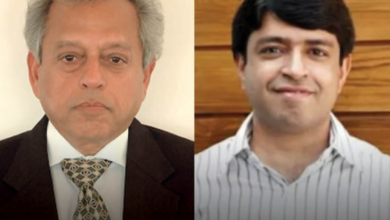
Eighteen years, Rs 537.50 crore, and a personal bill of Rs 40.36 lakh: Kabul Chawla and Sudhanshu Tripathi buy a receipt, not a clean chit
BPTP and the two directors who have run it since the foreign money arrived have paid Rs 4.84 crore to compound one FEMA clause. The Enforcement Directorate’s own words close nothing else.

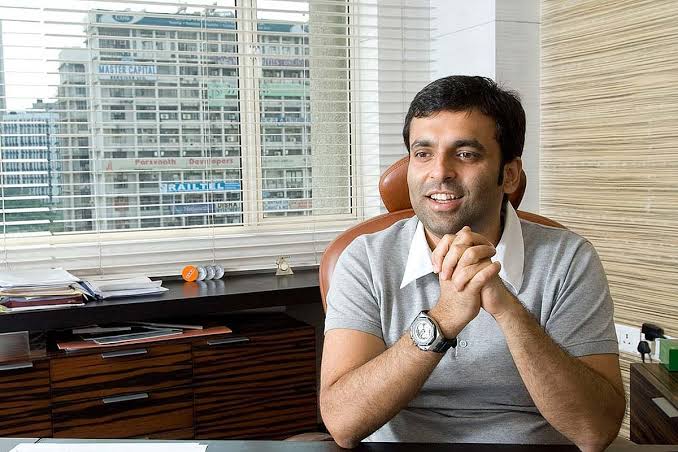
The cheque is real. The clean chit is not. On 17 September 2026 the Reserve Bank of India compounded one FEMA contravention against BPTP Limited and two of the men who have run it since the foreign money arrived. The price of that closure was Rs 4,84,35,000. The sum the Enforcement Directorate put under that contravention was Rs 5,37,50,00,000. Eighteen years after the shares were issued, the company and its directors paid less than one percent of the money involved and were handed a headline that sounded like the end of the matter. The Directorate’s own wording refuses them that comfort.
A receipt, not an acquittal
The Enforcement Directorate’s press release of 1 October 2026 is short on the case and long on procedure. It records that the RBI, exercising Section 15 of the Foreign Exchange Management Act, 1999, compounded contraventions by M/s BPTP Limited, formerly Business Park Town Planners Private Limited, and by its directors Kabul Chawla and Sudhanshu Tripathi. The orders are dated 17 September 2026. The company is to pay Rs 4,03,62,500. Each director is to pay Rs 40,36,250. The release then uses a word headline writers dropped: termination of investigation and further proceedings applies “only with respect to the contravention compounded.”
That contravention, and only that contravention, is stated in one bullet. BPTP issued shares to foreign investors with an optionality clause assuring an assured return and an exit price, contrary to Regulation 5(1) read with paragraph 2 of Schedule 1 to FEMA 20/2000-RB. The sum involved is written as 5,37,50,00,000. No Mauritius name appears in the October release. No date of receipt appears. No fixed deposit appears. The agency that searched the offices and the two residences in August 2025 has, thirteen months later, published a settlement note that closes one clause and leaves the rest of its own file unmentioned.
The sequence is not an imposition on surprised men. The release says the company and the directors filed the compounding applications. The RBI referred them. The ED issued a no-objection. The RBI then priced the breach. Section 15(2) does the rest: pay within time, and no further proceeding shall be initiated or continued on that contravention. This is a civil settlement of a civil breach. It is not a criminal discharge. It is not a finding that the agreements were lawful. It is a finding that the breach was eligible to be bought out, and that these three applicants bought it out.
The arithmetic they would rather not see printed
The same release reprints the RBI’s compounding matrix, apparently as public education. For residual non-reporting contraventions the grid is a fixed Rs 50,000 once per regulation, plus 0.50 to 0.75 percent of the amount under contravention. The top rate applies where the breach has run five years or more.
Run the figure they themselves printed.
Zero point seven five percent of Rs 537.50 crore is Rs 4,03,12,500. Add the fixed Rs 50,000. The result is Rs 4,03,62,500. That is the company’s order, to the rupee. Each director’s Rs 40,36,250 is one-tenth of the company figure, again to the rupee. Nobody at the RBI had to invent a special tariff for BPTP. The file was old enough to sit in the highest ordinary band, and the band was applied.
Put the total against the sum involved. Rs 4,84,35,000 is 0.90 percent of Rs 537.50 crore. Spread across the eighteen years from the August 2007 inflow to the September 2026 order, the company’s share is about Rs 22.4 lakh a year on a structure of Rs 537.50 crore. Kabul Chawla’s personal line on that order is Rs 40.36 lakh. Sudhanshu Tripathi’s is the same. For a whole-time director who has been on this board since 30 January 2006, that is the published price of his name on the compounding order.
Agency copy called it “about Rs 4.84 crore” and, in one URL, “484 crore.” The second figure is a slug error. The first is a rounding that hides how exact the bill was. There was nothing approximate about Rs 4,03,62,500.
What they signed, and what the RBI told them to delete
The money is not in dispute. The ED’s search release of 29 August 2025 says BPTP received Rs 322.5 crore from CPI India I Ltd, Port Louis, Mauritius, and Rs 215 crore from Harbour Victoria Investment Holding Ltd, Mauritius, under the automatic route in financial year 2007–08. Later reports of the complaint put the receipts on 21 August 2007 and 9 July 2008, at about USD 77.67 million and USD 49.84 million. The October compounding release rounds the same pool to Rs 537.50 crore and treats that pool as the sum involved in the optionality breach.
The structure is the offence that was compounded. Equity FDI under the 2000 regulation was permission to issue shares, not permission to promise the foreign holder a price on the way out. A put, a swap, an internal rate of return, an assured exit: the label moves, the economics do not. The investor was being offered a return that equity, on the rule then in force, was not allowed to guarantee. The ED’s August 2025 release says the investments “were structured with ‘put/swap’ options — clauses that provided the foreign investors with guaranteed returns upon exit.” The October release, more tightly, says shares were issued “with optionality clause assuring the foreign investors an assured return/exit price.”
Worse than the original clause is what the ED says happened after the regulator noticed. The 29 August 2025 release states that searches at BPTP’s offices and at the residences of Kabul Chawla and Sudhanshu Tripathi produced documents showing that the RBI had specifically directed the company to amend the shareholders’ agreement and remove the impermissible put option, and that BPTP failed to comply. That is not a technical miss in a filing window. On the agency’s account, the central bank pointed at the clause, and the clause stayed. Compounding in 2026 does not erase that sentence. It prices the years in which the sentence remained true.
A second allegation has travelled in news copy and is absent from the list of what was compounded. Reports of the complaint the ED filed before the Adjudicating Authority say about Rs 320 crore of the CPI money was first placed in fixed deposits and mutual funds rather than in projects, and date that complaint to December 2025. The October release does not include that use of funds in the contravention “for which compounding has been done.” Until an order says otherwise, the deposit point is an allegation in the investigation file, not a settled charge. The optionality point is no longer an allegation. It has a price.
The two names on the order
Kabul Chawla is not a late arrival to this company. MCA-linked records list him as managing director from 11 August 2003, the month BPTP was incorporated in Haryana, CIN U45201HR2003PLC082732. The foreign agreements of 2007 and 2008 were signed on his watch. The August 2025 searches were at his residence as well as the offices. The ED’s release of that week says he was found to be the beneficial owner of multiple foreign entities, one of which had been used to acquire a costly immovable property in New York, and that those entities, that property, and the source of funds for it were under examination. That examination is not the contravention compounded on 17 September 2026. The release that closed the optionality clause does not mention Manhattan. Paying Rs 40,36,250 does not answer the question the ED posed about the property.
Sudhanshu Tripathi has been whole-time director since 30 January 2006. The company’s own page says he joined in 2006, holds an LLB from the University of Delhi and a BA from the University of Lucknow, and handles business development, land acquisition and licensing. He was on the board before CPI’s money arrived and he is on it still. His residence was searched on 26–27 August 2025. His name is on the compounding order beside Chawla’s, for the same personal sum. A licensing and land director does not get to describe an assured-exit share issue as a back-office error that happened in another department. The RBI has now assigned him a personal figure. It is small. It is his.
Neither man has been convicted on this FEMA file. The Directorate’s own no-objection is an institutional statement that this contravention was not being treated as one of the non-compoundable classes: suspected money-laundering, terror financing, or a threat to sovereignty. Anyone writing that the October order “proves” laundering is writing past the document. Anyone writing that the order exonerates the two directors is doing the same. They applied. They were billed. The bill has their names on it.
What the cheque does not close
The ED said in August 2025 that multiple FIRs were already registered against BPTP and its directors at police stations in Delhi-NCR for non-completion of projects over a long period and for diversion of funds, and that those FIRs were also under examination. The October release does not say those FIRs have been withdrawn. It says the opposite structure of closure: only the compounded contravention.
A separate criminal file is already in the Supreme Court’s record. On 20 April 2026, in Writ Petition (Criminal) No. 150 of 2026, BPTP Limited and a director appeared as petitioners against the CBI. The order records that the CBI had registered FIR RC2192026E0001 at the Economic Offences-I police station, New Delhi, against the petitioners, in purported compliance with this Court’s directions of 23 September 2025 in SLP (Civil) No. 7649 of 2023 and later orders in that batch. The batch concerns alleged collusion between builders and financial institutions on subvention schemes. The project named in the order is Pedestal @70A, Sector 70-A, Gurugram. The Court recorded the developer’s claim that 180 units had been completed, and that the buyers who triggered inclusion were a small number. It did not quash the FIR on the face of that order. An FIR is an allegation. A compounding cheque under FEMA is not a discharge of an IPC and Prevention of Corruption investigation into a different scheme, in a different year, on a different project.
That is the strategic fact buried under the 1 October headline. BPTP and the two directors have paid to stop one civil proceeding about a 2007–08 share clause. They have not paid their way out of the FIRs the ED itself listed, the New York source-of-funds question the ED itself opened, or the CBI case the Supreme Court record shows they are already in court trying to narrow.
The homebuyer is in the agency’s sentence
The October note spends its second and third pages explaining that compounding aids ease of doing business. The August note spent a sentence on the people who dealt with this developer in rupees, not in Mauritius shares. The ED did not need a campaigner’s brief to write that police stations across Delhi-NCR had registered cases for projects not completed for a long period and for diversion of funds. Those cases remain allegations until a criminal court says otherwise. They are not a rumour. They are in the search release of the same agency that has just issued the no-objection.
The company, meanwhile, is not a shell that compounded and vanished. Its site still lists Tripathi as whole-time director. Registry-linked compilations put FY2026 revenue at about Rs 1,015.64 crore, down roughly 35 percent from the year before, with authorised capital above Rs 1,000 crore and paid-up capital of about Rs 234 crore. A developer of that size settling an eighteen-year foreign-exchange breach for Rs 4.84 crore is not a firm on its knees. It is a firm that has discovered the official tariff for this class of breach, and paid it.
The pinch
There is no need to invent a villainy the documents do not carry. The documents are enough.
They took Rs 537.50 crore from two Mauritius vehicles on the automatic route, on terms the regulator of that decade did not allow. When the RBI told them to strip the put out of the shareholders’ agreement, the ED says they did not. Eighteen years later the three parties on the compounding order have been told to pay Rs 4.84 crore, a figure that matches the top of the RBI’s ordinary grid and not a day of commercial pain. The personal exposure of the managing director who has sat there since incorporation, and of the whole-time director who joined the year before the money, is Rs 40.36 lakh each. The release that announces the payment is careful to close only what was compounded. The release that announced the searches is still sitting on the record, with the unanswered sentence about a New York property, the unanswered sentence about FIRs, and the unanswered fact of a CBI FIR the company has gone to the Supreme Court to fight.
That is not a settlement to be congratulated. It is a price list. BPTP, Kabul Chawla and Sudhanshu Tripathi have just shown what this particular contravention costs, and how much of the file a cheque of that size does not buy.