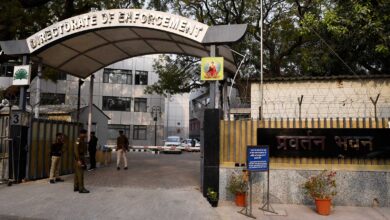
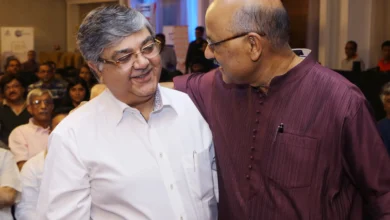
When ED Can Book Dabur Family In Mahadev Betting App Scam, Why Not ED Investigating Ankiti Bose?
The Mahadev investigation has followed money through betting panels, hawala channels, shell entities, overseas structures and a major corporate acquisition. So why should a reported Zilingo–EbixCash financial trail involving Ankiti Bose be treated as untouchable?


There is a question that the Enforcement Directorate cannot reasonably expect journalists to stop asking merely because the answer may be uncomfortable:
When an investigation into the Mahadev betting ecosystem can reach the chairman of Ebix, attach assets worth ₹940.77 crore and examine whether betting proceeds entered a major corporate acquisition, why has there been no publicly disclosed Mahadev-related investigation of Ankiti Bose despite a documented financial transaction between her former company and EbixCash?
This is not an allegation of guilt.
It is a question about investigative consistency.
And there is a very important factual correction before the rhetoric begins: the 2023 FIR naming Dabur chairman Mohit Burman and director Gaurav Burman was registered by Mumbai Police, not by the ED. The ED was separately investigating the Mahadev betting syndicate at the time. The Mumbai FIR named 32 persons and placed Mohit Burman at No. 16 and Gaurav Burman at No. 18. The Burman family categorically denied the allegations and called the FIR false and baseless.
That distinction matters.
But it does not weaken the question.
It makes it more precise.
Because the real issue is not: Why was somebody named in an FIR?
The real issue is:
Why does an enforcement investigation that is now following alleged betting proceeds into sophisticated corporate structures not publicly appear to have examined every material financial relationship touching the same corporate ecosystem?
And that question becomes particularly uncomfortable when the name that appears on the earlier side of the transaction is Ankiti Bose.
From startup darling to forensic controversy
Ankiti Bose was once one of India’s most prominent startup founders.
Zilingo, the Singapore-headquartered fashion-tech company she co-founded, raised approximately US$308 million in total funding by 2019. Its Series D round alone brought in US$226 million, with investors including Sequoia Capital, Temasek, EDBI, Burda Principal Investments and Sofina. Contemporary reporting put the company’s valuation at approximately US$970 million.
Then came the collapse.
On 31 March 2022, Zilingo suspended Bose pending an investigation. On 20 May 2022, the company terminated her employment after what it described as an independent investigation into complaints of “serious financial irregularities.” Zilingo said it terminated her “with cause” and reserved the right to pursue legal action. Bose disputed the allegations and said she was wrongfully dismissed.
The important point is not that the corporate board made an allegation.
The important point is that an independent investigation was commissioned, the CEO was suspended, the CEO was ultimately removed and the underlying forensic material has never become a complete public evidentiary record.
Bose has consistently disputed wrongdoing.
Therefore, no responsible publication can rewrite a corporate investigation into a criminal conviction.
But neither can journalism pretend that the investigation never happened.
And Zilingo’s corporate fate became even harder to dismiss.
The company entered creditors’ voluntary liquidation in February 2023 after its liabilities made continuation of the business impossible. EY Corporate Advisors were appointed joint liquidators.
Singapore’s corporate regulator, ACRA, also confirmed enforcement action over Zilingo’s failure to file annual returns for 2020 and 2021.
Again, none of this proves criminal conduct by Bose.
But for an investigative journalist—or an enforcement agency—it is enough to justify scrutiny of financial records.
And then comes the part that should make the Mahadev investigators pause.
The US$944,000 EbixCash transaction
Investigative reporting by Inc42 examined payments made by Zilingo to various vendors during the period of controversy.
One transaction stood out:
approximately US$944,000 paid to EbixCash.
Inc42 reported that the money was supposedly for the development of a “parallel IT system”, despite Zilingo already having an internal technology and product organisation. It further reported that the contract with EbixCash was signed in September 2021 while the documentation had allegedly been backdated to April 2021, and that approximately US$630,000 had been paid before an existing contract was in place. Inc42 also reported that sources familiar with Zilingo’s internal processes said Bose had approved payments to vendors including EbixCash.
Now stop here.
This is where sensational journalism usually makes its first mistake.
It says:
“Ankiti Bose paid Mahadev money.”
There is no evidence in the public record reviewed here establishing that proposition.
The defensible statement is much narrower:
Zilingo reportedly paid approximately US$944,000 to EbixCash; investigative reporting raised questions concerning the stated purpose, documentation and timing of the transaction; and sources cited by that reporting connected Bose to vendor-payment approvals.
Bose has disputed the broader allegations concerning financial irregularities and has maintained that Zilingo’s payments had proper documentation.
That is the line between investigation and defamation.
But it is also the line between a genuine financial lead and convenient amnesia.
Because the transaction itself is not a fantasy.
The money moved.
The recipient was not an anonymous shell on a spreadsheet.
It was EbixCash.
And that brings us to the extraordinary development that occurred years later.
EbixCash was not an unrelated company sitting in a distant universe
EbixCash was part of the Ebix corporate structure.
Ebix’s SEC-filed subsidiary list explicitly included entities such as EBIX PAYMENT SERVICES PRIVATE LIMITED, formerly ItzCash Card Ltd, along with other EbixCash entities. Ebix’s own SEC filings described EbixCash as a major component of the group’s Indian financial-services operations.
The scale was substantial.
In its 2020 annual filing, Ebix said its EbixCash division had developed into an integral source of revenue and profits, with businesses spanning remittance, foreign exchange, travel, prepaid cards, payments, lending and wealth-management technology.
So this was not a meaningless software invoice paid to an obscure vendor.
The transaction entered a major financial-services group.
And that group was eventually swallowed by a very different ownership structure.
Ebix went bankrupt. Then came Vikas Garg.
Ebix Inc. entered Chapter 11 proceedings in the United States in December 2023.
On 30 August 2024, an Eraaya Lifespaces-led consortium completed the acquisition of Ebix Inc. and its global subsidiaries. Eraaya’s own annual report records the acquisition and describes EbixCash as part of the acquired business. The stated total consideration was approximately US$151.577 million, or ₹1,273.25 crore.
This is another place where public discussion frequently compresses the facts too aggressively.
It is inaccurate to simply write:
“Vikas Garg bought Ebix.”
The transaction was completed through a consortium led by Eraaya Lifespaces, with Vikas Lifecare contributing approximately US$34.827 million toward the bid.
But Vikas Garg became crucial to the post-acquisition story.
Because in July 2026 the Mahadev investigation entered the Ebix transaction itself.
The ED’s Ebix intervention changed the equation
In June 2026, the ED provisionally attached assets worth approximately ₹940.77 crore linked to Vikas Garg, his family members and entities allegedly owned or controlled by him.
Then, on 14 July 2026, the ED arrested Garg in connection with its money-laundering investigation into the Mahadev Online Book/Skyexchange betting ecosystem. A special PMLA court subsequently remanded him to ED custody.
The allegations made by the ED were not limited to betting.
They concerned the movement and transformation of money.
According to the agency, betting proceeds were allegedly routed through entities connected to Garg, layered through multiple structures and used to acquire shares, securities and other assets. Crucially, the agency alleged that Eraaya acquired a 64% stake in EbixCash using funds allegedly generated from illegal betting activities.
That allegation, if ultimately proved, is enormously significant.
Because it takes Mahadev out of the narrow world of betting websites.
It takes the investigation into the world of:
corporate acquisitions, securities, investment structures, overseas transfers and financial layering.
That is precisely the territory in which the historic Zilingo–EbixCash transaction becomes worth asking questions about.
Not because one transaction proves the other.
It does not.
But because an enforcement agency itself has now alleged that money originating in the betting ecosystem travelled into structures connected with Ebix and EbixCash.
Once that happens, historical money flows into the same corporate ecosystem stop being trivial.
They become potential investigative leads.
This is where the Ankiti Bose question becomes unavoidable
The question is not whether Bose should be arrested.
The question is not whether Bose should be declared guilty.
The question is not whether a businesswoman who once worked in Singapore should somehow be made responsible for every criminal transaction involving a company years later.
That would be irresponsible.
The question is much more basic:
Has the ED examined the US$944,000 Zilingo–EbixCash transaction?
And if it has, why has there been no publicly disclosed Mahadev-related finding concerning Bose?
If it has not, why not?
What did the EbixCash contract actually provide?
What were the deliverables?
Who negotiated it?
Who approved it?
Why was the contract documentation allegedly backdated?
Why was approximately US$630,000 reportedly paid before the final contract existed?
Which bank accounts received the money?
Which legal entities were involved?
Who were the ultimate beneficial owners?
Did any intermediary or introducer stand between Zilingo and EbixCash?
What internal approvals existed at Zilingo?
What correspondence exists between the two organisations?
Did any money move onward from EbixCash?
Was the transaction commercially completed?
Were the supposed technology services actually delivered?
Were there refunds, offsets, credits, related-party arrangements or subsequent transfers?
These are not questions that require a newspaper to convict anybody.
They are questions that require a competent financial investigator to check the ledger.
And this is precisely what PMLA investigations are supposed to do
The Prevention of Money-Laundering Act defines “proceeds of crime” as property derived or obtained, directly or indirectly, from criminal activity relating to a scheduled offence. Section 3 covers persons who knowingly assist, are parties to, or are actually involved in processes connected with such proceeds and their projection as untainted property.
The Supreme Court has also recognised the ED’s statutory power under Section 50 of the PMLA to summon persons and require evidence or records during an investigation, subject to the legal safeguards governing that power.
That means an investigative agency does not have to start with handcuffs.
It can start with documents.
It can start with bank statements.
It can start with contracts.
It can start with invoices.
It can start with beneficial ownership.
It can start with the simple question:
Where did the money go next?
And if the answer is innocent, excellent.
Then publish or record that conclusion.
That is how an investigation should work.
Mahadev is not a small case where investigators can afford selective eyesight
The scale of the Mahadev investigation is now enormous.
In an April 2025 official press release, the ED said it had conducted searches at more than 170 premises, arrested 13 persons, filed five prosecution complaints against 74 entities, and seized, frozen or attached assets worth approximately ₹3,002.47 crore at that stage. The agency said its investigation involved benami bank accounts, movement of funds abroad and deployment of alleged betting proceeds through foreign investment structures.
In March 2026, the ED separately announced attachment of approximately ₹1,700 crore in properties in Dubai and New Delhi in the Mahadev case, including luxury properties linked to Saurabh Chandrakar and associates.
By July 2026, ED officials were publicly reported as estimating that Mahadev Online Book and allied platforms such as Skyexchange and Lotus 365 may have generated approximately ₹36,000 crore to ₹43,400 crore in alleged proceeds of crime over seven years.
Think about what that means.
A ₹43,000-crore-scale alleged money trail cannot logically be investigated only by staring at the original betting websites.
The money has to go somewhere.
Into bank accounts.
Into crypto.
Into hawala.
Into securities.
Into property.
Into companies.
Into investments.
Into acquisitions.
Into respectable corporate structures.
That is the entire point of a money-laundering investigation.
The London-Dubai-Singapore story needs evidence, not cinematic storytelling
There is another temptation here.
Dubai appears repeatedly in the Mahadev investigation because ED has said principal promoters Saurabh Chandrakar and Ravi Uppal operated the syndicate from there.
A 2023 Mumbai Police FIR also alleged that a person identified as Dinesh Khambat/Khambhat, described as London-based, was involved with Chandrakar in alleged match-fixing and betting activities. The allegation appears in the FIR and contemporaneous reporting; it is not a judicial finding.
That does not mean every London-based businessman is connected to Mahadev.
It does not mean every person who has travelled to Dubai is part of the syndicate.
It does not mean every Singapore-based executive is suspicious.
Cities are not evidence.
Bank accounts are.
Company records are.
Email trails are.
Corporate filings are.
Beneficial ownership is.
Payment instructions are.
Contracts are.
Crypto wallets are.
That is exactly why any serious article on Bose must resist the lazy geography argument.
The case against scrutiny cannot be:
“Dubai is a global financial centre, so the question is meaningless.”
Nor can the case for guilt be:
“Dubai is where Mahadev operated, so everyone there must be connected.”
Both are intellectually cheap.
The only serious question is what the documents show.
The Krishan Rattan connection: relevant, but not proof
Terra-Invest publicly identifies Krishan Rattan and Ankiti Bose as founding partners. Terra-Invest describes Rattan as a former banker whose career spanned London and New York and claims he has overseen transactions exceeding US$12 billion.
That business relationship is real.
But the more provocative claims floating around the internet go considerably further than the evidence.
A London professional footprint does not establish a connection with the alleged London-based Mahadev associate named in the 2023 Mumbai FIR.
The public record reviewed for this article does not establish that Bose or Rattan participated in the Mahadev syndicate.
That sentence is important enough to repeat.
It does not establish that they participated.
But it also does not answer whether the relevant financial records were ever examined.
And that is the heart of this article.
What about Bose’s later professional comeback?
Bose did not disappear from business after Zilingo.
By 2024, Terra-Invest was publicly presenting her as a leader in an investment platform operating across technology, financial services and other sectors. Gulf News reported a US$200-million partnership associated with Terra Invest and identified Bose, Krishan Rattan and Ambassador Kirk Wagar among its founders.
That, by itself, is entirely legitimate.
A failed or disputed business career does not create permanent criminal suspicion.
A person is entitled to rebuild.
A person is entitled to invest.
A person is entitled to start another company.
But the privilege of a second act does not erase the financial records of the first.
That is true for every entrepreneur.
And it should be especially true where an earlier corporate transaction later becomes potentially relevant to a major money-laundering investigation.
The uncomfortable asymmetry
Here is what makes the issue politically and institutionally awkward.
The Mahadev investigation has shown that the enforcement system is willing to move far beyond the original betting operators.
It has examined bookies.
It has examined alleged panel operators.
It has examined hawala networks.
It has examined investment structures.
It has frozen securities.
It has attached overseas property.
It has arrested a corporate chairman.
It has entered the financial architecture of a multinational acquisition.
The threshold for scrutiny has therefore moved.
It is no longer enough to ask:
“Who ran the betting app?”
The better question is:
“Who handled the money?”
And once that becomes the standard, the US$944,000 Zilingo–EbixCash transaction deserves an answer.
Not a headline.
Not a social-media war.
Not a defamation suit.
An answer from documents.
Why should the ED investigate Bose if there is no public Mahadev evidence against her?
Because investigation and prosecution are not the same thing.
Because asking questions is not convicting somebody.
Because obtaining bank records is not declaring guilt.
Because examining a transaction does not mean the transaction was illegal.
And because if the transaction turns out to be completely legitimate, the investigation itself will establish that.
But the reverse is also true.
If the transaction is suspicious, the documents should reveal why.
If there was no genuine service, investigators should be able to establish that.
If documentation was backdated, investigators can verify it.
If the payment was approved legitimately and the work was delivered, that too can be established.
If the funds ended in an entirely unrelated and legitimate destination, that can be established.
If there was layering, the banking record can show it.
The solution to uncertainty is not silence.
The solution to uncertainty is evidence.
The most important question is not “Why Ankiti Bose?”
It is:
“Why any potentially relevant person should be excluded from the money trail?”
Suppose investigators discover that the Zilingo–EbixCash payment was entirely legitimate.
Then say so.
Suppose they discover that the transaction had no relationship whatsoever with later funds allegedly involved in the Mahadev ecosystem.
Then say so.
Suppose they discover irregularities unrelated to Mahadev.
Investigate those separately.
But if investigators have identified a corporate entity as a possible destination or conduit for alleged criminal proceeds, then the historical transactions of that entity become legitimate areas for forensic review.
That is how serious financial investigations work.
The agency does not need to believe Bose is guilty.
It only needs enough reason to examine the paper trail.
And what about the Dabur precedent?
The Dabur episode is useful not because it establishes guilt against the Burmans—it does not—but because it demonstrates something about the reach of the broader investigation.
Mumbai Police were willing to register an FIR naming senior corporate figures in a case concerning the alleged Mahadev/Khiladi betting network. The FIR alleged an approximately ₹15,000-crore fraud and included allegations concerning match-fixing, hawala and cryptocurrency transactions. The Burman family denied the allegations and said the FIR was an attempt to interfere with its Religare acquisition.
A journalist should not use that episode as proof against the Burmans.
But neither should a journalist use it as a reason to stop asking questions about others.
The principle has to be consistent.
Investigate evidence.
Do not investigate identities.
Do not shield famous people.
Do not persecute unpopular people.
Do not confuse an FIR with a conviction.
Do not confuse a corporate relationship with a criminal conspiracy.
And do not confuse the absence of a public accusation with proof that every relevant transaction has already been examined.
The ED does not need another dramatic arrest. It needs another layer of forensic accounting.
This is where enforcement agencies should be more intelligent than newspapers.
The demand should not be for a sensational arrest of Ankiti Bose merely to satisfy public curiosity.
It should be for a transaction-level forensic examination.
The investigators should, at minimum, establish:
Zilingo → EbixCash
Who ordered the transaction?
Who negotiated the contract?
Who signed it?
What services were promised?
What services were delivered?
What invoices were raised?
What amounts were actually paid?
Why did the documentation allegedly carry an earlier date?
Who authorised the payments?
Where did the funds go thereafter?
Which legal entities received them?
Who ultimately controlled those entities?
Did any portion move through intermediary jurisdictions?
Were there subsequent related-party transactions?
Did any intermediary profit?
And, most importantly:
Does any part of that historical flow connect to the financial structures later examined by the ED in the Mahadev/Skyexchange investigation?
That question can be answered.
Perhaps the answer will be no.
Then publish the no.
But if the answer is yes, India deserves to know.
The agency should follow the money, not the celebrity
The Mahadev case has grown too large for an investigation driven by headline management.
The ED’s own releases describe an alleged ecosystem built around betting platforms, panel structures, benami bank accounts, overseas transfers and increasingly sophisticated investment mechanisms.
The moment alleged betting money reaches corporate structures, the investigation has to become forensic.
That means tracing old transactions.
Tracing counterparties.
Tracing beneficial ownership.
Tracing directors.
Tracing advisers.
Tracing acquisition financing.
Tracing fund flows across jurisdictions.
And tracing transactions that may pre-date the criminal investigation but touch the same entities.
That is not harassment.
That is due diligence.
The Bitter Question
Perhaps the most uncomfortable question in the entire Ankiti Bose story is not whether she is guilty.
There is presently no judicial finding establishing that.
The uncomfortable question is whether everyone with a potentially relevant financial connection is being investigated with the same intensity.
A businessman is arrested.
Assets worth hundreds of crores are attached.
An acquisition becomes the subject of an ED money-laundering allegation.
The agency says betting proceeds entered corporate structures.
And somewhere in the preceding history of that same corporate ecosystem sits a reported US$944,000 payment from a company led by a founder whose tenure was already the subject of a serious financial investigation.
That does not make Ankiti Bose a Mahadev accused.
But it makes the transaction worth examining.
And if the transaction has already been examined, the agency should say so.
Silence creates suspicion.
Evidence removes it.
Public-interest demand: investigate faster, investigate deeper, and close the loop
The Mahadev investigation cannot become another Indian financial scandal in which years pass, headlines disappear, companies are restructured, assets change hands and the public is left with fragments of an enormous money trail.
The enforcement agencies should conduct time-bound, coordinated and evidence-led investigations across the Mahadev, Skyexchange and connected corporate structures.
They should identify all genuine financial connections.
They should examine all material corporate transactions.
They should trace all significant cross-border flows.
They should establish beneficial ownership wherever necessary.
They should obtain and analyse banking, securities, accounting, tax, corporate and electronic evidence.
Where there is evidence of money laundering, prosecution should follow.
Where evidence exonerates a person, the record should say so.
Where allegations are unsupported, they should be closed rather than recycled indefinitely.
And where prosecution complaints have already been filed, trials should proceed speedily but fairly, because an accused person has a right to a timely adjudication and the public has a right to know whether the allegations were true.
The worst outcome is not an acquittal.
The worst outcome is an investigation that never finishes.
Because justice delayed is not merely a problem for the accused.
It is also a problem for the public.
DISCLAIMER
This article is an investigative opinion piece based on publicly available corporate filings, enforcement-agency releases, court-related material and contemporaneous media reporting. Allegations remain allegations unless established by a competent court.
Ankiti Bose has denied wrongdoing in relation to the allegations surrounding her tenure at Zilingo. The reports concerning the approximately US$944,000 Zilingo–EbixCash transaction are based on investigative reporting and should not be treated as a judicial finding that Bose committed any offence.
There is no public judicial finding identified in the research for this article establishing that Ankiti Bose participated in, financed, operated or knowingly facilitated the Mahadev betting syndicate. No court of law has convicted her of any Mahadev-related offence.
Likewise, the allegations made by the Enforcement Directorate against Vikas Garg concerning the Mahadev/Skyexchange investigation, the ₹940.77-crore asset attachment and the alleged use of betting proceeds in connection with Ebix-related transactions remain matters of investigation and prosecution and are not, by themselves, final findings of guilt.
The 2023 allegations concerning Mohit Burman and Gaurav Burman arose from a Mumbai Police FIR; the Burman family denied them and described the FIR as false and baseless.
Where this article identifies a transaction, corporate relationship or enforcement action as documented, that does not imply that every person associated with that transaction engaged in criminal conduct. The purpose of the article is to demand verification, not to substitute journalism for a criminal trial.
All persons referred to in connection with disputed allegations should be given a fair opportunity to respond, and any material factual error should be corrected promptly.
The public-interest demand is simple: investigate the money, follow the documents, complete the investigation without selective treatment, and bring legally sustainable prosecutions and speedy trials wherever the evidence warrants them.