Were Luxury Cars Seized From TDI’s Ravinder Taneja Purchased By Decades of Alleged Harassment Of Manesar Farmers And Homebuyers?
The Enforcement Directorate’s 2 October 2026 press release confirms multi-day searches at premises linked to Ravinder Taneja, Chairperson of the TDI Group, in the continuing Manesar land-scam investigation under PMLA, during which luxury vehicles were seized and identified as proceeds of crime alongside servers, hard disks and project records. This action is not the beginning of TDI’s connection to Manesar; the agency had already named Ravinder Taneja and TDI Infrastructure Ltd as accused years earlier. Parallel to this stands a separate homebuyer track in which the same network is alleged to have collected ₹4,619.43 crore from 14,105 customers across 26 projects, with ₹349.55 crore quantified as proceeds of crime and delays stretching 16–18 years. The two tracks intersect at the promoter level but rest on distinct transactions. What does the seizure of luxury assets reveal about the sources of wealth when set against this dual record of alleged intermediary gains from fearful farmers and prolonged non-delivery to ordinary buyers?


Is the Seizure of Luxury Cars from TDI’s Ravinder Taneja’s World the Latest Symbol of a Pattern That First Targeted Fearful Farmers Then Trapped Homebuyers for Decades?
On 2 October 2026 the Enforcement Directorate’s Chandigarh Zone-I issued a press release that places luxury vehicles at the centre of public attention while simultaneously reopening deeper questions about the sources of wealth within the TDI network.
Search operations conducted on 28 September 2026 at business and residential premises linked to Ravinder Taneja, identified as Chairperson of the TDI Group and Managing Director of several TDI group companies including TDI Infratech Ltd and TDI Infrastructure Ltd, formed part of the ongoing investigation into the Gurgaon-Manesar Land Scam under the Prevention of Money Laundering Act, 2002. The investigation originated from a CBI FIR. The ED specifically recorded that the TDI Group had already been under investigation for its alleged transactions with Atul Bansal and the ABWIL-led group of companies during the relevant offence period.
During those ED searches against Tanejas’, which stretched over three days across premises in New Delhi and S.A.S. Nagar, the agency seized project records, files, computers, digital devices, hard disks, servers and luxury vehicles that it identified as proceeds of crime. Material relating to alleged irregularities in other TDI projects also surfaced and remains under examination. The examination of seized records, tainted assets and financial affairs continues.
Luxury vehicles identified as proceeds of crime. That single detail demands sustained scrutiny. First, the formal designation of luxury cars as proceeds of crime under PMLA means the investigating agency has formed a preliminary view that these assets are linked to the alleged criminal activity under probe.
Second, the public is entitled to ask how such assets were acquired while the same network faces parallel allegations of extracting value from farmers who sold land under the shadow of compulsory acquisition and from homebuyers who paid full price yet waited more than a decade and a half for possession. The seizure does not constitute a final judicial finding, yet it forces the interrogative: whose money ultimately paid for those vehicles?
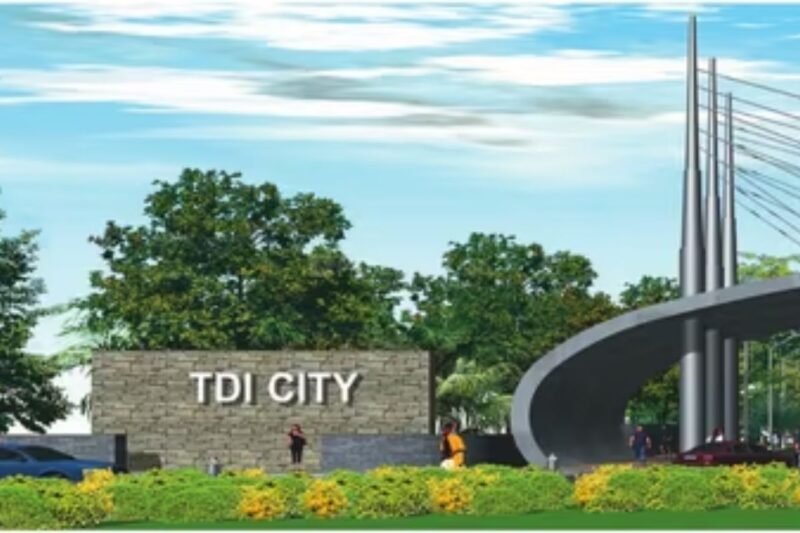
The significance of the 2 October release is substantial. The ED is not describing a peripheral property interest. It states that its investigation has identified the TDI Group itself as one of the intermediaries in the Manesar transaction chain. More than 400 acres of State-notified lands in Manesar, Naurangpur and Lakhnoula villages, earmarked for acquisition, were purchased by private builders and intermediaries from farmers at throwaway prices under the fear of acquisition by HSIIDC. The acquisition process was later allowed to lapse, the award dropped, and the same lands sold at skyrocketing prices, generating high profits. The TDI Group led by Ravinder Taneja is identified as one such intermediary.
More than 400 acres purchased under the shadow of notification. First, this scale of land represents a public resource whose acquisition was initiated for an industrial township. Second, when farmers sold at depressed prices because they feared low official compensation, any subsequent intermediary profit raises the question of whether the original owners received anything approaching the true commercial value that emerged once the acquisition threat was removed. The human cost is measured in the difference between the price paid to anxious cultivators and the price later realised by those who held the land after the process lapsed.
Between 2005 and 2007 the TDI Group used three companies, Indo Asian Construction Co. Pvt. Ltd., NCR Properties Pvt. Ltd. and Divya Jyoti Enterprises Pvt. Ltd., as vehicles to purchase nearly 33 acres from farmers and sell them to the Atul Bansal group at high profits.
Nearly 33 acres. Each acre purchased from a farmer under notification pressure and later transferred at elevated value represents a concrete instance of the mechanism the Supreme Court would later condemn.
The original Manesar controversy concerned approximately 912 acres. The Haryana Government issued a Section 4 notification on 27 August 2004 covering that area for an industrial township. A subsequent Section 6 notification covered approximately 688 acres after 224 acres were recommended for release. The CBI investigation placed before the Supreme Court alleged that approximately 400 acres were bought from landowners at substantially depressed prices because farmers feared compulsory acquisition and low compensation.
It quantifies the human impact of a process in which the threat of state acquisition itself became a tool that enabled private purchases at prices far below subsequent market levels. How many farming families absorbed that loss? What long-term economic consequences followed for those who sold under fear?
In Rameshwar v. State of Haryana, decided on 12 March 2018, the Supreme Court examined the entire mechanism. The Court concluded that the Haryana Government’s decisions of 24 August 2007 and 29 January 2010 were brought about by a mala fide exercise of power and constituted a fraud on power. The process had operated to benefit builders and private entities rather than the public purpose for which acquisition had been initiated. Landowners were confronted with impending acquisition and persuaded to sell, after which the process was dropped once the desired land had been cornered. Various entities, including middlemen, obtained “unnatural gains.” The Court annulled the relevant governmental decisions.
A judicial finding of “fraud on power” is among the strongest condemnations available. First, it means the highest court determined that executive decisions to drop acquisition were not taken in the public interest. Second, the consequence is that the entire chain of private transactions that followed rested on a foundation later declared illegitimate. The protection later extended to certain apartment purchasers does not erase the original distortion inflicted on landowners.
The Supreme Court judgment itself records the land purchases and subsequent transfers of the three companies later identified by the ED. NCR Properties Pvt. Ltd. acquired 11 acres 2 kanals 5 marlas between November 2004 and January 2005 and was transferred to Atul Bansal on 29 June 2007. Divya Jyoti Enterprises Pvt. Ltd. acquired 3 acres 19 marlas between December 2004 and June 2005 and was transferred on 13 February 2008. Indo Asian Construction Co. Pvt. Ltd. acquired 14 acres 7 kanals 3 marlas between October and November 2004 and was transferred on 21 November 2007. These parcels total approximately 29.29 acres on the Supreme Court record.
The latest ED release expressly states that these three companies were used by the TDI Group led by Ravinder Taneja. This is not a connection that first appeared in 2026. In its earlier Manesar investigation the ED had already alleged that Ravinder Kumar Taneja, then Managing Director of TDI Infrastructure Ltd, along with others, created or purchased the three companies specifically for purchasing notified land and subsequently selling it to Atul Bansal. The earlier investigation quantified the alleged profit from that intermediary transaction at approximately ₹3.12 crore.
Approximately ₹3.12 crore in alleged intermediary profit. Where did the ₹3.12 crore flow? Which accounts received it? What documentation of beneficial ownership has the current search recovered from the seized servers and hard disks?
TDI’s alleged role was that of an intermediary, not the principal architect of the entire Manesar operation. The broader structure ran from notification, to farmers’ fear, to private purchase at depressed prices, to lapse of acquisition, to rise in commercial value, to transfer of land or corporate vehicles, generating large alleged profits. Within that chain the ED places the TDI Group on the intermediary side.
TDI Infrastructure Ltd and Ravinder Taneja were already named as accused in the Manesar PMLA case years before the 2026 searches. Reporting on the ED’s 2020 supplementary chargesheet stated that both were among the accused. The court record in Assistant Director, ED v. Atul Bansal & Ors., dated 19 October 2024, identifies Ravinder Taneja as A-29 and TDI Infrastructure Ltd as A-30. That procedural fact is considerably stronger than a 2026 search headline. Earlier attachment proceedings in 2019 involved properties, bank accounts and sale deeds worth approximately ₹66.58 crore across several accused, including TDI Infrastructure Ltd.

The chronology is decisive. Section 4 notification on 27 August 2004. Purchases by the three companies in late 2004 and 2005. Section 6 declaration on 25 August 2005. Licence applications by the Bansal group in December 2006 that included the three entities. Decision to drop acquisition on 24 August 2007. Transfers of the companies in 2007 and early 2008. Supreme Court judgment of 12 March 2018 declaring the governmental decisions a fraud on power. ED supplementary chargesheet in 2020 naming Ravinder Taneja and TDI Infrastructure. Fresh searches on 28 September 2026 and the 2 October release restating the intermediary allegation and the three companies.
This timeline is a map of how public power, private fear and corporate vehicles intersected over more than two decades. Each step leaves unanswered questions about control of the companies at the moment of purchase, consideration paid to farmers, consideration received on transfer, and the ultimate destination of the alleged intermediary profit.
The homebuyer track must be treated as parallel and separate. The ED’s investigation into TDI Infrastructure arising from multiple Delhi Police and Economic Offences Wing FIRs concerns alleged non-delivery and diversion of buyer money. In June 2024 the agency provisionally attached properties worth approximately ₹45.49 crore. At that stage identified proceeds of crime stood at approximately ₹165.69 crore. This was not the Manesar attachment.
On 6 March 2026 the ED provisionally attached approximately ₹206.40 crore, including 8.3 acres and commercial units in Kamaspur, Sonipat. The investigation rested on 26 FIRs or chargesheets. The agency stated that TDI had collected approximately ₹4,619.43 crore from 14,105 customers across projects launched between 2005 and 2014, with delays extending to 16–18 years in some cases. Four projects still lacked occupation certificates and Park Street remained incomplete.
₹4,619.43 crore from 14,105 customers. First, this sum represents the aggregated life savings, home-loan proceeds and retirement funds of more than fourteen thousand households. Second, when the same agency alleges that substantial portions were diverted to subsidiaries, land-owning companies, loan repayments and investments rather than project completion, the human consequence is years of dual financial burden, EMI plus rent, while the promised asset remains unrealised. How many of those families have seen educational plans, marriages or retirements disrupted by the prolonged uncertainty?
By May 2026 the prosecution complaint recorded that total identified and quantified proceeds of crime had reached ₹349.55 crore after the 2024 attachment of ₹45.49 crore and subsequent attachments totalling ₹304.06 crore. The complaint names TDI Infrastructure Ltd, Ravinder Taneja, Kamal Taneja and D.N. Taneja. Notices were issued by the Special PMLA Judge at Patiala House on 28 April 2026.
₹349.55 crore quantified as proceeds of crime. First, this is the amount the ED has placed before a special court as the quantified fruits of the alleged diversion in the homebuyer case. Second, even if ultimately confiscated, it constitutes only a fraction of the original ₹4,619.43 crore collected. The arithmetic of restitution will leave most buyers far short of full recovery. Justice that arrives after 16–18 years and recovers only a portion is justice diminished.
A documented criminal-court example is the Delhi High Court’s decision of 24 March 2025 in TDI Infratech Ltd v. Government of NCT of Delhi concerning FIR No. 57/2020. The complainant alleged that in 2006 he was induced to invest in a future commercial project, paid an initial ₹8 lakh and ultimately approximately ₹22.47 lakh. The investigation recorded that money was collected between 2006 and 2009 without the necessary DTCP approval. A chargesheet under Sections 406, 420 and 120B IPC was filed against the company and directors including Ravinder Kumar Taneja. The High Court refused to quash the FIR, finding prima facie material while expressly stating that its observations were not a final determination of guilt.
Approximately ₹22.47 lakh paid for a commercial plot never allotted. First, for a middle-class investor this represented a substantial commitment made on the assurance of a forthcoming project. Second, the allegation of collection before required approval transforms the dispute into a question of the truthfulness of the representations made at the time of payment. The High Court’s refusal to terminate the prosecution means those allegations will be tested in evidence.
On 15 May 2026 Haryana RERA ordered civil imprisonment proceedings against five directors, Kamal Taneja, Devki Nandan Taneja, Ravinder Kumar Taneja, Renu Taneja and Ved Prakash, in an execution matter arising from a 2019 buyer complaint. The order contemplated three months’ civil imprisonment for repeated non-compliance characterised as delay tactics. It was a coercive civil measure, not a criminal conviction.
Three months’ civil imprisonment contemplated. First, the measure is designed to compel compliance with a regulatory direction. Second, the fact that a regulator felt compelled to reach for personal detention after years of non-compliance signals the exhaustion of ordinary enforcement tools. Subsequent settlement in that particular matter does not erase the pattern that made the order necessary.
Corporate-name distinctions remain essential. TDI Infrastructure Ltd is recorded as formerly Intime Promoters Pvt. Ltd. TDI Infratech Ltd appears in other records as formerly Taneja Developers and Infrastructure Ltd. The strongest Manesar connection runs through the TDI Group and Ravinder Taneja to TDI Infrastructure and the three intermediary companies.
The strongest documentary chain therefore comprises the current ED statement identifying the TDI Group as intermediary, the identification of the three companies, the earlier ED allegation of ₹3.12 crore profit and creation of the companies, the formal naming of Ravinder Taneja and TDI Infrastructure as accused in the 2020 chargesheet and subsequent court record, and the independent Supreme Court record of the same companies’ land purchases and transfers.
The two tracks must remain distinct. Track A is the Manesar land case culminating in the 2026 searches and the seizure of luxury vehicles as proceeds of crime. Track B is the separate homebuyer PMLA case involving ₹4,619.43 crore, 14,105 customers and ₹349.55 crore quantified proceeds. They intersect at the promoter and corporate-network level.
The seizure of luxury vehicles forces the central interrogative that titles this examination. Were those assets acquired through the same processes that left farmers selling under acquisition fear and homebuyers waiting more than a decade and a half? The ED has identified the vehicles as proceeds of crime within the Manesar investigation. The public record shows a long chain of intermediary allegations, a parallel homebuyer enforcement track of enormous scale, and a Supreme Court finding that the underlying governmental decisions constituted a fraud on power.
As of early October 2026 the examination of the seized servers, hard disks, project files and financial records continues. The documented historical record is substantial. How long can luxury assets identified as proceeds of crime stand unexplained against this dual backdrop of alleged extraction from fearful farmers and prolonged captivity of ordinary homebuyers?