Apple’s Business Of Selling You The Next Model And Its Own Admission Of ‘Dudding’ Your Older iPhones Through Software Updates
Your iPhone does not have to die for Apple to sell you the next one. Sometimes, it only has to get slower, its battery weaker and the newer model more tempting. Apple has said its software was managing ageing batteries to prevent shutdowns. But if the intention was genuinely to protect the phone and prevent shutdowns, why weren't consumers clearly told that installing the update could reduce performance?

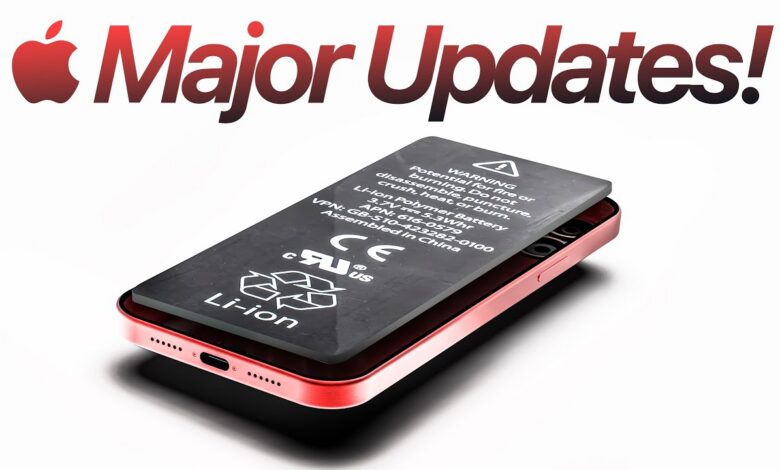
Your iPhone does not have to die for Apple to sell you the next one. Sometimes, it only has to get slower, its battery weaker and the newer model more tempting.
Apple has said its software was managing ageing batteries to prevent shutdowns. But if the intention was genuinely to protect the phone and prevent shutdowns, why weren’t consumers clearly told that installing the update could reduce performance?
That question sits at the heart of one of Apple’s most uncomfortable chapters – one involving software updates, ageing batteries, performance slowdowns, regulators and, ultimately, the business of convincing people that it may be time for a new iPhone.
Because there is a rather obvious problem with the idea of keeping an iPhone for as long as possible. For the consumer, it makes perfect sense. For Apple, which operates one of the world’s most valuable consumer technology businesses, the economics are rather different.
Apple And The Business Of Selling You The Next iPhone
Apple’s scale makes the upgrade cycle worth paying attention to. In FY2025, the company generated $416.2 billion in total revenue, with the iPhone contributing about $209.6 billion and Services another $109.2 billion.
That does not mean every old iPhone user is a lost sale. But at Apple’s scale, getting an existing customer to move from an older model to a newer one is enormously valuable.
And Apple has built its business around doing exactly that – releasing a new generation, adding faster processors, better cameras, new features and increasingly powerful software, and then persuading millions of existing users that their perfectly functional phone is suddenly looking a little less perfect.
The question, therefore, is not simply whether Apple makes good phones.
It is whether there is a point at which the process of making the next iPhone more desirable starts making the previous iPhone less desirable – and what role Apple’s software plays in that process.
The Smartphone Market Is Not Apple’s Playground Alone
There is another reason Apple cannot afford to take an existing customer for granted. The smartphone market is brutally competitive, with Samsung, Google and a long list of Chinese manufacturers constantly chasing consumers with cheaper phones, better cameras, faster processors and new features.
Apple itself describes the market as highly competitive, with aggressive pricing, short product life cycles, frequent new-product launches and rapid technological change. It also acknowledges that it must continually stimulate demand for new and upgraded products to remain competitive.
That makes the existing iPhone user particularly valuable. Apple does not merely want someone to own an iPhone today. It wants that customer to remain an iPhone customer when the next upgrade decision arrives.
And that is where the distinction becomes important. The competition is not only about convincing someone to buy a smartphone. It is also about convincing an existing Apple customer not to leave the Apple ecosystem when their current phone starts showing its age.
Your iPhone Is Only One Part Of The Apple Business
Apple has spent years making the iPhone the centre of a much larger ecosystem. There is iCloud, the App Store, Apple Music, Apple TV, Apple Pay, AppleCare and a growing collection of connected products such as the Apple Watch and AirPods. Apple says its installed base now exceeds 2.5 billion active devices worldwide.
The money involved is substantial. Services generated $109.2 billion in Apple’s FY2025, up 14% from the previous year, with growth coming from areas including advertising, the App Store and cloud services.
So the iPhone is not simply a one-time hardware transaction. It can be the entry point into a continuing relationship in which Apple earns from multiple products and services.
Which brings us back to the old phone.
If a customer keeps an older iPhone running happily for another three or four years, Apple still has that customer. But the immediate hardware sale is delayed. And in a business built around constant product launches, upgrades and an increasingly valuable ecosystem, getting the customer to move to the next model is not a trivial part of the equation.
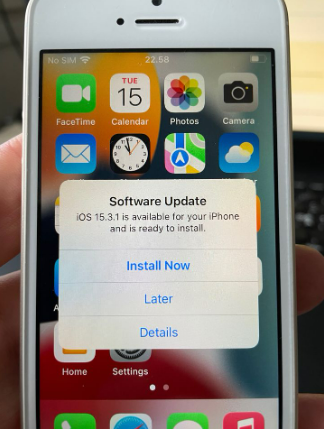
Then Came The Software Update
This is where the story gets considerably more uncomfortable.
In 2017, Apple acknowledged that it had introduced a performance-management system for certain older iPhones with ageing batteries. The system was designed to manage peak performance when a chemically aged battery could no longer reliably deliver the power demanded by the processor, reducing the possibility of an unexpected shutdown. Apple still describes the system this way today.
The problem was not simply that batteries get old. Everyone knows batteries degrade. The problem was that software was now actively changing how an older iPhone performed based on the condition of that battery.
For affected models, iOS could dynamically manage the maximum performance of components including the CPU and GPU. And this wasn’t some abstract technical adjustment.
Apple says the consequences could include longer app launch times, lower scrolling frame rates, reduced processing performance and, in more extreme circumstances, even temporary disabling of the camera flash.
In other words, the phone could still work. But it might not work quite like the phone you originally bought.
And that additional information matters.
Because consumers generally understand that an old battery holds less charge. What they may not expect is that installing a software update can also change the performance of the device they already own.
Apple Said It Was Protecting Your Phone
Apple’s defence has always been relatively straightforward. An ageing lithium-ion battery can lose its ability to deliver the instantaneous power required during demanding tasks. Under certain conditions, that can cause the iPhone to shut down unexpectedly.
So Apple introduced performance management to smooth those power peaks rather than allowing the phone to suddenly switch off. The company says the system dynamically adjusts performance according to factors including battery state, temperature and battery impedance.
There is a perfectly plausible technical reason for doing that. A phone that suddenly shuts down is hardly a better user experience than one that runs slightly slower.
Apple also subsequently introduced Battery Health information and greater control over performance management. With iOS 11.3 and later, the system was made more adaptive, assessing the level of management required and reducing it when the battery could support the necessary peak power.
But this is where the controversy moves beyond battery chemistry.
Because even if Apple’s technical explanation is accepted, another question remains: how clearly was the consumer told that installing a software update could change the performance of an older iPhone?
That question eventually attracted the attention of regulators. In France, the DGCCRF said an investigation led to a €25 million criminal settlement with Apple in 2020 over inadequate information to consumers about the possibility that their devices could slow after operating-system updates.
But Here Is Where The Problem Became Bigger Than Battery Chemistry
The issue might have remained a technical argument about ageing batteries if consumers had been clearly told what the software was doing. Instead, regulators concluded that the information gap itself was a problem.
In October 2018, Italy’s competition authority fined Apple €10 million over two separate practices. It found that Apple’s software updates had significantly reduced the performance of certain iPhones and, importantly, said this had accelerated their replacement with newer products. AGCM
The authority specifically pointed to iOS 10 being offered to owners of the iPhone 6 and 6s range without adequately informing them about its higher energy demands and the potential for problems such as unexpected shutdowns. Apple then released iOS 10.2.1 to address those problems, but, according to the regulator, did not warn consumers that the update could reduce execution speed and functionality. AGCM
Then came France.
In 2020, Apple agreed to pay €25 million following a French investigation into the same basic issue. The French consumer authority found that owners had not been informed that iOS 10.2.1 and 11.2 could slow their devices.
And that is the uncomfortable part of this story.
The regulators did not need to establish that Apple had secretly decided, let’s make old phones useless so people buy new ones. The documented problem was more precise: Apple’s updates could alter the performance of older phones, while consumers were not adequately informed about that consequence.
So Was Apple Protecting Your Phone Or Selling You The Next One?
This is where the story needs some restraint.
Apple’s explanation was (and remains) that performance management was intended to prevent unexpected shutdowns and extend the useful life of an iPhone with an ageing battery. That is not the same thing as admitting to deliberately sabotaging an old device.
But the commercial question doesn’t disappear.
Apple sells a new iPhone into a market where its existing customers already own the previous one. If software makes that older device slower, less responsive or less capable, the consumer has another reason to consider upgrading.
And Italy’s regulator explicitly connected reduced performance with an accelerated replacement process.
So the question is not simply whether Apple wanted an old iPhone to become obsolete. It is whether a system designed to manage ageing hardware could have the same commercial effect.
That distinction is important. Because Apple may not have needed to deliberately break your old iPhone. It only needed the old iPhone to become sufficiently less attractive while the next one looked sufficiently better.
Apple Doesn’t Need To Make Your Phone Useless
And perhaps this is where the business model becomes more interesting than the accusation itself.
Apple does not necessarily have to make an older iPhone unusable to encourage an upgrade. It can remain functional while gradually becoming less attractive beside the latest model.
The newer iPhone arrives with a faster chip, better cameras, longer battery life, new software features and capabilities that the older model may not offer. Meanwhile, the older device has an ageing battery, and – as the performance-management controversy demonstrated – software can also affect how that hardware performs.
That creates a very different kind of obsolescence.
The consumer is not necessarily being told, your phone is finished. Instead, the message is subtler: your phone still works, but look at what the new one can do.
And there is plenty of money riding on that distinction. In FY2025, Apple generated $209.6 billion from iPhone sales alone, while Services brought in another $109.2 billion. Its total revenue reached $416.2 billion.
So every upgrade decision sits inside a much bigger machine.
The Business Of Selling You The Next Model
This is also why the old-iPhone controversy cannot be examined in isolation from Apple’s broader business.
Apple has an enormous installed base and an equally enormous incentive to keep those customers buying its products rather than moving to Samsung, Google or another competitor. At the same time, Apple’s Services business benefits from customers remaining within its ecosystem, with Services revenue crossing $100 billion in FY2025.
The upgrade cycle therefore does more than sell another handset. It keeps the customer inside the Apple universe. And that brings us back to the software update.
The Italian competition authority did not merely say Apple’s updates caused performance problems. It said those practices could speed up replacement with newer products.
That does not prove that Apple deliberately designed performance management as a sales tactic. But it does establish the question at the heart of this story: When a software decision makes an older product less desirable, while the company is simultaneously selling you a newer one, where does battery protection end and commercial incentive begin?
That’s the question Apple has never completely escaped.

You Don’t Have To Break The Old Phone To Sell The New One
The genius – or the uncomfortable efficiency – of the modern smartphone upgrade cycle is that the old device doesn’t have to stop working.
It simply has to feel behind.
A better camera. A faster processor. New AI features. Longer battery life. A redesigned operating system. Features unavailable on older hardware. And, sitting underneath all of this, an ageing battery that may already have begun affecting performance.
The consumer is then left with a choice that feels entirely voluntary.
Keep the old phone. Or buy the new one.
But Apple’s own filings make clear how important frequent product transitions and customer demand for upgraded products are to the business. And this is where the old software-update controversy becomes more than a story about one battery-management feature.
It becomes a question about how an enormous technology company keeps an enormous installed base moving forward — from one iPhone to the next, rather than simply letting customers remain perfectly happy with the one they already own.
The Last Bit, So, Who Benefits? Protecting Or Selling?
Perhaps the most uncomfortable part of Apple’s old-iPhone controversy is that the company never needed to admit to deliberately killing your phone. Its explanation was that software-based performance management was meant to protect ageing batteries and prevent unexpected shutdowns.
But the consumer was left with something rather simpler: an older iPhone that could perform differently after an update, and a newer iPhone sitting in the market waiting to be bought.
Apple may call it battery management. Regulators questioned the disclosure. Consumers experienced the slowdown. And Apple’s business continued to depend heavily on selling new iPhones and keeping customers inside its ecosystem.
So the real question is not whether Apple literally forced you to buy the next model.
It is whether it needed to. Because when software can make an older phone feel old, the line between protecting your iPhone and nudging you towards the next one becomes rather harder to see.