Tayal Group Under the Microscope: ₹820.86 Crore of Alleged Proceeds of Crime, 215 Accounts Frozen — and the Bigger Question of Whether Insolvency Was Turned Into an Asset-Shield
An investigative examination of the Tayal Group bank-fraud allegations, shell-company network, hidden assets, PMLA attachments, Resolution Professionals and the alleged weaponisation of the IBC

The latest Enforcement Directorate action against the Tayal Group is not merely another search story. It opens a much larger and far more uncomfortable question: what happens when the machinery created to rescue distressed companies is alleged to become a mechanism for protecting the very assets that creditors and enforcement agencies are trying to recover?
On 30 September 2026, the Enforcement Directorate’s Kolkata Zonal Office-II conducted searches at 12 locations in Mumbai and Ahmedabad in a money-laundering investigation concerning alleged bank fraud, laundering of proceeds of crime and alleged misuse of the Insolvency and Bankruptcy Code by Tayal Group promoter-directors Pravin Tayal, Saurabh Tayal and others, allegedly in connivance with Resolution Professionals. b95785d0-51f1-4b31-8935-65e4f3e…
The numbers emerging from the operation are difficult to dismiss as routine enforcement statistics: 215 bank accounts were frozen, ₹20 lakh in cash was seized from Pravin Tayal’s residence, records concerning shell companies and cooperative-bank accounts were recovered, previously undisclosed immovable properties were identified, and fresh NPAs were unearthed, according to the ED. b95785d0-51f1-4b31-8935-65e4f3e…
The agency puts the proceeds of crime under investigation at approximately ₹820.86 crore in the cases arising from the Tayal Group’s alleged bank fraud. b95785d0-51f1-4b31-8935-65e4f3e…
And that is only the latest chapter.
This is not a ₹820-crore story that suddenly appeared in 2026
The historical record is substantially larger and considerably more complicated.
The ED’s earlier investigations into Tayal Group companies arose from CBI cases concerning alleged diversion of bank funds. In one major UCO Bank investigation, the three relevant entities were K. Lifestyle & Industries Ltd., Global Softech Ltd. and Tayal Energy Ltd.
A 2025 decision of the PMLA Appellate Tribunal, recounting the underlying CBI/ED material, records three FIRs and describes alleged diversion of bank facilities through intermediary/front entities. CaseMine
Case 1: K. Lifestyle & Industries
The CBI material reproduced in the PMLA proceedings alleged that UCO Bank disbursed ₹100 crore for machinery, including ₹49.63 crore and ₹50.37 crore through demand drafts to five companies identified in the investigation as front entities. The allegation was that the machinery was not purchased as sanctioned and that funds were instead diverted. The account was declared NPA with an outstanding liability of approximately ₹126.63 crore. CaseMine
Case 2: Global Softech
The second FIR concerned a ₹95 crore lending exposure, including a ₹100-crore term-loan sanction and a ₹45.50-crore cash-credit facility as described in the tribunal record. The investigation alleged diversion of funds supposedly meant for textile machinery. It further records an allegation that ₹8.85 crore of interest subsidy under the Technology Up-gradation Fund Scheme was obtained despite machinery allegedly not being purchased. The outstanding at NPA was stated at about ₹101.37 crore. CaseMine
Case 3: Tayal Energy
The third FIR concerned a ₹46.94 crore term loan, released through several RTGS transactions. The investigation alleged that the money was diverted to intermediary companies rather than being utilised for the sanctioned purpose. The outstanding liability at NPA was stated at ₹68.25 crore. CaseMine
There is a striking piece of arithmetic here.
The three facilities described in that proceeding total approximately ₹241.94 crore. Their reported outstanding liabilities at the time of NPA total approximately ₹296.25 crore.
That does not mean those figures should simply be added to the later ₹820.86-crore figure; the investigations overlap and arise from multiple cases. But it illustrates something important: the present ED action is not an isolated financial dispute over a handful of unpaid loans. It is the latest layer in a long-running enforcement history.
The shell-company allegation is central — not incidental
The ED has repeatedly alleged that the alleged bank-fraud mechanism involved a network of fictitious or shell entities through which funds moved before allegedly being deployed elsewhere.
The 2025 PMLA Appellate Tribunal record describes an ED investigation in which a person identified as Dilip Mehta allegedly stated that he had formed or purchased companies which were subsequently sold to P.K. Tayal and then used for transfers of funds between companies. The record says Mehta provided material relating to a fund trail and modus operandi, and that several companies were allegedly controlled through people associated with Pravin Kumar Tayal. CaseMine
The same record states that the ED’s investigation alleged that funds received from banks for specified purposes were siphoned through a “maze of fictitious companies”, ultimately reaching Tayal-group entities and other destinations. CaseMine
That allegation is particularly significant because shell companies, by themselves, are not illegal. A corporate group can legitimately operate through numerous subsidiaries and investment vehicles.
The investigative question is therefore much narrower and much more serious:
Were corporate entities being used for legitimate business purposes, or were they allegedly being used as conduits to disguise beneficial ownership, move borrowed funds, create artificial transactions and separate the ultimate asset from the original source of money?
That is exactly where the bank-fraud, PMLA and insolvency strands begin to intersect.
The ₹483-crore Empress Mall is one of the most important pieces of the puzzle
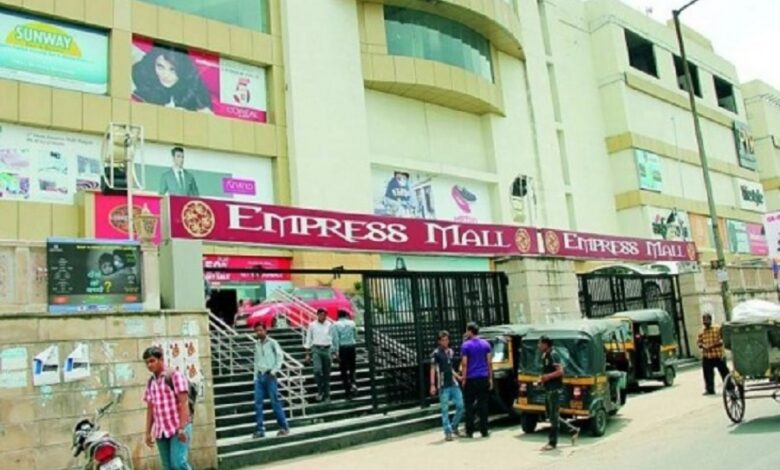
In May 2019, the ED provisionally attached Empress Mall in Nagpur, valued at approximately ₹483.16 crore, in the Tayal Group-linked investigation.
The ED’s official release stated that the property comprised commercially diverted land measuring 270,374 square feet and that the mall was in the name of KSL & Industries Ltd. The agency stated that the attachment followed its investigation into alleged fraudulent availing of ₹524 crore of loans from Bank of India and Andhra Bank in 2008. Directorate of Enforcement
The ED subsequently took physical possession of the mall in November 2021. It said the attachment had been confirmed by the adjudicating authority and that a prosecution complaint under Sections 44/45 of the PMLA had been filed before the Special Court at Mumbai, which had taken cognizance on 22 January 2021. Directorate of Enforcement
This is not just another property attachment.
The historical material shows an alleged trajectory that should concern every bank, lender and insolvency professional:
bank finance → alleged diversion → intermediary entities → alleged laundering → acquisition/retention of valuable assets → enforcement attachment → insolvency proceedings → dispute over control and possession of those assets.
That is the pattern investigators must test transaction by transaction.
The old UCO Bank investigation was already pointing toward concealed assets
Back in 2016, the ED announced provisional attachment of approximately ₹235 crore in assets in another Tayal-related UCO Bank money-laundering case. The agency stated that the underlying complaint alleged approximately ₹296 crore of fraud and that funds obtained for specific purposes were allegedly siphoned through fictitious companies. India Today
Contemporary reporting of the ED action stated that around ₹233 crore of immovable properties and 19 bank accounts containing about ₹1.60 crore were attached at that stage. India Today
In 2019, another ED action in the Bank of India/Andhra Bank matter resulted in the provisional attachment of the ₹483-crore Empress Mall, taking the publicly reported attachment figure across those matters to roughly ₹717 crore. Business Standard
Again, these numbers should not be mechanically aggregated into one single fraud figure because they relate to different investigations and stages. But the cumulative enforcement history is impossible to ignore.
Now comes the most explosive allegation: Was the IBC allegedly used as a shield?
The latest ED release moves the story from alleged bank-fund diversion into a much more uncomfortable territory: the alleged misuse of insolvency proceedings themselves.
According to the ED, after assets had been attached, CIRP proceedings were allegedly initiated through related shell entities under Section 7 of the IBC. The agency alleges that those entities were under the control and occupation of the accused persons and functioned as sham creditors designed to protect group assets. b95785d0-51f1-4b31-8935-65e4f3e…
The allegation gets still more serious.
The ED says certain Resolution Professionals allegedly admitted unverified and inflated claims of related parties, thereby reducing the voting share of secured banks and frustrating the purpose of the insolvency process. b95785d0-51f1-4b31-8935-65e4f3e…
In plain English, the allegation is that the insolvency system was not merely being used to resolve distressed companies but was allegedly being manipulated to alter the balance of power among creditors.
That is an allegation that demands forensic scrutiny.
Because IBC is supposed to be a creditor-driven resolution mechanism, not an asset-retention strategy for former promoters.
If the ED’s allegations are ultimately established in evidence, the issue would go far beyond one business family. It would raise a structural question about whether a resolution process can be engineered so that alleged wrongdoers regain effective control over assets through related entities while simultaneously challenging the enforcement agency’s attachment.
The Resolution Professionals named by the ED now face serious questions
The ED says searches were also conducted at the premises of Resolution Professionals Kiran C. Shah, Vinod P. Ambavat and Ravi Kapoor, along with associated entities. b95785d0-51f1-4b31-8935-65e4f3e…
This is crucial because an RP is not simply another private advisor hired by management. The insolvency framework imposes statutory responsibilities in relation to the resolution process.
The ED alleges that the RPs:
- admitted unverified/inflated related-party claims;
- filed applications seeking to set aside PMLA attachments;
- suppressed adverse court/tribunal orders;
- created encumbrances over attached properties; and
- thereby prevented ED from taking possession of rental income worth several crores. b95785d0-51f1-4b31-8935-65e4f3e…
Those are extremely serious allegations.
But they remain allegations unless and until established through due process.
There is, however, an important reason why the allegations deserve examination rather than being brushed aside.
The public insolvency record shows that these were active, contested processes
NCLT records show that KSL & Industries’ CIRP was admitted on 6 September 2019, and its proceedings involved Resolution Professional Kiran Shah. Later cause lists continued to show applications involving the RP, suspended management and creditors. IBBI
An NCLAT proceeding involving Kiran Shah and the ED specifically records that the ED’s PMLA action came after a Section 7 insolvency application concerning KSL & Industries had been admitted. Indian Kanoon
This makes the latest ED allegation particularly important: the apparent overlap between enforcement attachment and insolvency proceedings is a matter that actually exists in the public record.
The question is not whether IBC proceedings existed. They clearly did.
The question is whether anyone improperly exploited those proceedings to undermine a legally valid PMLA action.
The Vidhant Realty episode raises an even sharper 29A question
The ED has also pointed to a separate Ahmedabad investigation involving Vidhant Realty Private Limited.
According to the ED, insolvency proceedings were initiated against Vidhant Realty through another Tayal-group entity, Kausar Textiles Pvt Ltd, allegedly with the objective of frustrating PMLA attachment proceedings. The ED further alleges that Cubical Realty Pvt Ltd eventually became the Successful Resolution Applicant and that this violated Section 29A of the IBC because the SRA was allegedly beneficially owned by Tayal family members including Pravin Kumar Tayal and Navin Kumar Tayal. b95785d0-51f1-4b31-8935-65e4f3e…
But here the public record gives us an important counterpoint that must be reported fairly.
The NCLT resolution-plan record for Vidhant Realty states that the resolution plan submitted by Cubical Realty Private Limited was approved by the Committee of Creditors. The record also states that Cubical Realty submitted an affidavit confirming its eligibility under Section 29A and that the certificate recorded the plan as compliant with the Code and regulations. The same record shows a fair value of ₹47.58 crore and a liquidation value of ₹39.20 crore. IBBI
That creates an obvious investigative fault line:
the insolvency record records 29A eligibility; the ED now alleges a beneficial-ownership structure that made the SRA ineligible.
That is exactly the kind of issue that warrants examination of beneficial ownership, money trails, declarations, affidavits, connected-party transactions and the information available to the RP and CoC at the time.
The answer should come from documents and evidence — not competing press narratives.
The IBC allegations are not occurring in a vacuum
There is another uncomfortable feature of the public record.
The IBBI database shows ongoing and historical insolvency proceedings involving Tayal-linked companies and personal guarantors. For example, IBBI records an NCLT order dated 7 March 2024 admitting the insolvency application involving Pravin Kumar Tayal in a personal-guarantor case filed by State Bank of India. IBBI
IBBI records also show proceedings concerning Navin Kumar Tayal and Tayal-linked companies including Krishna Knitwear Technology. IBBI
NCLAT cause lists further show Pravin Kumar Tayal v. State Bank of India & Anr., Appeal No. 819 of 2024, continuing through listings in 2025 and 2026. National Company Law Appellate Tribunal
The sheer persistence of the insolvency litigation demonstrates why speed matters.
A financial-crime investigation that takes place over years, while parallel insolvency, property and recovery proceedings continue, creates an obvious risk:
the longer the process takes, the more opportunities there may be for ownership structures, transactions, encumbrances and litigation positions to change.
That is not an accusation of wrongdoing. It is a basic enforcement reality.
The Bank of Rajasthan chapter adds another dimension
The Tayal family’s financial history also intersects with the long-running regulatory saga surrounding Bank of Rajasthan.
A SEBI adjudication order records that Pravin Kumar Tayal, Sanjay Kumar Tayal, Saurabh Pravin Tayal and Navin Kumar Tayal, among numerous entities, were proceeded against in relation to shareholding arrangements and disclosures concerning Bank of Rajasthan. SEBI
SEBI’s adjudication order imposed ₹5 crore penalties each on Pravin Kumar Tayal, Sanjay Kumar Tayal, Saurabh Pravin Tayal and Navin Kumar Tayal in that proceeding. SEBI
The matter did not end there.
The Securities Appellate Tribunal in 2014 upheld the ₹4-crore Section 15HA penalty against Pravin Kumar Tayal and likewise upheld the ₹4-crore Section 15HA penalty against Sanjay Kumar Tayal while setting aside the separate ₹1-crore penalty under Section 15A(a). SEBI
For Navin Tayal and Saurabh Tayal, however, the SAT disposed of the relevant appeals by setting aside the penalties imposed under Sections 15HA and 15A(a) in those appeals. SEBI
That distinction matters.
A responsible investigation does not blur together every adverse regulatory order involving every member of a corporate family. Each proceeding has its own allegations, findings, parties, evidence and outcome.
Another piece of the puzzle: insider-trading proceedings
In a separate 2020 SEBI adjudication relating to suspected insider trading in Bank of Rajasthan shares around the proposed merger with ICICI Bank, SEBI investigated seven noticees and concluded that, except for Sanjay Tayal in the specific proceeding, the concerned noticees were liable for monetary penalty under Section 15G. SEBI recorded an alleged unlawful gain of ₹95.78 lakh by Rohit Premkumar Gupta and imposed a joint ₹3-crore penalty on specified noticees other than Sanjay Tayal. SEBI
That proceeding is distinct from the present ED bank-fraud investigation and should not be conflated with it.
But from a journalistic perspective, it demonstrates that the Tayal family and associated corporate entities have appeared across multiple regulatory and enforcement proceedings over many years.
That historical context is relevant when assessing why the current ED investigation deserves close scrutiny.
The real question: how many layers can a financial trail survive?
The latest ED release alleges a nexus connecting:
promoter-directors → shell entities → bank accounts → alleged diverted funds → real estate/assets → PMLA attachment → insolvency proceedings → related creditors → resolution process → alleged attempts to regain or preserve control. b95785d0-51f1-4b31-8935-65e4f3e…
That is an allegation.
But it is also an allegation backed by a very large documentary trail accumulated over years, according to the enforcement record.
The 2025 PMLA Appellate Tribunal material contains allegations involving front companies, fund transfers and alleged false or negligent certification concerning machinery purchases. In that proceeding, the Tribunal ultimately upheld attachment of the relevant Bhide Associates account, although the decision was specific to that appeal and did not itself determine criminal guilt of every person in the wider Tayal investigation. CaseMine
That distinction is essential.
Attachment is not conviction. A regulatory penalty is not automatically a criminal conviction. An ED allegation is not a judicial finding of guilt. A suspicious transaction is not by itself proof of a criminal conspiracy.
But equally important:
the absence of conviction cannot become a permanent substitute for investigation.
₹820.86 crore. 215 accounts. 12 searches. ₹20 lakh cash. ₹483 crore mall. Years of proceedings.
These are not numbers that should disappear into the daily news cycle.
The ED says it found documents relating to numerous shell companies and a large number of cooperative-bank accounts opened in the names of associates; it says 215 accounts were frozen under Section 17(1-A) of the PMLA and that cash of ₹20 lakh was seized from Pravin Tayal’s residence. It also says records relating to concealed properties and fresh NPAs were found. b95785d0-51f1-4b31-8935-65e4f3e…
The agency puts the current proceeds-of-crime figure at ₹820.86 crore. b95785d0-51f1-4b31-8935-65e4f3e…
Earlier ED action placed the value of the Empress Mall at approximately ₹483 crore, after an earlier UCO Bank-related attachment of approximately ₹234 crore. Business Standard
The question for investigators is therefore brutally simple:
Where did every rupee originate, through which entity did it move, who controlled that entity, where did the money finally land, and who ultimately benefited?
And a second question is equally important:
Who knew what, when did they know it, and what did they do with that information?
That question extends beyond promoters.
It potentially reaches directors, beneficial owners, related parties, sham-creditor structures, professionals, lenders’ representatives, valuers, transaction advisors and any other person whose role becomes relevant from the evidence.
The regulator and enforcement system now needs to move faster
This is precisely the stage at which another multi-year procedural marathon would be unacceptable.
The ED should aggressively complete the money trail rather than leaving the investigation at the level of property attachments and searches.
The CBI and other predicate-offence authorities should establish the underlying banking frauds and identify every person who allegedly participated in them.
The IBBI should independently examine the conduct of every Resolution Professional and insolvency professional implicated in the ED’s allegations, without waiting for a criminal conviction as a precondition for professional scrutiny.
Banks and financial institutions should conduct a consolidated recovery and exposure review across all connected entities and related guarantees.
The courts handling the predicate offences and PMLA prosecutions should endeavour to ensure that cases involving evidence stretching back many years do not become victims of procedural drift.
And where evidence supports prosecution, trial must move quickly.
India cannot afford a system in which alleged financial crimes travel through a decade of corporate restructuring, litigation and insolvency while the underlying money trail becomes progressively harder to reconstruct.
The uncomfortable irony of the insolvency system
The IBC was enacted to resolve insolvency, maximise asset value, protect creditor interests and move distressed businesses toward resolution.
The latest ED allegations raise a deeply uncomfortable hypothetical:
What if the insolvency process itself becomes another battleground for control over allegedly tainted assets?
If the allegations are eventually proved, that would not merely be a Tayal Group problem.
It would be an institutional problem.
Because once a promoter accused of diverting funds can allegedly place related parties into the creditor structure, manufacture voting strength, challenge enforcement attachments and ultimately re-enter the asset through another corporate vehicle, the distinction between resolution and asset preservation for the old management becomes dangerously thin.
That is precisely why Section 29A exists.
And that is precisely why beneficial ownership cannot be treated as a clerical disclosure exercise.
The investigation should follow the money, not the headlines
The most important evidence in a case like this will not be another press release.
It will be:
bank statements;
loan-sanction files;
stock statements;
inventory records;
machinery invoices;
GST and tax records;
company ledgers;
inter-company loans;
related-party agreements;
beneficial-ownership records;
email and communication trails;
RP claim-verification documents;
CoC minutes;
Section 29A affidavits;
valuation reports;
property transactions;
rent receipts;
encumbrance documents;
and the complete chain of money moving between borrowers, intermediaries and ultimate beneficiaries.
The answers should be reconstructed digitally, transaction by transaction.
A case of this magnitude deserves a single integrated financial map, not fragmented investigations sitting in different institutional silos.
The public deserves answers — not another endless cycle of allegations and adjournments
There is a temptation in India to treat complex financial-crime investigations as stories that begin with a raid and end with the next raid.
That cannot be the standard here.
The ED has now alleged that a network involving promoter-directors, shell companies and Resolution Professionals worked to siphon bank funds, conceal proceeds of crime and frustrate PMLA action. b95785d0-51f1-4b31-8935-65e4f3e…
Those allegations are too serious for sensationalism.
They are also too serious for bureaucratic slowness.
Either the evidence ultimately proves the alleged architecture, or it does not. Either the suspected transactions were legitimate, or they were not. Either the related-party claims were genuine, or they were manufactured. Either Section 29A was complied with, or it was evaded. Either the rental income was lawfully controlled, or it was allegedly kept away from enforcement.
There should be no permanent grey zone.
The public interest demands that the answers come from courts and completed investigations — and that they come fast.
EDITORIAL DEMAND: Tighten the screws, speed up the process
The present stage demands time-bound, coordinated and evidence-led action by the ED, CBI, IBBI, insolvency tribunals and other competent authorities.
Where evidence shows criminal conduct, prosecution should follow without avoidable delay.
Where professional misconduct is established, regulatory action should be swift.
Where assets are established to represent proceeds of crime, recovery and confiscation proceedings should be pursued to their lawful conclusion.
And where accused persons are ultimately exonerated, that too should be established promptly by an impartial judicial process.
Justice delayed is particularly dangerous in financial crime because money does not remain stationary. Corporate structures change. Assets move. Records disappear. Companies are struck off. Beneficial ownership gets layered. Witness memories fade.
The answer is not fewer investigations.
The answer is better investigations — and faster trials.
Disclaimer / Legal Notice
This article is based on publicly available regulatory, judicial, insolvency and enforcement records and on the Enforcement Directorate press release dated 6 October 2026. The allegations attributed to the Enforcement Directorate, CBI, SEBI or any other authority are reported as allegations and should not be read as a declaration of criminal guilt. An allegation remains an allegation unless established in accordance with law. Regulatory findings in one proceeding should not automatically be treated as proof of allegations in another proceeding.
As of the public records reviewed for this article, the latest ED release states that further investigation is in progress. I have not identified a final criminal conviction judgment in the materials reviewed that establishes that Pravin Tayal, Saurabh Tayal or the other persons named in the latest ED release have been criminally convicted for the allegations described in this article. The accused persons are entitled to due process, a fair hearing and the presumption of innocence unless and until guilt is established by a competent court.
The observations concerning the possible misuse of the IBC, sham creditors, inflated claims, concealment of orders, beneficial ownership and alleged connivance by Resolution Professionals are matters requiring investigation and judicial determination. They should not be construed as established facts merely because they have been alleged by the ED.
This publication strongly supports a prompt, independent, comprehensive and time-bound investigation, followed by expeditious judicial proceedings wherever legally warranted, so that both victims and accused persons are not left in an indefinite state of uncertainty.
Key primary and public-record sources
The 6 October 2026 ED press release supplied for this investigation records the 12 searches, 215 frozen accounts, ₹20 lakh cash seizure, alleged concealed properties, ₹820.86-crore proceeds-of-crime figure and alleged IBC/RP nexus. b95785d0-51f1-4b31-8935-65e4f3e… b95785d0-51f1-4b31-8935-65e4f3e… b95785d0-51f1-4b31-8935-65e4f3e…
The ED’s official 2021 release records the ₹483-crore Empress Mall attachment, the underlying ₹524-crore Bank of India/Andhra Bank loan-fraud investigation, filing of the PMLA prosecution complaint and cognizance by the Special Court. Directorate of Enforcement
The PMLA appellate record sets out the underlying UCO Bank FIRs, alleged diversion mechanisms, loan amounts and NPA balances. CaseMine
IBBI/NCLT records document the insolvency proceedings involving KSL & Industries, Vidhant Realty and personal-guarantor proceedings concerning Pravin and Navin Tayal. IBBI
SEBI and SAT records document the separate Bank of Rajasthan regulatory proceedings and their differing outcomes for members of the Tayal family.