Bail Is A Rule & Jail Is Exception Has Become The Boon For Financial Criminals In India Like Nayan Raheja
Until Proven Guilty Everyone is innocent should not be made new normal by the courts, This boosts the morale of the criminals as trials runs for years

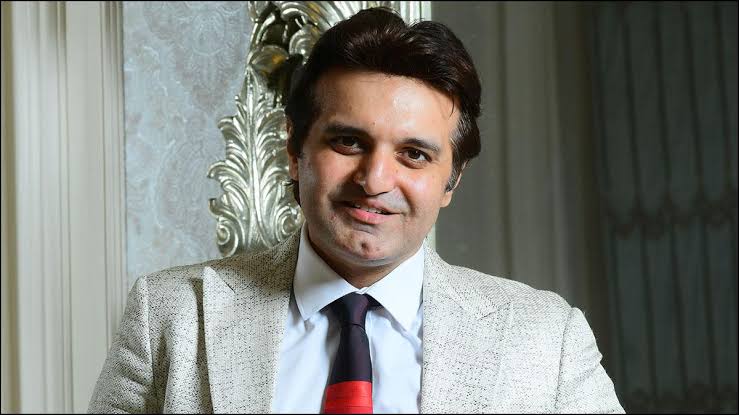
There is something profoundly uncomfortable about the way India’s criminal-justice system handles large financial investigations.
The person accused of taking a few thousand rupees from an ordinary citizen can find the machinery of law moving with impressive speed.
But when the allegations involve hundreds or thousands of crores, armies of lawyers appear, petitions multiply, hearings move from one date to another—and suddenly time itself becomes part of the defence strategy.
The case of Nayan N. Raheja, former director of Raheja Developers Ltd., now provides a particularly sharp lens through which to examine this uncomfortable reality.
Let us be clear at the outset: Nayan Raheja has not been convicted of money laundering or of diverting homebuyers’ funds. The allegations are being investigated, and the courts must ultimately decide guilt or innocence.
But precisely because the allegation is serious, the question is no longer merely whether bail should exist.
The question is:
Has the principle that “bail is the rule, jail is the exception” become so mechanical in practice that, in complex financial cases, it risks turning delay itself into a privilege?
That is the question the Nayan Raheja case puts brutally on the table.
Bail Is a Constitutional Principle. It Is Not Supposed to Become a Litigation Strategy.
The Supreme Court has repeatedly recognised that personal liberty matters and that “bail is the rule and jail is the exception.” In a 2026 judgment, the Court again described the principle as flowing from Articles 21 and 22 and the presumption of innocence. Sci API
That principle is indispensable in a democracy.
But there is a second judicial reality that deserves equal attention.
The Supreme Court has also repeatedly observed that economic offences involving deep-rooted conspiracies and substantial financial loss require a different approach, and that courts must consider the gravity of the accusation, the nature of the evidence, the possibility of securing the accused’s presence, the risk of evidence tampering and the larger public interest. Indian Kanoon
So perhaps the problem is not the phrase.
Perhaps the problem is what happens when the phrase is reduced to a slogan.
Because a slogan cannot become a substitute for judicial scrutiny.
And “presumed innocent” cannot quietly become “therefore, let the trial take forever.”
Nayan Raheja: One Man, Seven Summons, Five Non-Appearances
This is where the Nayan Raheja case becomes particularly difficult to dismiss as an abstract debate about bail.
The Saket PMLA court rejected his anticipatory-bail application on September 19, 2026.
According to the court record reported in the proceedings, seven summonses were issued to him. He appeared before the ED’s Gurugram Zonal Office on two occasions and did not appear on five occasions. The court treated that conduct as relevant to the request for anticipatory bail. Web India 123
And there is another detail.
On July 30, 2026, the Delhi High Court recorded an undertaking from Nayan Raheja that he would fully cooperate with the Enforcement Directorate. Daily PRABHAT
Then came the later dispute over his cooperation.
That is not a finding of guilt.
It is not proof that he committed money laundering.
But it is a matter the court considered significant enough to deny pre-arrest protection.
And that raises a very uncomfortable question:
What exactly is “cooperation” supposed to mean in a financial investigation if five out of seven summonses can go unanswered?
The irony practically writes itself.
An undertaking is given in one courtroom.
The investigating agency says cooperation then becomes a problem in another room.
A bail application follows.
And then everyone acts surprised when the public begins asking whether the system is designed to discover the truth—or simply to keep producing the next hearing date.
The Amazing Indian Bail Formula: Get Protection, Buy Time, Wait
This is where public cynicism enters.
The public has watched enough high-profile financial cases to develop a deeply corrosive perception:
The richer the accused, the longer the legal runway.
Again, one should be careful here.
There is no basis in the public record reviewed for this article to state as a fact that Nayan Raheja, specifically, paid any particular lawyer a particular fee, or that any particular legal fee guarantees bail.
But the perception exists.
The perception is that an affluent accused can retain elite legal representation, move from court to court, challenge procedure, seek protection, seek anticipatory bail, challenge summons, challenge attachment, challenge jurisdiction, challenge investigation—and keep the substantive criminal adjudication somewhere in the distance.
That perception is poisonous.
Because ordinary Indians do not experience the justice system like that.
A homebuyer who has spent years paying EMI on an undelivered apartment does not have the luxury of treating delay as a litigation tactic.
The developer can litigate.
The lawyer can argue.
The agency can investigate.
The court can adjourn.
The file can move.
But the buyer still pays rent.
And EMI.
And maintenance.
And interest.
And sometimes school fees.
And life goes on without the house that was supposedly being built.
“Until Proven Guilty, Everyone Is Innocent” — Correct. But That Sentence Has Been Misunderstood
This principle is absolutely essential.
A person is not guilty merely because the ED investigates him.
A search is not a conviction.
An FIR is not a conviction.
An ECIR is not a conviction.
An attachment is not a conviction.
Rejection of anticipatory bail is not a conviction.
That is precisely why this article is not calling for Nayan Raheja to be “punished” before trial.
But there is another side of the same constitutional equation.
Presumption of innocence is designed to prevent punishment without trial. It is not designed to guarantee indefinite liberty without an expeditious trial.
Those two concepts should never be confused.
Otherwise India risks creating an absurd formula:
You are innocent until proven guilty.
The trial will take years.
Therefore, effectively, nothing meaningful happens until the trial ends.
What happens then?
Evidence gets older.
Witnesses disappear.
Documents become harder to reconstruct.
Transactions become harder to trace.
Memories fade.
Companies restructure.
Assets move.
People retire.
People die.
And the people who originally complained begin to wonder whether the justice system is itself another obstacle standing between them and justice.
India’s Problem Is Not Imaginary: Cases Really Do Survive for Years
The country does not need anecdotal horror stories to establish judicial delay.
The National Judicial Data Grid currently shows more than 5.2 crore pending cases across the district judiciary reflected on its dashboard, including more than 4.1 crore criminal cases. Tens of millions of cases are already more than five years old, and millions are more than ten years old. National Judicial Data Grid
And courts themselves are increasingly speaking about extraordinary delay.
In September 2026, the Allahabad High Court drew attention to cases that had remained pending for 20 and even 40 years, criticising the culture of adjournment and “tareekh pe tareekh.” The Indian Express
So when critics say that a financial trial could consume a huge portion of a person’s life, that is not pure fantasy.
The system itself has demonstrated that extraordinarily long litigation is possible.
And that is precisely why the bail-versus-trial debate cannot be conducted in a vacuum.
Now Put the Raheja Investigation Into That System
The ED says its PMLA investigation arose from multiple FIRs connected with complaints by homebuyers.
The agency has alleged that large sums were collected from buyers for projects including Raheja Revanta, Raheja Shilas, Raheja Trinity, Raheja Oma, Raheja Mall, Raheja Aranya, Raheja Atharva and Vedanta, and that funds allegedly collected for construction were diverted or misused instead of being used for the purposes for which they were collected. The News Mill
The scale described publicly by the ED is enormous.
According to the agency’s April 2026 disclosure, approximately ₹2,425.99 crore had been collected from around 4,600 homebuyers. The ED subsequently announced several rounds of provisional attachment, with the cumulative value reported at approximately ₹2,399.65 crore. Inventiva
Again, attachment is not confiscation.
And neither is the investigation a conviction.
But if the numbers are anywhere remotely close to the scale publicly alleged, this is not a neighbourhood disagreement over a parking slot.
This is precisely the kind of case in which the investigation, evidence preservation and trial need to move faster, not slower.
The Defence Has an Answer. It Must Be Tested.
Nayan Raheja’s defence is not complicated.
His lawyers have argued that he was not involved in the day-to-day management or decision-making of Raheja Developers, that his periods of formal directorship were limited, that he held around 0.81% of the company, and that he had an architectural-advisory role. The defence has also argued that he was not charge-sheeted in the predicate offences and that no proceeds of crime were attributable to him. The News Mill
The ED disputes that narrative.
According to the agency, its investigation has produced material indicating that Nayan Raheja was involved in the affairs of RDL and/or was a director of subsidiaries through which homebuyer funds were allegedly diverted for purposes other than construction. The News Mill
Excellent.
Then investigate it.
Prove one side wrong. Prove the other side right.
That is exactly what a functioning criminal-justice system is supposed to do.
But nobody benefits from an endless middle ground in which allegations remain unresolved for decade after decade.
The Most Dangerous Incentive: Delay Can Become the Real Bail
Here is where the Indian system needs some brutal honesty.
For an alleged financial offender, physical imprisonment is not the only thing that matters.
Delay itself can have strategic value.
Every additional year before trial can mean:
more time outside custody,
more time to reorganise business affairs,
more time to challenge proceedings,
more time for witnesses and records to become difficult to retrieve,
and more time for victims to become exhausted.
That does not mean every accused person who seeks bail is manipulating the system.
Far from it.
Bail is often entirely legitimate.
But where the criminal process itself moves at a glacial pace, bail plus delay can produce an outcome that nobody formally ordered but everyone experiences.
No acquittal.
No conviction.
No restitution.
No finality.
Just another date.
And another.
And another.
The “Senior Advocate Effect” — Real or Perceived, It Is Destroying Public Confidence
India also needs to confront an uncomfortable class question.
There is an enormous difference between having a legal right and having the financial capacity to exercise that right aggressively.
A poor accused may struggle even to understand the process.
A wealthy accused can engage multiple counsel, senior advocates, forensic professionals, accountants and corporate lawyers.
That does not make the wealthy accused guilty.
But it can make the justice system look unequal.
And in justice, perception matters.
Because when ordinary citizens begin believing that:
“Hire a powerful lawyer, obtain protection, keep fighting and wait for the trial to disappear into the horizon,”
the deterrent effect of the criminal law starts collapsing.
The exact legal fee charged in any individual case is not the point.
The point is that access to justice must not quietly become access to delay.
The Supreme Court Has Just Asked for “Fear” Among Goons. Why Not Fear of Law for Financial Predators Too?
This is where a remarkable Supreme Court observation from October 5, 2026 becomes relevant.
While hearing a suo motu case concerning recent sexual offences in Delhi-NCR, a bench of Justices J.B. Pardiwala and K. Vinod Chandran said that the police needed to create fear in the minds of “goons” and anti-social elements prone to committing crimes against women. The Court stressed that prevention of crime matters, not merely action after the crime has occurred. LawFinder News
That logic deserves to be taken seriously beyond crimes against women.
Because what exactly is deterrence?
Deterrence means the potential offender calculates the consequences before committing the offence.
So ask the uncomfortable question:
Why should the principle of deterrence apply only when the criminal carries a weapon?
What about the alleged financial predator carrying a spreadsheet?
What about the alleged fraudster carrying a corporate structure?
What about someone who allegedly takes money from thousands of people rather than one victim?
A person who allegedly threatens a victim with physical violence can create fear.
A person who allegedly destroys a family’s financial future through a sophisticated economic scheme can create another kind of devastation.
One leaves bruises.
The other can leave people without homes, savings, retirement money and years of their lives.
The law must recognise both forms of harm without pretending they are identical crimes.
Criminal sophistication should not become an exemption from deterrence.
And Nayan Raheja’s Case Makes the Question Uncomfortably Specific
This is not an abstract academic discussion anymore.
Nayan Raheja has approached the Delhi High Court for anticipatory bail after the Saket court rejected his earlier plea. The ED has opposed the relief and has alleged non-cooperation. The High Court proceedings were heard on October 1, with the matter listed for October 6. Web India 123
The public record therefore places several competing principles directly against each other:
Presumption of innocence.
Right to liberty.
Need for effective investigation.
Alleged non-cooperation.
Serious economic allegations.
Thousands of alleged victims.
The statutory restrictions applicable under the PMLA.
And a judicial system already carrying millions of old cases.
That is not a simple bail application.
It is a test of whether the system can protect liberty without making delay a substitute for justice.
Courts Must Not Punish Before Trial — But Nor Should Society Be Sentenced to Wait
This is the line that India desperately needs to get right.
Nobody is asking courts to convict Nayan Raheja without trial.
Nobody should.
Nobody is asking courts to deny every bail application filed by a businessperson.
That would also be wrong.
But courts, investigators and the prosecution must confront the other extreme:
a system in which economically powerful accused remain protected for years while the trial itself moves at a speed that the victims can barely see.
That is not justice either.
There has to be a middle path:
strict scrutiny at the bail stage, meaningful cooperation conditions, protection of evidence, restrictions where legally justified, rapid completion of investigation, and genuinely time-bound trials.
Otherwise, the accused enjoys liberty and the victim enjoys paperwork.
A magnificent victory for procedure.
A miserable defeat for justice.
India Does Not Need “Bail Without End”. It Needs Justice Without Delay.
The most dangerous interpretation of “bail is the rule” would be this:
Bail first.
Trial later.
Justice whenever convenient.
That cannot be the new normal.
The Supreme Court itself has recognised the tension between prolonged incarceration and delayed trials in PMLA cases: stringent bail conditions cannot become a tool for keeping an accused imprisoned for an unreasonable period where the trial is unlikely to conclude within a reasonable time. Sci API
The same constitutional concern has another side.
Where the accused is on bail, the victim should not be forced to wait indefinitely for the conclusion of the trial either.
Otherwise the system becomes obsessed with only one liberty:
the liberty of the accused.
What about the homebuyer’s liberty to stop paying rent?
What about the liberty to recover hard-earned savings?
What about the liberty to sleep without worrying about insolvency?
What about the liberty to believe that a signed Builder-Buyer Agreement means something?
Those liberties matter too.
Nayan Raheja Should Not Be Convicted by Newspaper. But He Also Should Not Be Protected by Newspaper
That is the central point.
Nayan Raheja is entitled to defend himself.
He is entitled to challenge the ED.
He is entitled to seek bail.
He is entitled to the presumption of innocence.
And if the evidence ultimately shows that he committed no offence, the courts must say so plainly.
But the reverse is equally important.
If the investigation produces evidence establishing criminal involvement, the matter should not spend another generation travelling from adjournment to adjournment.
Investigators should investigate.
Prosecutors should prosecute.
Courts should adjudicate.
And where a trial is warranted, the trial should actually happen.
Not in 2045.
Not after the witnesses have vanished.
Not after half the victims have died.
Not after another generation has inherited the litigation.
Now.
The Bitter Question India Cannot Keep Avoiding
The real question in the Nayan Raheja case is not:
“Is Nayan Raheja guilty?”
That is for the court to decide after due process.
The more uncomfortable question is:
What happens when a system designed to prevent wrongful imprisonment becomes so slow that delay itself begins to function like protection?
Because if an alleged financial offender can spend years outside custody, repeatedly litigate, exhaust procedural remedies, wait through a chronically overloaded judiciary and reach a trial decades later, then the law may formally remain strict while its practical deterrent effect quietly disappears.
And once the message reaches the marketplace that economic crime can be followed by litigation, protection and decades of delay, the state has a problem much larger than one bail application.
The criminal does not need the law to say:
“You are safe.”
He only needs the system to behave as though it will take forever to catch up.
That is the danger.
So yes—
Bail is a rule. Jail is an exception.
But there must be another rule sitting beside it:
Trial must be swift. Investigation must be credible. Conditions must mean something. Evidence must be protected. Victims must not be forgotten. And financial power must never become the power to postpone justice indefinitely.
Because presumption of innocence is a shield against wrongful conviction—not a licence for endless delay.
And in cases involving alleged financial wrongdoing on a massive scale, the greatest failure would not be granting bail.
It would be granting time—year after year after year—and then discovering that time was the only thing the victims could never recover.
The Nayan Raheja case is therefore not merely about one man seeking anticipatory bail. It is about whether India’s justice system can protect the accused without making the victims wait forever.
And that is a question the courts, the ED and the entire criminal-justice system should answer—not with another adjournment, but with action.