Tayal Group : Eighteen years, ₹820.86 crore, a mall, 215 accounts — and still no conviction

The Enforcement Directorate’s Kolkata Zonal Office-II has, on paper, finally put a fresh boot through the door of the Tayal group. On 30 September 2026 it searched 12 locations in Mumbai and Ahmedabad. On 6 October it said what it found: shell-company papers, cooperative-bank accounts opened in the names of associates, records of immovable properties it says were hidden from both the agency and the lending banks, fresh non-performing assets, ₹20 lakh in cash at the residence of Pravin Tayal, and 215 bank accounts frozen under section 17(1-A) of the Prevention of Money Laundering Act. The promoters and directors named are Pravin Tayal, Saurabh Tayal and others. The Resolution Professionals whose premises were also searched are named as Kiran C. Shah, Vinod P. Ambavat and Ravi Kapoor.
That is the official account. It is also an indictment of time. The loans at the centre of this file were taken in 2008. The first big PMLA attachment landed in 2016. Empress Mall in Nagpur was provisionally attached in 2019 and physically taken in 2021. A money-laundering chargesheet was filed and a Mumbai court took cognisance. And in October 2026 the same cast is still being described, in the agency’s own language, as layering bank funds through shells and using the Insolvency and Bankruptcy Code to claw the assets back. If that reading is even half right, this is not a new scandal. It is an old one that was allowed to grow a second life inside the insolvency statute.
Two frauds, one number
The 6 October press release puts the proceeds of crime in the Kolkata Zone-II ECIRs at about ₹820.86 crore, tied to K. Lifestyle & Industries Ltd., Actif Corporation Ltd. and Jaybharat Textiles & Real Estate Ltd. The split, as briefed when the searches began and reported by ANI and others, is exact: ₹296.25 crore in the UCO Bank matter involving K. Lifestyle & Industries and others, and ₹524.61 crore in the consortium matter in which Bank of India was the lead bank, involving Actif Corporation, Jaybharat Textiles & Real Estate and others. Add them. They total ₹820.86 crore. The arithmetic is not a rounding error. It is the case.
The older public record matches the shape of that number, if not always the spelling. In May 2019 the ED said Mumbai-based Actiff Corporation, Jaybharat Textiles & Real Estate, KKTL and Eskay Knit (India), all of the Tayal group, had in 2008 borrowed ₹524 crore by defrauding Bank of India and Andhra Bank, then pushed the money through a maze of shell companies into assets in the name of KSL & Industries, including the Nagpur mall. In September 2016 the same agency, citing CBI cases built on a UCO Bank complaint, said K. Life Style & Industries, Global Softech and Tayal Energy had defrauded that bank of ₹296 crore. The CBI, the ED said then, had registered five cases against the group in Kolkata and Mumbai, and bank transactions of about ₹3,000 crore were under investigation. The promoter the 2016 note named was Praveen Kumar Tayal — the same man the 2026 note spells Pravin, and whom the Ahmedabad strand names as Pravin Kumar Tayal.
The method, across both the 2019 attachment note and the 2026 release, is the textbook of Indian bank fraud, not a clever new trick. Falsified stock statements. Inflated production claims. False declarations on capacity and machinery. Unauthorised sale of machinery that still stood hypothecated to the banks. Then layering through promoter-controlled shells, and the arrival of the money in real estate. Utilisation the group claimed, the ED said in 2016, was fictitious. Liabilities to banks on one side of the ledger; properties and bank balances on the other.
A mall the public paid for, and a rent stream the agency says it could not touch
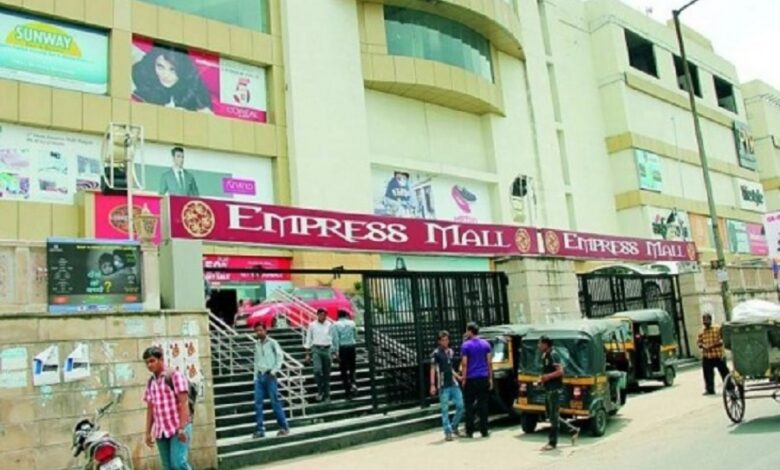
The monument to that alleged diversion is Empress Mall, Nagpur: 2,70,374 square feet of commercially diverted land, registered to KSL & Industries, valued by the ED at ₹483 crore. Provisional attachment came in May 2019. With an earlier UCO-linked attachment the agency then put at ₹234 crore, total attachment was stated at ₹717 crore. The Adjudicating Authority confirmed the mall attachment. In November 2021 the ED took physical possession. A PMLA chargesheet had been filed; the Mumbai court took cognisance on 22 January, as The Hindu reported that month.
Possession was supposed to be the end of the story. The 2026 release says it was the start of another. After attachment, the agency says, the promoters opened corporate insolvency resolution process under section 7 of the IBC through shell entities they controlled and occupied, dressed up as financial creditors, for one purpose: to protect the group’s assets. The Resolution Professionals, it says, admitted unverified and inflated claims of those related parties, and by doing so cut the voting share of the secured banks — the very lenders who had been left holding the NPA. The same RPs, the ED says, filed repeated applications to set aside PMLA attachments, suppressed adverse orders before courts and tribunals, created encumbrances, and kept the agency from taking the rent on the attached properties. That rent, the release says, was worth several crores, and it continued to be received by companies floated by the accused.
Read that slowly. A mall allegedly built with bank funds, attached as proceeds of crime, confirmed, possessed — and the cash register, on the agency’s account, still ringing for the people the attachment was meant to separate from the asset. If the ED can prove that, it is not a procedural quarrel between PMLA and IBC. It is the insolvency process being used as a cloakroom.
Ahmedabad: the same play, with a successful resolution applicant and a 95 per cent haircut
The Kolkata file is not the only one. The Ahmedabad Zone, the 6 October release says, found the same modus operandi against group entity Vidhant Realty Private Limited. Insolvency was initiated through another group entity, Kausar Textiles Pvt Ltd. Cubical Realty Pvt Ltd then became the successful resolution applicant. The ED’s charge is blunt: that was a clear violation of section 29A of the IBC, because Cubical was beneficially owned by the Tayal family, including Pravin Kumar Tayal and Navin Kumar Tayal.
Section 29A exists for this exact manoeuvre. It bars a person — and anyone acting jointly or in concert, and connected persons, promoters, and related parties — from submitting a resolution plan where the account of a corporate debtor under their management or control has been an NPA. The Supreme Court upheld the provision in Swiss Ribbons. The point of the section was to stop the promoter of a wrecked company buying it back at a distress price through a cousin, a shell, or a friendly bidder.
What the tribunal record shows is uncomfortable either way. The Mumbai Bench of the NCLT, by an order pronounced on 19 February 2025 in IA 67 of 2024 in CP(IB) 465 of 2023, approved Cubical Realty’s plan for Vidhant Realty. CIRP had been admitted on 25 September 2023 on a section 7 petition by Kausar Textile. The resolution professional was Modilal Dhanraj Pamecha. The plan was approved by 100 per cent of the committee of creditors. Cubical had filed an affidavit that it was not barred by section 29A. The numbers, as reported from that order, are the bitter part: total creditors’ claims of ₹983.91 crore, a resolution plan of ₹44.50 crore — 4.52 per cent. Financial creditors’ admitted claims were ₹899.91 crore; they were to be paid ₹44 crore over 1,800 days. Operational creditors, including statutory dues, had admitted claims of ₹83.66 crore.
A hundred per cent of a committee voting through a plan that returns under five paise in the rupee, on the back of a 29A affidavit the ED now says was false, is not a success story of the Code. It is the question the Code was written to prevent. Either the beneficial-ownership allegation collapses in court, in which case the ED has overreached, or it stands, in which case a promoter family the agency has chased since the middle of the last decade walked a related vehicle through a tribunal as the saviour of its own wreck. Both outcomes demand a faster answer than “further investigation is under progress.”
Two hundred and fifteen accounts, and ₹20 lakh on the table
The September searches, on the ED’s account, recovered papers on the incorporation and use of shell companies and on a large number of cooperative-bank accounts opened in the names of associates. Two hundred and fifteen accounts linked to the accused entities and associated persons were frozen. Cash of ₹20 lakh was seized from Pravin Tayal’s residence. Records of immovable properties said to have been concealed from the ED and the banks were identified. Fresh NPAs of group companies were unearthed.
₹20 lakh is not the scandal. It is the small change on the table while the alleged machinery — cooperative banks, associate accounts, shells — is what the agency says it has now documented. Cooperative banks have been the soft tissue of Indian laundering cases for years: thinner supervision, local relationships, accounts that do not shout. Freezing 215 of them is either a serious map of the layering, or a spray of account numbers that will not survive scrutiny. The public is owed the list, the beneficial owners, and the flow, not another press note that stops at the count.
The delay is the second offence
Count the years. Loans in 2008. CBI cases, and an ED attachment of about ₹235 crore, by 2016. Mall attached in 2019, possessed in 2021, chargesheet filed, cognisance taken. Vidhant’s CIRP admitted in 2023, plan approved by the NCLT in February 2025. Fresh searches in September 2026. At no point in the public record reviewed for this piece has a court convicted Pravin Tayal, Saurabh Tayal, Navin Kumar Tayal, or the named Resolution Professionals.
That is not a technicality to be mumbled at the end. It is the fact that makes the rest of this obscene. Attachment is not guilt. A press release is not a judgment. Cognisance is not a conviction. And an investigation that is still “under progress” eighteen years after the loans, and five years after a chargesheet and physical possession of a ₹483-crore mall, is an investigation that has failed the banks, the depositors who ultimately fund those banks, and the statute it claims to enforce. Every year of drift is a year in which rent can be argued over, claims can be admitted, resolution applicants can file 29A affidavits, and properties can, on the agency’s own 2026 account, stay concealed.
The IBC was sold as a guillotine for promoter impunity. Section 29A was the blade. If Resolution Professionals can, as the ED alleges, admit inflated related-party claims, shrink the banks’ vote, suppress adverse orders and park the rent, then the guillotine is being operated by the person on the block. IBBI and the NCLT do not get to treat that as a private dispute between an agency and a professional. A resolution professional is an officer of the process. Searching three of them — Kiran C. Shah, Vinod P. Ambavat, Ravi Kapoor — and then going quiet is not accountability.
What has to happen, and fast
The next step is not another attachment headline. It is a chargesheet that joins the 2008 fraud, the layering, the concealed properties and the alleged IBC misuse in one triable narrative; prosecution of the beneficial owners if the 29A allegation on Cubical holds; a public schedule for the trial of the PMLA complaint already cognised in Mumbai; and a direction that rent from attached assets is escrowed, not “received by companies floated by the accused.” The banks — UCO, Bank of India, Andhra Bank and whatever is left of that consortium — should be asked, in open court, why related-party claims were allowed to dilute them. The cooperative banks that housed the 215 accounts should be examined by the Reserve Bank, not merely named in a freeze order.
Eighteen years is long enough for an allegation to curdle into folklore. Either prove it, or withdraw it. What India has had instead is the worst of both: a mall taken, a chargesheet filed, a resolution plan waved through at 4.52 per cent, and the promoters still being searched in 2026.
Disclaimer. This report is based on the Enforcement Directorate’s press release of 6 October 2026, earlier ED statements reported by The Hindu, The Hindu BusinessLine, The Statesman and PTI, contemporaneous reports of the 30 September 2026 searches, and the NCLT Mumbai order of 19 February 2025 as reported from the tribunal record. Allegations remain allegations. As of the public record reviewed, no court of law has convicted Pravin Tayal, Saurabh Tayal, Navin Kumar Tayal, or the Resolution Professionals named in the 6 October release. They are entitled to the presumption of innocence. The demand of this piece is the opposite of a media conviction: a tighter, faster investigation, a speedy trial, and enforcement that finishes what it started in 2016.