The Architect Who Missed Five Summons: Nayan Raheja’s ₹1.23-Crore Question in a ₹2,426-Crore Homebuyer File

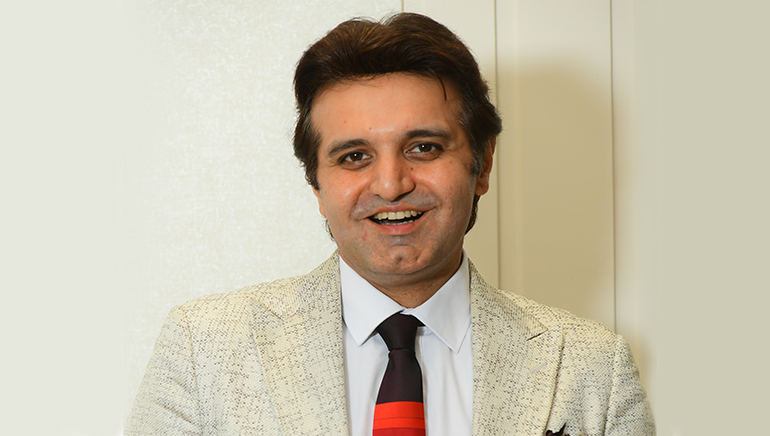
The file on Nayan N. Raheja is not a conviction. It is worse than a rumour and thinner than a charge-sheet: a money-laundering case in which a PMLA court has already refused him anticipatory bail, the Enforcement Directorate has attached a fortune around the company his father runs, and he is in the Delhi High Court asking to be written out of the story. Buyers are still waiting for keys. He is waiting for a quashing order.
The son who says he was only the architect
Nayan N. Raheja is the son of Navin M. Raheja, chairman and managing director of Raheja Developers Ltd. In court he is sold as an architect on a salary, a 0.81 per cent shareholder, a man who sat on the board only from 15 January 2003 to 12 January 2008 and again from 16 August 2010 to 26 November 2010, and who never ran the company day to day. That is his case. It is a submission. It is not a finding.
On 1 October 2026, Justice Amit Bansal of the Delhi High Court began hearing his challenge to the anticipatory-bail refusal. Senior Advocate Vikas Pahwa told the court the group had finished about 15 projects and built about 2,000 flats for the below-poverty-line category, and that Raheja was ready to join the investigation. ED counsel Rajat Nair asked for time and said the applicant had been non-cooperative. The matter was listed for 6 October. Readiness, in this file, has a paper trail.
Five summons, two appearances, one broken promise
Special Judge (PMLA) Sachin Jain of the Saket court dismissed the anticipatory-bail plea on 19 September 2026. The order did not turn on a brochure. It turned on Section 45 of the Prevention of Money Laundering Act and on conduct.
The judge held that not being named in the FIRs that feed the ECIR, or being named and not charge-sheeted, does not by itself wash a man out of a PMLA case. At the bail stage he must at least prima facie show he has not dealt with proceeds of crime under Section 3. The court found the twin conditions were not met. It also found that anticipatory bail is an exceptional concession, available where the accused can show false implication meant to harass him. Raheja had not shown that.
The conduct finding is the part his lawyers cannot draft away. Of seven summons, he appeared twice at the ED’s Gurugram zonal office and failed to appear and cooperate on five, “on one pretext or the other.” Special Public Prosecutor Anand Kirti pointed to the undertaking the Delhi High Court recorded on 30 July 2026: the petitioner would “fully cooperate” with the Enforcement Directorate. A High Court undertaking is not stationery. The bail judge treated the record after it as disentitling.
Earlier, on 1 August 2026, Additional Sessions Judge Sheetal Chaudhary Pradhan had given Navin M. Raheja and Nayan N. Raheja interim protection from arrest while the ED sought open-ended non-bailable warrants under the Bharatiya Nagarik Suraksha Sanhita, read with the PMLA, for alleged non-joining of a Section 50 investigation. Protection is not exoneration. It expired as comfort the moment the later bail judge counted the missed summons.
The numbers his own petition cannot hide
The ED’s public arithmetic, from its own press notes, is not a blogger’s sum.
On 28 April 2026 the Delhi zonal office provisionally attached immovable properties of about ₹1,113.81 crore belonging to related entities N.A. Buildwell Pvt. Ltd. and Riyasat Palaces Ltd., and to Navin M. Raheja and his family members. Searches under Section 17 had already been run on 27 June 2025, and again on 25 April 2026. From the April 2026 search the agency said it seized documents, digital evidence, jewellery and bullion of about ₹15.82 crore, and foreign currency of about ₹15 lakh. The ED’s case, in its words, is that a substantial part of homebuyer money was siphoned through related entities and shell companies to entities controlled by the director, his family members and close associates, and used for purposes unrelated to the projects, including assets and personal use.
On 15 June 2026 came a further provisional attachment of about ₹503.48 crore, covering Raheja Developers Ltd. and properties in the names of Navin M. Raheja and family. On 31 July 2026 the agency attached a further ₹782.36 crore of the company’s immovable properties. Cumulative estimated market value, on the ED’s 31 July note: about ₹2,399.65 crore.
The collection figure the agency has repeated since April is about ₹2,425.99 crore from around 4,600 homebuyers, taken for residential units and, on the agency’s case, not applied to those units. The ECIR itself dates to 2022, built on FIRs of the Economic Offences Wing in Delhi and Gurugram. Four years from the ECIR to three attachment orders in one summer is not speed. It is a late storm after a long drought.
The figure aimed at the son is smaller, and that is exactly why it matters. In his own writ to quash the ECIR — W.P. (Crl.) No. 2256 of 2026, Nayan N. Raheja v. Union of India and another, filed through Karanjawala & Co. — the allegations as reported by BW Legal World are these: the company collected about ₹2,699.13 crore from around 4,600 buyers and diverted about ₹1,353.26 crore for non-construction purposes; he is alleged to have received ₹1.23 crore from proceeds of crime; properties of about ₹14.10 crore belonging to him have been provisionally attached; his bank accounts have been frozen; his residence has been under surveillance. Justice Purushaindra Kumar Kaurav issued notice. The next date is 15 October 2026.
A ₹1.23 crore receipt allegation is not a ₹2,426 crore conviction. It is also not a cloak. The ED does not have to prove he booked every flat. It has to show, if it can, that he dealt with proceeds. His lawyers say that in two of three predicate FIRs in which he was named he was not charge-sheeted, and that the third was settled. That is a serious defence, and a court will have to test it. It does not erase a bail court that has already refused him shelter, or an attachment the agency says is his.
The projects the money had names for
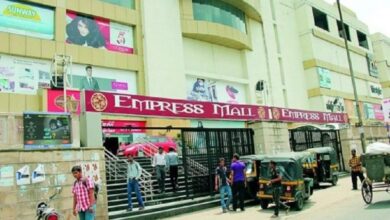
The FIRs described in the bail proceedings name Raheja Revanta, Raheja Shilas, Raheja Trinity, Raheja Oma, Raheja Mall, Raheja Aranya, Raheja Atharva and Vedanta. The shape of the allegation is the same in each: money taken under builder-buyer agreements for flats or commercial space, not used to finish the project, units not handed over.
This is not one angry buyer and a delayed paint job. It is the ED’s figure of roughly 4,600 buyers and roughly ₹2,426 crore, set against a defence that the promoter’s son was drawing a salary for architectural drawings. Buyers do not pay an architect’s salary. They pay for a floor, a date, and a key. On the agency’s case, a substantial part of that money left the projects.
The strategy: shrink the man, enlarge the delay
The legal strategy is recognizable. Shrink the role. Count the days on the board. Point at 0.81 per cent. Say the predicate case does not name him in the charge-sheet. Offer, again, to cooperate. Ask one bench for anticipatory bail. Ask another to quash the ECIR as an abuse of Articles 14 and 21. None of that is unlawful. All of it is available to an accused. What it is not is an answer to a buyer in Sector 78 or Sector 84 who paid ninety per cent of a price and is still looking at a site.
The pinch is in the sequence. Undertaking of full cooperation, 30 July 2026. Interim protection while warrants were sought, 1 August 2026. Anticipatory bail refused for non-appearance on five of seven summons, 19 September 2026. High Court told, on 1 October, that he is ready to join. Quashing petition already on foot before a different bench, notice issued, next date 15 October. Ready, in this record, is a word that keeps arriving after the summons.
What the agencies still have not done
Bail denied is not an arrest. As of the public record examined for this piece, Nayan N. Raheja has not been reported in custody. The ED attached close to ₹2,400 crore, seized bullion and jewellery worth ₹15.82 crore and foreign currency worth ₹15 lakh, and still has “further investigation is ongoing” at the bottom of its July note. Ongoing, four years after the ECIR, is a long time to leave 4,600 buyers as a press-release statistic.
The demand that follows from the record is not a slogan. It is a timetable. The ED should finish the Section 50 trail, put the alleged ₹1.23 crore receipt and the family-entity transfers into a complaint or drop them, and stop treating provisional attachment as a substitute for a trial. The predicate agencies should say, in a charge-sheet or a closure report, whether the son is in or out. The PMLA court and the High Court should not let cooperation undertakings become a revolving door. Buyers are not a backdrop for a quashing petition. If the allegation is diversion of homebuyer money, the case has to be investigated tightly, filed quickly, and tried. Delay is not neutrality. Delay is the method by which a tower stays unfinished and a defence stays untested.
Disclaimer
The matters above are allegations under investigation and pleadings before courts, together with findings at the stage of anticipatory bail. Allegations remain allegations. Provisional attachment under the PMLA is not confiscation and is not a finding of guilt. Refusal of anticipatory bail is not a conviction. Insolvency or regulatory orders, where they exist, are not criminal convictions. No court of law has convicted Nayan N. Raheja, Navin M. Raheja, or Raheja Developers Ltd. of money laundering or of the predicate offences discussed here, as of 7 October 2026. They are entitled to the presumption of innocence until found guilty by a competent court. This piece demands tighter, speedier investigation and faster trial by the enforcement agencies and the courts. It does not declare a verdict the courts have not delivered.