Nayan Raheja Under the ED Microscope: ₹2,425.99 Crore From 4,600 Homebuyers, ₹2,399.65 Crore in Attachments — And Five Missed Summonses That Refuse to Disappear
An investigative examination of the allegations against Nayan N. Raheja, the Raheja Developers money trail, the contradictory public record about his role, successive ED attachments, insolvency proceedings and the uncomfortable question confronting investigators: why is a case of this scale still moving without a concluded investigation or trial?


There are real-estate disputes, and then there are cases in which the numbers become so large that calling them merely “delivery delays” starts sounding almost insultingly inadequate.
The Enforcement Directorate’s own public record places the Raheja Developers investigation in the latter category.
The agency says approximately ₹2,425.99 crore was collected from around 4,600 homebuyers in connection with multiple real-estate projects. It says substantial portions of those collections were allegedly diverted and used for purposes other than development and completion of the promised projects. By 31 July 2026, the ED said the cumulative estimated market value of properties provisionally attached in the case had reached ₹2,399.65 crore. Directorate of Enforcement
And now the spotlight has moved sharply onto Nayan N. Raheja.
He is seeking anticipatory bail.
The ED is opposing it.
A Saket court has already rejected his anticipatory-bail application.
And, most damagingly for any attempt to portray the proceedings as nothing more than an ordinary contractual dispute, the September 19, 2026 order records that seven summonses were served and Nayan appeared before the ED’s Gurugram Zonal Office on only two occasions, while on five occasions he did not appear and cooperate in the investigation. ETRealty.com
That single fact deserves more scrutiny than the glossy language generally used around major real-estate groups.
Because the central issue is no longer just whether homes were delayed.
It is whether investigators can establish where thousands of crores went, who controlled the relevant entities, who benefited, whether homebuyer money was diverted, and what role—if any—Nayan Raheja played in that alleged architecture.
And the public deserves answers.
Not brochures.
Not awards.
Not corporate reputation.
Answers.
The case is much bigger than Nayan’s bail application
The current controversy has to be viewed against the larger PMLA investigation into Raheja Developers Ltd.
The ED says the case arose from multiple Economic Offences Wing FIRs based on complaints by homebuyers. Its 2025 search release said the investigation concerned allegations that substantial sums were collected from investors and homebuyers on assurances of residential flats but that promised flats were not handed over. Searches were conducted at 13 locations in Delhi, NCR and Mohali on 27 June 2025. Directorate of Enforcement
The investigation escalated dramatically in April 2026.
The ED conducted further searches on 25 April 2026. According to its official 28 April release, the searches resulted in seizure of documents and digital evidence, along with jewellery and bullion valued at approximately ₹15.82 crore and foreign currency equivalent to approximately ₹15 lakh. The agency also said its examination of seized material and other evidence indicated that substantial sums collected from homebuyers had allegedly been siphoned through related entities and shell companies and ultimately transferred to entities controlled by the director, family members and close associates. Directorate of Enforcement
Those are allegations made by the investigating agency.
They are not a conviction.
But they are also not meaningless press-release language.
They are the stated findings and allegations emerging from a continuing PMLA investigation.
The attachment trail is enormous
The chronology is difficult to ignore.
On 28 April 2026, the ED announced a provisional attachment of properties with an estimated current market value of ₹1,113.81 crore, involving N.A. Buildwell Pvt. Ltd., Riyasat Palaces Ltd., Navin M. Raheja and family members. Directorate of Enforcement
On 15 June 2026, another ₹503.48 crore worth of properties was provisionally attached. The cumulative figure rose to approximately ₹1,617.29 crore. The Tribune
On 31 July 2026, another ₹782.36 crore of immovable property belonging to Raheja Developers Ltd. was provisionally attached. The ED’s official release states that the cumulative estimated market value of properties attached in the case had reached approximately ₹2,399.65 crore. Directorate of Enforcement
Three attachment orders.
Three major financial interventions.
One case.
And an extraordinary financial footprint.
There is an obvious mathematical curiosity here: the ED’s ₹2,399.65-crore cumulative attachment figure is numerically close to the ₹2,425.99 crore that the agency says was collected from approximately 4,600 homebuyers. The two figures must not be treated as equivalent—one concerns estimated market value of provisionally attached property, the other customer collections—but the proximity is striking enough that the underlying valuation, diversion and tracing methodology deserves public explanation. Directorate of Enforcement
Indeed, ₹2,425.99 crore divided across 4,600 buyers works out mathematically to an average of roughly ₹52.7 lakh per buyer, although actual individual payments would obviously have varied.
That is not a minor consumer dispute.
That is a financial ecosystem affecting thousands of families.
And then comes Nayan Raheja
Nayan’s legal position is clear.
According to reporting of the September and October proceedings, his lawyers have argued that he was not involved in day-to-day management or decision-making at Raheja Developers Ltd., that his directorship in RDL ran from 15 January 2003 to 12 January 2008 and then from 16 August 2010 to 26 November 2010, and that after that he held no management position in the company. His lawyers also said he held approximately 0.81% in the company and received remuneration for advising on architectural drawings. They further argued that he had not been charge-sheeted in the predicate offences and therefore the PMLA allegations against him were not sustainable. ETRealty.com
That is the defence.
But here the investigative record becomes considerably more interesting.
Because the public record from earlier years does not present quite such a neat picture.
A 2019 Delhi court order records that Nayan N. Raheja was then described as a Director of Riyasat Towers Pvt. Ltd. and Executive Director of Raheja Developers Ltd. The same record describes Riyasat Towers as a wholly owned subsidiary of RDL and records that documents connected with a 2017 land transaction bore Nayan’s signature as director. Indian Kanoon
This is not some anonymous internet allegation.
It is a judicial record of a separate dispute.
And the company’s own public-facing material tells a similar story.
In 2019, Raheja Developers publicly identified Nayan as its Executive Director, and company materials continued to describe him in that capacity during the 2020–21 period. The Economic Times
So an obvious investigative question arises:
How should the public reconcile the claim that Nayan had no management role after November 2010 with public and judicial records from 2019–21 describing him as an Executive Director or company director?
That does not, by itself, establish that he participated in any alleged money laundering.
Nor does it establish that he controlled funds.
But it is a legitimate inconsistency requiring examination.
And the answer should come from corporate records, board minutes, statutory filings, bank trails, authority documents, emails, payment instructions, beneficial ownership analysis and the ED’s case material—not from public-relations narratives on either side.
The ₹1.23-crore allegation cannot simply be waved away
The Nayan-specific dimension of the matter becomes more serious still in reporting concerning his Delhi High Court writ petition challenging the ED proceedings.
PTI/ET reporting on that litigation stated that the allegations involved ₹2,699.13 crore allegedly collected from around 4,600 homebuyers, of which ₹1,353.26 crore was alleged to have been diverted for non-construction purposes. That reporting further stated that the case against Nayan included an allegation that he had received ₹1.23 crore from the proceeds of crime, with properties worth approximately ₹14.10 crore attached in relation to him. ETRealty.com
These figures require an important editorial qualification.
The ED’s own April and July 2026 press releases publicly cite ₹2,425.99 crore as the amount collected from approximately 4,600 homebuyers. Directorate of Enforcement
The later court-reporting figure of ₹2,699.13 crore is therefore different.
That discrepancy should not be quietly buried.
It should be explained.
Is the higher figure based on a broader project universe?
A later stage of financial reconstruction?
Additional accounts?
A different methodology?
A different cut-off?
The difference is large enough that the agencies and proceedings should make the methodology transparent.
Investigative journalism should ask uncomfortable questions even when the answers are inconvenient.
The summons issue is where Nayan’s case becomes particularly difficult
This is arguably the single most important development in the current litigation.
On 30 July 2026, the Delhi High Court recorded Nayan’s undertaking that he would fully cooperate with the ED. ETRealty.com
Then came the September proceedings.
The Saket Special Court, presided over by Special Judge PMLA Sachin Jain, rejected Nayan’s anticipatory-bail plea.
The court held that merely because a person is not named in a predicate FIR, or is not charge-sheeted in the predicate offence, does not automatically mean that person stands outside PMLA proceedings. The court found that the statutory conditions under Section 45 had not been satisfied and that Nayan had not demonstrated reasonable grounds for believing that he was not guilty of money laundering at that stage. Web India 123
But the court also took issue with his conduct during the investigation.
Seven summonses. Two appearances. Five non-appearances.
That is the record reported from the September 19 order. ETRealty.com
There is a simple question here.
If an accused offers an undertaking before a High Court that he will fully cooperate, why should an investigating agency later have to tell another court that he has not been cooperating?
The answer may ultimately be completely lawful and fact-specific.
There may have been medical reasons.
Scheduling issues.
Legal objections.
Procedural disagreements.
There may be explanations the public does not yet have.
But the fact that a court recorded five non-appearances makes this an issue that cannot responsibly be ignored.
And it becomes especially relevant because anticipatory bail is precisely about protecting liberty before arrest while ensuring that investigation is not frustrated.
The defence says “architect”; the investigation says “role in the corporate structure”
Nayan’s lawyers have emphasised that he was an architect, that he advised on drawings, that his shareholding was approximately 0.81%, and that he was not involved in day-to-day management.
The ED’s case, as reported in the September proceedings, is fundamentally different.
The agency says its investigation has produced sufficient material indicating that Nayan was involved in the affairs of RDL or was a director of subsidiary companies into which homebuyer funds were allegedly diverted for non-construction purposes. ETRealty.com
This is the point where corporate titles become less important than documentary evidence.
A 0.81% shareholder can theoretically have enormous influence.
A 30% shareholder can theoretically have little operational role.
A director can be active.
A director can be nominal.
An Executive Director can exercise actual control.
Or not.
The only credible answer lies in evidence:
Who authorised payments?
Who signed instructions?
Who controlled subsidiary accounts?
Who approved inter-company transfers?
Who interacted with lenders?
Who negotiated land transactions?
Who issued project-related instructions?
Who benefited from transferred money?
Who sat on which boards?
Who received what remuneration?
Who communicated with homebuyers?
Who signed or authorised contractual documents?
Who knew what, and when?
That is the investigation the public deserves.
Raheja Revanta: from luxury promise to insolvency proceedings
The story becomes even more difficult to dismiss as a simple “delay” when individual projects are examined.
The ED proceedings refer to multiple Raheja projects, including:
Raheja Revanta
Raheja Shilas
Raheja Trinity
Raheja Oma
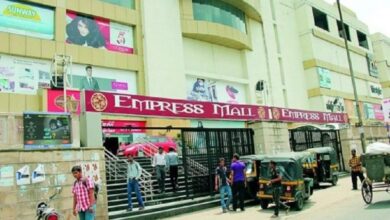
Raheja Mall
Raheja Aranya
Raheja Atharva
Vedanta
The allegations, as reported from the bail proceedings, concern money collected from customers for residential and commercial units and the alleged diversion of those funds rather than their use toward completion of the promised projects. ETRealty.com
Revanta is particularly revealing.
Haryana RERA’s record identifies Raheja Revanta in Sector 78, Gurugram as a registered residential group-housing project with registration 32 of 2017 and an area of approximately 18.72 acres. Haryana RERA
Project records disclose possession provisions tied to contractual timelines plus infrastructure-related conditions, and numerous proceedings concerning possession delays have followed. Haryana RERA
Then, in June 2026, the IBBI recorded that the NCLT had initiated Corporate Insolvency Resolution Process for Raheja Developers Ltd.—Revanta Project by order dated 8 June 2026. The IBBI’s resolution-plan record shows that the process proceeded into the resolution-applicant stage. IBBI
So one of the group’s major projects is not merely the subject of buyer frustration.
It has entered the insolvency framework.
That changes the seriousness of the commercial story.
And Shilas was already an insolvency battleground
The problems are not limited to Revanta.
In November 2024, the NCLT admitted insolvency proceedings concerning Raheja Shilas, following a petition by 43 homebuyers. The tribunal treated the matter as a debt-and-default dispute involving payments made by buyers and delayed delivery. SCC Online®
The NCLAT subsequently confined that CIRP to Raheja Shilas (Low Rise) rather than allowing the November 2024 order to operate as a blanket company-wide insolvency proceeding. It also made clear that allottees in other projects remained free to pursue independent proceedings. Moneylife
That distinction matters.
The insolvency proceedings do not prove the PMLA allegations.
But they establish something else that cannot simply be argued away:
There has been judicially recognised default and prolonged buyer distress in at least specific Raheja projects, with insolvency proceedings used as a remedy.
The company has denied wrongdoing
A serious investigation must carry the response of the accused side.
Raheja Developers has denied fraud allegations.
In a statement reported following the April 2026 ED action, the company said it had invested significantly more funds into the project than had been collected from customers, and claimed that this had been substantiated through a forensic audit conducted under the supervision of Haryana RERA. The company said there had been no diversion or misuse of funds. The Economic Times
Nayan’s lawyers have separately denied personal involvement in the alleged diversion, relying on his stated role as an architect, his limited shareholding, his claimed absence from management after 2010 and the fact that he was not charge-sheeted in the predicate offences. The News Mill
Those arguments deserve to be heard.
They also deserve to be tested.
That is what an investigation is supposed to do.
Infrastructure cannot answer a money-trail question
One of the explanations advanced around some projects has concerned external infrastructure—roads, water, sewerage, approvals and related governmental impediments.
Indeed, individual RERA records contain contractual language linking some possession obligations to availability of necessary external infrastructure. Haryana RERA
But here is the analytical problem:
Infrastructure may explain delay. It does not automatically explain financial flows.
A road delay does not explain an inter-company transfer.
An approval delay does not explain a payment to an unrelated entity.
A construction slowdown does not by itself explain an asset purchased by a group-connected person.
A government bottleneck does not answer who authorised funds moving through subsidiaries.
Those are separate questions.
And the ED’s case is specifically about alleged diversion and laundering—not simply whether a builder delivered a flat late.
That distinction is fundamental.
A peculiar contradiction sits at the heart of the narrative
On one side, the defence asks the courts to view Nayan essentially as an architect with a tiny shareholding and no meaningful management role for many years.
On the other, the historical public record contains repeated descriptions of him as Executive Director of Raheja Developers.
The 2019 judicial record describes him as a current RDL Executive Director and RTPL director. Indian Kanoon
Raheja’s own public communications around 2019–21 similarly identify him as Executive Director, including statements attributed to him regarding project delivery, luxury housing, affordable housing and the group’s business strategy. NewsWatch
Again, that does not prove money laundering.
But it makes one question unavoidable:
What exactly was Nayan Raheja’s role, authority and influence during the years in which the relevant projects were marketed, financed, developed and delayed?
That question should be answered by the evidence.
Not adjectives.
Not branding.
The ₹2,425.99 crore question has now become a ₹2,399.65 crore question
There is another uncomfortable feature of this case.
The ED says homebuyers paid approximately ₹2,425.99 crore.
The ED says approximately ₹2,399.65 crore worth of property has been provisionally attached.
Again: these are different legal and financial categories.
An attachment is not a recovery.
A market valuation is not the same as cash.
A property belonging to a related entity is not automatically equivalent to the alleged proceeds of crime.
And a provisional attachment is not final confiscation.
But the figures nevertheless indicate the extraordinary breadth of the investigation.
When a case reaches this magnitude, the public interest in a rapid, forensic accounting of the entire money trail becomes overwhelming.
What about Nayan’s present anticipatory-bail battle?
On 1 October 2026, the Delhi High Court heard the initial submissions on Nayan’s anticipatory-bail application.
The ED sought additional time to respond and told the court that Nayan had been non-cooperative.
Nayan’s senior counsel said he was willing to join the investigation and pointed to the group’s project history and its claimed completion of projects, including affordable housing. ETRealty.com
The matter was reported for hearing on 6 October 2026.
I have not located a reliable public report establishing a final merits decision from that date. Accordingly, it would be irresponsible to state that the High Court has either granted or rejected the fresh anticipatory-bail plea unless and until that order is verified.
That caution matters.
The internet has plenty of confident statements.
Investigative journalism requires fewer confident statements—and more evidence.
The most important demand now: finish the investigation
After the searches, seizures, attachments, corporate litigation, RERA proceedings, insolvency proceedings and bail litigation, the public should not have to spend another year discovering the same facts through scattered court orders.
The enforcement process now needs to become sharper.
First, the money trail must be completed
Every rupee collected from homebuyers should be reconstructed through audited bank records, project accounts, related-party transfers, inter-company loans, advances, land purchases, asset acquisitions and beneficial ownership.
Second, the individual roles must be separated
The case should not become a collective punishment exercise.
If Nayan is implicated, investigators should demonstrate precisely why.
If he is not responsible, the evidence should establish that too.
The standard should be evidence—not family association.
Third, the discrepancy in financial figures must be explained
Why does one public court-reporting account refer to approximately ₹2,699.13 crore collected and ₹1,353.26 crore allegedly diverted, while the ED’s own published releases cite ₹2,425.99 crore collected? ETRealty.com
The answer should be placed on record.
Fourth, the summons issue must be resolved factually
Seven summonses.
Two appearances.
Five non-appearances.
A prior undertaking of full cooperation.
The courts and investigating agency should determine exactly what occurred, why, and whether the reasons offered were legally sufficient. ETRealty.com
Fifth, trials should not become archaeological exercises
The alleged financial conduct concerns large sums and thousands of homebuyers.
Evidence should be preserved.
Assets should be protected.
Witnesses should be examined promptly.
The investigative complaint, if warranted by the evidence, should be filed without avoidable delay.
And once the matter reaches trial, proceedings should move as expeditiously as the law permits.
The public-interest question that cannot be postponed
This is not an appeal for conviction by newspaper.
Nor should the State arrest somebody merely to satisfy public anger.
Arrest must remain an evidence-based legal decision.
But the opposite extreme is equally unacceptable.
An investigation involving thousands of homebuyers, more than ₹2,400 crore in stated collections, successive property attachments approaching ₹2,400 crore, multiple FIRs, seizures of documents and valuables, project-level insolvency and an accused whose cooperation has itself become a matter of judicial scrutiny cannot be allowed to become an endless procedural maze. Directorate of Enforcement
The enforcement agencies now need to tell the public—not through slogans but through legally supportable action—what remains to be investigated.
And if the evidence ultimately establishes that Nayan Raheja played a criminal role in the alleged diversion or laundering, then the law should move decisively against him.
If it does not, then the evidence should clear him.
Either way, the investigation must move faster than the headlines.
Because for the thousands of homebuyers caught in prolonged disputes, every additional adjournment has a price.
Every delayed investigation has a cost.
Every year of uncertainty is another year in which the legal system is asking families to remain patient while their homes, savings and financial futures remain trapped in litigation.
That is not justice.
That is delay wearing a legal costume.
EDITORIAL CONCLUSION
Nayan N. Raheja is entitled to defend himself.
He is entitled to due process.
He is entitled to the presumption of innocence.
But due process cannot mean perpetual delay.
The ED’s investigation must be tightened, the financial trail must be completed, the role of every individual—including Nayan—must be established on evidence, the assets must remain protected in accordance with law, and any prosecution supported by evidence must proceed to trial without unnecessary delay.
The courts, too, should treat a matter involving thousands of homebuyers and thousands of crores as a priority for expeditious adjudication.
The objective should not be punishment before proof.
The objective should be something more basic:
Find the money. Establish the truth. Identify responsibility. Protect the buyers. And bring the case to a legally final conclusion.
Anything less risks turning one of the most consequential homebuyer-financial investigations in the NCR into another case where the money trail moves faster than justice.
STRONG LEGAL & EDITORIAL DISCLAIMER
This article is an investigative and analytical report based on publicly available Enforcement Directorate releases, judicial orders and court reporting, Haryana RERA records, IBBI/NCLT materials and contemporaneous news reports available as of 7 October 2026. All allegations attributed to the Enforcement Directorate, homebuyers, complainants or other parties remain allegations unless and until established by a competent court. A provisional attachment under the Prevention of Money Laundering Act is not, by itself, a final confiscation or a finding of guilt. Admission into insolvency proceedings constitutes a finding of default within the insolvency framework and is not a criminal conviction. Rejection of anticipatory bail is not a conviction. The defence and positions attributed to Nayan N. Raheja and Raheja Developers have been included where publicly reported. No court of law has convicted Nayan N. Raheja of money laundering or the alleged diversion of homebuyer funds on the material reviewed for this article. The article does not pronounce guilt; it demands a prompt, transparent, evidence-based investigation and, where charges are ultimately filed, a speedy and fair trial.
Key primary records
ED’s official 28 April 2026 attachment release: Directorate of Enforcement
ED’s official 31 July 2026 attachment release: Directorate of Enforcement
Delhi High Court/Saket proceedings as reported: ETRealty.com
Earlier Delhi court record concerning Nayan’s corporate role: Indian Kanoon
IBBI record on Revanta CIRP: IBBI
NCLT/IBC record concerning Shilas: