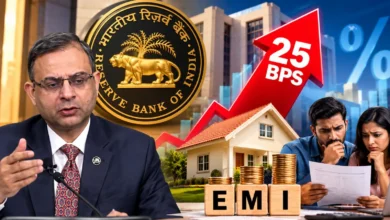
Bail Is the Rule, Jail Is the Exception — But Has This Become a Boon for Financial Criminals? The Nayan Raheja Question


India’s much-repeated judicial principle that “bail is the rule and jail is the exception” was never meant to become a comfortable escape route for people accused in serious financial crimes.
Yet today, the principle increasingly invites an uncomfortable question: who actually pays the price when an accused gets bail but the victims are left waiting for justice for decades?
The case surrounding Nayan Raheja, who is facing an Enforcement Directorate investigation and has sought anticipatory bail, brings that question sharply into focus.
To be absolutely clear, Nayan Raheja has not been convicted and remains entitled to the presumption of innocence and due process. But the allegations and the prolonged suffering of homebuyers raise a larger question about whether the legal system is giving too much importance to the immediate liberty of an accused while giving too little urgency to the suffering of those who allegedly lost their life savings.
“Until Proven Guilty” Cannot Become a Permanent Licence for Delay
“Until proven guilty, everyone is innocent.”
Of course.
That principle is fundamental.
But somewhere along the way, the principle risks being transformed from a protection against wrongful conviction into something far more troubling:
Years of liberty for the accused, followed by decades of waiting for everyone else.
That cannot become the new normal.
A criminal trial in India can take years and, in some cases, an extraordinarily long period of time. By the time the verdict finally arrives, victims may have spent a substantial part of their lives waiting.
And that is precisely where the system begins to send a dangerous message.
If an accused knows that bail is likely to be available, that the proceedings can be contested repeatedly and that the final trial may remain unresolved for years, where is the deterrence?
What fear does the law create?
What urgency does the system create?
What message reaches the next financial operator tempted to gamble with other people’s money?
The Rich Have Lawyers. The Victim Has EMI.
There is a bitter perception in India that the financial offender enters the courtroom with an arsenal of legal resources while the victim enters with unpaid bills.
The perception is simple:
Hire the best lawyers, obtain bail, fight the case and wait.
There is even a widely held public perception that a wealthy accused can engage designated senior advocates at fees running into ₹10–15 lakh or more for a single appearance.
Whether that perception is accurate in any particular case is not the point.
The point is the inequality it represents in the public imagination.
The alleged financial offender has money for litigation.
The homebuyer has an EMI.
The alleged offender can fight case after case.
The homebuyer continues paying rent.
The alleged offender can seek protection from arrest.
The homebuyer continues waiting for a home that may never arrive.
And then the system congratulates itself on protecting liberty.
Whose liberty?
Once Bail Is Granted, What Happens to the Victims?
This is the part nobody likes to discuss.
Suppose bail is granted.
Then what?
The investigation continues.
The proceedings continue.
The hearings continue.
The adjournments continue.
The appeals continue.
And eventually, the trial can continue for years.
Meanwhile, the people who invested their life savings in their dream homes remain trapped.
They may continue living in rented accommodation.
They may continue paying EMIs on bank loans.
They may continue carrying the financial burden of a property for which they are still waiting.
Their money is gone from their hands.
Their home is still out of reach.
Their patience is exhausted.
And the legal system tells them, in effect:
“Please wait.”
For how long?
Ten years?
Twenty years?
Thirty years?
Forty?
At that point, justice becomes almost theatrical.
A case file survives.
The victims survive.
The legal proceedings survive.
But the dream for which the victims paid may have disappeared decades earlier.
This Is How Confidence in the System Dies
Financial crime does not thrive only because criminals are clever.
It thrives when criminals believe the consequences can be postponed.
If the perceived equation becomes:
Take the money → face investigation → obtain bail → fight endlessly → delay trial → let time do the rest,
then the criminal law loses its most important weapon:
deterrence.
That is why the enormous rise in financial crime should concern the justice system.
A criminal justice system must not merely punish after the fact.
It must also create enough fear beforehand to discourage the next offence.
Otherwise the message becomes extraordinarily dangerous:
Crime may be risky, but the legal process is slow enough to be survivable.
The Supreme Court Says Fear Must Exist. Why Not for Financial Offenders?
The Supreme Court has recently spoken about the need to instil fear in the minds of goons and anti-social elements committing crimes against women.
That principle deserves a much wider question.
Why should fear of the law be restricted to one category of offender?
Why should a person accused of physically attacking a woman be expected to fear the consequences while a sophisticated financial offender allegedly capable of causing immense economic devastation is treated primarily through the lens of delay, procedure and liberty?
Financial crime may not always leave visible wounds.
But the damage can be devastating.
For a homebuyer, losing lifelong savings is not an accounting entry.
It is a destroyed future.
It is years of rent.
It is years of EMI.
It is family pressure.
It is uncertainty.
It is watching a dream home remain unfinished while the legal system keeps moving at its own leisurely pace.
If the Supreme Court believes that fear of consequences can prevent crime, then that principle should not become selective.
The financial criminal should fear the law too.
The Nayan Raheja Case Should Not Become Another Endless Legal Story
The Nayan Raheja matter is therefore about much more than one bail application.
It represents the anxiety that the Indian legal system may once again allow the calendar to become the most powerful defence strategy.
And that is precisely what must be avoided.
Thousands of homebuyers and investors cannot be expected to spend another decade waiting while the accused fights for liberty and the system fights with its own backlog.
These people did not invest imaginary money.
They invested their lifelong savings.
They borrowed.
They paid.
They trusted.
They planned their lives around the promise of a home.
Yet they remain trapped in rent and EMI while the legal battle continues.
At some point, the justice system must ask a brutally simple question:
Who is being protected by delay?
India Cannot Afford Another Vijay Mallya or Nirav Modi Situation
There is another fear that cannot simply be brushed aside.
Once a person facing a serious financial investigation obtains bail, there is always a concern—depending on the facts of the case—that the accused may attempt to leave India and place themselves beyond the effective reach of the justice system.
India has already experienced enormously difficult, prolonged efforts to bring back high-profile economic offenders such as Vijay Mallya and Nirav Modi.
The country cannot afford to repeat that experience.
It should not have to spend another decade fighting extradition battles while victims continue waiting at home.
The lesson should have been learned already:
Once an accused is outside the country and beyond effective jurisdiction, bringing that person back can become a battle in itself.
India does not need another one.
The Court Must Not Take Another Risk
Nobody is asking the judiciary to convict anyone without trial.
Nobody is asking the courts to abandon due process.
The demand is much simpler:
Do not allow the principle of bail to become a weapon against the victims.
Do not allow the accused to enjoy years of freedom while the victims endure years of suffering.
Do not allow judicial backlog to become an indirect benefit for those accused of major financial wrongdoing.
Do not allow the passage of time to become the most powerful defence in the courtroom.
And above all, do not take another avoidable risk with an accused in a serious financial case when the country already knows how difficult it can be to bring economic offenders back once they leave India.
India is not ready for another decade-long international chase.
The homebuyers are not ready for another decade of rent and EMI.
And the justice system should not expect victims to spend their entire lives waiting for a verdict.
Because when the accused gets bail and the victim gets another twenty years of waiting, one question inevitably follows:
Is the system protecting justice — or merely protecting the passage of time?
The Nayan Raheja case deserves an answer.
Not twenty years from now.
Now.