In the quick-moving world of Indian edtech, a reason for concern seems to be brewing. Physics Wallah (PW), which was once hailed as the people’s hero in a big company-dominated industry, seems to be taking a path that raises some very serious questions regarding integrity, value, and educational quality. It makes us wonder about a troubling question:
Is Physics Wallah overcharging fees without offering real degrees, essentially replicating the wrong practices that have impacted other edtech firms?
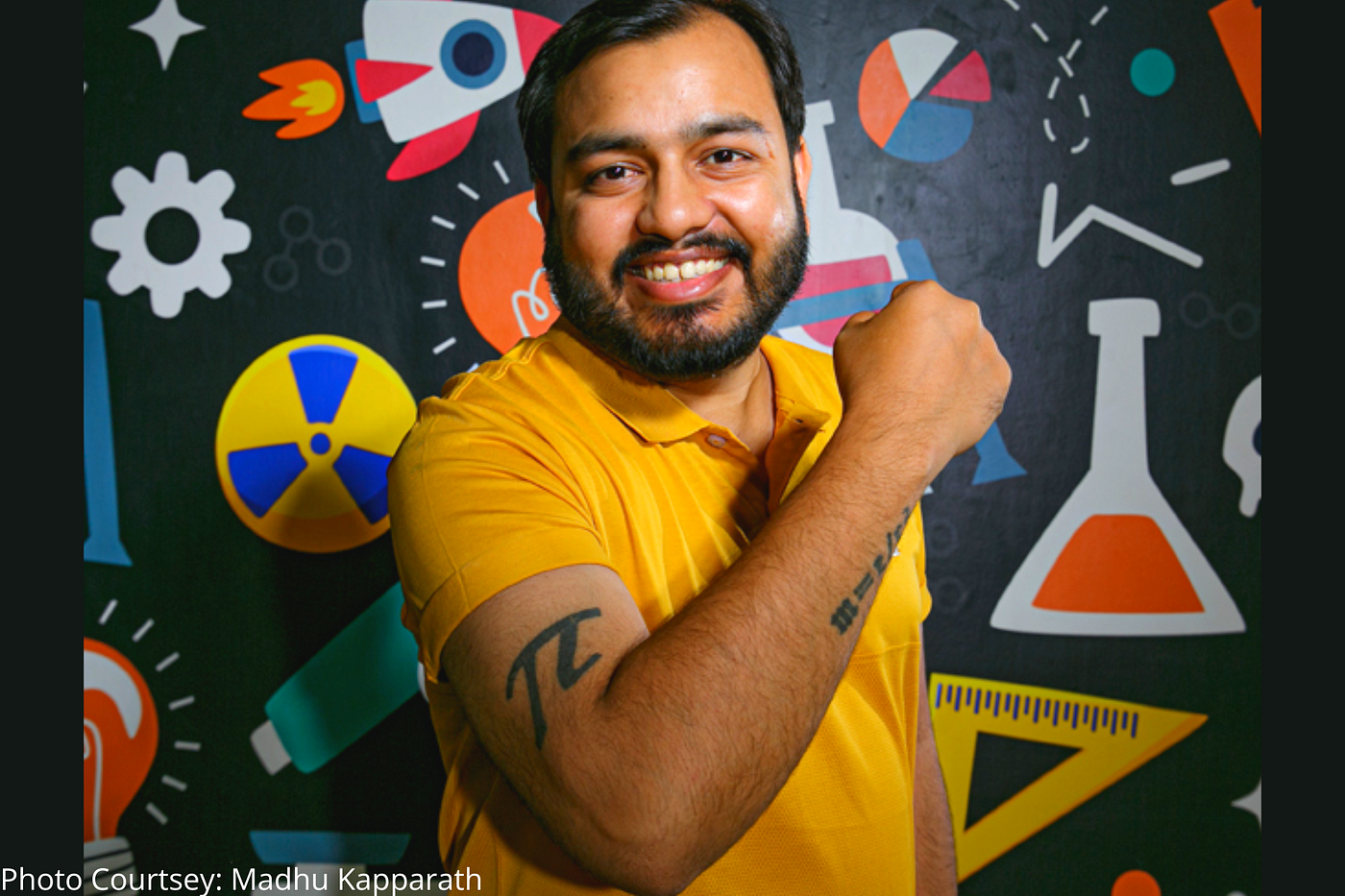
The history of Indian educational technology, aka Indian ed-tech has been one of high hope and some problems. When these platforms came out, they were hoping to make education available to everyone, so that many people who could not otherwise afford it could learn well. Physics Wallah, which was started by Alakh Pandey, became popular very quickly as a affordable alternative to expensive coaching centers. Its YouTube channel was providing free lectures, and its paid courses were much affordable than those of its competitors. This strategy helped Physics Wallah receive a lot of respect and become worth $3.7 billion—a huge achievement in an industry where large brands like Byju’s and Unacademy have had serious problems.
But fresh evidence reveals a stunning twist. The PW Institute of Innovation now charges approximately Rs 15 lakh for what it describes as a professional technical course, as reported by a news media website. But students who initially enrolled into this course did not receive a BTech degree, the least expected qualification for this amount of money. Rather, they were required to register separately for online BSc courses offered by affiliated universities. While PW has since begun awarding a BTech degree, it is from Medhavi Skill University in Sikkim— an academy that lacks the reputation and credibility that would otherwise justify such sky-high fees.
History says Sikkim is embroiled in providing fake degrees.
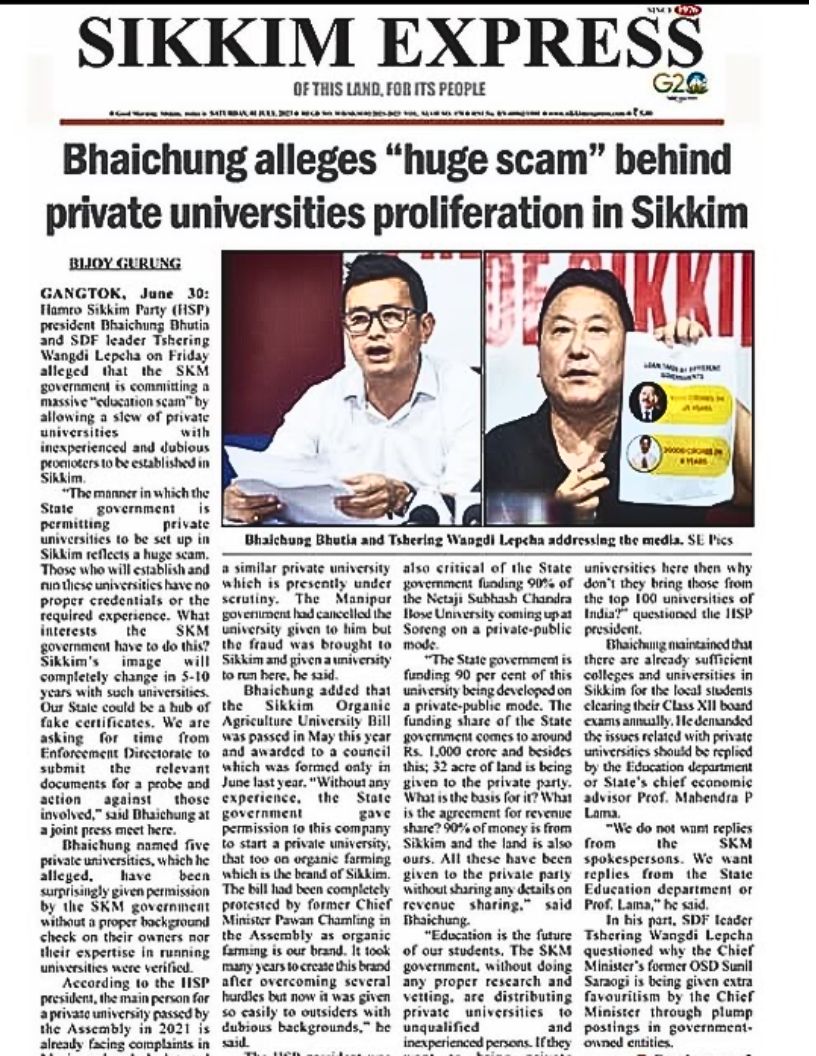
Medhavi Skills University in Sikkim has faced accusations of fraud, particularly regarding the offering of degrees and certificates in violation of UGC rules. The university, established in 2021, was founded by the Medhavi Foundation and claims to be a skill-based university with campuses in Singtam and Bermiok. However, there have been allegations of offering degrees and certificates without proper accreditation or adherence to regulatory guidelines. In 2023, Hamro Sikkim Party (HSP) president Bhaichung Bhutia and SDF leader Tshering Wangdi Lepcha alleged that the SKM government is committing a massive “education scam” by allowing a slew of private universities with inexperienced and dubious promoters to be established in Sikkim.
Also, in 2015, another university, named EILLM University, was raided by ED. Undertaking its biggest action in a suspected education scam, Enforcement Directorate (ED) attached assets worth Rs 110 crore of this Sikkim-based private university which is alleged to have duped numerous students by issuing fake degrees. EILLM University which came under the scanner and was promptly dissolved by the SDF government in 2015, renamed by the SKM government by passing a bill in the Sikkim Legislative Assembly by changing its name to Sikkim Alpine University, says SDF spokesperson Komal Chamling in a press statement in February 2024.
Can we draw parallels from past?
This situation is similar to problems that have affected the Indian edtech sector for years. In 2019, WhiteHat Jr, which was later bought by Byju’s for $300 million, received criticism for making unrealistic promises about their coding courses for children. They claimed that kids as young as six could create apps and get high-paying jobs. Likewise, Vedantu faced complaints when students talked about hidden fees and trouble getting refunds. These companies were eventually checked by regulators and criticized by the public, with many students feeling confused about what they were really buying.
Looking back, this trend is comparable to the uncontrolled growth of private engineering colleges in the 1990s and early 2000s. The majority of these colleges charged high fees but offered degrees that were not valuable, usually without adequate resources or teachers. The government only intervened with regulations later, but by then, most students had already earned costly degrees that did not result in jobs.
Physics Wallah’s case continues to be the same as it has been up until now. Students who enrolled in PW’s program with high hopes found it difficult to deal with a curriculum that kept changing and were taught by teachers who at times lacked teaching experience. They dropped out of the program after spending Rs 4 lakh and 18 months. This was done by at least a dozen students from a batch of 132. 19 students dropped out during business administration, with just 12 remaining.
These numbers present a dire picture regarding retention and satisfaction. For an institution founded on the idea of making a name with “democratizing education,” such a high rate of dropouts suggests a severe disparity between promise and delivery.
The timing of this scenario is especially disturbing. Physics Wallah is reportedly preparing for an IPO. In order to attract investors, the company must demonstrate that it has the potential to expand beyond the core business of affordable online tutoring. Initiatives such as the PW Institute of Innovation, with higher prices and purported premium services, assist in developing a narrative of earning more money and improved business metrics. But what does that do for the students who have faith in the company’s initial mission?
The economic cost to students and families is enormous. Rs 15 lakh is an enormous expense for the average Indian family—usually through loans or selling savings. If students are investing that much, they should be told upfront what they are paying for in terms of information on what qualifications they are gaining and how much worth these will have in the marketplace.
If Physics Wallah is selling degrees from obscure colleges at full price, students are entitled to know exactly what they are paying for. The concerns are not just about the degree. Students complain that the courses shift rapidly, instructors leave and arrive frequently, and nobody knows how the program operates. These issues affect the quality of education regardless of what degree is awarded at the conclusion. Education is not merely obtaining a certificate—it is also about the learning, skills, and experience gained in the learning process. If these fundamental components are not strong, even a reputable degree would not be valuable.
This is a reflection of deeper issues with the development of the edtech sector in India. What was initially celebrated as expanding access to quality education is now seemingly focused on company growth and shareholder returns at the expense of education outcomes. This is a similar trend to other industries where disruptive new entrants eventually embrace some of the dodgy practices of the incumbent operators they initially pilloried.
The challenge for Physics Wallah—and for the whole edtech industry—is to create a business model that profits and tells the truth about education. Can these companies make the profits investors are looking for and teach students as well? Up till now, the indications are doubtful.
Social media sites such as Reddit have become arenas where students complain about various aspects of Physics Wallah’s operations. These ground-level discussions are a symptom of a disconnect between marketing hyperbole and student reality—a disconnect that should trouble anyone who cares about India’s education future.

What really makes this story poignant is where Physics Wallah started. Alakh Pandey began as a teacher who wanted to impart good education to everyone. His YouTube channel became popular because he taught in a fun way and really cared to see his students do well. Many people stood by him because they shared his vision. Now, there are concerns as to whether high growth and business pressures have started to change these core values.
India’s edtech experience is also in keeping with overall international trends. For-profit institutions of higher learning in the United States came under the regulatory spotlight following revelations of numerous schools handing out top-dollar tuition for a degree that contributed no value whatever in the corporate setting. They either shut their doors or received big fines for fraudulent marketing practices. Is the fate of Indian edtech in line for similar ignominy?
As we examine these changes, it’s helpful to recall the adage: “The more things change, the more they stay the same.” Despite new technology and new business models, education is still primarily about trust. Students trust schools to provide them with knowledge and degrees that will serve them well in the future. When this trust is violated—whether by traditional universities or new online learning sites—the consequences are more than individual disappointments and affect social progress and economic growth in general.
For Physics Wallah, this will be a crucial moment.
Will Physics Wallah go back to its initial goal of providing quality education accessible to everyone?
Or will commercial interests make it focus more on growth figures instead of education quality?
The choice it makes will likely determine the future of the company and also change the attitude of people in India towards the whole edtech industry.
Parents, teachers, and students need to carefully consider edtech products. They need to get past marketing jargon to learn what qualifications are offered, by whom, and how they are accepted in employment. They need to ask specific questions about teacher qualifications, course content, and student results. Most importantly, they need to hear about the experiences of current and past students before spending a lot of money.
Technology can transform education in a highly positive manner. But this is possible only when new technology is used in combination with a very strong sense of honesty in education. Otherwise, we may be ending up creating digital copies of the same age-old issues that technology was designed to address—expensive, opaque, and ultimately unable to deliver on their most important promises to students.
As the proverb goes, “All that glitters is not gold.” In all the hype of edtech unicorns and billion-dollar valuations, let us not lose sight of the core mission of education: to provide students with knowledge and skills that can enhance their lives. If Physics Wallah or any edtech firm fails in this core mission, no amount of technological advancement or market capitalization can compensate for this core failure.