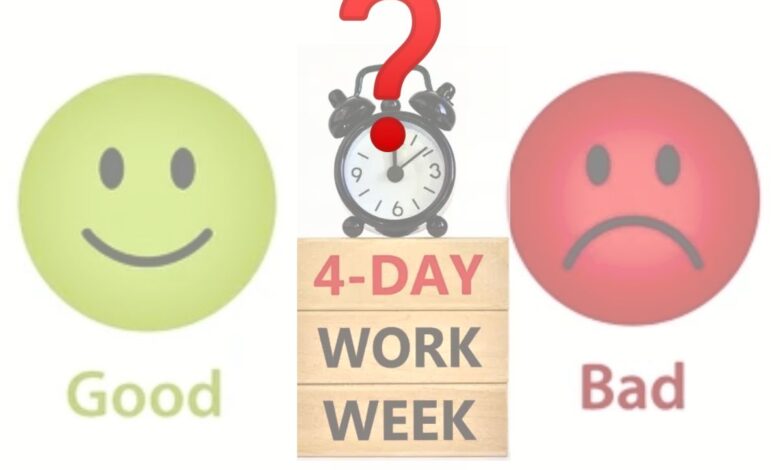
Alright, let’s talk about something that’s been buzzing around the work world lately—the four-days work week. In fact, it’s been spreading like wildfire, with a lot of companies hopping on the bandwagon. We’ve heard all the hype: less time at work, more time for yourself, and who wouldn’t want that? But here’s a little thought that might throw a wrench in all that excitement: What if the four-day work week is actually… not the best solution? What if we tried something else, like a six-day work week with shorter hours? Stick with me here, I promise this isn’t a crazy idea.
The Rise of the Four-Day Work Week
First, let’s get some context. The four-day work week is quickly becoming a hot topic. Just check out the news—over 200 companies in the UK have permanently adopted it (no pay cuts either!). It’s spreading to countries like Japan and Germany, and even cities like Tokyo are jumping on the bandwagon. The idea is simple: you work four days instead of five, and you get an extra day off to recharge, rest, or just live life outside of work.

Sounds pretty great, right? And it has some major perks. Studies and trials have shown that employees working fewer days tend to be more productive, less stressed, and happier. The idea is that the time off leads to better mental health and, in turn, more efficient work when they’re on the clock. Plus, the flexibility allows people to focus on their personal lives and families, without the constant tug-of-war between work and home.
So, what’s not to love? It’s the future, right?
But Wait—What About Parents?
Now, here’s where things get a little tricky. You see, there’s a catch—especially for parents. As much as the four-day work week sounds like a dream, it’s not necessarily the magical solution for everyone. Take my friend, for example. He is a parent, and trust me, he have been trying to figure out how to make work and family life balance better.
Here’s the thing: his kids go to school from 9 am to 3 pm. If he is working 9 to 5 for four days a week, that’s only one hour of overlap with their school schedule. Sure, he get an extra day off, which is great for him to rest or do things around the house. But he still have to figure out after-school care, or at least, he is not spending enough time with his kids on a regular basis.
Some might say, “Well, just take the extra day off to be with your family!” But it’s not as simple as that. The schools are still operating on a five-day schedule, so what is he supposed to do on that extra day off? It’s not like there’s a magical day off that makes his kids free from school. He might end up spending the day running errands or catching up on the things he didn’t get to during the week. And if you’re like him, you know that an “extra day off” doesn’t automatically mean more time for family.

What If We Tried Something Else?
So, here’s the unpopular opinion I’m throwing out: What if the four-day work week isn’t the answer? What if, instead, we tried a six-day work week with shorter hours? Before you stop reading in horror, let me explain.
Now, hear me out. Instead of cramming five days of work into four, what if we broke up our work into six shorter days? Think something like a 9-to-3 schedule instead of 9-to-5. Six days of work sounds like a lot, but shorter hours could give us more flexibility. You could still have that feeling of productivity, but with more personal time at the end of each day. Plus, you’re still getting the same amount of work done, just in more digestible chunks.
The Case for a Six-Day Work Week with Shorter Hours
One thing that a lot of these four-day work week discussions don’t consider is how people manage their time. Sure, getting that extra day off sounds great, but it can also create a feeling of urgency on the other four days. You’ve got less time to get everything done, and in some cases, it can lead to burnout and increased stress.
So, what if you worked six days but just worked less each day? Here’s what that might look like:
Better Focus: When you know you’ve got a shorter day ahead of you, you’re probably more focused. There’s no dragging yourself to the end of the day when you’re mentally checked out. Shorter hours help you stay energized and on task.
Less Stress, More Flexibility: With a six-day schedule, you’ve got that extra day, but you don’t feel as pressured on any one day. It’s a less intense workday overall, which means you have time to breathe, handle personal errands, and get home earlier to enjoy your evening.
Family Time: Back to the parent thing. If I worked six days with shorter hours, I could get home earlier each day, and have more time with my kids after school. We’d have more quality time together without the stress of trying to fit everything into a single, overloaded day.
Mental Recharge Happens All Week: The whole idea behind a four-day work week is that people need time to recharge. But let’s be real—people need to recharge all the time, not just one day a week. By working six days, but keeping the hours shorter, you get that refreshment throughout the week. You’re never too far gone, always keeping your energy levels up.
Less Pressure for Employers: For businesses, a six-day work week with shorter hours might allow them to still cover all necessary work while providing more consistent work patterns. It gives both employers and employees a steady, predictable schedule that can be beneficial for everyone involved.
Could This Work?
It sounds like an odd concept at first, right? We’ve been conditioned to think that longer hours mean more work gets done. But studies on productivity show something different: the less we work, the less productive we actually are. That’s why shifting to a six-day week with shorter hours might allow people to maintain focus without feeling overwhelmed by marathon workdays.
Of course, not every industry or role would suit this model. It wouldn’t work for those needing longer stretches of focus or jobs that rely on collaboration between teams who need to be in sync for a set period of time. But for office jobs, customer service, or many freelance positions, it might actually be a better way to get the job done.
A Flexible Future?
Now, I’m not saying the six-day work week is the perfect answer either. What I am saying is that, like the four-day week, the solution to work-life balance and flexibility isn’t a one-size-fits-all. If we’re going to embrace new ways of working, we need to also keep in mind that flexibility comes in many forms. Whether it’s a four-day week, six shorter days, or a completely different setup, it’s important to keep experimenting and adapting to what works best for all kinds of people, especially parents who still need that balance between work and home life.

In the end, whether it’s a four-day week or a six-day one, the goal is to work smarter, not harder, and to design workplaces that allow us to live our lives without sacrificing one for the other. Maybe, just maybe, it’s time to rethink how we structure our workdays—not for everyone, but for anyone looking for a better way to juggle it all.
At The End…
So, there you have it. A six-day work week with shorter hours might not be the first thing that comes to mind when you think of workplace flexibility, but it could be the perfect balance for those who need more time each day but still want that extra bit of recharge. It’s all about finding the model that works for you, your job, and your family. The four-day work week is cool, but maybe the six-day shorter-hours work week could be just the right kind of tweak for some of us. What do you think? Could this be the future of flexible work?
Let’s keep the conversation going, because, honestly, the more options we have, the better.