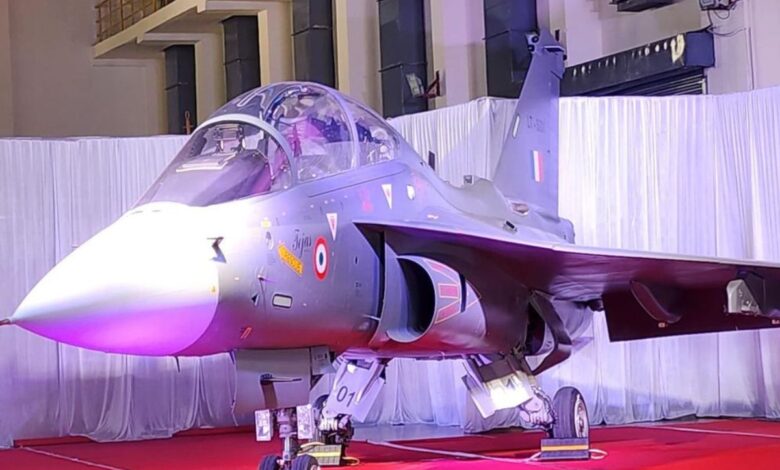
When Air Chief Marshal Amar Preet Singh publicly slammed Hindustan Aeronautics Limited (HAL) earlier this year, it sent shockwaves through India’s defence establishment. In a candid moment caught on video at Aero India 2025, the Indian Air Force (IAF) chief bluntly told HAL officials that he had “no confidence” in the state-run aircraft manufacturer. “You have to alleviate our worries and make us more confident.
At the moment, I am just not confident of HAL, which is a very wrong thing to happen,” Singh remarked, voicing frustration at HAL’s repeated delays in delivering much-needed fighter jets. It is exceedingly rare for a service chief to criticize a domestic defence supplier so openly, and Singh’s scathing words underscored a deep-seated concern about HAL’s competence and the nation’s aerial combat readiness.
Singh’s comments, made while he sat in the cockpit of a HAL-built trainer jet, were not off-the-cuff. They reflected mounting dismay within the IAF over HAL’s failure to deliver on promises. The immediate trigger was the delay in the Light Combat Aircraft (LCA) Tejas Mark-1A program; a delay so prolonged that it has left the IAF scrambling to keep aging jets in the air. “Timelines are a big issue,” the Air Chief said in May 2025, lamenting that he could not recall a single instance of a defence project being completed on schedule.
By February 2025, his patience had run out: “I was promised… 11 Mk-1As ready minus the engines… Not a single fighter is ready… ‘maza nahi aa raha hai’ (this is not working out),” he told HAL’s team, criticizing the gap between HAL’s optimistic assurances and reality. For a leader of the world’s fourth largest air force to express such loss of confidence in a premier domestic supplier was unprecedented, and it laid bare the high stakes of India’s indigenous fighter jet program.
So, What Could Be The Urgency Behind New Orders? Is It About MiG-21 Retirement and Rising Risks!
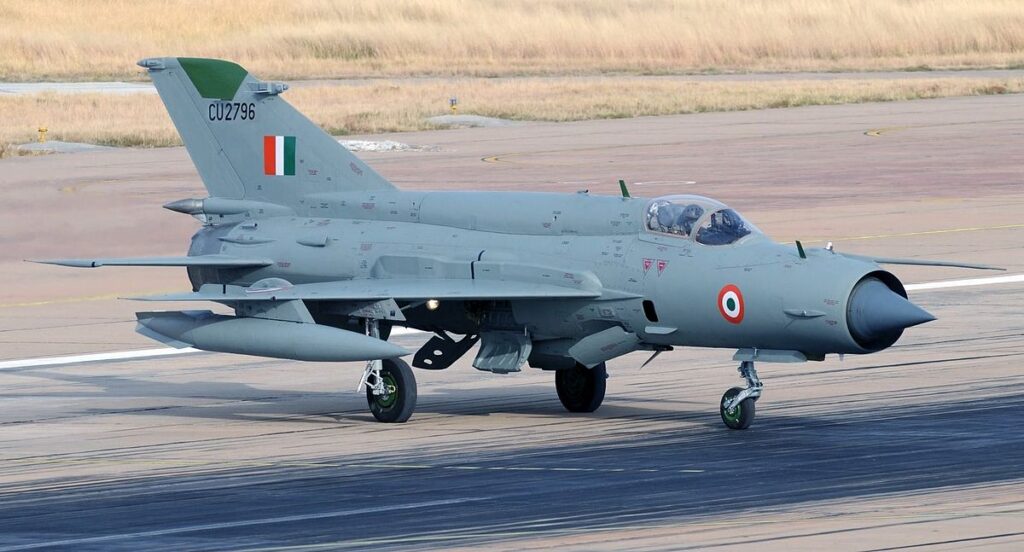
Why was Air Chief Marshal Singh so alarmed by HAL’s delays? The answer could be found in India’s dwindling fighter fleet, and particularly the venerable MiG-21. The IAF’s iconic MiG-21 jets, first inducted in 1963, have been the workhorses of India’s air defence for decades. But their final chapter has been marred by frequent and deadly accidents, earning the aircraft grim nicknames like “flying coffin” and “widow maker”.
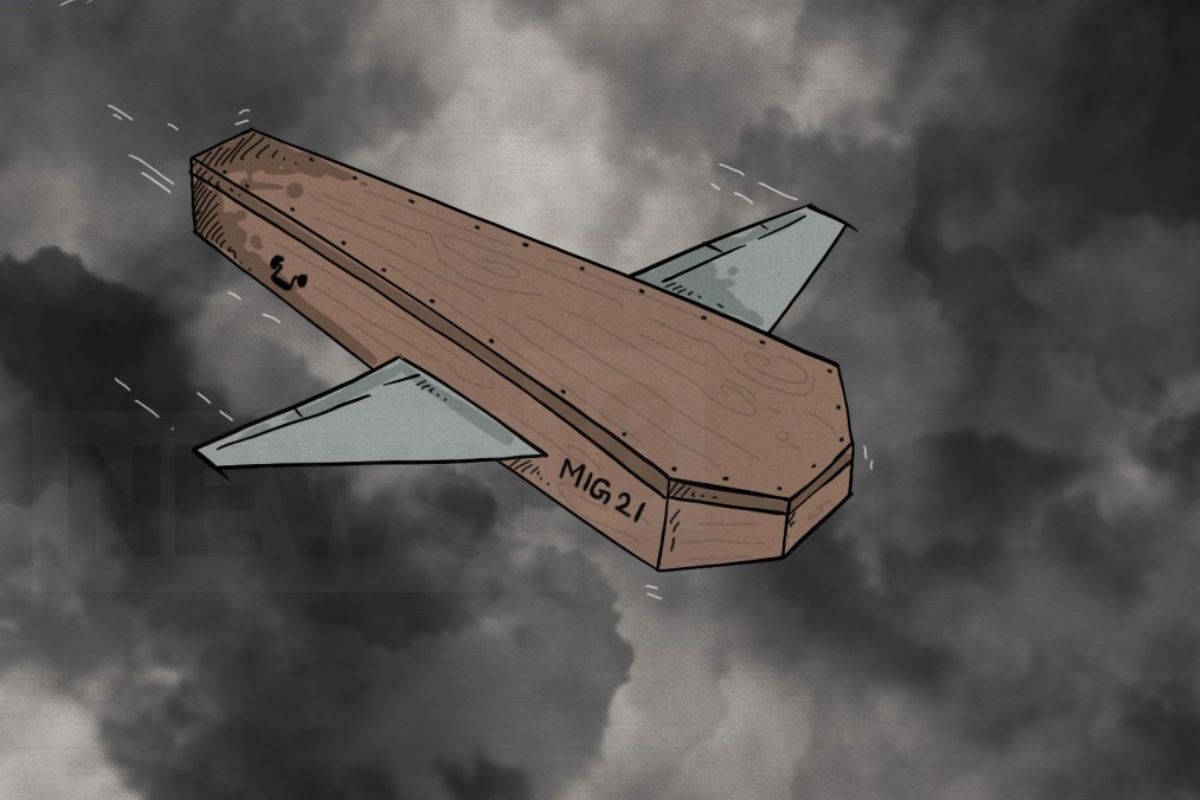
More than 400 MiG-21s have crashed over the years, killing over 200 Indian pilots and around 60 civilians on the ground. Many of these accidents occurred in the past two decades, underlining the growing risks of keeping such an aging platform in service. Each crash has not only meant tragic loss of life but has also underscored the urgent need to replace the MiG-21 with modern fighters.
After six decades of service, and over 400 crashes that earned it the moniker “flying coffin”, the MiG-21 is finally set to retire in 2025. Delays in inducting its replacement forced the IAF to keep flying this aging aircraft far beyond its intended lifespan.
Originally, the IAF aimed to phase out the last MiG-21s by 2022, but that deadline slipped precisely because their replacements were not ready. The indigenous Tejas Mk1A was meant to fill the void, yet HAL’s failure to deliver the new jets on time left the IAF with little choice but to extend the MiG-21’s service. This extension came at a cost: in May 2023, a MiG-21 crash in Rajasthan killed three villagers on the ground (in addition to injuring the pilot), prompting the Air Force to temporarily ground the entire MiG-21 fleet.
It was a stark reminder that lives were on the line while India’s new jets remained stuck in production delays. “Initially set to retire by 2022, the MiG-21 jets remained in service due to delays in the delivery of replacement LCA Tejas Mk1A jets,” notes a report on the MiG-21’s final phase-out. Every month of delay in Tejas induction was effectively a month that IAF pilots had to keep flying the outdated MiGs, with all the attendant risks.
Now, at long last, the MiG-21 will be formally retired by September 2025, ending an illustrious but increasingly troubled 62-year tenure. The send-off for the last squadron in Chandigarh will be as much a tribute as a relief. But the retirement of these four remaining MiG-21 squadrons brings its own urgency: the IAF’s fighter squadron strength will fall to just 29 or 30 squadrons, which is the lowest in decades, far below the authorized 42.
This shortfall severely stretches India’s air power, especially at a time of rising regional security threats. It is against this backdrop that the government has handed HAL an ambitious new target: deliver 97 new Tejas Mk-1A fighters as soon as possible to replace the MiG-21s and bolster the IAF’s depleted ranks.
So A New LCA Tejas Order Is A Rewarding Failure or Recognizing Necessity?
In August 2025, the Cabinet Committee on Security, headed by Prime Minister Modi, approved a massive ₹62,000 crore deal to procure 97 additional Tejas Mk-1A Light Combat Aircraft from HAL. This is on top of an earlier order for 83 Tejas Mk-1A placed in 2021; none of which has been delivered to the Air Force yet. The decision to award HAL this second large order has raised eyebrows. After all, HAL has so far fallen short on its previous delivery commitments – so why entrust it with even more jets?
Government officials and defence planners justify the move as an unavoidable necessity. The new Tejas fighters are quite literally meant to keep the Air Force flying. They will replace the retiring MiG-21s on a one-to-one basis, plugging a critical gap in India’s air defence. The Tejas Mk-1A is a light, agile multi-role fighter equipped with modern avionics and weapons, far more advanced than the 1960s-era MiGs.
In concept, inducting over 90 of these indigenous jets would allow the IAF to raise several new squadrons and mitigate the free-fall in force levels. Time, however, is of the essence. According to one report, the government plans to retire the MiG-21 fleet “in the coming weeks” and wants the Tejas Mk-1A induction to pick up speed immediately. In fact, sources indicated the new Tejas order was fast-tracked in recognition that the MiG-21s could no longer soldier on; which is a tacit admission that delays in Tejas production had already gone on too long.
Defence experts note that New Delhi has little choice but to keep faith in HAL for the Tejas program. Scrapping the indigenous fighter now, or trying to buy an off-the-shelf foreign fighter as an interim measure, would set India back further and leave the IAF in an even more precarious position. The Tejas Mk-1A, despite the delays, is slated to be the cornerstone of the IAF’s fleet in coming decades, with plans for around 350 Tejas variants (Mk-1, Mk-1A, and the future Mk-2) to form the backbone of India’s air combat power.
The new order for 97 jets is therefore seen as a vote of confidence, or perhaps a leap of faith, that HAL can finally deliver at scale. It also aligns with the “Make in India” push for self-reliance in defence manufacturing. Allowing HAL a second chance to prove itself may be politically and strategically preferable to depending entirely on foreign fighter imports. The Tejas is indigenous, and HAL is “our own company”, so the country needs HAL to succeed.
Yet the question on everyone’s mind is unmistakable: Can HAL meet this new 97-jet target on time, or is the IAF doomed to suffer another round of broken deadlines? The frustration voiced by Air Chief Marshal Singh- “At the moment, I am just not confident of HAL”, still hangs in the air. His concern is echoed privately by many in the armed forces who have seen ambitious induction plans falter repeatedly.
The IAF simply cannot afford another multi-year delay when its squadron count is nosediving. If HAL’s performance does not dramatically improve, India’s air readiness could be compromised in a way that poses serious national security risks. This is why the new Tejas order, while essential, is also being viewed as a high-stakes test for HAL’s credibility and for India’s defence self-reliance.
HAL’s Track Record: Delays, Missed Targets, and Lost Confidence
Hindustan Aeronautics Limited is no newcomer to India’s aerospace scene as the PSU has been around since the 1940s and has produced everything from vintage Hawks and Gnats to today’s Sukhoi Su-30MKIs. But despite its long history and monopoly in aircraft manufacturing, HAL’s reputation is far from sterling when it comes to timely delivery and quality. In fact, Air Chief Marshal A.P. Singh’s public rebuke was only the latest in a string of critiques from the armed forces. HAL’s track record on major projects has often been marred by delays and inefficiencies, leading to frustration at the highest levels.
The Tejas LCA program itself is a case study in protracted timelines. Initiated in the 1980s (around 1983–84), the project to build an indigenous light fighter jet stretched over three decades. The first Tejas prototype flew in 2001, but it was not until 2016 that the IAF officially inducted the aircraft, and even then, only a handful were operational. Production of the initial batch of 40 Tejas Mk1 (the baseline variant) lagged significantly.
As of early 2025, nearly 15 years after the order was placed in 2010, the IAF was still awaiting delivery of four out of those first 40 Tejas Mk1 jets. In other words, HAL hadn’t even fully met its first small Tejas order when it was supposed to be gearing up for the larger 83-jet Mk1A order. According to a detailed analysis in The Federal, deliveries of the Mk1 were officially slated to begin in 2016, yet “the IAF has yet to receive the first 40 Tejas fighters” years later. Such sluggish progress raises doubts about the sustainability of India’s indigenous fighter programs and has eroded HAL’s credibility in the eyes of its primary customer, the IAF.
The pattern is not limited to the Tejas. HAL’s delays and quality issues have cropped up in other projects as well. The HAL HJT-36 Sitara intermediate jet trainer, for example, was meant to replace the IAF’s aging Kiran trainers in the 2010s. Instead, the Sitara project was bogged down by design flaws (notably dangerous spin characteristics) and spent years in limbo. It was only after extensive rework and rebranding as “Yashas” that the aircraft was declared flight-worthy in 2023, nearly 25 years after development began.
During those lost years, the IAF had to keep using outdated trainers and even imported Swiss Pilatus turboprop aircraft to fill the gap in pilot training. Similarly, HAL’s much-touted projects like the HTT-40 basic trainer and various indigenous helicopters have seen schedule overruns, though some have eventually reached production. Each delay has a ripple effect: the armed forces either have to extend the life of old equipment (as seen with the MiG-21) or look for emergency purchases from abroad, both of which carry operational and financial costs.

Critics point out that HAL’s institutional culture may be part of the problem. The company, being a public sector undertaking, has a large bureaucratic structure. A former defence official noted that HAL is rife with “systemic inefficiencies,” including a tendency to overpromise and underdeliver.
The episode at Aero India 2025, where HAL showcased what it labeled as Tejas Mk1A fighters, even though they still lacked key Mk1A features like the updated radar and weapons was telling. It suggested an eagerness to project progress that wasn’t fully real, further “eroding confidence in HAL’s accountability and transparency”. In Singh’s words, HAL’s approach often seems to be driven by a complacent “ho jayega” (it will happen) attitude; a far cry from the sense of urgency the IAF feels.
Beyond the anecdotes, the numbers speak loudly. HAL was contracted in February 2021 to deliver 83 Tejas Mk-1A fighters by 2026-27, with the first delivery originally due by March 2024. As of August 2025, not a single Mk-1A has been handed over to the Air Force. HAL officials say they have manufactured at least seven airframes, but final delivery awaits integration of engines and systems. The first finished Tejas Mk-1A is now expected by October 2025, a delay of about 18 months from the initial schedule.
This slip has not gone unnoticed. “I cannot recall a single instance of a project being executed on time,” Air Chief Singh lamented, calling it a wake-up call for India’s defence production sector. Thanks to these delays, the IAF, which today fields only around 30 fighter squadrons, is staring at a further capability gap just as regional rivals bolster their air forces.
HAL’s broader reputation has suffered accordingly. Within India, each failure or delay dents the armed forces’ trust. It’s telling that even previous IAF chiefs have criticized HAL; the company’s struggles are not a new story. Internationally too, HAL’s name raises eyebrows.
When India was negotiating the Rafale fighter deal with France last decade, the plan to have HAL license-produce Rafales in India encountered resistance – Dassault Aviation reportedly hesitated to partner with HAL due to concerns over whether HAL could meet quality and timeline requirements. Eventually, the Rafale deal was signed in 2016 without any role for HAL in manufacturing the jets (India opted to buy 36 Rafales in flyaway condition). This episode reinforced the view that HAL’s inefficiencies are well-known in the global defence industry.
In sum, HAL’s track record is a mixed bag at best. It has delivered on some programs (for instance, license-producing hundreds of Sukhoi Su-30MKI fighters and Hawk trainers, albeit with foreign help), but when it comes to indigenous projects, delays have been the norm rather than the exception. A parliamentary committee once slammed HAL for “poor quality control, unreliable safety practices, … and low production efficiency” contributing to accidents and backlogs. From the ill-fated HF-24 Marut fighter in the 1960s to more recent aborted projects, HAL has had its share of unsuccessful or abandoned aircraft programs – highlighting gaps in its design and development capabilities. All of this provides crucial context – and a cautionary backdrop – to the latest 97-aircraft Tejas order.
Engines, Excuses, and Explanations: What Went Wrong and Is It Fixed?
HAL and Ministry of Defence officials do not deny the delays, but they have offered various explanations; some of them valid, others sounding like excuses to a frustrated Air Force. One oft-cited reason is the engine supply bottleneck for the Tejas Mk-1A. The Tejas is powered by the American-made General Electric F404-IN20 turbofan engine. When HAL received the big order for 83 Mk-1As in 2021, it needed nearly 100 F404 engines (including spares) to power those jets. But GE Aerospace had shut down its F404 production line in the 2010s after completing earlier orders for India.
Thus, when India placed the new order, GE had to restart its dormant production line, re-hiring suppliers and retooling factories. This took time. In fact, GE delivered the first batch of new F404 engines only in March 2025 – roughly a year later than planned. HAL’s Chairman, C.B. Ananthakrishnan (also known as D.K. Sunil in some reports), stated that missed engine supply deadlines by the US vendor were a primary factor in HAL’s failure to meet the Tejas delivery schedule. With the engine issue now “sorted out” and deliveries accelerating, HAL insists that a major hurdle to Tejas production has been removed.
To HAL’s supporters, this explanation carries weight: it shows that not all delays were of HAL’s making. Indeed, supply-chain dependencies have long dogged India’s defence projects. “HAL’s dependence on foreign suppliers for critical components, particularly aircraft engines, makes the organisation vulnerable to supply chain disruptions,” an analysis in The Federal noted, pointing directly to the F404 engine delays as an example.
Sanctions and technology denials have also played a role. During the 1990s, after India’s 1998 nuclear tests, Western countries imposed embargoes that hit defence imports. HAL’s chairman reminded critics in February 2025 that the Tejas program had to “build things from ground up” after 1998, because global sanctions cut off access to certain technologies. Critical subsystems had to be indigenized, often through trial and error, which ate up years. From this perspective, HAL argues, the delays were not simply due to incompetence or “laziness” but also the unavoidable growing pains of a nation striving for self-reliance under difficult circumstances.
That said, the IAF’s counter-argument is compelling: Whatever the causes, the fact remains that HAL did not deliver on time, and the nation was left holding on to 60-year-old MiG-21s as a result. Air Chief Marshal Singh acknowledged the technical issues but pointed out that every delay has operational consequences. By 2025, the IAF’s fighter fleet was so depleted that even a few dozen Tejas would have made a big difference – yet HAL missed the March 2024 deadline for first delivery, and then overshot the revised deadline too.
From the Air Force’s viewpoint, HAL should have anticipated the engine supply risk and had contingency plans. Additionally, some delays were internal: there were holdups in certifying new capabilities on the Mk-1A (such as integrating advanced missiles, an electronic warfare suite, and the new AESA radar). These certification tests took longer than expected, contributing to an overall 18-month slip in the schedule.
Under intense pressure and scrutiny, HAL has taken steps to speed up production. The company has set up a second Tejas assembly line at its Nasik facility (in addition to the main line in Bengaluru). This move is aimed at ramping up output from the current capacity of about 8–16 aircraft per year to as many as 24 per year by utilizing two sites. In theory, if HAL manages 24 fighters annually, it could fulfill the existing 83-jet order in roughly 3.5 years and then tackle the additional 97-jet order immediately thereafter.
HAL’s leadership has been keen to assure the public and the IAF that things are now on track. “We will soon start delivering the aircraft,” HAL’s chairman vowed in February 2025, the day after the IAF chief’s outburst. He noted that the technical issues causing delay “have got sorted out” and that HAL’s entire team is focused on meeting deadlines after understanding the Air Force’s concerns.
By the end of 2025, HAL expects to hand over at least three Tejas Mk-1As (two from Bengaluru, one from Nasik) to the IAF for induction. Moreover, HAL stated it plans to deliver “at least 11 Tejas-Mk1A aircraft to IAF by March-end” 2025 as part of the sped-up schedule (though as of August, that target seems optimistic). Such public promises indicate HAL knows its credibility is on the line.
The new order for 97 fighters will only compound the challenge, essentially doubling the workload, so HAL will have to maintain an unprecedented tempo. It’s worth noting that HAL’s production achievement in the past included license-building around 200 Su-30MKI fighters over about 17 years, averaging roughly a dozen per year. Producing 24 indigenous fighters a year would be a significant increase, but HAL’s management is betting on new infrastructure and lessons learned to make it feasible.
They have also been pushing for technology tie-ups, such as a deeper transfer-of-technology arrangement with GE for manufacturing the next-generation F414 engines in India. If successful, that could mitigate future engine supply issues for upcoming Tejas variants and the planned fifth-generation AMCA fighter. In short, HAL is trying to address both the symptoms and causes of its delays: speeding up manufacturing on one hand, and reducing dependence on foreign suppliers on the other.
Accountability, Assurances, and the Human Cost
Even as HAL scrambles to prove it can deliver, a poignant question hangs in the air: Who is accountable for the costs of these delays – especially the human cost? Over the years, the prolonged presence of MiG-21s in IAF service (long after most countries retired the type) has been linked to the lack of timely replacements. With dozens of pilots lost in MiG-21 crashes, there is a gnawing sentiment that at least some of those lives might have been saved had HAL and India’s defence establishment delivered new jets on schedule.
“Who will take charge of the lives lost because of MiG-21 losses?” ask observers and bereaved families. It is, of course, a hypothetical question; one cannot pin every MiG-21 accident on HAL’s delays, as factors like pilot training and technical snags play a role too. However, the broader point remains: delays in defence procurement can have deadly consequences, and yet accountability for such delays is often diffuse.
In the military, accountability for failure can be severe – a squadron leader who crashes a jet faces an inquiry and possible court-martial, for instance. But in the realm of production and procurement, the responsibility is murkier. HAL, as a corporation, rarely faces punitive action beyond financial penalties for late delivery (and even those are sometimes waived or renegotiated by the government).
No HAL executive is court-martialed for missing a deadline. The end result is a sense of impunity in the system. The Air Force chief’s very public critique of HAL can be seen as an attempt to enforce a degree of accountability by naming and shaming the organization in the court of public opinion. It also served as a cry for help – a signal to the government and industry that the status quo was unacceptable.
For its part, HAL has expressed regret over the delays and insists it is doing everything possible to avoid a repeat. “The concern of the Air Chief is understandable,” HAL’s chairman conceded, acknowledging the IAF’s worries about its shrinking squadron strength. He promised that HAL would “start rolling out” the fighters now that engines are in hand, and emphasized that “as a team, all of us are focused” on delivering result. Such assurances are welcome, but they will ultimately be measured against HAL’s performance in the coming months and years.
The true test will be whether HAL can meet the delivery timelines for both the remaining 83 jets and the newly ordered 97 jets without further excuses. The IAF, having been disappointed before, will likely keep the pressure on HAL through regular progress reviews. There is talk of enhanced oversight, and HAL has been asked to provide revised delivery schedules that are realistic and binding.
Defence analysts note that HAL’s fortunes are at an inflection point. On one hand, the company is enjoying an order book of unprecedented size – over ₹1.3 lakh crore (approx $16 billion) in pending orders, spanning fighters, helicopters, and engines. Success with the Tejas Mk-1A would position HAL as a true aerospace powerhouse and could even open up export opportunities for the jet. On the other hand, another round of failures could severely damage HAL’s standing.
It would strengthen the argument of those who call for involving India’s nascent private aerospace firms more deeply, or even for restructuring and reforming HAL. In an analysis piece, former officials suggested that HAL needs deep structural changes – less bureaucracy, more accountability, and a revamped work culture that incentivizes meeting targets. Without such changes, they warn, HAL will “struggle to meet deadlines” due to a complacent, slow-moving approach ingrained over years.
Finally, there is the bigger picture of national security. India faces a highly dynamic threat environment, with neighbouring China rapidly modernizing its air force and even unveiling sixth-generation stealth fighters. In that light, delays like those of the Tejas program don’t just cost time and money – they could leave the country vulnerable. Every squadron the IAF falls short is a gap that an adversary could exploit.
Thus, the 97 Tejas order is not merely a contract; it is a cornerstone of India’s strategy to maintain a credible air defence posture in the coming decade. The hope is that HAL, having stumbled, will now rise to the occasion and deliver the fighters before it’s too late. The onus is now squarely on HAL to restore faith, by ensuring that history does not repeat itself in the form of yet another missed deadline.