Air Ticket Hike After Pahalgam Attack- The Shameful Event When Indian Aviation Chose Capitalism Over Ethics!

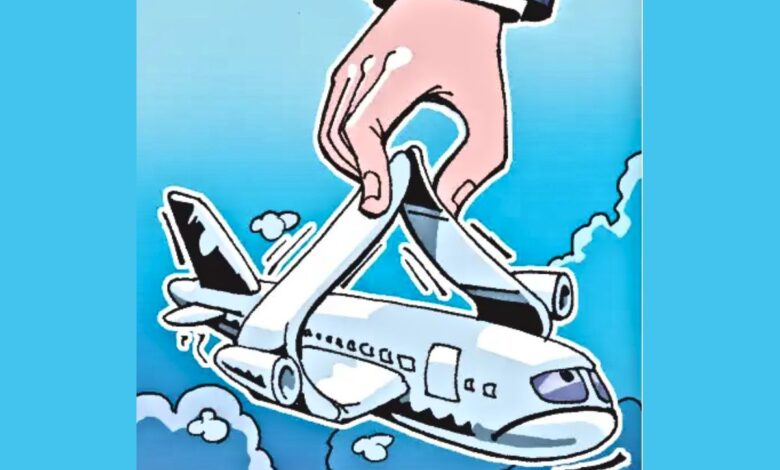
Once a tragedy occurs, a society reveals its real nature. The recent terrorist attack in Pahalgam revealed a disturbing divide in the way India reacted – while common man displayed enormous kindness, corporate machinery exploited fear to make money. What went on in the skies above Kashmir was not a pricing error; it was a serious ethical failure that forces us to consider the difference between earning money and being a decent human being.
The Cost of Fear: How the Market Reacted to Human Suffering?
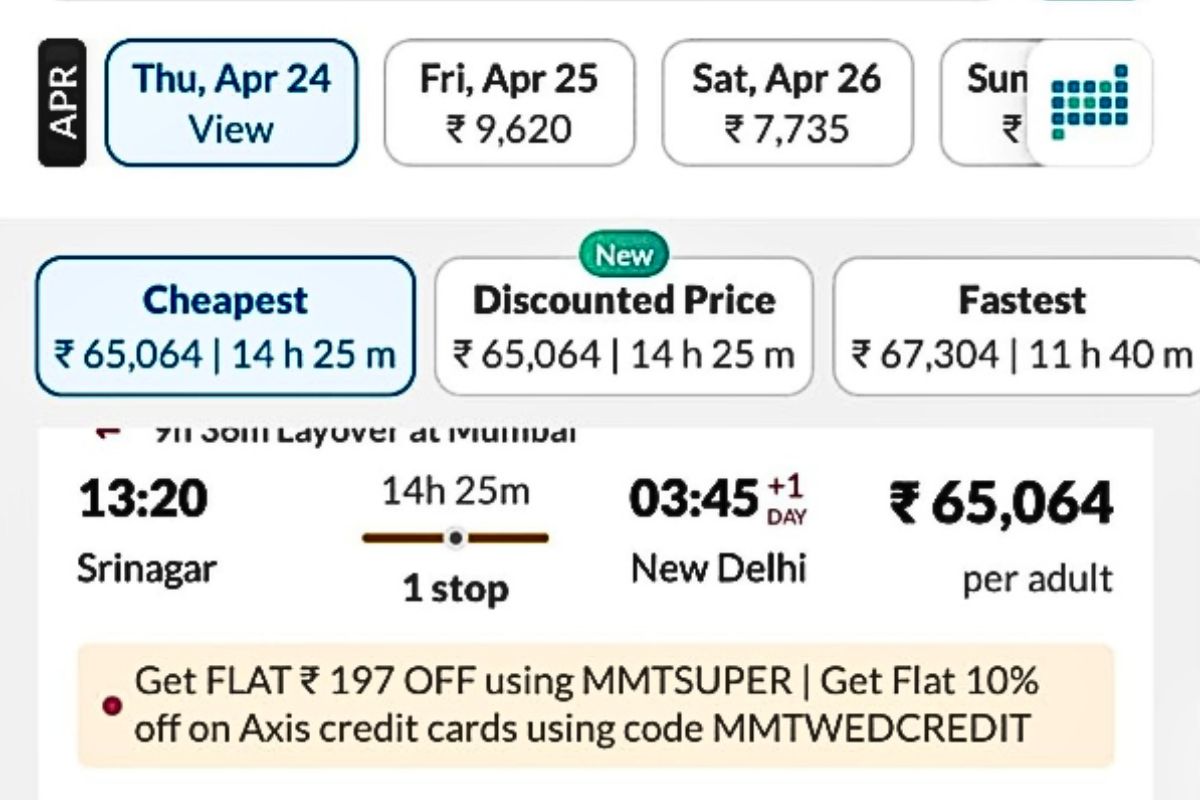
The numbers are telling. In a matter of hours after the Pahalgam attack, air ticket prices from Srinagar to Delhi – which would normally cost between ₹6,000-8,000 – were being sold for an eye-watering ₹65,000 for a one-way economy ticket. Prices to Mumbai and Bengaluru also shot up to over ₹30,000. These were not market corrections; these were algorithmic extraction of profit from human desperation.
What was particularly troubling was how it differed from the reaction on the ground in Kashmir. While airlines were jacking up ticket fares, locals in Kashmir were incredibly generous.
Horseback riders did not accept payment for services rendered, and one even died to keep tourists safe. Taxi drivers gave free rides and hot tea to traumatized tourists. Hotel owners waived fees and gave full refunds without batting an eyelash. Such acts – performed quickly and from the heart – were from individuals with little money who chose kindness over profit.
Meanwhile, financially healthy airline corporations with veteran executives allowed their pricing mechanisms to increase ticket prices three times within an evening. The juxtaposition was shocking: Common man with not much money volunteered to donate generously, whereas giant corporations with plenty opted to take more.
This dichotomy compels us to face a difficult question:
What is wealth in our culture? Is it profits in the third quarter and what flows back to the shareholders, or is it being generous when a person is in need?
This is not new; We Have A History of Profiting in Times of Crisis!
This is not the first instance of profit over humanity in a crisis, both internationally and in India. The trend goes back through centuries of human history.
In the Bengal Famine of 1943, people starved to death as food vendors stockpiled grain to maximize profits. It made one of India’s most catastrophic humanitarian crises even more so. Winston Churchill’s policies were more concerned with wartime financial demands than with keeping people alive, and the result was around three million deaths. The market was permitted to “function normally” as the people starved and died.
In 1877, during the Great Famine in southern India, British colonial authorities followed strict hands-off economic policies. They kept on exporting grain as millions of people died of starvation. The laws of the marketplace were prioritized over the requirement of compassion, with ghastly results.
There have been instances in recent times, such as in the 2010 Ladakh flash floods, when private helicopter operators charged outrageous fares to pick up stranded tourists. In the 2018 Kerala floods, too, the same price hikes were seen in flights from Kochi and Thiruvananthapuram.
The COVID-19 pandemic witnessed a stark case of crisis capitalism. Oxygenators that would cost ₹40,000-₹50,000 normally were being sold over ₹2 lakh during the peak of the second wave. Hospital beds were treated as luxury, available only for those who could afford to pay the highest amounts. In some metropolitan cities, ambulance rides were being charged ₹15,000-₹20,000, which would otherwise cost much less.
All over the world, we have witnessed the same. When Hurricane Katrina damaged New Orleans in 2005, hotel room rates in neighboring states increased two to three times. When there was the Texas power crisis in 2021, individuals received electricity bills of $10,000 for a few days of electricity because systems realized there was not sufficient and hiked the rates.
These instances reveal an uncomfortable reality: unregulated markets tend to crash catastrophically in times of humanitarian crises. When demand increases due to life-threatening circumstances, algorithmic pricing mechanisms – which are designed to maximize returns – can inflict serious financial damage on those who are already vulnerable.
The Duopoly Problem: This Is When Competition Doesn’t Help
India’s domestic civil aviation market is one specific weakness. With control in the hands of a few carriers, the theoretical safeguards of competition effectively disappear during crises. When crisis hits, the market’s invisible hand doesn’t adapt – it constricts.
The Pahalgam fiasco is an example of this market failure. Algorithms picked up on the heightened demand as worried tourists and visitors tried to escape, and prices changed accordingly – not to serve the public but to drive profits. Under these conditions, an airline ticket becomes something people can choose to buy but not necessarily need – a vital lifeline. However, the mechanism of pricing failed to respond to this difference.
It’s especially worrisome that these airlines are taking advantage of infrastructure that is given a lot of government support. They get to use government-created airports, air traffic control, security, and regulations. They’ve been given financial aid directly or indirectly most of the time when they’re financially struggling. They get the benefit of government support and use of public money, yet when something unfortunate happens to the country, some seem to ignore their duty to serve the public.

Regulatory Responses: Global Perspectives
How have other cultures tackled this issue? In the United States, over 30 states have enacted price gouging laws that go into effect automatically under a declared emergency. These typically ban price hikes above a percentage (typically 10-25%) on basic items and services such as transportation, fuel, food, and housing.
In 2017, during Hurricane Irma, when some airlines initially raised prices, public outcry and state anti-gouging legislation introduced the necessary adjustments. JetBlue Airways established a one-way fare cap of $99 to facilitate evacuations – not through charity, but through informed self-interest where public trust was aligned with corporate action.
The European Union’s passenger rights directive (EC 261/2004) offers very comprehensive protection in disruptions, such as compensation for delays and cancellations. Although not directly addressing crisis pricing, the regulatory environment sets the precedent that passenger welfare cannot be secondary to commercial concerns.
Japan’s disaster relief is worth replicating. Following the 2011 Tohoku earthquake and tsunami, Japanese companies maintained prices fairly stable for essential commodities and services. This was not solely due to regulation, but also due to cultural norms prioritizing assisting everyone in need during difficult times. Even some companies reduced prices in order to assist those in need, recognizing that national catastrophes compel individuals to set aside normal profit margins.
What Is The Weaknesses of India’s Consumer Protection System?
India’s Consumer Protection Act 2019 revised the level of consumer rights and bolstered the role of the Central Consumer Protection Authority (CCPA). It also broadened the definition of unfair trade practices and made regulation tighter. It remains short of doing much regarding price surges during crises, a phenomenon typical with essential services.
The present regulatory strategy is predominantly based on moral suasion and post-facto measures. Following the Srinagar air ticket hike’s outcry, the Directorate General of Civil Aviation (DGCA) had issued an advisory to airlines to limit ticket fares. Airlines then added additional flights, flew larger planes, and eliminated some charges. But by this time, irreparable harm had been caused – many passengers had already paid huge sums or were stuck.
This reactive approach is not enough. By the time regulators get advice, algorithms have already done their harm. The psychological damage and financial burden have already been incurred. A person in crisis should not have to wait for Twitter outrage to engage regulators.
Is There Any Positive Way Ahead: Preventive Safety and Fair Algorithms
We need to think about how to regulate essential services during emergencies differently. The CPA needs to be modified to clearly provide that price increases during emergencies are unfair trade practices. The CCPA needs to be allowed to act independently during national disasters, terrorist attacks, or health emergencies, and it needs to be given the authority to impose actual penalties and seek refunds.
More actively, the DGCA and the Government of India need to introduce a ‘crisis pricing code’ for vital services. Through this code, price controls would be automatically initiated in declared emergencies or on directions from a nodal agency. This would not abolish market mechanisms altogether, but would put human well-being over unregulated algorithmic pricing in exceptional situations.
Technical solutions may support regulatory measures. Airlines and other major service providers may be mandated to include emergency plans in their pricing systems – automatic caps or discounts that kick in during the time of emergencies. Regulators must be given real-time data on ticket fare mechanisms to make sure that there is transparency and rules are followed.
Also, essential service providers in India could be required to hold some inventory (like seats or rooms) at fixed prices during times of crisis. This would guarantee that even during difficult times, fundamental transport is available to ordinary people, not only to the affluent.
Others will say that such intervention would interfere with how markets operate. But this is a misconception of a fundamental fact: markets are there to serve society, not society to serve markets. When market mechanisms harm people’s well-being in times of bad fortune, targeted support is not only suitable but essential.
Others would say that airlines reacted properly following government warnings, and it was proof that the system works. That misses the point: safety must be automatic and instantaneous, not something subject to public ridicule and bureaucratic pressure. Before outrage can effect change, vulnerable individuals already have been subjected to unnecessary harm.
The Deeper Question: Values in a Market Society
Apart from individual policy recommendations, the Pahalgam tragedy leads us to pose the greater question of what society we should be building. Do we all concur that we must pay the most when we need it the most? Or do we think that in any decent society human misery can never be a business proposition?
The contrast between the Kashmiri horse riders, cab drivers, and hoteliers on one hand, and the reaction of airlines employing algorithms on the other hand, is not so much about varying people making varying decisions. It is about varying values and notions regarding how to organize society.
The people of Kashmir taught us something that philosopher Michael Sandel has referred to as “moral limits of markets.” That is, there are certain things that cannot be sold, or at least not for a great deal of money, during human tragedy. Their rapid generosity demonstrated an old maxim: during times of shared tragedy, we owe one another more than money.
The algorithmic reply, however, reflected what sociologist Zygmunt Bauman described as “liquid modernity.” That is a system where all relationships between humans, even in time of crisis, are carried on the terms of the cold rationality of the maximization of profit.
As India grows economically and changes technologically, we have to choose which vision will lead our growth. Will we let AI-based pricing systems take away human dignity? Or will we make sure that our most innovative technologies stay rooted in enduring human values?
What India Need Is A Time of Clear Morals!
India is reaching a critical stage in its evolution. With our technological competence and our increasingly complicated economy, the conflict between human welfare and market efficiency will become ever more sharp. The Pahalgam tragedy provides a moment for ethical clarity amidst such complication.
We’ve seen it happen before – with COVID-19, natural disasters, and civil disturbances. In each instance, price gouging has contributed to the misery of the people. And in each instance, we’ve relied on moral suasion and responding with regulations rather than preventing problems in the first place.
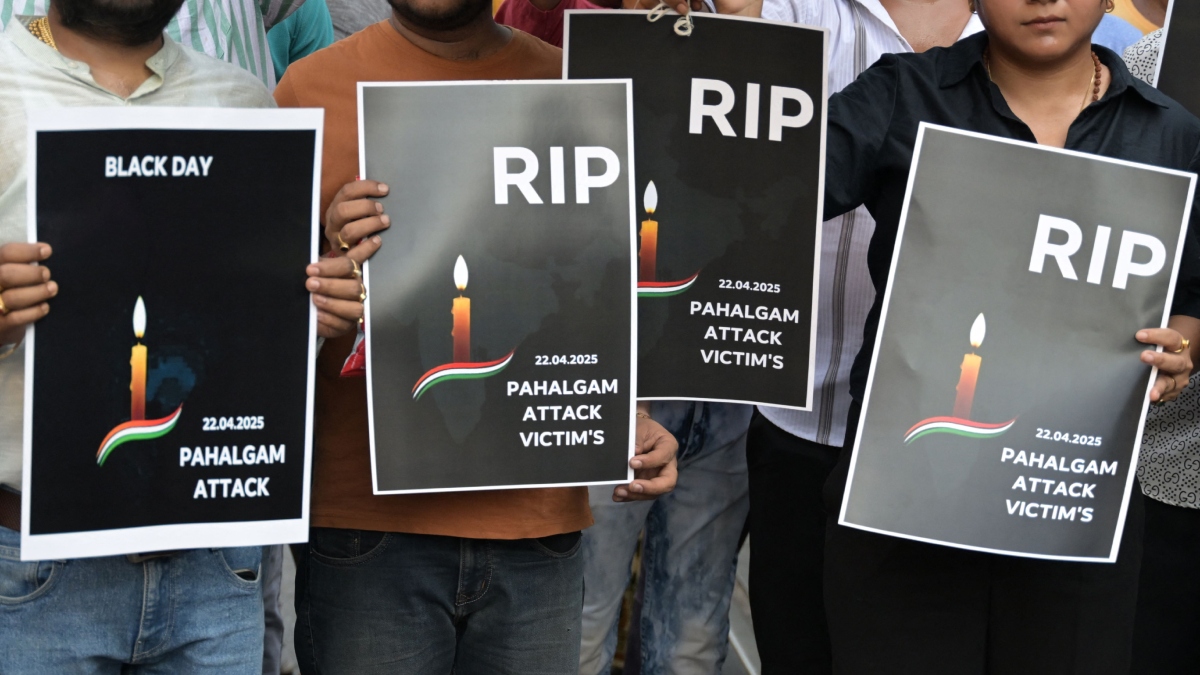
It is now time to bring an end to this trend. A Consumer Protection Act amendment with a focus on stopping price hikes in times of crisis in vital services would mean that in today’s India, fairness and compassion need to be prioritized over algorithms. The horse rider who sacrificed his life guarding tourists in Pahalgam taught us the best of our common humanity. The taxi drivers offering free transport and the hotel owners waiving cancellation charges are examples of how kindness can be business.
What they did urges us to develop economic and regulatory systems that uphold such values – systems where doing the right thing precedes profit, not the reverse. Ultimately, this is not just an issue of air ticket fares or regulations. It is an issue of what we believe in as a people and as a nation. Do we only look at our prosperity in rupees and paise? Or do we realize that the real wealth is our capacity to give and be merciful, particularly to those who need it the most? The response to that query will determine not only our economy but our society.